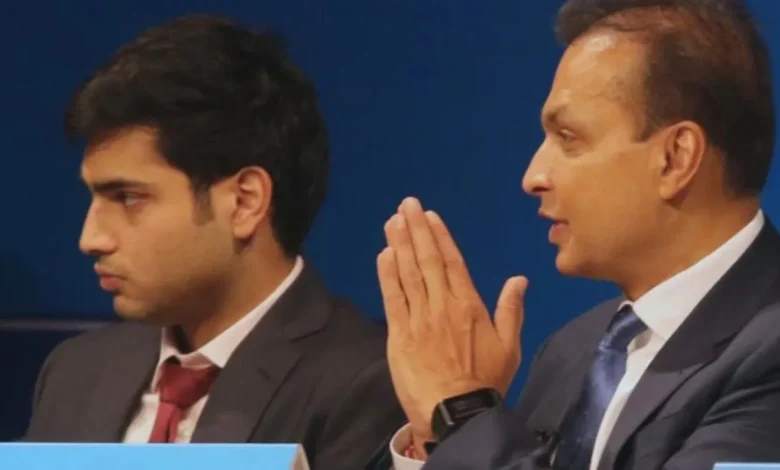
Anil Dhirubhai Ambani, born 4 June 1959 in Mumbai, is the younger son of legendary entrepreneur Dhirubhai Ambani and chairman of the Reliance Group (often called the Anil Dhirubhai Ambani Group, or ADAG). Trained at Wharton, he took charge of finance at Reliance Industries in the 1980s, and after his father’s death in 2002, he and his elder brother Mukesh jointly led the conglomerate.
In 2005, following a public sibling feud, their mother Kokilaben brokered a split: Mukesh took the petrochemicals, refining and core industrial business under Reliance Industries Ltd (RIL), while Anil received telecom, power, financial services, infrastructure and entertainment.
For a time, Anil Ambani was the face of India’s “new economy” boom. The 2008 IPO of Reliance Power was then India’s largest and was subscribed in under a minute, briefly propelling him to an estimated net worth of about US$42 billion and making him the world’s sixth-richest person. Over the following decade and a half, however, high leverage, aggressive bets in telecom and infrastructure, regulatory shocks and intense competition triggered a dramatic reversal. Many of his flagship companies slid into insolvency, and the businessman who once symbolised India’s rising corporate power now finds himself at the centre of multiple debt disputes, regulatory actions and criminal investigations.
1. The core disputes as of now
1.1 ED money-laundering case and ₹1,452-crore attachment
In November 2025, the Enforcement Directorate (ED) announced provisional attachment of properties worth about ₹1,452 crore under the Prevention of Money Laundering Act (PMLA). These assets are linked to Anil Ambani, his Reliance Group companies and associated entities.
The attached assets reportedly include:
- Commercial buildings within the Dhirubhai Ambani Knowledge City (DAKC) complex in Navi Mumbai
- Office space in Millennium Business Park, Navi Mumbai
- Land and buildings in Pune, Chennai and Bhubaneswar
ED says this is part of a broader money-laundering probe tied to alleged loan fraud involving Reliance Communications (RCom) and other group entities. With this step, the cumulative value of assets attached in related cases has risen to nearly ₹9,000 crore, according to press reports based on ED figures.
ED’s key allegations (drawn from press summaries of its complaint) are that:
- RCom and group companies took large loans from Indian and foreign lenders around 2010–2012, leaving overall outstanding dues of about ₹40,000+ crore. Banks have classified many of these as fraudulent.
- Substantial portions of these loans—running into tens of thousands of crores—were allegedly diverted for:
- “Evergreening” older loans with new borrowings
- Routing funds to connected parties and shell entities
- Parking money in FDs or mutual funds and then re-routing it
- Foreign outward remittances without genuine business purpose
The Reliance Group’s response has been to stress that:
- The attached properties primarily belong to RCom, which has been in insolvency under the National Company Law Tribunal (NCLT) for several years.
- Anil Ambani resigned from RCom in 2019 and is no longer associated with its management.
- The current ED actions, they say, have “no material impact” on the operations or prospects of Reliance Infrastructure (RInfra) and Reliance Power (RPower), which are listed companies with independent businesses.
At this stage, these are allegations and provisional attachments, not final judicial findings.
1.2 CBI–Yes Bank corruption case involving ADAG finance arms
In parallel, the Central Bureau of Investigation (CBI) has filed charge sheets naming Anil Ambani and former Yes Bank CEO Rana Kapoor (among others) in a corruption and cheating case.
According to CBI’s case as reported:
- Between 2017 and 2019, Yes Bank invested roughly ₹4,900–5,000 crore in instruments issued by two ADAG finance companies:
- Reliance Home Finance Ltd (RHFL) – about ₹2,965 crore in non-convertible debentures
- Reliance Commercial Finance Ltd (RCFL) – about ₹2,045 crore via commercial paper / debentures
- By late 2019, most of these investments turned non-performing, leading to an alleged loss of around ₹2,796.77 crore to Yes Bank.
- CBI alleges that in return for these investments, RCFL and RHFL extended loans and facilities to shell or weak firms linked to Rana Kapoor’s family, amounting to a quid pro quo arrangement and a form of bribery.
Charges include criminal conspiracy, cheating, corruption and provisions of the Prevention of Corruption Act. The matter is at the stage of prosecution based on charge sheets; guilt or innocence will ultimately be determined by the courts.
Anil Ambani and his group have denied wrongdoing and characterised the cases as commercial disputes being given a criminal colour.
1.3 PIL in the Supreme Court over alleged RCom bank fraud
A third front is a Public Interest Litigation (PIL) in the Supreme Court filed by E.A.S. Sarma, a former union secretary, which asks for a court-monitored probe into alleged large-scale bank fraud by Reliance Communications (RCom) and its associates.
Key aspects of the PIL:
- It claims that RCom and group entities engaged in a “massive banking fraud” involving diversion of loan funds, use of shell companies, and systematic evergreening.
- It criticises banks and regulators for allegedly delaying or limiting action, arguing that negligence or collusion by bank officials themselves should be investigated.
- It asks the Supreme Court to ensure that CBI and ED investigations are not restricted to a single FIR but look at the entire pattern of alleged wrongdoing over years.
A bench led by Chief Justice B.R. Gavai has issued notice to the Union government, CBI, ED and Anil Ambani, seeking their responses. The case is at a preliminary stage; the Court has not yet rendered any finding of fact or guilt.
2. Other court cases and financial hardships
Beyond the current Yes Bank/ED/PIL triad, Anil Ambani’s recent history is marked by regulatory sanctions, enforcement actions, creditor litigation and near-misses with imprisonment. These collectively explain why the narrative around him often emphasises “financial hardship”.
2.1 UK personal guarantee dispute with Chinese banks
In 2020, three Chinese banks (Industrial & Commercial Bank of China, China Development Bank and Exim Bank of China) pursued Anil Ambani in the Commercial Court of the High Court of England and Wales over US$717 million in alleged personal guarantees linked to loans made to RCom in 2012.
- The court held that a personal guarantee signed by Ambani was binding, and directed him to pay about US$717 million within 21 days.
- During these proceedings, Ambani submitted a statement claiming his net worth had fallen to “zero” after accounting for liabilities, down from billions of dollars earlier.
- Later reporting suggests that there was a settlement in 2022 that avoided the risk of imprisonment for contempt over non-payment, though terms have not been publicly disclosed.
2.2 Ericsson contempt case in the Supreme Court of India
Another very public moment came in the Ericsson–RCom dispute. Swedish telecom vendor Ericsson had approached the Supreme Court to recover dues of around ₹550 crore from RCom for network maintenance.
- In 2019, the Supreme Court held Anil Ambani guilty of contempt of court for failing to comply with its earlier orders to pay Ericsson. It warned he would be jailed for three months if he did not pay about ₹453 crore within four weeks.
- Ambani eventually complied, reportedly with support from his elder brother Mukesh Ambani’s group, avoiding imprisonment.
2.3 SEBI’s 5-year market ban and fund-diversion finding
In 2024, India’s capital markets regulator SEBI passed a detailed order against Reliance Home Finance Ltd (RHFL) and various individuals, including Anil Ambani.
Key elements of SEBI’s order (which is appealable):
- SEBI concluded that Anil Ambani and senior RHFL officials had orchestrated a fraudulent scheme to divert funds by routing them as loans through “conduit” entities that were effectively promoter-linked, not genuine third-party borrowers.
- It barred Anil Ambani from the securities market for five years, and also restrained him from serving as a director or Key Managerial Personnel in any listed company or SEBI-regulated intermediary for the same period.
- RHFL itself and several associated entities were also penalised and restricted.
Ambani has publicly indicated he is exploring legal options against this order, and his camp maintains that the allegations are unfounded.
2.4 SBI’s “fraud” classification of RCom’s loan account
In 2025, State Bank of India (SBI) classified RCom’s loan account as “fraud”, citing alleged fund diversion from loans extended in 2016 and intending to report Anil Ambani to the Reserve Bank of India as an “erstwhile non-executive director” associated with the fraudulent account.
- Ambani challenged this classification in the Bombay High Court, arguing that he was denied a proper hearing and supporting documents.
- In late 2025, the High Court dismissed his writ petition, holding that SBI’s decision was not arbitrary and that he had been given opportunities to respond.
- Earlier, a similar “fraud” tag from Canara Bank was withdrawn after legal challenge, indicating the dispute over such classifications is still evolving.
While a “fraud” label is an administrative/regulatory step rather than a criminal conviction, it has serious consequences: accounts so tagged are typically referred to investigative agencies, and borrowers are barred from fresh bank finance for several years.
2.5 Insolvency of flagship companies and personal wealth collapse
Multiple Anil Ambani–controlled companies have faced insolvency or debt restructuring, including:
- Reliance Communications – telecom arm, in corporate insolvency proceedings with debt estimated at more than ₹40,000 crore.
- Reliance Capital – financial services company undergoing resolution under the IBC, with bidders like IndusInd International.
- Various power and infrastructure SPVs that faced stress due to fuel supply issues, regulatory delays and high leverage.
Commentary pieces note that his fortune declined from a peak of about US$42 billion after the Reliance Power IPO (2008) to near-zero by his own sworn claims in the UK court in 2019, though more recent estimates suggest a partial rebound to roughly US$500–700 million on the back of recovering share prices in some group entities.

3. Major controversies, allegations and cases involving Anil Ambani
A. Criminal / enforcement investigations
A1. ED money-laundering probes tied to Yes Bank loans
- Agencies & laws: ED under PMLA, based on CBI FIRs
- Core allegation: RCom, RHFL, RCFL and other group companies allegedly siphoned off bank loans (especially from Yes Bank) via shell companies, evergreening, circular transactions and kickbacks to bank officials between 2010–2019.
- Recent developments:
- Raids at 35+ locations linked to Anil Ambani and 50+ entities.
- Attachment of assets worth around ₹1,452 crore in November 2025, with total attachments in related matters approaching ₹9,000 crore.
- Status: Ongoing investigation; properties attached provisionally; no final conviction as of now.
A2. CBI corruption / cheating case – Yes Bank & ADAG finance companies
- Agencies & laws: CBI, Prevention of Corruption Act, IPC cheating and conspiracy provisions.
- Core allegation:
- Yes Bank, under Rana Kapoor, invested about ₹4,900–5,000 crore in RHFL and RCFL instruments.
- These investments later turned sour, allegedly causing a ₹2,796.77-crore loss to Yes Bank.
- In exchange, concessional loans were extended by RHFL/RCFL to entities beneficially owned by Kapoor’s family, forming a quid pro quo bribe structure.
- Accused: The charge sheets reportedly name Anil Ambani, Rana Kapoor, Kapoor’s family members, RHFL, RCFL and various executives.
- Status: Prosecution stage; guilt or innocence yet to be adjudicated.
A3. PIL-driven “massive bank fraud” allegations around RCom
- Forum: Supreme Court of India, PIL by E.A.S. Sarma.
- Core charge in the petition: RCom, its group entities and former promoter Anil Ambani are alleged to have engaged in large-scale bank fraud involving diversion of loan funds, shell companies and evergreening, causing systemic risk and losses.
- Relief sought: A court-monitored investigation by CBI and ED that goes beyond existing FIRs, and scrutiny of bank officials’ roles.
- Status: Notices issued; matter sub judice, no findings yet.
A4. Pandora Papers and ED investigation of offshore structures
- The Pandora Papers leak in 2021 reported that Anil Ambani and his representatives were associated with at least 18 offshore companies in jurisdictions such as Jersey, the British Virgin Islands and Cyprus.
- In 2024, it was reported that ED had opened probes into about 380 Indians named in Pandora Papers, including Ambani, and was examining potential violations of foreign-exchange and anti-money-laundering laws.
- Status: Investigative; no public indication of prosecution or penalty specific to this yet.
A5. ED case involving alleged fake bank guarantee – Reliance Power CFO arrest
- Event: In 2025, ED arrested Ashok Pal, CFO of Reliance Power, in a case involving an allegedly fraudulent bank guarantee worth ₹68 crore submitted in connection with a project.
- Media reports describe Pal as a close associate of Anil Ambani, though Ambani himself has not been reported as an accused in that specific ED case so far.
- Status: Case ongoing against the CFO; broader implications for the group remain to be seen.
B. Regulatory / civil and creditor disputes
B1. SEBI’s RHFL order (five-year ban)
As covered above, SEBI’s 2024 order found that funds were diverted from RHFL through sham loans to conduit entities linked to the promoter, and imposed:
- ₹25-crore penalty on Anil Ambani
- A five-year ban on him from accessing the securities market and from being a director/KMP of any listed company or SEBI-registered entity
- Fines and restrictions on RHFL and other associated parties
Ambani’s legal challenge to this order is expected, but until and unless it is stayed or overturned, the SEBI findings and sanctions remain in place.
B2. Ericsson dues and contempt (civil/commercial, but with penal dimension)
While Ericsson’s dispute with RCom began as a commercial claim for unpaid dues, it escalated when the Supreme Court held Anil Ambani in contempt of court for non-compliance with its payment orders.
He avoided jail by arranging payment within the deadline, but the episode underscored how close financial disputes had brought him to personal custodial risk.
B3. UK High Court and Chinese banks – enforcement of personal guarantees
The UK High Court judgment requiring Ambani to pay US$717 million to Chinese banks is another civil/commercial dispute with quasi-penal overtones, because non-compliance could have resulted in contempt proceedings with potential imprisonment.
B4. Government tender debarment – SECI vs Reliance Power
In 2024, the Solar Energy Corporation of India (SECI) reportedly debarred Reliance Power and its subsidiary Reliance NU BESS Ltd for three years from future SECI tenders, after concluding that a bank guarantee submitted as earnest money deposit carried a fake endorsement purportedly from SBI.
The order is against the companies, not personally against Anil Ambani, but it adds to the compliance and reputation challenges around his group.
C. Political controversies and acquittals
C1. 2G spectrum allocation case – Reliance Telecom
The 2G spectrum case was one of India’s biggest political scandals. Reliance Telecom Ltd (a company from the Anil Ambani stable) and three senior ADAG executives were among the accused.
- In December 2017, the special CBI court acquitted all accused, including Reliance Telecom and the ADAG executives, holding that the prosecution had failed to prove wrongdoing and that the case was based on misreading and selective reading of records.
- CBI and ED appeals against the acquittals have been admitted by the Delhi High Court, but unless those decisions are reversed, the trial-court acquittals stand.
Notably, Anil Ambani himself was not an accused in the charge sheet, though his group’s reputation was affected by the broader narrative around “2G scam”.
/newsdrum-in/media/media_files/2025/11/03/anil-ambani-reliance-group-reliance-capital-2025-11-03-16-05-37.jpg)
C2. Rafale offset controversy
While not a court case against him, Anil Ambani’s name surfaced in the political controversy over India’s Rafale fighter jet deal, because his company Reliance Defence became an offset partner to Dassault Aviation. Some opposition figures alleged cronyism, but no criminal case naming him has been brought in this context; the Indian Supreme Court eventually upheld the government’s Rafale procurement process in 2018.
4. How all this reshaped Anil Ambani’s business story
4.1 From high growth to high leverage to high litigation
The pattern that emerges from this chronology is relatively clear:
- Aggressive expansion – Massive bets in telecom (RCom), power (Reliance Power), infrastructure (RInfra), finance (Reliance Capital, RHFL, RCFL) were funded largely through debt, not equity.
- Regulatory and competitive shocks – Telecom price wars, changing regulations, project delays and fuel supply constraints undercut cash flows.
- Debt stress and restructurings – As revenues faltered, loans needed restructuring and evergreening; companies rolled over debt and pledged shares, leaving the group more vulnerable.
- Bank and bond defaults – Ultimately, several entities defaulted on dues or entered insolvency, leading creditors, regulators and investigative agencies to retrospectively scrutinise how funds had been used and whether misrepresentation or diversion occurred.
Regulators (SEBI), investigative agencies (ED, CBI), banks (SBI, others) and foreign lenders (Chinese banks) now allege that what looked like mere bad business decisions also involved systematic misstatement and misuse of funds. Ambani and his companies consistently deny criminality, framing the events as commercial failures magnified by political and media narratives.
4.2 Current position
As of late 2025, Anil Ambani finds himself:
- Personally restricted by SEBI from the securities market and from holding key positions in listed entities, unless an appellate body stays or overturns that order.
- Facing continuing ED and CBI investigations and prosecutions centred on Yes Bank loans and alleged diversion of funds via RHFL, RCFL and RCom.
- Implicated in a Supreme Court-level PIL that seeks to characterise alleged RCom-related wrongdoing as a “massive bank fraud” requiring court-monitored investigation.
- Dealing with insolvency of multiple companies and continuing NCLT proceedings over asset sales and creditor recoveries.
At the same time, some of his surviving listed entities—Reliance Power and Reliance Infrastructure—have seen periods of sharp stock-price recovery, arbitration victories and new project wins, suggesting that parts of the group are still functioning and attempting turnarounds.
5. Summary: allegations vs outcomes
When talking about “scams, frauds and cases” against Anil Ambani, it’s essential to distinguish between:
- Established findings – for example:
- SEBI’s order holding that funds were fraudulently diverted from RHFL and imposing a five-year market ban and penalties on Ambani (subject to appeal).
- The Supreme Court’s contempt finding in the Ericsson matter, where he faced potential jail for non-payment until dues were cleared.
- The UK High Court’s judgment enforcing personal guarantees for US$717 million in favour of Chinese banks.
- Ongoing allegations and investigations – for example:
- ED’s money-laundering probes and asset attachments (~₹9,000 crore cumulative).
- CBI’s corruption case around Yes Bank investments in RHFL/RCFL.
- The Supreme Court PIL alleging massive bank fraud at RCom.
- ED’s broader investigation into offshore structures revealed in the Pandora Papers.
- Closed / acquitted matters – for example:
- The 2G spectrum case, where Reliance Telecom and three ADAG executives were acquitted in 2017, and Anil Ambani was never an accused in the charge sheet.
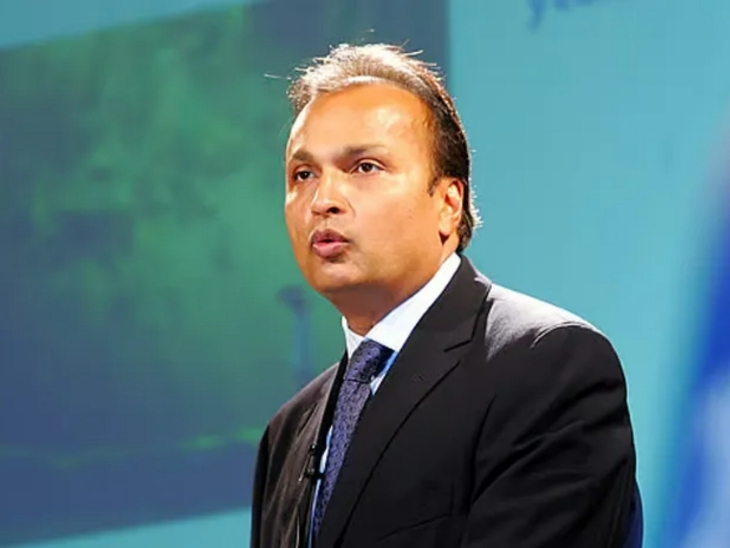
Putting it together, Anil Ambani today is a complex figure: an entrepreneur who once epitomised Indian corporate ambition, now closely watched by regulators, law-enforcement agencies and courts in India and abroad. Many of the most serious allegations against him are still being tested in legal forums, so any final judgment—legal or historical—will depend on how those cases eventually conclude.