Atanu Chakraborty HDFC Exit: From Satyam To HDFC, India’s Independent Directors Keep Choosing The Exit Door Over The Boardroom, And The Public Keeps Paying The Price

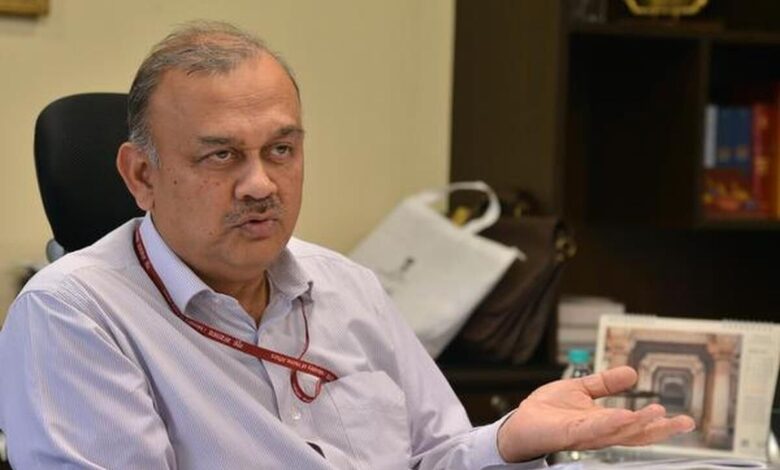
Atanu Chakraborty HDFC Exit: The Sentence That Disrupted The Mid-Week
There is a specific kind of institutional sentence — rare, carefully constructed, and precisely calibrated in its vagueness — that says everything by saying nothing at all. On the evening of March 18, 2026, such a sentence landed in the inbox of the Governance, Nomination and Remuneration Committee of HDFC Bank’s board, and within hours it had done more damage to one of India’s largest financial institutions than any competitor, any regulatory fine, or any quarterly earnings miss could have accomplished in the same period of time.
“Certain happenings and practices within the bank, that I have observed over last two years, are not in congruence with my personal values and ethics. This is the basis of my aforementioned decision.”
Bunch of words. One sentence that named no practice, no person, no incident, no date, no department, and no operational failure. And yet those bunch of words — written by Atanu Chakraborty, a retired 1985-batch IAS officer of the Gujarat cadre who previously served as Secretary of the Department of Economic Affairs and Secretary of DIPAM, both departments under the Finance Ministry, and who had served as HDFC Bank’s part-time chairman since May 2021 — produced one of the most consequential single days in Indian banking history.
HDFC Bank lost $7 billion in market value within hours of the resignation letter becoming public. Its American Depositary Receipts dropped 7.28 percent on the New York Stock Exchange the same evening. By the morning of March 19, more than ₹65,000 crore had disappeared from the bank’s market capitalisation before Indian markets had finished their first hour of trading. The RBI issued a statement, the interim chairman was appointed, an investor call was held, and the bank’s CEO broke his silence — all within 24 hours of a letter that contained no allegation, no complaint, and no named wrongdoing.
This article is not about whether HDFC Bank is guilty of something. It is about something more fundamental and more consequential: what does it mean for Indian corporate governance, Indian depositor protection, and Indian investor confidence when the most senior independent oversight figure at the country’s largest private sector bank resigns over ethics — and the entire regulatory, legal, and institutional infrastructure of that governance system has no mechanism to compel him to say what he means?
The Anatomy of the Silence
To understand what makes Chakraborty’s silence so significant, you first need to understand what made his position so significant. The part-time chairman of HDFC Bank is not a ceremonial role. Chakraborty was appointed part-time chairman by the Reserve Bank of India, which means his appointment carried explicit regulatory endorsement. His term had been extended in 2024 until May 2027 — meaning the RBI had assessed him, approved him, and renewed his mandate to serve as the independent oversight head of a Domestically Systemically Important Bank.
A D-SIB is not merely a large bank. It is an institution whose failure or dysfunction would produce systemic consequences for the entire Indian financial system — for millions of depositors, for hundreds of thousands of institutional clients, and for the interconnected web of financial obligations that runs through every corner of the Indian economy.
The chairman of a D-SIB is supposed to be the primary institutional guardian of governance at the apex of that system. The chairman chairs the board, leads governance committees, interfaces with the regulator, and — most critically — serves as the independent counterbalance to executive management. He is the person who is supposed to ask the uncomfortable questions, resist the convenient consensus, and if necessary, be the last line of defence between a systemic institution and the conduct that could compromise it.
The board’s response to Chakraborty’s letter was itself revealing. HDFC Bank’s MD and CEO Sashidhar Jagdishan confirmed publicly that every board member tried to persuade Chakraborty to take back his resignation or elaborate on the concerns so that they could be addressed, but he did not relent. The board also requested him to moderate the language in the resignation letter itself — an attempt that was unsuccessful. The request to “moderate the language” is worth pausing on. What language, precisely, was considered immoderate?
The sentence itself is measured, careful, and deliberately non-specific. The only interpretation of “moderating” language that makes sense in this context is removing the phrase “values and ethics” entirely — asking Chakraborty, in effect, to resign without saying why. He declined.
During the investor call on March 19, Keki Mistry, the newly appointed interim chairman, told analysts that Chakraborty had not provided the board with any evidence or details of the alleged unethical practices. The bank maintained that no specific practices or happenings had been brought to the board’s attention. Mistry described the bank’s governance as top class and emphasised its values of transparency, trust, and integrity.
Here lies the governance paradox at the centre of this story. The board says it was never told what the concerns were. The chairman says the practices were serious enough to make continuation untenable. Both of these statements cannot simultaneously be true in a well-functioning governance system — because a well-functioning governance system is specifically designed to ensure that concerns raised at the chairman level are both documented and addressed. The fact that they can both be stated publicly without obvious contradiction is itself evidence that the governance system did not function as designed.
The Legal Prison: Why the Chairman Could Not Speak?
To understand why Chakraborty said what he did rather than what he apparently knew, you need to understand the legal environment in which independent directors in India operate — because that environment is, structurally, more constraining than most people outside the boardroom realise.
The concept of independent directors gained formal legislative recognition in India through the Kumar Mangalam Birla Committee Report’s introduction of Clause 49 of the SEBI Listing Agreement in 2000, with crucial amendments introduced by the Naresh Chandra Committee in 2003, and eventual statutory recognition under the Companies Act 2013. Both the Companies Act 2013 and SEBI’s LODR Regulations 2015 place heavy reliance on independent directors as the primary mechanism for improving corporate governance.
What these frameworks give independent directors in responsibility, however, they do not fully match in protection. An individual independent director cannot play an effective role in isolation. Even if a particular independent director is highly committed, they can only “watch” wrongdoing and at best initiate a discussion, but alone they cannot stop a decision even if it is detrimental to the interest of shareholders or other stakeholders. Neither can they blow the whistle outside the boardroom — because board proceedings are considered confidential. The only way independent directors can stop wrong decisions is by acting collectively.
This may be the structural trap in which Chakraborty found himself. Board proceedings are confidential. An independent director who publicly names a specific practice or conduct at a public listed company opens themselves to defamation litigation if the named party contests the characterisation. The asymmetry of resources in such litigation — where an individual former chairman faces a large, well-capitalised institution with a substantial legal team — is enormous. The practical consequence is a governance architecture that asks independent directors to serve as ethical guardians but then creates legal conditions that make explicit ethical disclosure practically perilous for the individual making it.
Chakraborty’s ‘bunch of words’ are the precision product of someone who has spent a career navigating Indian regulatory and legal systems and who understands exactly how much can be said without crossing the line into legally actionable territory. The letter says that there are ethical concerns. It says they were observed over two years. It says they were the sole basis for the resignation. And it says nothing else — because saying anything else, for a man in his position, without the protection of a formal regulatory or judicial proceeding, would expose him to consequences that the governance framework provides no shelter from.
This is not cowardice. This is the architecture of institutional silence operating exactly as it was designed to operate.
Are there any similar historical mirrors: When Governance Guardians Have Walked Away Before?
The Chakraborty resignation does not exist in isolation. History — Indian and global — has produced a series of moments when the people appointed to oversee institutional governance chose to exit rather than expose, and where what their exits concealed proved, in every case, to be more serious than the markets initially assumed.
The Satyam Catastrophe: When Independent Directors Fled Before the Flood
The most instructive Indian precedent is the one that every serious student of corporate governance knows by heart — but which the Chakraborty moment makes newly and urgently relevant.
Satyam Computer Services, India’s fourth-largest IT firm, was founded by Ramalinga Raju on June 27, 1987. By 2007, it had become the official IT service provider for the FIFA World Cup 2010 and 2014. In 2008, revenues exceeded $2 billion, and Raju had co-chaired the World Economic Forum Summit in New Delhi. Satyam had won the Golden Peacock Award for Corporate Accountability in 2008 — five months before the fraud was revealed. The entire public face of the company was one of excellence, governance, and international recognition.
The private reality was devastatingly different. In his resignation letter to the Satyam board on January 7, 2009, Raju admitted that the company’s actual cash and bank balance was ₹321 crore — against the ₹5,361 crore that had been reported to shareholders and auditors, a fabrication of over ₹5,000 crore. The actual number of employees was approximately 40,000, compared with the 53,000 the company had reported, with the difference representing ghost employees whose fabricated payroll accounts were used to redirect funds out of the company systematically. The fraud was not the product of a single bad quarter — it was sustained, systematic, and deeply embedded in Satyam’s financial reporting infrastructure for years.
A genuine inquiry arose about the significance of “independent directors” after the Satyam scandal erupted and four independent directors resigned. The four resignations, coming in rapid succession after Raju’s confession, raised devastating questions about whether the independent directors had known what was happening and said nothing, or had been genuinely deceived by the management they were meant to oversee.
Wharton professor Michael Useem raised a question that has never been fully answered: did the four directors who resigned actually do the right thing? “The leadership dictum is that you need to stay the course, stay in the game, face the problem and solve the problem,” he said. “Did the four directors who resigned have an option of banding together, staying on the board and changing governance?”
The parallel to Chakraborty’s situation is not perfect — Chakraborty resigned before any publicly known fraud, not in its aftermath. But the structural question is identical: when the governance guardians exit rather than publicly expose, who protects the stakeholders who were depending on those guardians to act?
Indian index fell nearly 7% on the day the Satyam news broke out. The scandal damaged local and foreign investors’ faith in India’s business sector, generating concerns about transparency, accountability, and ethical standards. The damage, in other words, was not limited to Satyam shareholders — it propagated outward through the entire credibility architecture of Indian corporate governance.
Enron and the Collapse of the Governance Mythology
The global precedent that most directly illuminates the structural failure at the heart of the HDFC situation is Enron — the American energy giant whose 2001 collapse remains the defining example of what happens when governance institutions become captured by the cultures they are meant to oversee.
Enron’s board included individuals with impressive credentials — academics, former senators, experienced executives. Its audit committee was chaired by distinguished figures. Its external auditor was Arthur Andersen, one of the world’s most prestigious accounting firms. Every element of the governance architecture that markets and regulators depend on was present and apparently functioning.
What the post-collapse investigations revealed was that the governance apparatus had been systematically compromised — not through dramatic acts of malfeasance by individual directors, but through the gradual accumulation of small departures from independence that individually seemed minor but collectively produced a board that was psychologically and institutionally incapable of challenging management. Directors received consulting fees from Enron subsidiaries. Board members attended Enron-sponsored events. The compensation committee approved executive pay packages so complex that no outside director could have independently assessed their value. The board twice voted to suspend its own ethics rules to accommodate specific transactions.
The need for independent directors became apparent after major corporate scandals like Enron and Satyam, both of which highlighted the risk of boards lacking independent oversight. Both the Companies Act 2013 and SEBI LODR Regulations 2015 stipulate heavy reliance on independent directors in improving corporate governance. Yet the regulatory response, mandating more independent directors, addresses the compositional problem without addressing the deeper cultural and institutional problem that Enron illustrated so devastatingly: that independence on paper and independence in practice are entirely different conditions, and that the same social and institutional pressures that produce effective governance when they operate correctly also produce the most complete governance failures when they are subverted.
Wait, we have more domestic names in the list- Gensol Engineering: The Recent Saga Of Corporate Misgovernance
The most recent Indian precedent, separated from the HDFC situation by only months, was the Gensol Engineering and BluSmart collapse of 2025, which produced a director resignation pattern so reminiscent of Satyam that legal scholars noted the parallel explicitly.
Soon after an interim order was passed by SEBI against the promoters of Gensol Engineering Limited, who are also the founders of BluSmart Mobility, three independent directors resigned within a few days. One cited concerns about high debt levels and financial sustainability. A second cited other professional commitments. A third said the company could not create value for shareholders and indicated his inability to continue despite presuming the company had good corporate governance.
The pattern is identical to Satyam in its essential structure: governance guardians exit at the moment of maximum institutional vulnerability, when the stakeholders depending on their presence need them most. Resignation by all the independent directors adversely affected the interest of minority shareholders of Satyam when a bailout was required for the company.
The Gensol case is particularly instructive for what it says about the inadequacy of the current regulatory response to director resignations. SEBI’s disclosure requirements mean that resignations must be reported and reasons given. But “professional commitments” and “inability to create value for shareholders” are reasons that say nothing while technically satisfying the disclosure obligation — exactly the same structural evasion that Chakraborty’s carefully constructed sentence achieves in a more sophisticated register.

Wells Fargo: When the Governance Failure Was the Product
The international parallel that most directly maps onto what an investigation of HDFC Bank should examine is Wells Fargo — the American bank that in 2016 was found to have created millions of unauthorised customer accounts, opened without customers’ knowledge, to meet internal sales targets. The scandal cost Wells Fargo $3 billion in settlements, its CEO and chairman their positions, and produced one of the most comprehensive post-mortem investigations into banking governance failure ever conducted.
What made the Wells Fargo case extraordinary was not the fraud itself — it was the evidence that emerged during congressional hearings and regulatory investigations that senior executives, including board members, had received internal complaints and warnings about the fraudulent account-opening practices for years before the public revelation. The governance system had received the signal. It had chosen, repeatedly, not to act on it in ways that would have addressed the underlying cultural and structural problems rather than the individual incidents.
The congressional hearing testimony of former CEO John Stumpf illustrated the precise failure mode that the HDFC situation raises: the board was told what it needed to hear rather than what it needed to know, and the independent directors on the governance and audit committees did not push through the management-curated information to reach the operational reality beneath it.
The parallel question for HDFC Bank is direct: Chakraborty spent two years observing the practices that ultimately made his continued service untenable. Over those two years, what was brought to the attention of the board’s governance and audit committees, and how was it characterised? The answer to that question — which Chakraborty has not provided publicly and which the bank says was never given privately — is precisely the answer that India’s depositors, investors, and regulators deserve to have.
The Merger’s Shadow: A Governance Integration That May Have Gone Wrong
One of the most significant and most underexamined dimensions of Chakraborty’s resignation is the temporal overlap between his “two years of observation” and the post-merger integration period of HDFC Ltd and HDFC Bank.
The merger of HDFC Ltd with HDFC Bank was completed on July 1, 2023 — roughly two and a half years before Chakraborty’s resignation, placing the start of the merger integration period squarely inside the two-year window he referenced. Chakraborty himself noted in his letter that the benefits of the merger were yet to be fully fructified. Large mergers are not just financial transactions — they are governance integration events. Two institutions with different cultures, different decision-making styles, different ways of escalating concerns and resolving internal disagreements are combined into one. That process is rarely seamless, and in the period immediately following a merger of this scale, the tone from the top matters enormously.
The HDFC merger was one of the largest in Indian corporate history — creating a combined entity with a balance sheet that made HDFC Bank the second-largest bank in India. Chakraborty joined the board in May 2021, became chairman during the reverse merger process, and his tenure oversaw the completion of that integration when it became effective on July 1, 2023.
The cultural and governance integration of two large, historically distinct organisations — HDFC Ltd with its mortgage-focused, relatively conservative culture and HDFC Bank with its more aggressive retail and commercial banking culture — is precisely the kind of process during which governance norms can become unclear, accountability lines can blur, and practices can emerge that would not have been tolerated in either institution separately.
When Chakraborty says he observed certain practices “over the last two years” that were not in congruence with his values and ethics — and those two years correspond almost exactly to the post-merger integration period — the question that governance experts and regulators must ask is whether the practices he observed were products of the cultural collision and integration challenges of the merger, and if so, what that says about whether the merger integration process itself was conducted with adequate governance oversight.
The Lilavati Dimension: The Context the Bank Would Prefer Not to Discuss
No investigation of Chakraborty’s resignation can be considered complete without acknowledging the documented legal proceedings involving HDFC Bank’s sitting CEO that unfolded within the same two-year window Chakraborty described.
The Lilavati Kirtilal Mehta Medical Trust — which manages Mumbai’s Lilavati Hospital — filed a ₹1,000 crore civil defamation lawsuit against HDFC Bank’s MD and CEO Sashidhar Jagdishan in June 2025, alleging malicious statements made against the Trust. More seriously, the Trust also lodged a criminal FIR against Jagdishan, alleging financial fraud and claiming that ₹2.05 crore misappropriated by trust trustees was received by the CEO. The Trust further alleged that Jagdishan misused his position as the head of a leading private bank to interfere in the Trust’s internal governance affairs.
What makes the institutional response to this FIR particularly notable is its progression through the judicial system. Multiple Bombay High Court judges — reportedly ten in succession — recused themselves from hearing Jagdishan’s petition to quash the FIR. The Supreme Court, in July 2025, declined to entertain his challenge, with the matter remaining before the Bombay High Court. By November 2025, the Mumbai Police’s Economic Offences Wing was preparing summons for all accused in a case involving alleged diversion of over ₹1,300 crore in trust funds.
HDFC Bank has categorically denied all allegations, characterising them as retaliatory and connected to the bank’s recovery efforts against loan defaulters from the Mehta family. These denials are on the public record and must be weighed alongside the allegations.
What cannot be dismissed, however, is the governance question the timeline raises. A chairman who said he observed certain practices over two years was simultaneously the chairman of a bank whose CEO was navigating an active criminal FIR, a ₹1,000 crore defamation suit, multiple judicial recusals, and a Supreme Court rebuff — all within his “observation window.” The board said it was never told what the concerns were. Is it the bank’s position that its chairman was unaware of an FIR against its own CEO? And if the chairman was aware, is the board’s claim that no concerns were brought to its attention consistent with the most basic expectations of governance at a D-SIB?

The Public Money Imperative: Why Silence Is Not an Option at a D-SIB
The argument for transparency is not merely academic in the case of HDFC Bank — it is grounded in the fundamental nature of what the institution is and who bears its risks.
Foreign institutional investors own over 47% of the stake in HDFC Bank. The Government of Singapore and Norway’s Government Pension Fund Global are among the top foreign investors, owning nearly 2.3% and over 1.2% stake respectively. But beyond foreign institutional investors, the bank’s most fundamental stakeholders are its depositors; the Indians whose savings, fixed deposits, salary accounts, and retirement funds sit within an institution that manages public money at an extraordinary scale.
The bank’s balance sheet, as of December 2025, stood at ₹40.89 lakh crore. The overwhelming majority of that balance sheet is funded by public deposits — money that belongs to people who had no choice in the governance culture of the institution they deposited with, who cannot evaluate the practices that a chairman found ethically untenable, and who have no mechanism to extract their money quickly enough to protect themselves if those practices are serious.
This is the fundamental asymmetry that makes HDFC Bank’s governance crisis different from a corporate governance failure at a manufacturing company or a technology startup. The depositors of HDFC Bank are involuntary stakeholders in whatever the chairman observed. They did not sign up to bear the risk of a governance culture that the most senior independent oversight person found incompatible with his values. They signed up to deposit their money with a bank that they trusted to be managed with the integrity that the institution’s external face projected.
The social contract of banking — the implicit bargain between a bank and its depositors — rests entirely on the belief that the governance of the institution is functioning as it should. When the person specifically appointed by the regulator to oversee that governance signals that something has been wrong for two years, that social contract is not merely strained — it is broken in a way that demands institutional response, not reassurance.
What an Investigation Must Ask
The case for a formal, independent investigation into the circumstances of Chakraborty’s resignation is not based on a presumption that HDFC Bank has done something wrong. It is based on the straightforward proposition that India’s depositors, investors, and banking system cannot function on the basis of a governance assertion — “everything is fine” — that is directly contradicted by the conduct of the institution’s own governance head, who held the position for five years and resigned from it citing ethics.
An investigation, conducted by the RBI, SEBI, or an independent committee of qualified persons, should examine at minimum the following questions. It should ask what specific practices Chakraborty observed during the two-year period he referenced, and whether those practices were brought to the attention of any board committee, the statutory auditor, or the internal audit function during that period. It should ask whether the board’s governance and audit committees maintained records of concerns raised at the chairman level, and if so, what those records contain.
It should ask whether the post-merger integration process produced any governance or conduct findings that were reviewed at board level, and how those findings were addressed. It should ask how the bank’s board handled the knowledge of the Lilavati FIR against the CEO, and whether the board’s governance committee assessed the conduct implications of that FIR for the institution’s governance standards.
It is time to rethink whether to continue having a straitjacket formula of depending upon independent directors for improving corporate governance when the success rate is repeatedly questioned. Good governance works on clearly laid policies, joint decision-making, clearly defined roles, and internal controls that are thoroughly and periodically reviewed. A possible solution could be having a supervisory body composed solely of independent directors, which acts as a watchdog on the entire management.
The Regulatory Framework That Must Change
Beyond the immediate HDFC Bank situation, Chakraborty’s resignation reveals a structural inadequacy in India’s independent director framework that requires legislative or regulatory correction.
The current framework creates independent directors who are legally obligated to maintain confidentiality about board proceedings, legally exposed to defamation risk if they make specific public allegations without the protection of formal proceedings, and legally disempowered to take unilateral action even when they believe governance standards are being violated. The framework then provides no mandatory mechanism for public disclosure of the substance of ethics-based resignations when those resignations occur at D-SIBs or other systemically important institutions.
The concept of an independent director in today’s corporate ecosystem is quintessential if India is to achieve Viksit Bharat by 2047. It is more than a bookish statutory requirement — it is a cornerstone of ethical business conduct. Making that cornerstone structurally sound requires addressing the legal environment in which independent directors actually operate.
Specifically, it requires creating a formal regulatory mechanism — modelled on the whistleblower frameworks that exist in securities law — through which an independent director at a systemically important institution can make confidential, protected disclosure of governance concerns to the RBI or SEBI without the legal exposure that currently makes such disclosure practically impossible. And it requires creating a corresponding obligation on the regulator to investigate and, where the concerns are substantiated, to disclose the findings to the public in terms that allow depositors and investors to make informed decisions.
At the end, the Nation That Deserves to Know
On March 18, 2026, a 1985-batch IAS officer who had spent a career in the most senior offices of India’s economic bureaucracy wrote a letter. He addressed it to the governance committee of the board of a bank that manages ₹40 lakh crore of predominantly public money. He said, in thirty-eight words, that he could no longer serve in good conscience.
He confirmed that there were no material reasons for his resignation other than those stated — which means the ethical concerns were not peripheral, not contextual, and not subject to interpretation. They were, in his assessment, the entirety of the reason for his departure.
Every board member asked him to elaborate. His response was essentially nothing. Not because he had nothing to say — but because the architecture of the system he was operating within gave him no protected, structured mechanism to say it, and the personal legal risk of saying it outside that architecture was real and substantial.
The markets understood the gravity of what he did not say. Seven billion dollars of market value disappeared in hours. The RBI issued a reassurance. The new interim chairman said everything was top class. The CEO said the board was baffled.
None of that changes the fundamental fact: the man appointed by the Reserve Bank of India to be the independent governance head of India’s most important private sector bank said that what he observed over two years was not congruent with his personal values and ethics, and then declined to say anything more.
In a country where 7.16 crore MSME owners bank with formal institutions, where hundreds of millions of ordinary Indians entrust their savings to the banking system, and where the confidence of global investors in Indian financial governance determines the cost of capital for every Indian business, that silence is not acceptable as a final answer. It is a starting point for an investigation — conducted transparently, by independent authorities with protected access to board records, governance committee minutes, and the testimony of the man who walked away.
Atanu Chakraborty’s thirty-eight words are not the end of HDFC saga. They are the beginning of a question that India’s financial regulators, its parliament, and ultimately its people have every right to demand be answered in full.