Beyond Books: IIT Madras – That Invested In Dreams, Not Just Degrees!
Cradles of Innovation: How IIT Madras Transforms Student Dreams into National Treasures!


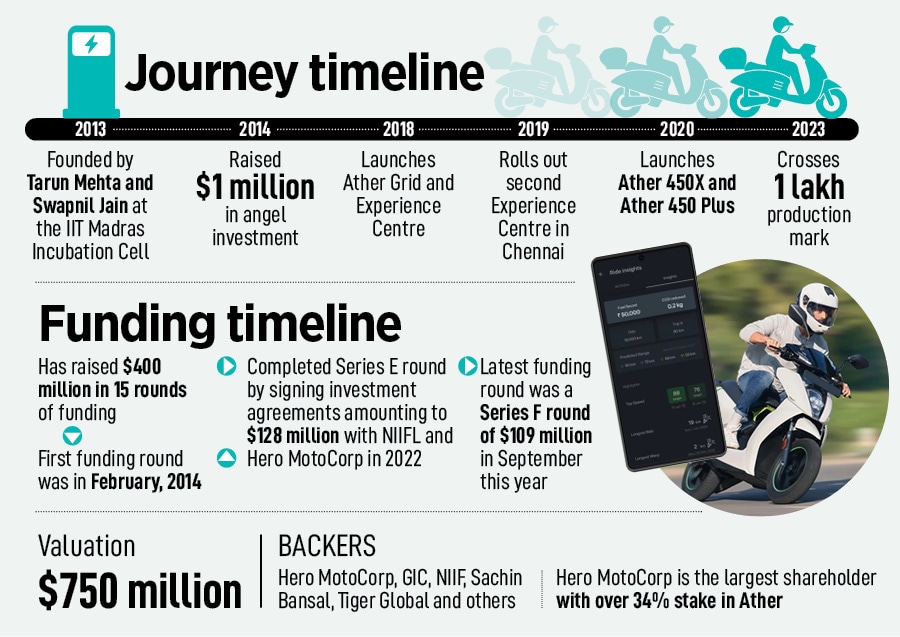
On the sultry shores of Chennai, nestled among the sprawling banyan trees and modernist concrete structures, lies an institution that has quietly redefined what educational excellence truly means. While most of India’s academic conversation revolves around placement statistics and salary packages, IIT Madras has been writing a different story altogether—one where the currency isn’t measured in job offers but in the audacity of ideas it nurtures. The recent Ather Energy IPO throws this philosophy into sharp relief, transforming a modest ₹29 lakh investment by the institute into a staggering ₹50 crore windfall. But this financial triumph merely scratches the surface of a deeper truth about what education was always meant to be.
Remember when we were kids and our parents would tell us to study hard so we could “get a good job”? That narrative has dominated Indian education for decades—study, rank, place, earn. Rinse and repeat. It’s the hamster wheel millions of students jump onto every year. But then there’s IIT Madras, which looked at two bright-eyed students named Tarun Mehta and Swapnil Jain back in 2013 and thought: “These boys don’t just need degrees; they need backing for their dreams.” That ₹29 lakh wasn’t just seed funding; it was a declaration of faith in what education should truly accomplish.
What makes this story particularly remarkable is how it bucks the trend of conventional academic capitalism. Most premier institutes worldwide have become obsessed with churning out employment-ready graduates as if they were widgets on an assembly line. The brochures proudly display average salary packages, the number of Fortune 500 recruiters, and the percentage of students placed—metrics that reduce education to a mere economic transaction. Harvard brags about its MBA graduates commanding starting salaries that could make small countries jealous. Stanford flaunts its Silicon Valley connections. Closer home, IIMs showcase their crore-plus packages as proof of institutional excellence.
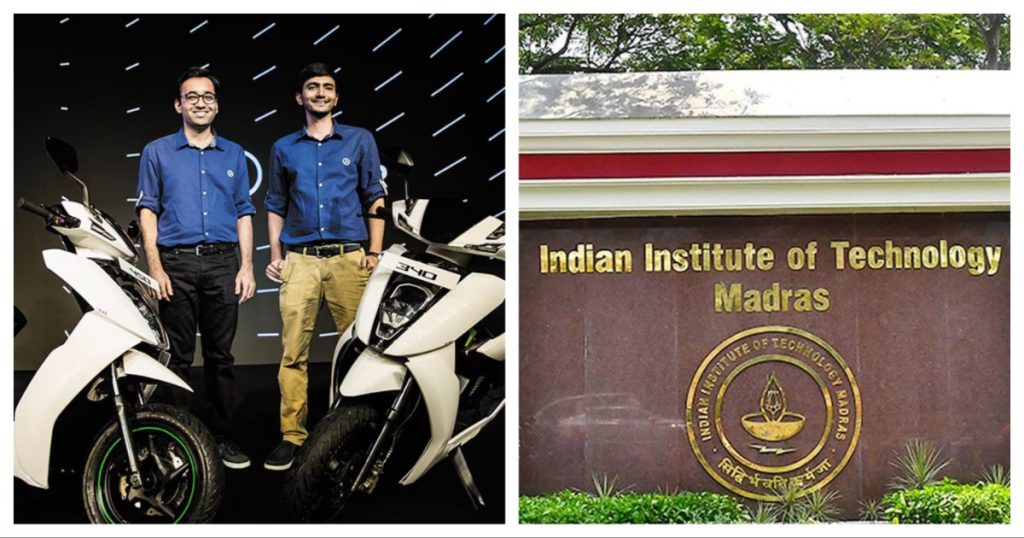
Amidst this rat race, IIT Madras chose to plant trees whose shade they knew they might never sit under. The institute’s investment in Ather Energy wasn’t just financial prudence; it was philosophical rebellion. It echoed what the legendary physicist and Nobel laureate C.V. Raman once meant about the Scientific Research Institute he established in Bangalore: “I am not starting an institute to produce PhD holders, but to produce knowledge.” IIT Madras, in backing Ather, showed that it wasn’t just in the business of producing engineers, but in cultivating innovators who could reshape industries.
This approach finds historical resonance in other educational paradigms that prioritized innovation over immediate utility. The Massachusetts Institute of Technology (MIT), during the early 20th century, fostered what it called the “Radiation Laboratory” during World War II, which became the crucible for radar technology development. The lab didn’t focus on placing students in existing companies but on solving problems nobody else could tackle.
Similarly, Stanford University’s encouragement of faculty and student entrepreneurship in the 1950s laid the groundwork for what would eventually become Silicon Valley. Both institutions understood what IIT Madras seems to have grasped—that education’s greatest value lies not in fitting students into existing slots but in empowering them to create new possibilities altogether.
The Indian context makes IIT Madras’s achievement even more remarkable. In a country where parents still dance with joy at the prospect of their children securing ‘sarkaari naukri‘, where stability is prized over risk, and where failure carries not just economic but social stigma, the institute chose to swim against the cultural tide. It wasn’t just investing money; it was investing against the grain of conventional wisdom. As the great Indian philosopher Jiddu Krishnamurti once observed, “It is no measure of health to be well adjusted to a profoundly sick society.” In educational terms, IIT Madras refused to adjust to a system that reduced learning to mere employment preparation.
The Ather Energy story also illuminates the often overlooked role of institutional patience. The investment was made in 2013—a decade before the IPO would materialize its returns. In educational ecosystems worldwide, such patience is increasingly rare. University administrators demand quick publications, immediate grant returns, and fast-track commercialization. Department budgets rise and fall on yearly metrics. But true innovation, as any scientist or entrepreneur would tell you, rarely adheres to administrative timetables. As C.K. Prahalad, one of India’s greatest management thinkers, often meant, “If you want to reach a goal that lies twenty years in the future, you need to start walking in the right direction today.”

IIT Madras walked that long path with Ather Energy. While many institutions might have pulled funding after a few years without tangible returns, the institute maintained faith in both the idea and the innovators behind it. This patience mirrors what happened at Bell Labs during its golden era, where researchers were given the freedom and time to pursue fundamental questions without immediate commercial pressure—resulting in transistors, lasers, and information theory that revolutionized modern life.
What’s particularly heartwarming about this story is how it challenges our collective notion of what constitutes “educational ROI” (Return on Investment). For too long, we’ve reduced this calculation to starting salaries and job titles. Parents anxiously await placement seasons, newspapers publish placement statistics as if they were cricket scores, and institutes raise fees based on employment outcomes. It’s a reductionist approach that would make even the most ardent capitalist cringe. Education becomes transactional—pay this much, earn that much more.
But what if the true ROI of education lies elsewhere? What if it’s measured in patents filed, problems solved, industries disrupted, and lives improved?
The ₹50 crore that IIT Madras stands to gain from the Ather IPO isn’t just financial capital; it’s validation capital—proof that betting on innovation yields returns that transcend balance sheets.
As the venerable APJ Abdul Kalam, scientist and former President of India, often emphasized, “Dreams are not what you see in sleep, they are the things that don’t let you sleep.”
For Tarun Mehta and Swapnil Jain, those sleepless nights of building Ather Energy were supported by an institution that saw beyond the conventional metrics. And that’s a lesson more Indian educational institutions desperately need to learn. In a country brimming with talent but often lacking in innovation infrastructure, as recently noted by Union Minister Piyush Goyal, the IIT Madras model offers a template worth emulating. Imagine if every major Indian university allocated even a small percentage of its resources to incubating student ideas rather than just preparing students for existing jobs. The cumulative impact could transform India from a service economy to an innovation powerhouse.
This approach has precedents in other “tiger economies” that leapfrogged development stages. South Korea’s KAIST played a crucial role in transforming the country from an agricultural economy to a technological giant by channelling their focus on industrial innovation rather than just education for employment.
In a similar fashion, Israel’s Technion has been instrumental in creating the “Start-up Nation” phenomenon by deeply integrating research with entrepreneurship. Both institutions, like IIT Madras, understood that educational institution’s duty extends beyond individual career preparation to national economic transformation.
Of course, this isn’t to suggest that job placements are irrelevant. Economic security matters, and for many students, especially those from economically disadvantaged backgrounds, a stable job represents not just income but social mobility. The critique isn’t of placement itself but of placement as the singular, defining purpose of education. As the Sanskrit phrase goes, “Sa vidya ya vimuktaye” (true knowledge is that which liberates). Liberation comes in many forms—intellectual, creative, financial, and social. A holistic educational philosophy embraces all these dimensions rather than reducing itself to just one.
Perhaps what makes the IIT Madras-Ather Energy story most powerful is how it reconnects us with the original purpose of universities. These institutions weren’t conceived as job factories but as crucibles of knowledge and catalysts for civilization’s advancement. The medieval European universities weren’t founded to help students get jobs in feudal manors; they were established to push the boundaries of human understanding. Similarly, ancient Indian centers of learning like Nalanda and Takshashila weren’t focused on employment but on exploration—of the world around us and the consciousness within us.
In backing Ather Energy, IIT Madras reclaimed this ancient wisdom while embracing modern possibilities. It recognized that in an age of rapid technological change, the most valuable education isn’t one that prepares students for existing jobs (which might not exist a decade later) but one that equips them to create new opportunities altogether. As the American educational philosopher John Dewey put it, “Education is not preparation for life; education is life itself.” By investing in student innovation, IIT Madras treated education not as a pathway to employment but as a journey of creation.
So the next time a starry-eyed teen asks which college will get them the best placement, perhaps we should gently redirect the question:
Which college will best nurture your ideas?
Which institution will believe in your vision even when the market doesn’t yet understand it?
Which campus will invest not just in your degree but in your dreams?
For in the final analysis, the true measure of educational excellence isn’t the salary its graduates command but the problems they solve and the futures they forge. And by that measure, IIT Madras doesn’t just rank high—it sets the standard for what Indian education can and should aspire to be.
As we celebrate the Ather Energy IPO and the windfall it brings to IIT Madras, let’s recognize that the greater wealth lies not in the financial returns but in the norm it establishes! A precedent that says loud and clear: education isn’t about fitting into existing slots but about creating new possibilities altogether.
And in a country as young, dynamic, and full of potential as India, that’s precisely the education we need to cultivate—one that invests in dreams, not just degrees. After all, as another IIT graduate, Sundar Pichai, once remarked, “A mind stretched by new experiences can never go back to its old dimensions.” IIT Madras has stretched not just minds but the very definition of what educational excellence means in contemporary India.