BPTP Most Controversial Real Estate Company Gears Up For IPO, Targets Ambitious Rs 10,000 Crore Annual Revenue. Should SEBI Allow Such Companies To List Their IPO?
Glass House IPO: BPTP’s ₹10,000 Crore Dream Built on Broken Promises...

BPTP’s IPO: Grand Promises on a Shaky Foundation
In a season of booming real estate IPOs, a Delhi-NCR developer named BPTP Ltd is pitching itself as the next big opportunity. The company boasts a 45–50 million sq ft land bank and plans to launch ₹10,000 crore worth of projects annually. BPTP’s CEO touts 55% CAGR growth and envisions ₹10,000 crore in yearly revenue in the near future. Indeed, BPTP claims its FY2025 revenue hit ₹3,000 crore (up from about ₹780 crore in FY22) and is projected to surge to ₹5,500 crore this year.
With such rosy figures, it’s no surprise that BPTP is eager to ride the IPO wave that has swept India’s property sector – 21 realty IPOs since 2021 raising ₹319 billion. But behind the glossy prospectus and ambitious targets lies a far less comforting story, one that every lay investor should hear loud and clear before lining up for shares.
Over the past two decades, BPTP has amassed a reputation not of triumphs, but of troubles. The company, formally Business Parks Town Planners Pvt Ltd, has been entangled in regulatory raids, legal battles, and homebuyer protests almost continuously. Its Chairman and MD, Kabul Chawla, once a poster-boy of NCR’s realty boom, today cuts a far more controversial figure.
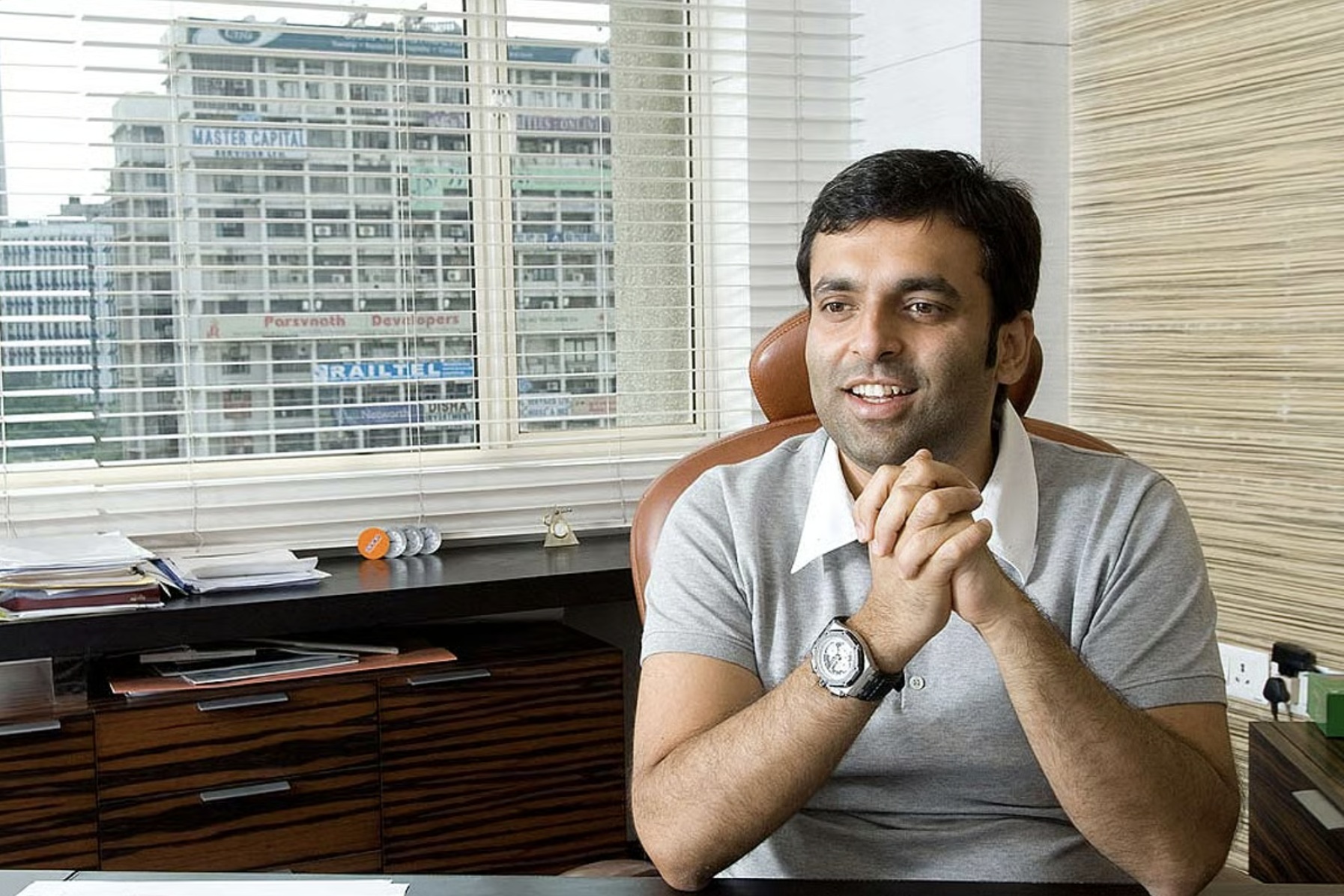
As BPTP gears up to hit the capital markets, we question whether a firm with such a shady past should be allowed to solicit public money at all. In this deep-dive, we peel back the layers of BPTP’s saga, juxtaposing its big promises with the gritty reality experienced by homebuyers, regulators, and courts. The tale that unfolds is equal parts cautionary and outrageous – a reminder of the adage: If something sounds too good to be true, it probably is.
The Shiny Facade: BPTP’s Big IPO Pitch
At first glance, BPTP’s numbers and plans paint the picture of a rising star. The company asserts it has “enough land bank to launch projects worth ₹40,000 crore” and continues to acquire strategic land parcels across Gurugram, Faridabad, and Noida. It purchased new land in Gurugram for ₹87 crore and even sold a 10-acre plot to another developer for ₹100 crore, which is an evidence of its significant holdings. BPTP is now investing ₹6,000 crore in a luxury project along the Dwarka Expressway, part of a 150-acre township development. By all indications, the company wants to be seen as a heavyweight with a 600-acre footprint in NCR and the firepower to expand further.
Adding to the optimism, BPTP’s leadership notes a broader market upswing: real estate IPOs nearly doubled funds raised in 2024 compared to 2023, and post-pandemic demand for housing is robust. This narrative of “we’ve restructured, merged entities, and streamlined operations for growth” was reinforced by CEO Manik Malik, who stated that after years of consolidation, BPTP is now poised to capitalize on India’s realty boom. The company even says it’s creating a separate rental portfolio to tap steady income. In short, BPTP’s IPO pitch is that of a rejuvenated firm with scale, vision, and timing on its side.
Yet, investors must ask: Is this the whole story? For all the talk of land banks and project pipelines, BPTP’s public communications conspicuously omit the elephant in the room, which is the mountain of controversies and unfinished business trailing the company. Like a gleaming showroom hiding cracks in the foundation, the IPO prospectus glosses over years of customer complaints, regulatory investigations, and financial skulduggery that continue to dog BPTP’s existence. Before betting on BPTP’s future, it’s crucial to scrutinize its past and present with a healthy dose of skepticism.
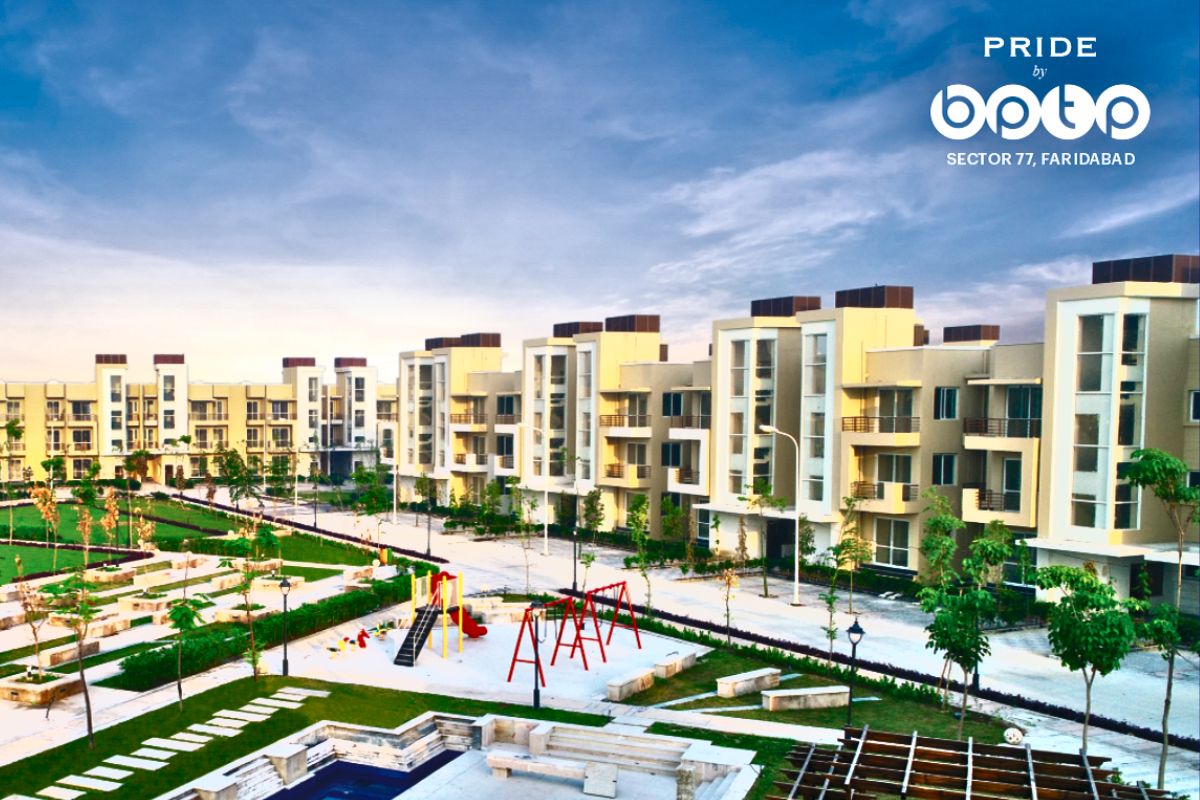
Cracks Beneath the Surface: A History of Scandals
BPTP’s journey is littered with red flags that would give anyone a break. The Enforcement Directorate (ED), India’s financial crime watchdog, has been a frequent uninvited guest at BPTP’s offices. In August 2025, ED agents raided BPTP properties across Delhi, Noida, and Faridabad, uncovering what they allege to be a foreign exchange violation involving ~₹500 crore.
Specifically, investigators claim BPTP received over ₹500 crore in 2007–08 from Mauritius-based entities through illicit put-option deals, flouting India’s FEMA (Foreign Exchange Management Act) rules. The ED froze bank lockers and seized documents in that raid, even as BPTP’s spokesperson insisted the company was cooperating and confident of clarifying its position. Notably, ED sources also revealed that multiple FIRs (police complaints) against BPTP and its directors in various police stations are part of this probe. In plain terms, BPTP stands accused of financial misconduct on a grand scale – accusations that are now the subject of ongoing investigations.
Crucially, this wasn’t a one-off event but rather the latest in a long line of enforcement actions. As far back as 2010–2011, BPTP’s offices were raided by the Income Tax department and ED in quick succession, with authorities alleging tax evasion, money laundering via shell entities, and “hawala” transactions to route funds overseas. A 2014 police raid in Faridabad followed, after over 1,000 buyers filed cheating complaints when a BPTP housing project (codenamed “Spire”) turned out to be a phantom – buyers’ money taken with no actual units to show. That case led to a non-bailable warrant against Kabul Chawla and eventually an Interpol Red Corner Notice in 2018 when he refused to submit to Indian courts.
From tax raids to Interpol notices, the pattern is unmistakable. Whistleblowers and angry investors have repeatedly triggered probes into BPTP, unearthing what authorities describe as “a picture of systemic financial opacity”. Whether it’s undeclared income, unauthorized foreign deals, or diversion of funds, BPTP’s name has surfaced again and again. Each time, the company has managed to stall or settle – paying fines here, negotiating refunds there – without admitting wrongdoing. But the cumulative effect of these run-ins is damning. As one anonymous ex-employee noted, “Chawla built an empire on buyer trust, but governed it from afar, leaving the mess for others”. Indeed, trust is the scarcest commodity in BPTP’s balance sheet today.
Even BPTP’s early backers have a tale of caution. In the mid-2000s, global investors like JP Morgan and Apollo Global poured money into BPTP, lured by the booming NCR property market. But by 2015, those investors were mired in a protracted arbitration battle to get their money back. BPTP had to sell an entire 800,000 sq ft office building (BPTP Crest in Gurgaon) for ₹850 crore just to pay off these institutional investors and facilitate their exit.
Separately, an arbitral tribunal in London ordered BPTP to pay JP Morgan ₹560 crore; after much legal tussle, the company settled for about ₹390 crore in 2015. In other words, even sophisticated financiers found BPTP to be a nightmare business partner, needing courts and fire-sales of assets to extract returns. For a lay investor, the message is clear: if Wall Street giants struggled to enforce accountability on BPTP, retail shareholders might fare no better.
Homebuyers’ Nightmare: Projects Delayed and Buyers Betrayed
Numbers on a prospectus can obscure the human cost of a developer’s failings. Beyond the boardroom and courtroom, thousands of middle-class families have borne the brunt of BPTP’s broken promises. The company’s track record on project delivery is, to put it mildly, abysmal.
Since 2015, BPTP has faced over 50 cases in consumer forums, RERA tribunals, insolvency courts, and even the Supreme Court – mostly for severe delays in handing over homes, failure to refund deposits, and other breaches of contract. By one count, a whopping 70% of these cases were decided in favor of aggrieved buyers. Judges have repeatedly scolded BPTP for “chronic delivery failures”, whether in projects like Park Elite in Faridabad, Terra and Discovery Park in Gurugram, or others across NCR.

The legal record reads like a hall of shame for BPTP’s customer relations. In one 2019 RERA order, a buyer of BPTP’s Freedom Park project was awarded a refund with 9% interest after years of waiting. In 2021, the Supreme Court upheld an NCDRC (consumer commission) directive compelling BPTP to pay ₹1.19 crore plus 9% interest to another buyer for a flat never delivered.
The company has even flirted with insolvency proceedings: in late 2022, an operational creditor dragged BPTP into NCLT over unpaid dues, causing panic among homebuyers who feared their unfinished apartments might get stuck in bankruptcy court. (BPTP managed to stave off liquidation by cutting a settlement at the eleventh hour.) Such episodes underscore a precarious truth – BPTP’s commitments are only as good as the legal pressure behind them.
For residents who do receive possession, life in a BPTP township can still be an ordeal. Consider Astaire Gardens, a sprawling BPTP colony in Gurgaon’s Sector 70A. In mid-2025, over 700 families in Astaire Gardens were left without reliable water supply for weeks, reduced to spending lakhs on private water tankers to meet basic needs. Summer demand shot up to 8 lakh liters a day, but the government supply often dropped to zero – and there was no adequate backup plan by the developer. Residents lodged complaints, met city officials, and vented their fury as day-zero scenarios played out repeatedly.
“We pay taxes and water charges, yet we’re left scrambling for tankers every day just to maintain basic hygiene,” lamented the RWA (resident welfare association) general secretary, calling the situation “mentally and financially exhausting”. Such scenes are more reminiscent of a neglected village than a premium gated community – a far cry from the brochure promises that likely sold these homes.
Maintenance and governance issues also plague these projects. In September 2025, Astaire Gardens residents staged a protest demanding the builder hand over society management to them, citing “lack of transparency and arbitrary hikes” in maintenance charges. The residents’ association accused BPTP’s management arm of exploiting homeowners with inflated fees and unaccounted expenses, and insisted on an independent audit. BPTP’s representative flatly denied wrongdoing, claiming all costs were third-party audited – an assertion met with deep skepticism by those on the ground. This tug-of-war for control of basic facilities underscores how even after paying in full for their properties, buyers often remain at BPTP’s mercy, fighting for the most elemental rights in their own housing complexes.
In another case from May 2025, residents of BPTP Park Prime and The Mansions (Sector 66, Gurgaon) erupted in protest over what they allege to be a fraudulent scheme by BPTP to overbuild on their campus. The developer secured in-principle approval to revise building plans and merge two licensed plots’ floor area, effectively cramming new towers into an existing complex. Homebuyers were incensed that no consultation was done and that approvals were “fraudulently” obtained behind their backs. They fear loss of green spaces, strain on infrastructure, and safety hazards from the extra construction.
The RWA points out that BPTP hasn’t even delivered all originally promised facilities – a clubhouse, power sub-station, service roads, solar panels – despite the project launching in 2008 and phased possessions since 2014. To add more towers now, without fulfilling past obligations, feels like a betrayal. “No further construction should be allowed without consent of two-thirds of residents,” the RWA declared, vowing court action if needed. BPTP, for its part, insists it followed the law and that “no rights of existing customers are being impacted”– a claim the residents outright reject. The dispute is now before regulators, but the episode highlights BPTP’s modus operandi: push the envelope for profit, and dare the homeowners to stop it.
Perhaps most telling is the sheer volume of refunds and settlements BPTP has had to shell out in recent years. By some estimates, BPTP paid over ₹500 crore in refunds between 2019 and 2023 to resolve buyer complaints and avoid harsher penalties. Every refund represents a family that paid for a dream home and got a nightmare instead, often enduring years of legal battles to recoup their hard-earned money. Social media is replete with their stories: in 2020 the hashtag #KabulChawlaBPTPBetrayed trended on Twitter, as frustrated buyers tagged government officials and recounted how “Full amount paid, 10 years on, still no house… (we demand) Arrest (of) Kabul Chawla for torture and harassment”.
Protests on the streets have flared up intermittently since 2014 – from marches of 200+ buyers in Faridabad carrying placards about stalled “Park Elite” units, to buyers assembling outside BJP offices in 2017 alongside victims of other builders. In one 2015 demonstration, a distraught buyer said on camera, “We paid ₹1 crore; now (we have) homelessness”, after blockading a BPTP office. The public outrage is real and raw, even if it only occasionally pierces the national headlines. For every investor considering BPTP’s IPO, there are dozens of BPTP’s customers who would likely offer a stern warning: Don’t trust the hype.
The Man at the Center: Kabul Chawla’s Controversial Reign
Any discussion of BPTP inevitably circles back to its founder, Kabul Chawla, for the company’s fortunes and follies are inextricably tied to him. Chawla’s personal journey reads like a Bollywood script – but one where the protagonist’s moral compass is dubious. Born in a modest Punjabi family, Chawla moved to Delhi in the 1980s and started off as a small property broker in Faridabad.
By 2003, he had founded BPTP and rode India’s mid-2000s real estate boom to astonishing heights. Global firms like Citigroup and JPMorgan invested over ₹500 crore into BPTP during its heyday, as Chawla pitched “integrated living” projects with slick confidence. At its peak, BPTP was reportedly valued above ₹10,000 crore, and Chawla was celebrated as a visionary in some media profiles. “We are not just building homes; we are crafting communities,” he proclaimed in a 2008 Economic Times interview.
However, even as the accolades rolled in, cracks were forming below Chawla’s feet. By 2010, income-tax raids had unearthed alleged tax evasion at BPTP. In 2011, an arrest warrant was issued against Chawla in a cheating case – an accountant accused him of siphoning ₹40 lakh from a land deal. Rather than face the law, Chawla fled to the United States, ostensibly for “business commitments,” and remained an elusive figure for years.
This pattern of evasion would become a hallmark: catch me if you can. In 2014, when over a thousand Faridabad buyers alleged fraud (the “housing scam” noted earlier), police booked Chawla under serious charges of criminal conspiracy. He did not appear to cooperate; by 2018 Interpol had issued a red-corner notice seeking his detention.
Even as homebuyers and police hunted him in India, Chawla was living lavishly abroad. A 2015 exposé in the New York Times uncovered that Chawla (or entities linked to him) had purchased a $2.5 million condominium in Manhattan while defaulting on delivery commitments back home. Confronted, Chawla denied owning the NYC property, claiming he merely “stayed there as a guest of a cousin” – a story met with raised eyebrows.
By 2022, Punjabi media reported Chawla was “living it up in New York”, attending high-society events, even as Indian courts were still ordering refunds for projects launched a decade prior. Photos of him at golf outings and galas started circulating, enraging those who had invested their life savings with BPTP. The contrast could not be starker: Kabul Chawla sipping champagne in Manhattan, versus middle-class Indians slogging through EMIs for undelivered flats. This disconnect fuelled a social media firestorm and plaintive cries like, “Arrest Kabul Chawla… No house after 10 years!”.
Chawla’s defenders (few as they are) argue that he is a victim of circumstance – that BPTP’s troubles stem from the 2008 financial crisis and subsequent market downturn, and that he’s unfairly vilified for “legacy issues” beyond his control. The company line often highlights how BPTP restructured debt and weathered the post-2008 storm, implying Chawla’s decisions saved the firm. But this narrative conveniently ignores what Chawla did during the crisis: rather than doubling down on fixing projects, he was selling personal assets at huge profits (e.g. a Delhi bungalow in Golf Links sold for ₹150 crore in 2015), moving assets overseas, and dragging out every legal process.
An Outlook India piece in 2015 quoted a former BPTP employee saying, “Chawla…governed (the empire) from afar, leaving the mess for others”. Indeed, court records and enforcement actions depict Chawla as someone who mastered the art of delay – using absences, appeals, and settlements to keep one step ahead of the law. Even the recent ED raid in 2025, which explicitly targets his alleged personal stash of undeclared foreign assets, has not yet compelled him back to India. It seems no matter the scandal, Chawla himself has managed to stay just out of reach (as of this writing), leaving BPTP’s current management to claim they are cleaning up the mess.
All of this casts serious doubt on BPTP’s governance and transparency going into the IPO. If the man who built the company is a fugitive in all but name – running operations via “video calls from the US” in recent years – can investors trust that BPTP has truly reformed itself? The company’s spokespersons insist on Chawla’s innocence until proven guilty and blame any past issues on unforeseen market conditions. Yet, the evidence of misconduct and evasion is so extensive that one struggles to buy the innocence narrative.

Chawla, now in his 60s, may never face a perp walk, but the shadow he casts on BPTP is long and dark. As the IPO approaches, BPTP will no doubt highlight a new era of professional management (Chawla is reportedly no longer a day-to-day executive). Still, the ethical legacy and leadership culture he left behind cannot be scrubbed away with a few corporate governance tweaks. Investors should ask: What guarantees that BPTP under public ownership won’t repeat the same behavior that it did as a private firm? So far, there are no easy answers – only pointed questions.
Not the First Time: IPOs and Real Estate Rogues
BPTP’s situation might be extraordinary, but it is not entirely unique. India’s real estate sector has seen more than its share of controversial companies and cautionary tales, especially when it comes to raising money from the public. As we consider whether SEBI (the Securities and Exchange Board of India) should greenlight BPTP’s IPO, it’s worth recalling a few parallels from recent history:
- Amrapali Group (2019) – Once a prominent developer, Amrapali became infamous for siphoning off homebuyers’ funds and leaving over 45,000 flats undelivered. In a scathing 2019 judgment, the Supreme Court cancelled Amrapali’s registration under RERA, barred its directors from the business, and handed all unfinished projects to state-run NBCC for completion. The court found Amrapali had diverted “thousands of crores” to promoters’ extravagant lifestyles (luxury cars, villas, etc.) and even ordered an ED probe into money laundering, citing collusion by banks and officials. In effect, Amrapali was banished from real estate – a fate that underscores how severe the punishment can be when a developer defrauds the public trust. BPTP hasn’t (yet) faced such ultimate sanction, but the echoes are hard to miss: like Amrapali, it too is accused of diverting buyer monies and leaving projects half-done.
- Unitech Ltd (2017–2023) – Once India’s second-largest realty firm, Unitech collapsed under project delays and debt, eventually landing its promoters in jail. Unitech’s MD Sanjay Chandra was arrested in 2017 for failing to deliver homes or refund buyers, and remained behind bars for years. By 2019, the Supreme Court concluded Unitech was incapable of fulfilling commitments to 17,000 buyers, and it tasked NBCC with taking over 74 stalled projects across the country. A forensic audit found Unitech’s management diverted over ₹1,500 crore of homebuyers’ money to purposes other than construction. The court-appointed board overseeing Unitech’s resolution has since been working to salvage what it can. The Unitech saga shows that if a company fails its customers gravely enough, even an IPO or past public listing won’t save its promoters from criminal liability. Unitech was a listed entity when its misconduct came to light; yet regulators and courts intervened later to protect buyers. This raises a sobering point: listing is not a seal of legitimacy, and SEBI allowing an IPO is no guarantee a company won’t implode like Unitech did.
- DLF (IPO in 2007, SEBI ban in 2014) – DLF is India’s largest real estate developer and had a blockbuster IPO in 2007. But even a market giant can stumble on governance. In 2014, SEBI barred DLF and its top executives from accessing capital markets for 3 years after finding that DLF “failed to disclose key information” in its IPO prospectus. Specifically, DLF omitted details about subsidiaries and pending legal cases – effectively hiding material facts from investors. The ban (although later lifted on appeal) caused DLF’s stock to plummet ~30% and tarnished its image. The DLF episode is instructive: SEBI can and will punish even blue-chip companies for IPO misrepresentations. If a well-established firm like DLF could allegedly mislead investors, one must be doubly cautious about a less transparent player like BPTP. Any IPO by BPTP would need to fully disclose its myriad legal issues, investigations, and financial uncertainties – otherwise it risks DLF-style sanctions or worse.
Beyond these, there have been other notorious cases (the likes of Sahara, HDIL, Jaypee Infratech, Supertech, etc.), but the pattern is consistent. When real estate companies stray – be it through fraud, diversion of funds, or failure to deliver – the fallout is devastating for both customers and investors. In several instances, the regulators stepped in only after the damage was done. This time, with BPTP’s record plainly visible pre-IPO, SEBI has a chance to be proactive rather than reactive.
Should SEBI Say “No” – Or Impose Strict Conditions?
All these threads lead to the core question: Should SEBI allow BPTP to list its shares on the stock exchange? And if yes, under what conditions? It’s not a trivial question. On one hand, barring a company from raising capital is a serious step as it can be seen as prejudging the company’s guilt in matters still under investigation.
BPTP, for all its baggage, has not yet been convicted of a crime; its projects, though troubled, are not all abandoned; and one could argue that fresh capital might even help BPTP set things right (completing projects, paying refunds, etc.). There is also the perspective of current stakeholders: private equity investors or banks might want an IPO to create liquidity and recoup their investments, which have been stuck for years.
On the other hand, SEBI’s prime mandate is to protect investors and ensure fair, transparent markets. And here is a company whose entire modus operandi has been opacity and unfulfilled obligations. The risks of allowing BPTP to go public are manifold:
- Use of Funds: What will BPTP do with the IPO proceeds? If history is any guide, one worries that money raised from new investors could end up servicing old liabilities or vanishing into related-party transactions, rather than building new projects. SEBI could demand that a significant portion of funds be earmarked for completing pending projects or placed in escrow for buyer refunds – but monitoring that would be a challenge. After all, BPTP has merged entities and moved money within its labyrinth of subsidiaries in the past. Without rock-solid safeguards, an IPO might become just another way to shift funds around, potentially out of the reach of both new shareholders and existing homebuyers.
- Disclosure: At minimum, SEBI must enforce full and frank disclosure of BPTP’s legal and financial situation in any IPO prospectus. That means detailing all outstanding court cases, ED/IT investigations, FIRs, pending refunds, project delays, and the status of Kabul Chawla’s involvement. Anything less would be a disservice to investors. If BPTP complies, the prospectus could end up reading like a thriller – which might itself deter many potential buyers of the stock. (In other words, once the truth is on the table, the market may on its own shun the IPO – a form of justice through valuation.) However, SEBI has to be extremely vigilant that nothing material is hidden. Remember DLF’s case, where not disclosing a few legal disputes led to a 3-year ban. BPTP has scores of disputes; there can be no selective storytelling.
- Corporate Governance Overhaul: SEBI could condition the IPO on tangible governance reforms – for instance, excluding the founding family from management, appointing independent directors of high repute, and instituting audit committees to track use of funds. One might argue this is already happening: Kabul Chawla is said to be less hands-on now, and professionals like CEO Manik Malik are front-facing. But given that Chawla remains the controlling shareholder (and the face of past misdeeds), more drastic measures may be warranted. Perhaps a trust could be created to hold promoter shares until legal cases conclude, or Chawla could be required to divest a part of his stake to dilute his influence. These are unusual measures, but BPTP is an unusual company. If SEBI simply treats BPTP like any other IPO candidate, it would ignore the elephant in the room.
- Moral Hazard and Precedent: Allowing BPTP to list without addressing its legacy issues sets a troubling precedent. It might signal that regulatory scrutiny in real estate is toothless – that a developer can ignore homebuyers and flout laws for years, yet still get a green light to tap public funds. This runs directly counter to the spirit of recent judicial interventions. Recall that the Supreme Court, in the Amrapali verdict, urged authorities to “act tough against errant builders” and even cancel their leases if they don’t deliver on time. Approving BPTP’s IPO in the current climate might be seen as rewarding a history of malfeasance, undermining the hard-won gains in consumer protection (like RERA) achieved in the last decade. SEBI must carefully weigh the message it sends.
From an investor’s point of view (especially a retail investor), the prudent stance would be extreme caution or outright avoidance unless these issues are convincingly resolved. Yes, there is money to be made in real estate, BPTP’s growth figures hint at potential profits; but at what risk?
A company with this many skeletons in its closet could implode without warning, leaving shareholders holding worthless paper. We have seen how swiftly authorities cracked down on Amrapali and Unitech once things hit a boiling point. BPTP could be one expose or one court order away from a similar reckoning. If, say, the ED probe results in a hefty penalty or attachment of BPTP’s properties, how would that affect the company’s valuation and ability to do business? These are not far-fetched scenarios; they are live possibilities.
In an ideal scenario, SEBI might allow the IPO but with stringent conditions: for example, mandate that a significant portion of IPO proceeds go towards an escrow fund for completing all delayed projects under RERA supervision; require quarterly reporting on construction progress and refund settlements; and perhaps, as a show of accountability, have the promoters personally contribute to a buyer-compensation fund before taking any money off the table. SEBI can also require prominent risk warnings in the prospectus about the ongoing investigations and past defaults, so no investor can claim ignorance later. In essence, if the listing proceeds, it should do so in a tightly regulated box, not as a free pass.
However, SEBI also has the option to defer or reject the IPO application if BPTP cannot convince them of its bona fides. There is precedent for regulators putting listings on hold due to corporate governance concerns. Given the complexity of BPTP’s situation, SEBI could simply say: “Not yet. Clean up your act and prove it over a few more years before you come to the market.” This would be a bold move and might face legal challenge from BPTP, but it could be justified in the public interest. The capital market is not a right but a privilege, and SEBI is well within its powers to protect investors from a potentially toxic offering.
At the end: Between Redemption and Relapse
BPTP’s impending IPO is a litmus test – for the company, for regulators, and for the investing public. On paper, the firm stands at the cusp of a new chapter: it has weathered past financial storms, assembled a huge land reserve, and claims to be “growing at 55% annually” with sights on ₹10,000 crore revenue. The IPO could inject fresh capital, perhaps enabling BPTP to finally deliver all those pending homes and turn disgruntled customers into happy residents. One might even frame it as BPTP’s shot at redemption – a chance to come clean, become a responsible corporate citizen, and create value transparently under the gaze of public shareholders.
But redemption requires repentance and repair, not just lofty talk. So far, BPTP’s outreach to its victims has been minimal. Refunds and settlements were grudging, often forced by courts. Apologies or acknowledgments of fault are virtually nonexistent in its communications. Instead, the company line remains that everything is under control, even as ED agents haul away evidence and residents protest for basic amenities.
BPTP’s spokesperson recently stated the firm “has always complied with laws… committed to transparency, ethical practices, and stakeholder interests”. Words so out of tune with reality that they border on sarcasm. Transparency? Ethical practices? Ask the families who’ve spent a decade paying both rent and EMI because BPTP didn’t hand over their flat on time. Ask the ED officers sifting through secret ledgers.
For the general public investor, the takeaway is clear: Approach BPTP’s IPO with extreme caution. Don’t be swayed by the headlines of “₹10,000 crore projects every year” or the FOMO of a booming property market. Look at the fine print – the myriad legal proceedings, the cash flow gymnastics, the governance red flags – and decide if this is a business (and management team) worthy of your trust.
Investing is fundamentally an act of trust in management’s integrity and competence. Here, the competence might be present (BPTP did build many projects, albeit late), but the integrity is deeply questionable. Until BPTP demonstrates a tangible break from its past, not just in press releases, but via independent audits and a track record of honoring commitments, skepticism is warranted.
As for SEBI and other regulators, they stand at a crossroads. Give BPTP a nod, and they must be prepared to monitor it like a hawk, possibly for years, to protect new shareholders and old homebuyers alike. Decline or delay the listing, and they send a powerful message that market access is a privilege earned by good conduct, not a refuge for those fleeing accountability. SEBI’s decision will be closely watched, not only as a judgement on one company but as a barometer of India’s regulatory resolve in cleaning up the real estate sector.
In Indian mythology, there’s an image of “Vishwas” (faith) balanced against “Shanka” (doubt). For BPTP, the scales are currently heavy with doubt. Perhaps the company can tilt it back to faith over time – stranger things have happened – but until then, regulators and investors would be wise to keep their eyes wide open and their guard up. The IPO market may be hot, but nobody wants to buy into a lawsuit, a protest, or a scam unknowingly**. BPTP needs to prove it deserves the public’s money. Until it does, maybe it’s better for all if this controversial empire-in-the-making remains on the private side of the fence.