DGCA Imposed Penalty of Rs 22.20 Crore On World’s Most Unsafe Airline IndiGo


In a landmark decision that has sent shockwaves through India’s aviation sector, the Directorate General of Civil Aviation (DGCA) has slapped IndiGo, India’s largest airline, with a staggering penalty of ₹22.20 crore. This fine, announced on January 17, 2026, stems from massive flight disruptions in December 2025, which left over 300,000 passengers stranded across the country.
The DGCA’s probe revealed systemic failures in IndiGo’s operations, including inadequate preparation for revised Flight Duty Time Limitations (FDTL) norms, over-optimization of resources, and a blatant disregard for regulatory compliance. But this is far from an isolated incident. IndiGo, often hailed as a low-cost giant dominating 65% of India’s domestic market, has a long history of controversies, safety lapses, and customer complaints that paint a picture of an airline prioritizing profits over passenger safety and satisfaction.
This article delves deep into IndiGo’s troubled legacy, examining its repeated run-ins with regulators, alarming safety records, customer harassment scandals, and operational inefficiencies. We’ll explore how IndiGo has become synonymous with delays, cancellations, and mishaps, earning it the dubious title of the world’s most controversial, unsafe, and dangerous airline. Drawing from official reports, passenger testimonies, celebrity criticisms, and expert opinions, we’ll uncover why IndiGo continues to thrive despite mounting evidence of misconduct—and what it says about India’s judicial and regulatory landscape.
The Latest Blow: DGCA’s Record Penalty and Systemic Reforms
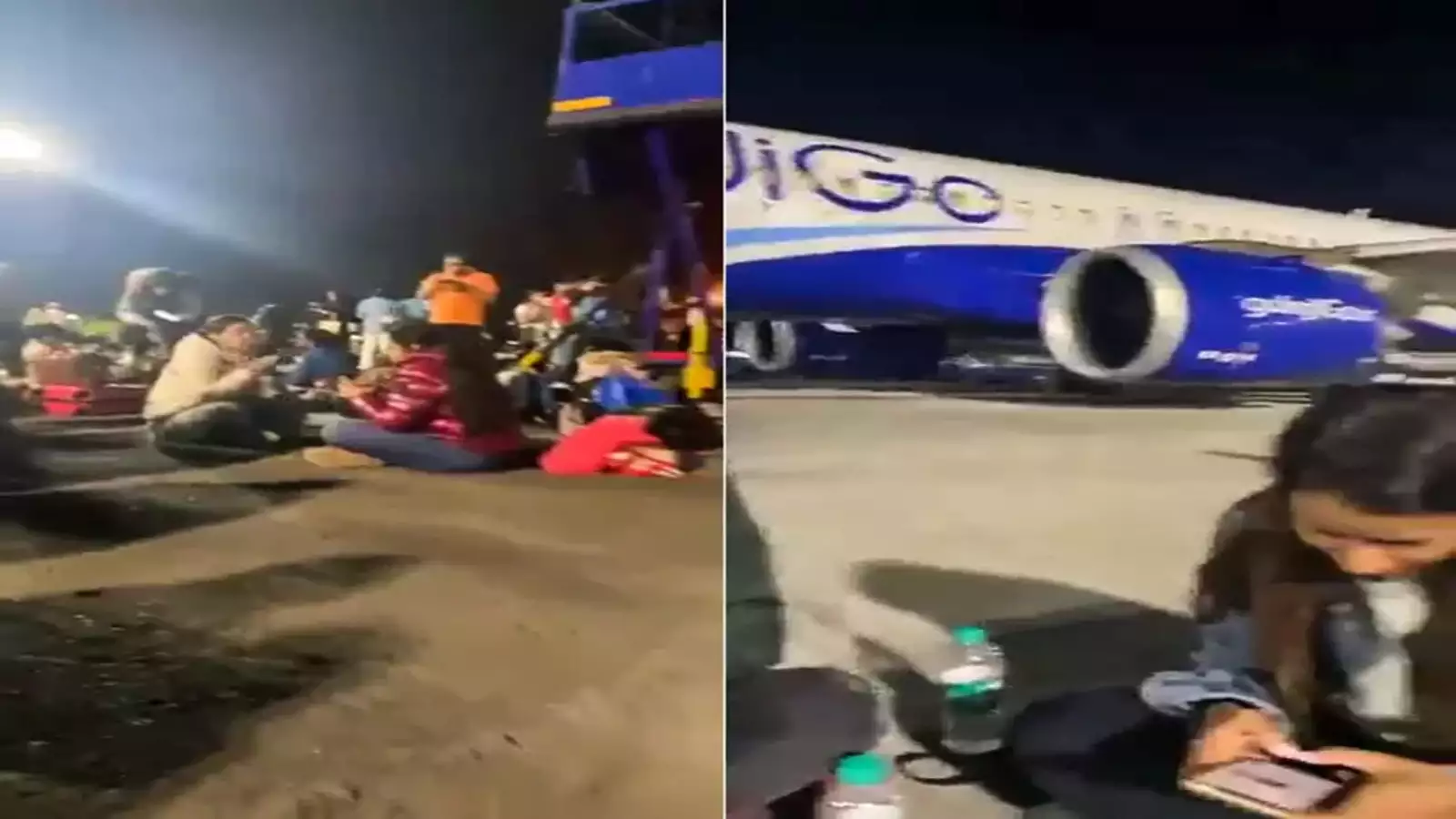
The DGCA’s enforcement order, a 40-page document released on January 18, 2026, details the chaos that unfolded between December 3 and 5, 2025. IndiGo cancelled 2,507 flights and delayed 1,852 others, affecting major hubs like Delhi, Mumbai, Bengaluru, Hyderabad, Kolkata, and Chennai. On December 5 alone, over 1,600 of IndiGo’s 2,300 daily flights were scrapped, leading to overcrowded terminals, lost baggage, and widespread passenger distress. The regulator attributed this meltdown to IndiGo’s failure to implement revised FDTL norms, which mandate stricter rest periods for pilots to prevent fatigue-related risks.
The penalty breakdown is telling: a one-time systemic fine of ₹1.80 crore for six counts of non-compliance (₹30 lakh each), covering management failures, oversight lapses, and inadequate buffers. Additionally, a daily penalty of ₹30 lakh for 68 days of ongoing FDTL violations (from December 5, 2025, to February 10, 2026) adds up to ₹20.40 crore. In total, ₹22.20 crore—the highest ever imposed on an Indian airline.
But the DGCA didn’t stop at fines. IndiGo must furnish a ₹50 crore bank guarantee under the IndiGo Systemic Reform Assurance Scheme (ISRAS), to be released in phases upon verified reforms in leadership, manpower planning, digital systems, and board oversight. Senior executives faced personal repercussions: CEO Pieter Elbers received a caution for inadequate crisis management; COO Isidre Porqueras was warned for failing to assess the winter schedule’s impact; and Senior VP of Operations Control Centre Jason Herter was relieved of duties and barred from accountable positions. The DGCA also terminated four of its own inspectors overseeing IndiGo and launched an internal inquiry.
IndiGo’s response was measured: “We are committed to taking full cognizance of the orders and will take appropriate measures.” Yet, critics like the Federation of Indian Pilots (FIP) slammed the penalty as “meagre” and “a joke,” comparing it unfavorably to a $140 million fine on Southwest Airlines in the US for similar disruptions in 2022, where funds went directly to passengers. FIP President G.S. Randhawa argued that the fine fails to prioritize safety, calling for stricter punishments.
This is not the first time DGCA has imposed a penalty on IndiGo. The airline’s history is riddled with fines for operational and safety violations, underscoring a pattern of recurring negligence.
A History of Fines: IndiGo’s Repeated Regulatory Run-Ins
IndiGo’s brushes with the DGCA date back years, with penalties accumulating for everything from safety lapses to passenger mistreatment. In 2023, the regulator fined IndiGo ₹30 lakh for four tail strike incidents on its A321 fleet within six months—a serious safety breach where the aircraft’s tail scrapes the runway during takeoff or landing, potentially compromising structural integrity. These incidents, occurring between January and June 2023, highlighted deficiencies in pilot training and maintenance protocols.
Earlier, in 2022, IndiGo was penalized ₹5 lakh for denying boarding to a specially-abled child, an act deemed discriminatory and in violation of Civil Aviation Requirements (CARs). The airline’s ground staff cited the child’s “uncontrollable behavior” as a safety risk, but the DGCA ruled it as harassment, emphasizing the need for better handling of passengers with disabilities.
Other notable fines include ₹10 lakh in 2021 for failing to provide adequate assistance during fog-related delays, and multiple smaller penalties for baggage mishandling and overbooking. Cumulatively, these fines point to a systemic issue: IndiGo’s aggressive cost-cutting and expansion strategies often come at the expense of compliance and customer care. As per DGCA data, IndiGo’s cancellation rate spiked to 0.51% in October 2025—low compared to peers but indicative of underlying strains that exploded in December.
IndiGo Ranks Number 1 in Airline Accidents: A Safety Nightmare
IndiGo’s safety record is a litany of near-misses and actual incidents that have earned it the reputation as the world’s most unsafe airline. While global rankings like AirlineRatings.com once gave IndiGo a 7/7 safety score, it was downgraded to 5/7 in August 2025 due to repeated compliance lapses and incidents. Critics argue this downgrade understates the problem: IndiGo ranks number 1 in airline accidents and aviation incidents in India, as per parliamentary discussions and DGCA reports.
A 2025 parliamentary committee on transport highlighted IndiGo’s dominance in incidents, noting over 50 safety-related events between 2022 and 2025, including engine failures, tail strikes, and in-flight malfunctions. As per the parliament report, IndiGo ranks 1 in aviation incidents, accounting for a disproportionate share given its market dominance. For instance, in 2025 alone, IndiGo reported multiple tail strikes: an A321neo in Mumbai on August 16 during a go-around in heavy rain; another in Chennai on March 8; and one in Delhi on September 9, where significant damage was found post-landing.
Engine fires have also plagued IndiGo. In July 2025, an Ahmedabad-Diu flight aborted takeoff after an engine caught fire, evacuating 60 passengers. In August 2024, a Kolkata-Bengaluru flight made an emergency landing due to engine failure shortly after takeoff. A 2022 incident saw flames shooting from an engine during takeoff from Delhi, captured on passenger video. These events underscore IndiGo’s vulnerability, with critics labeling it the most controversial, unsafe, and dangerous airline in the entire world.
IndiGo has been in the limelight due to its tail strikes and fires in the engines, often linked to Pratt & Whitney engine issues on its A320neo fleet. Yet, the airline’s rapid expansion—operating over 2,300 daily flights—has strained maintenance and training, leading to these mishaps.
Customer Harassment and Assault: IndiGo’s Notorious Staff Behavior
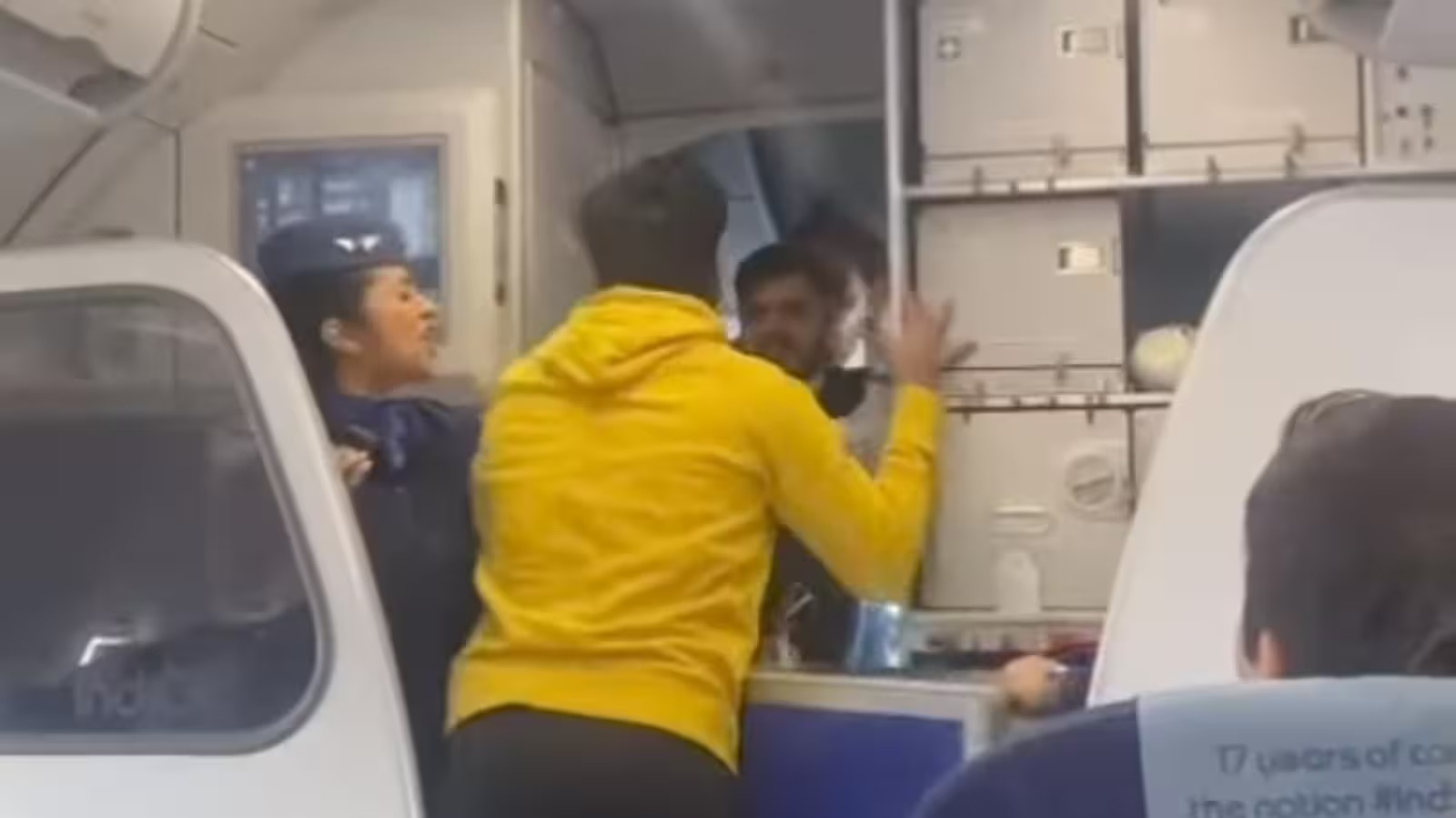
Beyond safety, IndiGo ranks number 1 in harassment and assault of customers. IndiGo staff has been quite notorious in assaulting clients, with high-profile incidents making headlines. In 2017, a passenger was manhandled and dragged on the Delhi airport tarmac by ground staff after an argument, leading to the sacking of involved employees and a public apology from IndiGo President Aditya Ghosh. The whistleblower who filmed the assault was also fired, sparking outrage.
More recently, in 2025, a trainee pilot accused seniors of caste-based harassment, including remarks like “go stitch slippers” and “not worth a watchman.” An FIR was filed under SC/ST laws. In another case, a woman passenger alleged a pilot barged into the lavatory mid-flight, downplaying it as an “inconvenience.”
IndiGo also ranks number 1 in customer harassment through systemic issues. Baggage handling of IndiGo is worst in the industry, with a LocalCircles survey showing 42% of passengers complaining in 2025—up from 27% in 2024. During the December meltdown, thousands of bags were lost or delayed, with passengers waiting hours at belts. DGCA data reveals IndiGo’s baggage mishandling rate is among the highest, often due to understaffing.
Unusual flight delays and cancellations have become the new normal with IndiGo. In December 2025, on-time performance plummeted to 8.5% on December 4, with over 5,000 cancellations from November 21 to December 7 affecting 9.5 lakh passengers. Overall, IndiGo’s cancellation rate hit 1.232 in November, largely due to FDTL issues.
Celebrities Slam IndiGo: Voices from the Spotlight
IndiGo’s woes have drawn ire from celebrities, amplifying public frustration. Actor Mannara Chopra criticized IndiGo for denying boarding despite being on time, calling it “tantrums” from staff. Shamita Shetty slammed the airline for offloading her bags without notice. Divya Dutta vented over being checked in for a cancelled flight, labeling it “huge harassment.”
Comedian Kunal Kamra was banned from IndiGo (and later Air India) after heckling anchor Arnab Goswami mid-flight in 2020. Ranvir Shorey called out a 10-hour delay in 2024, threatening complaints. Harsha Bhogle decried “rude” service in 2025. During the December crisis, Jay Bhanushali, Lauren Gottlieb, Aly Goni, and Rahul Vaidya blasted IndiGo—Vaidya spent ₹4.2 lakh on alternatives, calling it “awful.” Rana Daggubati and Naresh (Mahesh Babu’s stepbrother) also criticized system glitches.
These high-profile complaints highlight IndiGo’s poor service, with celebrities like Richa Chadha and Surbhi Chandna accusing “mental harassment” over delays.
Calls for License Cancellation: Insights from Inventiva.co.in
Media outlets like Inventiva have been vocal critics, demanding accountability. In a December 5, 2025, article titled “Indigo Or DGCA- Who Is Responsible For Harassment Of ‘We, The People Of India’?“, Inventiva questioned IndiGo’s license amid the FDTL crisis, arguing the airline’s dominance allows it to harass passengers unchecked. Another piece, “Opinion: Who Will Rule The Sky If IndiGo Does Not Fly!?”, sarcastically pondered alternatives while criticizing IndiGo’s cancellations. A March 11, 2025, article “How Indigo, Air India Is Harassing Indian Customers?” detailed booking cancellations without notice, calling for regulatory intervention, including potential license revocation.
Inventiva’s June 19, 2025, analysis “India’s Aviation Sector- From Pilot Issues To Fatal Accidents, What Lies Ahead?” highlighted IndiGo’s maintenance meltdowns, implicitly demanding stricter oversight or license suspension for repeated violations.
Opinion: IndiGo’s Survival Amid Chaos—Thanks to India’s Flawed Judiciary
Despite such issues, disputes, and controversies, IndiGo is still able to survive in the market because of the poor judicial process in India. The corporate companies know that the Indian judiciary takes decades to resolve customer disputes, and no customer in India wants to go through the lethargic, harassing process of law to seek relief and justice. Many even withdraw their complaints and cases, deterred by endless hearings, adjournments, and bureaucratic red tape. Corporates like IndiGo understand this and thus are very openly harassing customers, secure in the knowledge that accountability is rare.
Such airline companies bribe in crores to ministers to get licenses and hence everyone knows that no one can do anything to them, and the business continues. This nexus between big business and politics shields giants like IndiGo from real consequences. Fines like ₹22.20 crore are mere slaps on the wrist for a company with ₹24,540 crore quarterly revenue. Until judicial reforms speed up resolutions and anti-corruption measures dismantle these ties, passengers will continue to suffer while IndiGo soars unscathed.
In conclusion, IndiGo’s latest penalty is a symptom of deeper rot. With a history of fines, safety lapses, customer assaults, and operational failures, it’s time for real change. Will the DGCA’s actions finally clip IndiGo’s wings, or will it continue dominating India’s skies at passengers’ expense? Only time—and perhaps a stronger judiciary—will tell.
Disclaimer- This article is based on publicly available reports, DGCA data, and media analyses. Opinions expressed are for illustrative purposes