Does DGCA’s Minimal Fines Allow IndiGo To Do Massive Customer Harassment? Is DGCA Becoming A Toothless Regulator?
22 Crore Fine On 2.2 Lakh Crore Giant- Why DGCA's Penalties Are Pocket Change for IndiGo? Why Are Indian Regulators Becoming A Mute Spectator? RBI Banned Kotak's Digital Onboarding; Why Can't DGCA Punish IndiGo Such Harshly So That It Doesn't Repeat Violations? Are We Wrong If We Say DGCA's Minute Fines Enable IndiGo To Do Massive Customer Harassment?

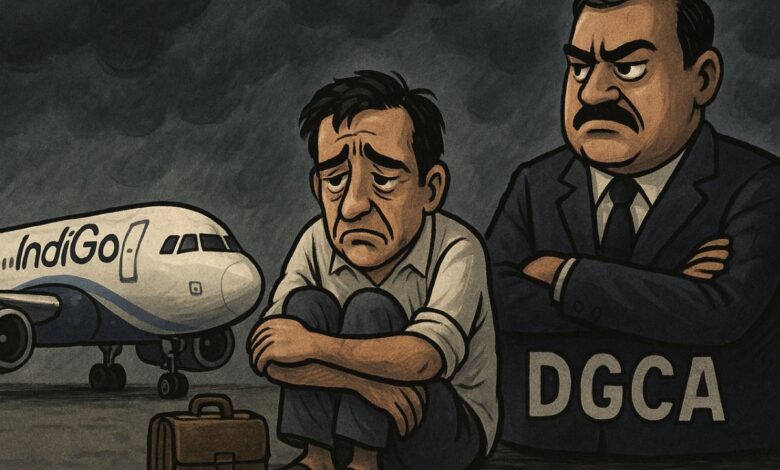
DGCA’s Powerlessness In The Face Of IndiGo’s Aviation Monopoly: IndiGo’s Sky-High Dominance
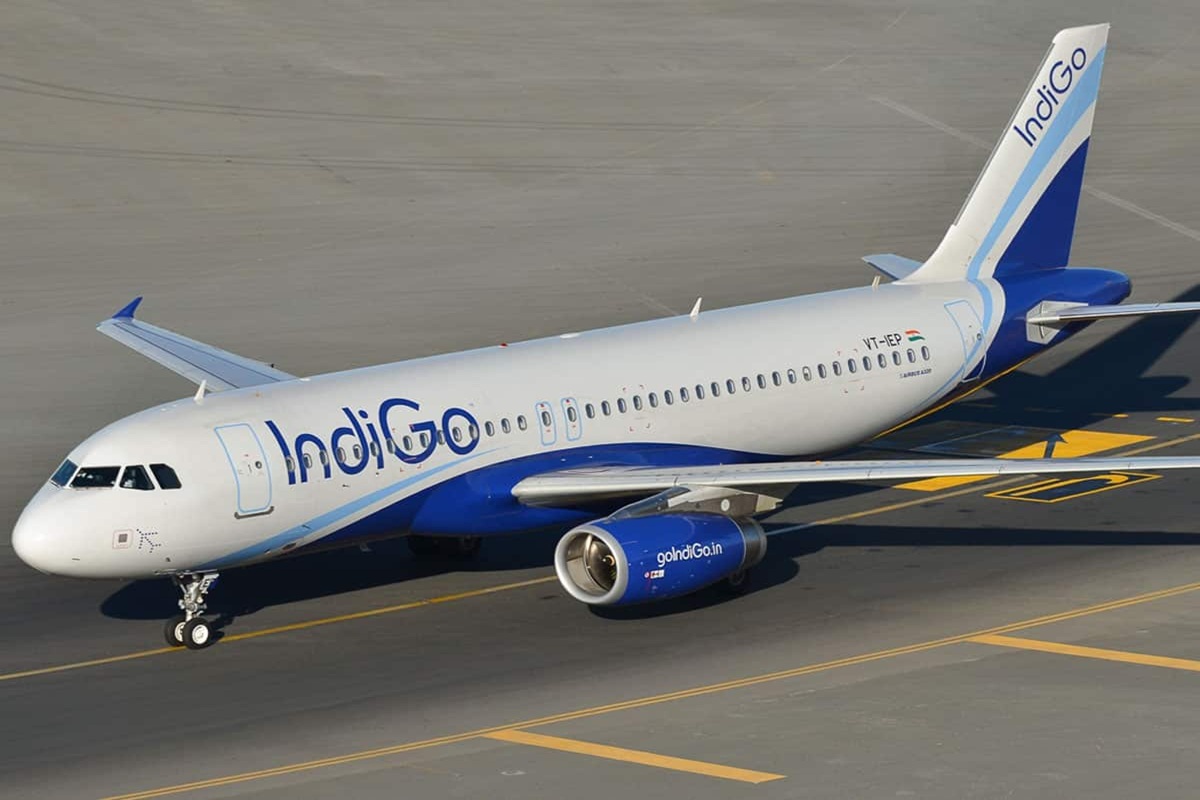
IndiGo’s sky-blue jets, like the one above, are now a ubiquitous sight at Indian airports. Its market share is immense – about 60–65% of domestic passengers. This dominance is no accident; two decades of consolidation have left IndiGo and Air India controlling over 90% of the local market. Its financial clout is thus staggering. It seems only IndiGo can reliably fly “to smaller airports or less-frequented cities,” making it indispensable.
This near-monopolistic position has come at a price for consumers: reduced choices and little competition. Even as airline rivals folded, IndiGo’s relentless growth turned it into a lone behemoth. Meanwhile, it has managed to preserve fat profit margins, giving it a buffer that dwarfs any regulatory fines. In short, IndiGo’s size and money power dwarf those of any would-be regulator.
In any healthy market the regulator would act as a counterbalance to such concentration. But in India DGCA’s fines have been almost laughably small compared to IndiGo’s scale.
For example, after an unprecedented December 2025 meltdown, where 4,500 flights were cancelled or delayed and hundreds of thousands of passengers were stranded, DGCA imposed a ₹22.2 crore penalty on IndiGo. Would it be wrong if we call this a slap on the wrist. Federation of Indian Pilots leader Captain Randhawa was blunt: “It was a national crisis, they caused a national crisis,” he said, affecting “6‑7 lakh people,” yet the ₹22 crore fine was “very, very small”.
A Member of Parliament pointed out that ₹22 crore is less than what IndiGo makes in one day, calling the penalty “ridiculously small”. In global perspective it is tiny: Southwest Airlines was fined $140 million (over ₹1,100 crore) for a similar holiday-season debacle, whereas DGCA’s fine was barely 2% of that. With an airline that profits hundreds of crores annually, a ₹22 crore fine looks like a minor bookkeeping entry; barely a pinch compared to IndiGo’s coffers.
Labor Woes: Pilots Pushed to the Edge
IndiGo’s labor practices have spawned their own controversies. Staff routinely complain of punishing schedules, precarious contracts, and even discrimination. During COVID lockdowns, top management got juicy stock‐option bonuses while pilots took 20–30% pay cuts – leading to open revolt. In April 2022, several pilots planned mass sick leave to protest continued 28–30% pay cuts, just as IndiGo executives were getting stock awards. The airline responded by suspending those pilots, citing breach of conduct. Discontent has simmered for years as a pilot said that after two short-haul night flights over consecutive nights, she often lay awake worrying “I don’t think I will live long if I continue flying… everything has just shut down. This is zombie work”.
Pilots say IndiGo relies on grueling rostering. During the December 2025 crisis, fatigue-soothing rules were waived for IndiGo to stabilize operations, underscoring how far beyond safe limits the airline had pushed its crew. Industry veterans warned the disaster was “cutting corners, pushing man and machine to its absolute limits”. Contracts are strict: many pilots sign 5-year bonds with huge penalties. One pilot regretted spending $80,000 on training only to face a clause forcing her to pay $50,000 back if she left early.
Another described being threatened with a “dependability programme” (freezing promotions and benefits) for falling ill. In June 2025 a trainee pilot even filed a police complaint against three senior colleagues, alleging caste-based insults (“go back and stitch slippers, you are not fit to fly”). Police subsequently registered an FIR under the SC/ST Act against those IndiGo officials. The airline hastily denied wrongdoing, but the incident highlights the intensity of staff grievances.
Evidence from the FIR filings, internal memos, and multiple news accounts shows an environment where pilots feel overworked, underpaid, and even bullied. In theory DGCA is supposed to oversee crew rest and safety, but when pilots flag systematic fatigue, the regulator’s response has been tepid at best. Rather than penalize the airline for over-scheduling or harassment, DGCA quietly granted IndiGo exemptions and let it continue operations. The impression among industry insiders is that IndiGo employs aggressive manpower tactics with minimal pushback from regulators.
Customers in Chaos: Delays, Cancellations, Complaints
The human cost of IndiGo’s operational shortcuts has been massive. During the height of the 2025 crisis, airports were scenes of chaos. Departure boards were “red across the country” as flights vanished. Travelers, including families and the elderly spent nights on hard benches. One viral video showed children sleeping with bags at a gate, chanting “Down with IndiGo!” in frustration.
By some estimates nearly one million bookings were disrupted between Nov 21 and Dec 7, 2025. Passengers reported getting little help: baggage piled up or went missing, announcements were scarce, and online systems crashed under refunds demand. Even IndiGo admitted the mess was “not feasible to be anticipated” – a claim pilots and experts dispute as implausible given two years of advance notice of new rest rules.
Beyond this meltdown, passengers frequently air grievances. Consumer forums are rife with complaints about delays and rude service. For example, a New Delhi complaints tribunal fined IndiGo ₹1.5 lakh in mid-2025 after a passenger on a Baku–Delhi flight was seated in a “stained and unhygienic” seat. The court explicitly found the airline’s response “dismissive” and held it guilty of “deficiency in service,” ordering compensation for “mental agony, physical pain and harassment”.
Similarly, many flyers now advise booking flights on non-Indigo airlines to avoid the risk of sudden cancel-for-profit schemes. In fact, the Competition Commission of India (CCI) is examining an antitrust complaint after reports that IndiGo cancelled flights and rebooked seats at inflated prices, allegedly exploiting its market dominance. In one filed case, a passenger’s replacement fare was much higher than the original, prompting accusations of abusive pricing by a 60%-share carrier.
The recurring theme is clear: customers bear the brunt of IndiGo’s business decisions. From constant rescheduling to unannounced rule changes, travellers end up stranded, hungry, and often out-of-pocket. Yet aside from mandatory refunds (IndiGo claimed to have paid out ~$100 million in cash compensation in Dec 2025) the airline faces little direct penalty. The DGCA enforces no meaningful automatic refund or deterrent beyond its modest fine. Thus “harassment”, in the sense of institutional indifference, seems baked into the customer experience.
- Persistent Complaints: Social media and forums are littered with accounts of irate flyers. People recount missing flights after late notification texts, or being coerced into paying thousands extra for re-bookings. Many say their only recourse is slow consumer-court battles, or even filing FIRs under consumer protection laws – a drastic step. It seems that IndiGo’s strategy is clear: catch passengers off-guard and see what they’ll pay to get home; if they complain, the regulator barely blinks.”
- Peanuts vs Impact: To illustrate regulators’ audacity, consider that DGCA’s ₹22.2 crore fine is less than what IndiGo collects in a single day (over ₹80 crore daily on average). In fact, the fine itself was literally paid off by the airline’s backlog of unpaid refunds: DGCA admitted IndiGo “was in breach” and set the fine equal to the overdue refunds of disembarked passengers. In other words, indigo essentially just had to pay its own dues – a cost of doing business – with no extra sting. Pilots and consumer activists see this as a cynical calculation: even “big penalties” like ₹22 crore are absorbed as normal operating costs by a carrier raking in hundreds of crores in profit.
DGCA’s ‘Big’ Enforcement – A Closer Look
The Directorate General of Civil Aviation (DGCA) technically has power to cap punishments. But in practice its actions are mild. The December 2025 inquiry made public shows DGCA harboured serious criticisms- an internal report blamed IndiGo’s “over-optimisation”, thin buffers, and management lapses for the crisis. It warned top executives by name – even suggesting removal of the SVP of Operations – but stopped short of anything criminal.
The largest financial penalty DGCA imposed was ₹22.2 crore, justified as ₹1.8 crore one-time plus ₹30 lakh per day for non-compliance over 68 days. Even this number was bounded by DGCA’s own authority: current law caps fines at ₹1 crore per violation, so DGCA effectively let IndiGo pile up ₹20.4 crore by simply stretching the time frame. In other words, IndiGo “farmed the penalty” by restoring 8% crew duty-time cuts after 68 days; each additional day beyond incurred another ₹30 lakh fine.
Such tinkering contrasts with regulatory zeal elsewhere. For comparison: in the U.S., the Department of Transportation fined American Airlines $4.1 million (≈₹34 crore) for excessive tarmac delays – the largest civil penalty under its passenger-rights rules. That fine was aimed solely at inconvenience to travellers, not safety; U.S. regulators make carriers pay dearly for rule breaches. The Federal Aviation Administration has even threatened up to $75,000 per flight for airlines defying its capacity-cut orders during emergencies. In short, if DGCA’s fine is a stern lecture in Punjabi, the FAA’s response is a sledgehammer. Industry watchers ask why India’s regulator can’t mirror that bite.
On the banking side, even more stringent action was taken. When Kotak Mahindra Bank failed to shore up its cybersecurity governance, the Reserve Bank of India banned the bank from on-boarding new customers online and issuing credit cards – a crippling sanction. This after just two years of identified lapses. By contrast, if an airline repeatedly upsets travellers and ignores aviation safety norms, DGCA offers a small fine and moves on.
In Kotak’s case RBI publicly named and punished individuals, kept the bank off certain digital platforms. The divergence is stark: RBI wielded broad interdictions, while DGCA merely counted days and racked up a transaction fee for IndiGo. “Kotak felt RBI’s teeth after they slipped (though, it’s also late); but Indigo laugh off DGCA fines as cost of doing business.”
Other “Toothless Tigers” in India
This problem isn’t unique to civil aviation. Across Indian regulation, critics say watchdogs often act as “toothless tigers.” For example, the Securities and Exchange Board of India (SEBI) holds vast powers to police markets, yet does the minimal to enforce them and safeguard the investors. Moneylife magazine documented how companies brazenly ignore SEBI directives, forcing the Securities Appellate Tribunal to slap SEBI with a fine for non-compliance.
One case involved a large family whose demat accounts remained frozen long after SEBI’s orders were overturned. SEBI failed to lift the freeze for months, ultimately showing up to court only after frantic appeals. The Tribunal scolded SEBI’s “lackadaisical approach” and imposed ₹5 lakh costs on the regulator. Another example involved a stock promoter ignoring SEBI’s share-dematerialization orders; again the tribunal lamented that unless SEBI seeks contempt proceedings, “it is signalling that the regulator is toothless”. In plain English, companies openly thumb their noses at SEBI’s written orders.
Moreover, even after knowing companies have criminal cases and doing frauds and scams and causing pain and havoc to citizens, SEBI allows the IPO of such compromising financials’ companies. Such companies exist in every sector. Take BPTP in real estate, Paytm in new age startups, etc.
Telecom regulation has similar echoes. India’s TRAI was tasked with curbing monopolies in telecom. Yet even before TRAI could flex muscle, policy changed: a 2022 draft Telecommunications Bill was widely panned for stripping TRAI of enforcement powers, effectively reducing it to an advisory body. All this at a time when three companies (Reliance Jio, Bharti Airtel, and Vodafone-Idea) already control nearly 90% of mobile subscribers. Critics warned that instead of reining in the duopoly, the bill handed more power to the big players. In effect, TRAI is being disempowered just when it’s most needed – another case of public interest forfeited.
Meanwhile, India’s food regulator FSSAI has been “slammed” by Parliament for a “non-serious” approach to adulteration in staples like ghee and milk. Lawmakers complained that FSSAI has no nationwide mechanism to check food adulteration, raising grave consumer safety concerns. These episodes follow a pattern: whether airlines, banks, securities, telecom, or food, regulators sometimes show a friendly face to industry. The deterrent effect of sanctions is limited when penalties are tiny or enforcement is lax.
In each case, critics pointed out that players act “as if regulations exist only on paper.” The term “toothless tiger” has become a cliché for Indian agencies – powerful in theory, powerless in practice. In response, some officials have acknowledged the criticism. Former RBI Governor Raghuram Rajan once cautioned that India’s culture of impunity must end (though he stressed this need not mean punitive zeal without fairness). But actual steps have been uneven.
Global Perspective: Enforcers with Bite
Contrast India’s regulators with their overseas counterparts. In the European Union, for example, passengers enjoy strong rights by law. Under EC Regulation 261/2004, a delayed or cancelled flight automatically triggers €250–€600 per passenger in compensation (depending on distance and delay length). EASA (Europe’s aviation safety agency) and EU authorities also routinely levy hefty fines on carriers for violations, often paid back to consumers or public coffers. Once, the UK’s Civil Aviation Authority fined British Airways hefty sums for hidden costs and misleading ticket charges (tens of millions of pounds). EASA itself enforces strict safety reporting and can ground airlines for non-compliance; DGCA has no direct parallel.
In the U.S., the Department of Transportation aggressively pursues airlines’ consumer violations. After massive tarmac delays in 2016, DOT hit American Airlines with $4.1 million in fines, the largest ever for that rule, ensuring affected travellers were compensated. The DOT routinely imposes six-figure penalties on airlines for mishandling disabled passengers, failing to refund on cancelled flights, or unjust markups.
In one case, DOT mandated refunds plus a public notice for multiple airlines after price-gouging flight changes. The Federal Aviation Administration (FAA) also flexes its muscle on safety matters: during the recent U.S. air traffic controller shortage, the FAA threatened up to $75,000 per flight for airlines that defied its capacity-cut orders. (In reality, compliance was patchy and most airlines simply had to answer a stern letter – but the threat was there.)
By global comparison, DGCA’s actions feel timid. Its fines are rarely so punitive. Even when banks falter on technology risk, or telecom giants deviate from license terms, the punishments (if any) rarely suspend their core business. True, regulators in more mature markets sometimes draw criticism for overreach, but when it comes to enforcing baseline rules, they don’t shrivel away. In India, the pattern is that fines are often limited by statute (like DGCA’s ₹1 crore cap) and enforcement is drawn out, making penalties a minor expense. The $2.45 million DGCA levied on IndiGo, though a record for India, is a fraction of what even smaller foreign carriers have paid for similar failures.
Why It Matters: Citizens’ Cost of Complacency
For Indian flyers, this regulatory reticence comes at a price. When the regulator seems mild or hand-tied, airlines like IndiGo face little deterrent to slow down or upgrade service. The recurring question is: whose interests are we safeguarding? Consumers argue that if one-ticket operators can cancel flights en masse with impunity, then reliable travel is a privilege, not a right. Small carriers struggle to enter routes dominated by IndiGo because they can’t compete on price without cutting corners. Travel journalists now advise: “If you don’t see an alternate airline, book another mode of transport” – a sad testament to consumer helplessness.
Monopoly charges have also been pressed: one legal activist noted that trying to prosecute Indigo’s misdeeds is like holding a “Goliath” to account with a penknife. Contrast that with cases where regulators show teeth: Kotak’s cyber lapses led to a partial operational ban; HDFC Bank was similarly restrained after tech failures. In aviation, the only real consumer remedy is expensive litigation or consumer-commission filings (with just ₹150,000 compensation caps). Many Indians, often paying top fare for the only flight available, lack the resources to fight.

So yes, when DGCA “fines in peanuts,” it raises a poignant question: is this the price of “ease of living” for airlines, or of genuine governance? The answer, in the view of many, is stark: regulatory complacency effectively subsidizes the monopoly. It allows IndiGo to keep strict labor policies and maximum capacity schedules, knowing that if passengers howl, the worst penalty is a fraction of its profit. The irony is that this hurts the very economy regulators are supposed to protect. Lets say it “irony of a five-rupee fine”: slap a big corporation too lightly, and consumers pay the balance.
Across these events, one sees a consistent pattern: aggressive cost-cutting by IndiGo, by not recruiting enough pilots, meets only proportional or symbolic rebuke. Rather than drive home accountability, regulators appear satisfied with small-dollar fines. Public records (DGCA orders, consumer rulings, investigation committee reports) paint a picture of an airline that pushes rules to the limit, knowing it faces few consequences. All claims above are backed by such documents and reputable news outlets, not anecdotes.
At the end, is DGCA protecting passengers or protecting IndiGo’s profits?
In sum, the DGCA’s meek penalties on IndiGo are emblematic of a broader issue: Indian regulators often lack the will or the legal firepower to tame giant incumbents. Unlike the rigid actions of the FAA, RBI, or EU authorities, DGCA’s (biggest) beating stick, a ₹22.2 cr fine, is just a gentle tap compared to Indigo’s market force. Customers and aviation experts alike worry that such leniency emboldens the monopoly. If a near-monopoly airline learns it can cancel thousands of flights with only a minor financial slap, what stops it from doing so again in the next peak season?
The citizens’ cost is high: wasted time, money, and trust. Yet when we look at how regulators across sectors have handled much smaller private giants, a pattern emerges. SEBI is chided for its own inertia, RBI is sometimes the notable exception when it chooses to enforce strictly, and TRAI and FSSAI have been openly criticized by Parliament for failing consumers. In each case, whistle-blowers and petitioners have called out the agencies for letting big players off lightly.
IndiGo may be “India’s pride” in terms of growth and punctuality, a perception DGCA once lauded, but nobody should be above accountability. If businessmen are so powerful that even ministers hesitate to cross them, regulators themselves end up in rubber-stamp mode. As things stand, the regulator’s bark has too often proved toothless.