The Renaissance Man Of Financial Markets: Dinesh Thakkar’s Extraordinary Journey

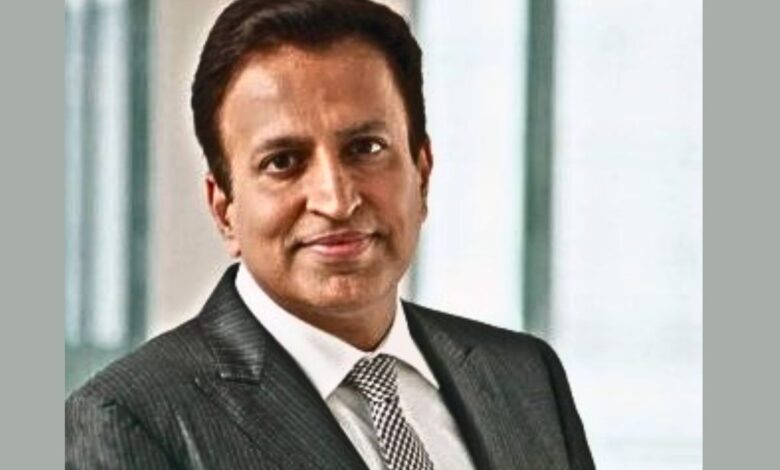
In the bustling financial landscape of India, few stories captivate the imagination quite like that of Dinesh Thakkar. His trajectory from a modest educational background to creating a financial behemoth valued at over 22,000 crore rupees stands as a testament to vision, adaptability, and unwavering determination. While conventional wisdom might suggest that academic pedigree dictates success, Dinesh Thakkar’s narrative offers a refreshing counterpoint—one where intuition, market acumen, and resilience triumph over traditional credentials.
After completing his 12th standard education, Dinesh Thakkar made what many considered an audacious decision. Rather than following the safe, well-trodden path into his family’s established textile business, he chose to chart his own course. This decision wasn’t born from youthful rebellion but from a deeper understanding that true growth often necessitates stepping beyond familiar shores. Recognizing that family capital might come with invisible strings that could restrict his entrepreneurial flexibility, he took the bolder route of borrowing capital to invest in the stock market.

The early 1990s presented a financial landscape vastly different from today’s digital ecosystem. Stock market operations occurred through terminals, requiring investors to physically visit broking offices and navigate through opaque paperwork for even the most basic transactions. This lack of transparency proved costly for the young Dinesh Thakkar, who saw his initial capital evaporate. Yet, in what would become a defining characteristic of his journey, he transformed this setback into an opportunity by becoming a sub-broker, determined to change the very system that had disadvantaged him.
What followed was nothing short of extraordinary dedication.
Dinesh Thakkar immersed himself in technical charts, often studying them for twelve hours straight—a discipline that few could maintain.
This relentless pursuit of market knowledge bore fruit, as he began earning an impressive 40 lakh rupees annually. Success enabled him to assemble a team of like-minded stockbrokers, establishing a modest office in Bombay with two partners. On August 8, 1996, Angel Broking was born, though few could have predicted the financial colossus it would become.
Dinesh Thakkar’s genius wasn’t limited to market analysis but extended to business model innovation. Recognizing that obtaining broker licenses for sub-brokers would be both prohibitively expensive and time-consuming, he pioneered an alternative approach. By designating them as authorized persons and implementing a commission-sharing model ranging from 50-70% based on experience, he democratized entry into the brokerage world. This ingenious structure allowed individuals with basic market knowledge to become Angel brokers—a strategy that proved remarkably effective.

The growth trajectory that followed was nothing short of meteoric. Angel Broking expanded its broker network to 5,000 and diversified into Commodities (2004), Mutual funds, IPO, and Portfolio Management Services (2006), eventually partnering with Birla Sun Life to launch Insurance services in 2007. This impressive growth attracted significant attention, culminating in the International Finance Corporation investing 152 crore rupees at a valuation of 840 crore rupees in 2007.
By March 2012, the company had scaled impressively, boasting 8,577 sub-brokers across 5,132 terminals nationwide. With revenue reaching 408.53 crore rupees and a net profit of 8.5 crore rupees, Angel Broking had become a formidable player in the financial services sector. The company’s expansion extended beyond equities, with commodities trading revenue reaching 97.4 crore rupees.
Yet, as often happens in business, success attracted competition. Traditional players like Sharekhan and Karvy enhanced their operations, while Motilal Oswal surpassed Angel Broking in revenue. More concerningly, new digital-first entrants like Zerodha and Groww began gaining momentum, threatening to disrupt the established order. At this critical juncture, many leaders might have doubled down on the existing model, but Dinesh Thakkar demonstrated remarkable prescience by recognizing the need for transformation.
After building an empire of 10,000 sub-brokers serving 1.1 million customers through offline channels, Dinesh Thakkar made perhaps his boldest move yet—pivoting to a mobile-first strategy and rebranding as Angel One in 2019. This wasn’t merely a cosmetic change but represented a fundamental shift toward a 100% digital-first approach for all existing and future business operations.
)
The results of this transformation were extraordinary. Angel One attracted 850,000 users within just one year, eventually scaling to 2.15 million accounts and capturing a 6.13% market share. As the company ascended to become the fourth-largest on the National Stock Exchange, it achieved another milestone with a 600 crore rupee IPO on October 5, 2020.
Today, Angel One stands as the third-largest broking firm in India, trailing only Zerodha and Groww. With annual growth of 58%, the company now serves over 50 million customers, generating revenue of 3,021 crore rupees and a net profit of 890 crore rupees. This remarkable journey has culminated in a valuation of 22,236 crore rupees—a figure that would have seemed fantastical to the young man who had just completed his 12th standard education.
Perhaps the most inspiring aspect of Dinesh Thakkar’s story is his willingness to pivot after 23 years of building his business. This decision exemplifies the rare combination of humility and foresight that truly exceptional leaders possess. In a world obsessed with overnight success stories, Dinesh Thakkar reminds us that enduring achievement often requires patience, adaptation, and above all, resilience in the face of changing circumstances.