Is Low IQ The New High IQ? Questions We Must Ask As India Celebrates Its Young, Dull Future


Let’s talk about a little issue that no one really wants to bring up, but let’s face it, it’s time. India is too busy fighting about religion, caste, politics, and which god is superior to care about something really crucial — like, you know, progress. Meanwhile, in the other corner of the globe, China is launching tech titans like Deepseek, leaping ahead into the future while we’re still arguing over the color of the flag.
Once upon a time, India and China were on roughly the same level, at least economically and technologically. The competition was fierce, but also fair. Today? Oh boy, it’s like comparing a well-oiled, high-performance machine to a rusty bicycle with a missing wheel. While India remains fixated on divisive religious and political issues, China is creating the future.
The China Advantage: The Secret Sauce
You see, there’s one thing China has figured out that India can’t seem to grasp — unity. Not the false, shallow kind that’s forged in the political theater, but the real kind that comes from people actually focusing on common goals. In China, there’s no fighting over whether a religion should control government policy or whether the caste system should still have a say in who gets to do what. There’s no endless back-and-forth about whether or not the economy should align with a particular party’s agenda.
China’s people rally behind causes, whether it’s tech development, scientific advancements, or economic growth, without friction. They are aligned in their vision of progress, and guess what? It’s paying off big time. We’ve got the likes of Alibaba, Tencent, Baidu, and now Deepseek — China’s very own AI marvel that’s set to revolutionize global technology. Meanwhile, India can’t even get a cohesive internet policy, let alone innovate at the pace China has.
Why? Because we’re too busy debating whether a temple should be built at one place or another, or whether politicians from one party should be banned from wearing a specific color. We focus on everything but the future. In the meantime, China just goes ahead and launches an AI company that makes Google’s search engine look like a child’s toy.
Politics, Religion, and Caste: The New National Pastimes
If you ask the average person in India what’s on their mind, chances are it’s not technology, space exploration, or economic advancement. No, it’s religion, caste, and which party is in power today. Who cares about the future when we’ve got endless squabbles over who’s superior, right?

Politics has become such a deeply ingrained part of Indian culture that it’s hard to distinguish between the state and religion anymore. As if that wasn’t enough, the caste system still persists in many parts of the country, dictating who gets opportunities and who gets left behind. Instead of focusing on building a future, our politicians are too busy creating divides, fueling hate, and undermining any real progress.
There’s no vision here. No national agenda. Just a deep, continuous cycle of blaming the other party, or the other religion, or the other caste. India has somehow managed to make every issue into a divisive one. And guess what? The rest of the world is watching. Meanwhile, China is investing heavily in the next generation of technology and science.
The Great Tech Escape: China’s AI Revolution
Let’s take a look at China’s most recent feat — the rise of Deepseek. This is a company that’s aiming to compete with the big boys in AI, like Google’s DeepMind or Microsoft’s OpenAI. But you won’t see Deepseek blaring its name in a political campaign or basing its business decisions on caste or religious bias. It’s purely focused on what matters: innovation.
Deepseek is a product of years of government-backed focus on high-tech industries. China’s Communist Party, no matter how authoritarian or controversial it might be, has a clear-cut agenda: be a global technological powerhouse. China’s biggest companies don’t get bogged down in ideological distractions. Instead, they pour resources into things that actually move the needle — artificial intelligence, robotics, 5G infrastructure, and green energy.
Compare that to India, where the biggest tech exports are calls from call centers and apps that promise to “fix your life” through the magic of yoga or astrology. We love our apps — but let’s be real: how many of those are advancing technology on a global scale? Meanwhile, China is busy creating artificial intelligence that might just outthink all of us within a few decades.
India’s Youth: The Next Generation of Underachievers?
India has one of the youngest populations in the world — 65% of its population is under the age of 35. On paper, this should be a massive advantage. With a young, dynamic workforce, India could be the Silicon Valley of the East. But instead, our youth is increasingly distracted by the noise of politics, religion, and who’s fighting with whom.

What do we see when we look at young Indians today? Social media rants about who should be worshipped, which politician is the most corrupt, and what’s the latest caste-based controversy. We’re not exactly raising a generation of future leaders; instead, we’re nurturing a group of young people who are more interested in being part of a political echo chamber than working towards real-world problems.
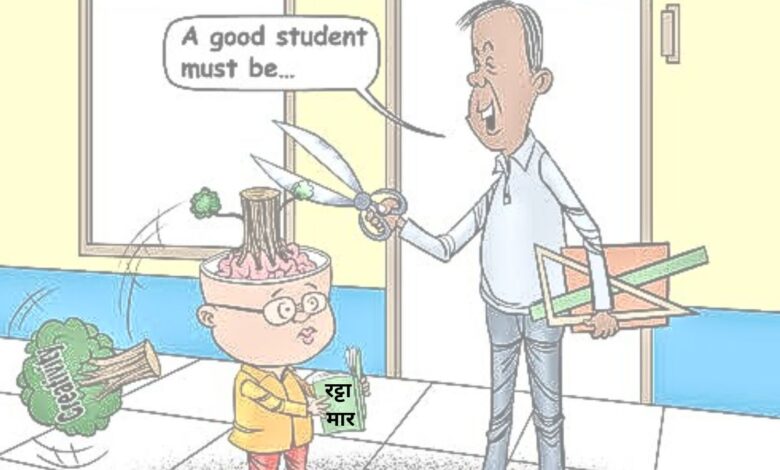
In a country where youth unemployment is on the rise, and the education system is more focused on rote learning than critical thinking, it’s no surprise that we’re losing the technological race. India’s youth might be the youngest population, but are they equipped with the skills to lead the world in the next generation of innovation? The answer is a resounding no.
And guess what? If this trend continues, we’ll be the world’s youngest country with the lowest average IQ. What a fantastic combination! We’ve got all the energy and ambition, but we’re funneling it into pointless debates and outdated ideologies rather than education, innovation, and building something worthwhile.
The Road Ahead: Can India Catch Up?
At this point, you’re probably wondering, “Can India still catch up?” Well, let me put it this way: it’s possible, but extremely unlikely unless we change course drastically. The current trajectory isn’t looking great. As long as India continues to focus on religion, caste, and petty politics, China will keep moving further ahead in technology, infrastructure, and economic power.
India’s best bet right now is to put aside divisive ideologies and focus on building a forward-thinking, inclusive society. Instead of glorifying outdated concepts like caste or religious superiority, we need to embrace the power of science, technology, and collaboration. The future won’t be built on who prays to whom, but on who can innovate, think critically, and work towards the common good.
We need a national agenda that puts technology and education at the forefront. We need to stop treating our youth like pawns in the political game and start investing in their future. We need to stop obsessing over what divides us and focus on what unites us: our potential as a nation.
But with the current state of affairs, it’s hard to be optimistic. The endless distractions of religion, politics, and caste are pushing us further into the abyss of stagnation. So, if you’re looking forward to India being the leader in AI, space exploration, or the next tech revolution… well, don’t hold your breath.
At teh End: Wake Up, India
If India doesn’t get its act together, we could very well find ourselves in a situation where we are the youngest nation, but also the most backward one. China is moving ahead at breakneck speed, and India is busy arguing over things that won’t matter in the future.
So, congratulations, India. We’re on track to be the world’s largest nation with the smallest ideas. And when that happens, don’t say we didn’t warn you. If we keep going at this pace, the only thing we’ll lead the world in is irrelevance. Let’s hope that day doesn’t come too soon.