For The First Time, SEBI Admits Adani Was Wrong — Was Silence Earlier Due To The Previous Chairperson?
For the First Time, SEBI Charges Adani — What Held It Back Before? First Public Censure of Adani by SEBI: Change of Chair, Change of Stance? Was SEBI’s Past Quiet on Adani a Matter of Who Was in Charge?


The impossible has happened. Water is now flowing uphill. Pigs are flying. All these because the SEBI has finally recognized possible mistakes in the Adani empire. If you have been following India’s financial markets at all, you will know this is very unusual.
For years, the Adani Group appeared to sail through regulators undeterred by scores of allegations. The behemoth conglomerate, owned by billionaire Gautam Adani, has faced scores of challenges – from the stunning Hindenburg Research report accusing stock manipulation to recent bribery allegations in the US – while SEBI had maintained what critics have called a conspicuous silence. Till now.
What Is The Turning Point?
SEBI charged Gautam Adani’s nephew, Pranav Adani, a director in several group firms, with violating insider trading rules. He had tipped off his brother-in-law, Kunal Shah, about significant news of Adani Green’s acquisition of SB Energy Holdings prior to the announcement. SEBI’s report revealed that the news was subsequently used by Kunal Shah and brother Nrupal Shah to sell Adani Green shares. This is reported to have yielded them “ill-gotten gains” of approximately ₹9 million ($108,000).
Pranav Adani wishes to resolve these allegations “without admitting or denying the allegations.” According to an e-mail to one news website, he stated that “he has not violated any securities rule.” The Shah brothers have also defended themselves. They claim that they have made these trades without “knowing any unpublished price sensitive information” and that “information in question had already been disseminated to the public.”
This is a step that raises a pertinent question: Why now? After years of appearing to do nothing, in the face of numerous warning signs, what led SEBI to act against the Adani Group at last?
Can We Call This A Tale of Two Chairpersons?
The timing is interesting. SEBI has moved faster during the same period when there is a new head at the agency. The earlier SEBI chairperson, Madhabi Puri Buch, ended her term in February 2025. Under Buch’s chairmanship, SEBI faced criticism for not wanting to investigate thoroughly against the Adani Group, especially after the January 2023 Hindenburg report that said the company was involved in “brazen stock manipulation and accounting fraud.”
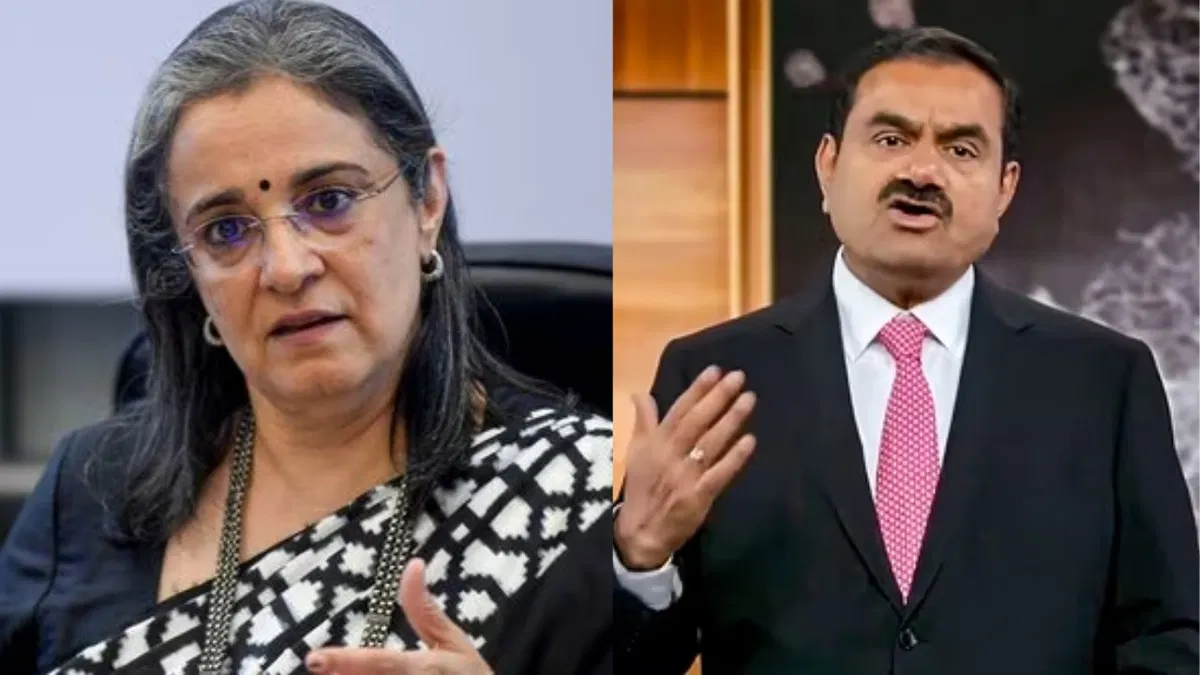
The Hindenburg story hit Indian financial markets with a thud, with billions being lost in the value of Adani companies. But most thought that the response of SEBI was weak. The regulator opened an investigation but made very little public announcement about what they found and how they proceeded.
Individuals observed this inaction and began to comment, sometimes blaming the regulators for being too cozy with large corporations. Critics pointed to the close relationships between the Adani Group and the ruling elite, suggesting that SEBI could be hindered by politics. Some even questioned whether there were conflicts of interest at play.
What The Historical Perspective Shows Is A Regulatory Capture in India!
Regulatory capture is a case of regulatory agencies, which are entrusted with regulating industries, becoming controlled by industries. This is not a recent case in India. Since the economy was opened, there have been numerous cases of regulators going soft on big business companies.
For example, look at the telecommunication sector in the early 2000s. TRAI was accused of making decisions that seemed to favor incumbent firms over new ones. This led some economists to term it a “cozy club” of operators. The controversial 2G spectrum sale scandal was attributed a cost of ₹1.76 lakh crore to the government by the Comptroller and Auditor General. This was viewed by most as the culmination of years of regulatory problems.
The Reserve Bank of India was also faulted in the manner it dealt with non-performing assets (NPAs) in banks. The central bank was faulted by critics for dragging its feet in acknowledging the growing problem of bad loans, especially loans made to powerful companies. A 2018 report by the Public Accounts Committee of Parliament indicated that only 12 accounts held 25% of all NPAs, and it implied that the rules were not applied strictly to big borrowers.
What was SEBI’s Earlier Approach Towards Adani?
SEBI too has faced criticism. It was formed in 1992 to protect the investors and promote development of the securities market. SEBI has succeeded and failed to ensure strong market participants comply with the law.

The regulator’s reaction to the Satyam scandal in 2009 was welcomed for being prompt. SEBI prohibited the company founder B. Ramalinga Raju and 4 others from the securities market for 14 years. But its reaction to other high-profile cases has been faulted as being slow and too lenient.
For instance, SEBI’s investigation into alleged insider trading at Reliance Industries Limited lasted years before it concluded in settlement in 2020. Similarly, the resolution of the National Spot Exchange Limited (NSEL) scam, which broke out in 2013, has been criticized for being too slow, with the majority of investors still waiting for compensation.
A research study conducted by the National Institute of Securities Markets revealed that, from 2015-2020, SEBI succeeded in securing 35% of cases related to market manipulation and insider trading at appellate courts. This study eventually indicates a high degree of challenge in implementing these rules. This data comes from the full report of NISM titled “Effectiveness of Securities Market Enforcement in India,” published in 2021.
Why Adani Seemed To Be An Exception?
In this case, SEBI’s reluctance to aggressively probe the Adani Group, despite repeated charges, appeared to be a pattern. But what rendered the Adani case most significant was the volume and international scrutiny the charges attracted.
The Hindenburg report was not just a market rumor; it was a 100-page detailed report that made specific allegations of offshore shell companies, accounting irregularities, and share price manipulation. The $150 billion drop in the market capitalization of Adani companies was not just a small market correction; it was a huge event that could harm the confidence of Indian markets overall.
Still, for more than a year, SEBI’s public stance was guarded. The regulator did issue a notice of inquiry but was less forthcoming about its progress. That deafening silence was particularly noticeable against the backdrop of international publicity the case had generated.
The US Department of Justice and the Securities and Exchange Commission also initiated their own probes into the Adani Group. These resulted in Gautam Adani and two Adani Green executives being accused of bribing government officials to obtain power supply contracts in India and of defrauding US investors. The Adani Group has termed these allegations as “baseless.”
The Winds of Change?
So what’s new? Why is SEBI all of a sudden keen to pursue the Adani Group, even if only to consider an insider trading case against Pranav Adani?
Perhaps one of the reasons is that the new SEBI chiefs have introduced a new style of functioning. New bosses tend to demonstrate their mettle by dealing with significant cases, and the Adani case is certainly one of them.
Another explanation is that the global attention, particularly the US regulators’, has made it difficult for SEBI to maintain its previous stance. With the US regulators actively investigating Adani officials for charges, SEBI may have felt compelled to demonstrate its own authority in regulation.
A 3rd explanation is more straightforward because, perhaps the evidence in this instance was simply too compelling to ignore. Insider trading cases, when backed by robust evidence such as call records and unusual patterns of trading, may be easier to prosecute than complex allegations of accounting fraud or market manipulation.
Whatever the reason, this move against Pranav Adani is a telling shift in SEBI’s approach to the group. It suggests that the immunity the Adani Group appeared to enjoy may be coming to an end.
Impact on Indian Markets.
The broader implications of this shift for Indian markets may be considerable. Critics have long argued that India’s regulations favor large, well-connected companies, and that it is difficult for others to compete and that foreign investors might be deterred.
Raghuram Rajan, former governor of the Reserve Bank of India, once famously remarked, “If you have crony capitalism, it means that connections matter more than capabilities.” This has been a worry for institutional investors interested in the Indian market.
SEBI’s move against Pranav Adani, while limited in scope, could be a sign of a trend towards tighter regulatory control over all market participants, large or small, connected or not. Such a trend would be welcome to those who believe that fair, transparent markets are essential for India’s long-term economic growth.
Also, it would help to rebuild some of the trust lost because of the Hindenburg accusations and what ensued. The sudden downfall in Adani stocks and the flush out of billions from Adani empire after the report not only harmed investors but also made people doubt the integrity of the market and how effectively the regulations protect it.
The Path Forward
It is premature to infer that this one step signals a dramatic change of policy by SEBI. Insider trading charges against Pranav Adani are serious, but they are more modest in terms of scope compared to the general charges leveled by Hindenburg and US prosecutors.
The real test of SEBI’s regulatory mettle will be if it does a proper probe into the general allegations against the Adani Group. This would include probing offshore shell companies, accounting frauds, and market manipulation.

The critics observe that the insider trading case may be the manner in which SEBI can be perceived to be acting without having to take on the more problematic aspects of the Adani narrative. After all, to pin down a particular executive for a particular transaction is much less surprising than to condemn the underlying regulations and financial arrangements of one of India’s largest corporations.
Can We Portray This As A Question of Independence of Rules?
This leads us back to the question that has dogged this story from the very start: Is SEBI independent? Can it regulate organizations with close political connections effectively?
The answers to these questions have far-reaching implications beyond the Adani case. They are questions of the integrity of India’s financial markets and of India’s ambition to be an economic superpower.
Actual regulatory independence does not just require protection under the law but also a culture of robust enforcement and a political culture that supports the regulator’s role. It requires regulators to be willing to push against powerful interests, even unpopular or hard to do.
The action against Pranav Adani could be a sign that SEBI is heading in that direction. Or it could be a small action to ease the pressure without dealing with the essential issues. Only time will be the judge.
Conclusion: A New Chapter or Only a Footnote?
Has the sun indeed risen in the west? Has SEBI’s attitude towards the Adani Group changed in some fundamental manner? If so, does this change reflect a general change in the rules in India or is it just a clever move to react to some pressures?
These matters are yet to be decided. One thing is certain, however, that for the very first time, someone who is close to Adani is being targeted by SEBI through direct action. That fact alone gives the case some importance, no matter what ultimately happens. A poet once wrote, “We shall see, surely we too shall see, that day that has been promised, when the mountains of tyranny blow away like cotton.” Perhaps, in the grip of the market, we are witnessing the first gentle breeze of change. Perhaps not.
For investors, stakeholders, and all those following the economic development of India, the message is simple: watch this space. The Adani-SEBI saga is not yet over, and its conclusion will have much to say about the way India’s financial markets and regulations are going. After all, “A single act of justice is worth more than a thousand prayers.” Now the issue is whether the move by SEBI against Pranav Adani is the start of true justice or a symbolic move done to appease critics. Only time will tell. But one thing is for sure: many Indian and international eyes will be watching closely.