Gautam Adani, The Press Freedom Predator Who Has Made Journalism A Crime; What Is Adani Scared Of?
What happens to a country when billionaires start deciding what truth looks like? Power has always feared the pen - not because of opinion, but because of evidence. Gautam Adani isn’t battling journalists over ego or image; he’s fighting memory, documentation, and the uncomfortable truth that once written, cannot be erased. Markets may forgive, governments may protect, but journalism preserves. And that, perhaps, is what truly terrifies him.

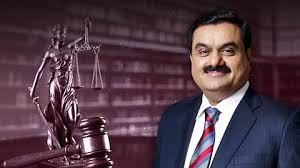
When power meets the pen, conflict is inevitable. And today, that clash has a name — Gautam Adani. The battle between authority and the press isn’t new; it is as old as civilization itself.
Long before digital newsrooms, prime-time debates, and viral YouTube exposés, societies relied on early forms of journalism to stay informed. Ancient Rome’s Acta Diurna in 59 B.C. publicly recorded political events and legal proceedings. Imperial China circulated court bulletins during the Tang Dynasty. By the 17th century, Europe saw the birth of printed newspapers, and by 1702, England had its first daily paper. The 19th century then revolutionised journalism through the Penny Press, making news accessible to the masses and slowly introducing the idea of objective reporting.
Therefore, from royal courts to crowded streets, journalism evolved not merely as a profession but as a public service – a mirror held up to those in power. And with that mirror came discomfort. Because power, by its very nature, dislikes scrutiny. So it is hardly surprising that friction between business empires and journalists has existed for centuries. One builds influence, capital, and control. The other questions it. One seeks to shape. The other attempts to uncover them. This tug-of-war has played out across eras, geographies, and political systems.
Which brings us to present-day India and to one of the most powerful men in the country.

Gautam Adani’s rise is nothing short of extraordinary. From ports to power, airports to energy, his empire today stretches across sectors and continents. Even after global tremors like the Hindenburg allegations and scrutiny from international regulators, the Adani Group continues to expand, holding firm in India’s corporate arena and beyond.
But while markets may fluctuate and stocks may recover, one battle seems far from over — his growing confrontation with journalists who refuse to stay silent.
These are reporters who choose to question, investigate, and speak – not intimidated by political proximity or corporate muscle. And Adani, it appears, is not an opponent to be taken lightly. His legal arsenal, deployed aggressively, has shown that silencing Indian journalists may be easier than confronting regulators abroad.
India’s legal system, flawless on paper, often feels distant and inaccessible to ordinary citizens. So what remains as the last credible watchdog? Journalism. Independent reporting. The uncomfortable questions no one else dares to ask.
But journalism, true to its calling, does not deal in blind praise or targeted hatred. It operates on both sides of the coin – spotlighting achievements while exposing wrongdoing. And that, perhaps, is where the real tension lies.
So now that the stage is set, the question becomes unavoidable:
What is Gautam Adani really scared of?
The Black Side Of The Coin
Behind the glossy balance sheets, global expansions, and nationalist rhetoric lies a far less flattering reality. Over the past few years, the Adani Group has waged an aggressive legal war against journalists and media houses who dared to scrutinise its business practices. Defamation suits, ex-parte injunctions, and government-backed takedown notices have become its weapons of choice, a strategy now widely recognised as lawfare.
The pattern is unmistakable: publish an investigative report, receive a legal notice, face a gag order, delete content or prepare for a long, exhausting court battle. The aim isn’t just to win cases – it’s to drain journalists financially, mentally, and institutionally until silence becomes easier than resistance.
When Press Freedom Is Put On Trial
On September 6, a Delhi civil court handed Gautam Adani something unprecedented – sweeping powers to muzzle journalists through an ex-parte injunction, passed without even hearing the accused. Before newsrooms could challenge the order, the Modi government’s Information & Broadcasting Ministry sprang into action, issuing mass takedown notices.
Over 200 pieces of content – YouTube videos, Instagram posts, investigative articles – were ordered to be deleted. Journalists. Digital platforms. Independent creators. No discrimination. If it mentioned Adani critically, it vanished.
Even more disturbing was what the court allowed next.
Adani was effectively authorised to maintain his own rolling blacklist – a private censorship database. Any URL, post, or article he deemed “defamatory” could be flagged and erased within 36 hours – without further judicial scrutiny. No hearings. No evidence examination. No defence.
A billionaire was handed powers that even courts hesitate to exercise.
The Net Widens
This gag order didn’t just target investigative journalists. It extended to:
- Podcasters
- Satirists
- Independent YouTubers
- Even private citizens making incidental social media references
Not stopping there, notices were also sent to Meta and Google, forcing Big Tech to police content on Adani’s behalf. In effect, global platforms were deputised as corporate censors.
“Anti-India” – The Convenient Shield
Adani’s lawyer Jagdeep Sharma justified the crackdown to Deutsche Welle, claiming critical journalism was driven by “anti-India interests.”
“The negative reporting amounted to an unjust campaign against the group… There are vested interests behind this.”
This tactic is familiar:
—Question a corporation — you’re anti-business.
—Question a billionaire — you’re anti-national.
—Question power — you’re anti-India.
It’s a portrayal designed not to defend truth, but to delegitimise dissent.
Journalists in the Crosshairs
The hit list reads like a who’s who of independent journalism:
- Ravish Kumar – pushed out of NDTV after Adani’s takeover, now running a YouTube channel that cannot even mention Adani
- Paranjoy Guha Thakurta
- Ravi Nair
- Platforms like Newslaundry and The Wire
- Popular creators like Dhruv Rathee
- But the most dangerous part of the order was its 10th defendant — “Ashok Kumar”, India’s version of the American John Doe.
This legal fiction allows Adani to target any unknown person in the future. Anyone. A student. A freelancer. A whistleblower. A random Twitter user. If Adani thinks you’ve defamed him, your content disappears!
No court hearing required.
This single clause converts a legal order into a permanent censorship pipeline.
A Legal Expert Speaks
A senior legal expert involved in similar cases said:
“Press freedom in India has always been fragile. But what we are witnessing now is a new brazenness — corporations and governments bending law to impose direct censorship.”
The Adani case is alarming, the expert said, because:
It grants a private conglomerate powers comparable to a judge
It allows retroactive censorship of articles dating back to 2017
It bypasses the most basic principle of justice — the right to be heard

The Pushback Begins
Not all journalists bowed.
Four reporters — Ravi Nair, Abir Dasgupta, Ayaskant Das, and Ayush Joshi — challenged the order. In late September, the district court quashed the gag order, calling it legally unsustainable.
Senior lawyer Vrinda Grover minced no words in court:
“Is there any law in this country that can tell the press what it cannot question? That is not what the Constitution allows.” Calling the takedowns a tsunami, she warned: “Heavens have fallen on the law of this land.”
The judge agreed. The order, he ruled, violated natural justice.
Gautam Adani’s Powerplay Exposed
Let’s recap what happened:
September 6: Court orders immediate takedown of nearly 140 YouTube videos, 80+ Instagram posts. Content removed without being examined
September 18: Order set aside for four journalists. Separate appeals still pending. Prior restraint imposed on others – meaning no future reporting allowed unless pre-approved
This violates Article 19(1)(a) – freedom of speech.
Prior restraint is unconstitutional unless it meets strict tests under Article 19(2).
This order meets none.
A Pattern Since 2017
This isn’t new. Since 2017, Adani Group has filed:
- Around 10 legal actions
- Against 15+ journalists and media houses
- Using both civil and criminal defamation
This is systematic. Strategic. Chilling.
2025 Hit List
- Two major defamation suits
- Ex-parte injunctions
- John Doe expansion
- Government takedown orders
- Targeting Newslaundry, The Wire, HW News, Ravish Kumar
What Adani’s suit claims: “Defendants, by aligning with anti-India interests, have disrupted critical infrastructure projects with ulterior motives…”
Translation?
Criticism = sabotage.
Questions = conspiracy.
Journalism = threat to national security.

Its Deadliest Weapon – Gag Suits
Press freedom bodies now openly call this SLAPP litigation — Strategic Lawsuits Against Public Participation.
The goal isn’t justice.
—It’s intimidation.
—It’s financial exhaustion.
—It’s silencing through fear.
The Chilling Effect
RSF condemns the orders. Editors Guild warns of creeping censorship. Courts themselves admit: prior restraint is dangerous. And yet – the lawsuits continue.
The Bigger Picture
- NDTV takeover (2022–23)
- Hindenburg allegations (2023)
- Offshore fund probes
- Market manipulation questions
- Every major investigation is followed by — legal retaliation.
As of late 2025, some gag orders have been softened. But the war is far from over. Because this isn’t just about Adani. It’s about who controls the playbook in India.
So now we are asking the most logical and powerful question – what is Gautam Adani scared of?

Let’s be brutally honest.
Gautam Adani is not afraid of journalists.
He is afraid of what they might uncover.
A man who commands ports, power plants, airports, energy grids, and now newsrooms does not fear criticism for ego reasons. Billionaires don’t lose sleep over tweets. What terrifies them is documentation. Evidence. Paper trails. Investigative work that doesn’t disappear in 24 hours.
Because journalism does what PR cannot, it connects dots.
Fear #1: The Archive Problem
Markets forget.
Social media scrolls on.
But journalism archives truth.
A viral scandal may die in a week, but an investigative report lives forever – cited, referenced, retrieved. Adani’s biggest fear is not today’s headline. It’s tomorrow’s footnote in a future probe.
Hence, a journalist doesn’t just write a story. They leave a trail.
And trails lead to: offshore funds, shell companies, regulatory loopholes, political patronage, sweetheart deals, conflicts of interest. Once published, these things cannot be un-known. That is why takedowns matter so much. Not to silence noise –
but to erase memory.
Fear #2: Narrative Control Slipping Away
Adani’s rise has been carefully packaged:
- “Nation-builder”
- “Infrastructure hero”
- “Job creator”
- “India’s global face”
This is not accidental. This is brand engineering and when journalists puncture this image, it doesn’t just hurt reputation, it threatens the entire myth.
And billionaires run on myth:
- investors buy stories
- governments buy optics
- voters buy nationalism
Hence, if the story collapses, so does confidence. That is why every critical report is branded: anti-national, a foreign conspiracy, vested interests. Because once you label journalism as treason, you don’t have to answer questions.
Fear #3: The Domino Effect
Adani isn’t scared of one journalist. He is scared of contagion.
- One exposé emboldens another.
- One whistleblower inspires two more.
- One court win encourages ten reporters.
Power depends on deterrence. Therefore, make one journalist suffer publicly and others will think twice. That is why the lawsuits are loud, why the takedowns are theatrical and why names are splashed. Simply put – this is not legal strategy but public intimidation.
A warning shot: “This is what happens when you write about me.”
Fear #4: Losing Political Immunity
Let’s say the quiet part out loud – Adani’s strength isn’t just money; it’s proximity to power.
Governments change. Allies fall. Equations shift. But what happens when:
- elections turn
- coalitions collapse
- public anger peaks
Journalism ensures nothing is forgotten when that happens. When political protection weakens, old stories resurface.
That is why Adani wants – past articles deleted, videos erased and digital footprints wiped. Because power is temporary, records on the other hand are permanent.
Fear #5: Becoming the Face of Corporate Excess
Every era creates a villain. Ambani in the 80s, Sahara in the 2000s, Nirav Modi in 2018 and Adani obviously doesn’t want to become the symbol of crony capitalism. Since, once a face is attached to a system, one cannot escape it.
Fear #6: Journalists Who Cannot Be Bought
This is where it hits hard – PR firms can be hired, Media houses can be acquired, TV anchors can be managed. But independent journalists?
They have: no advertisers, no corporate board, no political masters, only credibility. That scares billionaires the most – because, one cannot – threaten them financially, starve them of access or dangle contracts. So the only thing left: sue them into silence.
Fear #7: The Collapse of Fear Itself
The biggest danger to power is not opposition. It is fearlessness.
When journalists stop being scared…when courts push back…when people start sharing banned content even more…power loses its edge.
And Adani knows this – that is why the crackdown is so aggressive, why the orders are so sweeping and why the language is so dramatic; because when fear disappears – empires start shaking.
So what is Adani really afraid of?
Not lies. Not defamation. Not YouTubers.
He is afraid of: Evidence, patterns, investigations, memory and accountability. Because the day reporters stop looking over their shoulders is the day power loses its shield.
The Last Bit, When Silence Becomes Policy
The courts may insist that “fair and accurate reporting” remains protected. On paper, that sounds reassuring. But reality tells a darker story. Because what good is protection when a journalist is silenced before a court even decides whether the story is true?
This is the danger of ex parte justice – orders passed without hearing the accused. Not after proof. Not after trial. But before. Content erased first. Truth debated later. If at all.
As lawyer Nakul Gandhi rightly pointed out, this violates the very spine of natural justice. When gag orders become wide, vague, and aggressively enforced by government agencies, censorship stops being exceptional; it becomes routine.
A system where speech is filtered before it reaches the public is not a democracy.
It is a controlled playbook. Even more sinister is the expansion of John Doe or “Ashok Kumar” orders – once meant for piracy cases, now weaponised against journalism. These orders don’t just target named reporters; they target everyone – a freelancer. A student. A citizen with a phone. Anyone can be next.
Journalist Abir Dasgupta said it plainly — this will have a chilling effect. And chilling is the right word. Because fear spreads faster than facts. When one journalist is gagged, ten others think twice. When one article disappears, a hundred stories die unborn. Hence, this is not about defamation anymore; this is about control.
Control over narratives. Control over memory. Control over what India is allowed to know. Empires rise. Empires fall. But the record remains.
And one day, when the dust settles, when the power equations change, when protection evaporates – those erased articles will return. Screenshots. Archives. Court documents. Memory…dangerous!
The real question isn’t what Adani is scared of. The real question is: What happens to a country when billionaires start deciding what truth looks like?
Think!