Gurugram Drainage Death: A Case Of Defunct Municipal Machinery Of Corrupt Municipal System?
Gurugram’s Monsoon Misery: How ₹500+ Crore of Tax Money Got Washed Away

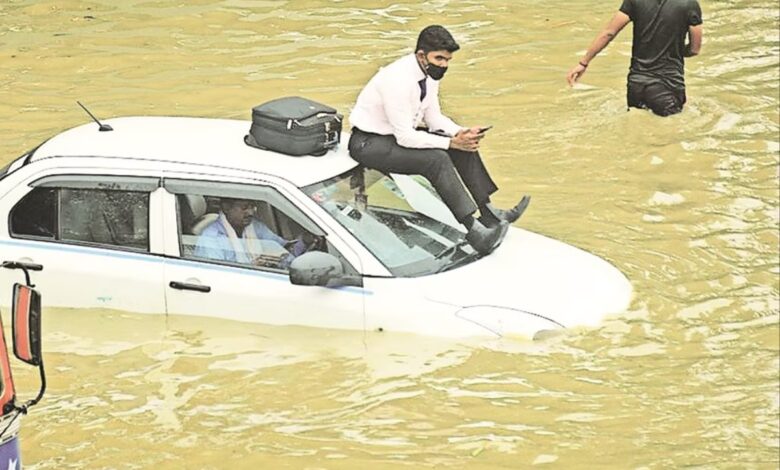
Gurugram, a city of soaring luxury apartments and multi-crore homes, found itself once again “knee-deep in grief, sewage, and questions” after a mere two-hour monsoon downpour in July 2025. In the so-called Millennium City, eight people died, electrocuted by live wires, drowned in hidden pits, swept into open drains or killed in flooded-road crashes during a rain event that should have been routine. Pregnant wife Sumanlata made over 200 frantic calls to her husband Shailendra’s phone that night; by morning, his body was pulled out of a knee-high sewer alongside their waterlogged street.
Such tragedies were entirely preventable, a dark footnote to a heavier truth: Gurugram’s civic machinery has poured hundreds of crores into drainage projects over years and still the city drowns. Taxpayers are left wading through stinking floodwater, car owners wonder where their hard-earned rupees went, and grieving families are given nothing but false assurances. As one netizen bitterly asked: “Where are the taxes going? Down the drain, literally.”
History of Waterlogging Woes in Gurugram
This failure is not new. In July 2016, a moderate 52 mm rainfall, hardly unprecedented, brought Gurugram to its knees in the infamous “Gurujam” flood. Entire expressways and arterial roads became rivers; commuters abandoned luxury cars by the dozen. After that debacle, politicians promised a waterlogging-free city and unleashed a flood of promises and funding. Chief Minister Manohar Lal Khattar’s government vowed to fix the drains once and for all, allocating massive funds for widening and new drains.

In 2018, the state sanctioned a ₹453-crore project to widen the overburdened Badshahpur drain. In 2020 the GMDA drafted a ₹290-crore plan to build stormwater catchments and revive Aravalli water bodies. Another ₹50 crore went just to routine desilting and maintenance since 2018. Yet year after year, the situation repeated itself. By 2024, despite around ₹1,000 crore spent on drainage projects city-wide, Gurugram still “gets to its knees after every spell of rain”.
Residents note the pattern: every monsoon brings new flooding spots even in areas previously dry. The same 112 critical waterlogging points get identified and “solved” on paper each year, but the cycle plays on. As Gurugram lawyer Ritu Bhariok observes, the yearly pre-monsoon clean-up has become a farce: “They conduct pre-monsoon desilting every year, but nothing changes. It’s the same story of corruption, collusion, and cheap materials.” In short, once again the city woke up to flooded basements and sewage-backed drains pushing filth into living rooms.
Timeline of failures:
2016’s Gurujam should have been wake-up call.
Instead, initiatives remained on paper or bogged down in red tape. The promised parallel drains beside Badshahpur never materialized, and widening efforts trickled on. In 2017 the new Gurugram Metropolitan Development Authority (GMDA) was formed, but it too spent years planning rainwater channel maps rather than delivering concrete results. By 2023, heavy showers again killed at least one person and submerged swathes of the city. This cycle culminated in July 2025’s deluge, which exposed every flaw: tangled master drains, encroached nullahs, endless construction without drainage, and an utterly unprepared municipal corporation.
The July 2025 Deluge: Tragedy After Tragedy
When rain lashed Gurugram on July 9–10, 2025, it didn’t take a hurricane to wreak havoc, just a normal monsoon burst. Within minutes, key roads became deep canals. Nine-year-old URA buses and sedans floated like boats, and Rajiv Chowk underpass turned into a waist-deep swimming pool. The District Disaster Management Authority even ordered a work-from-home advisory amid gridlock. Yet officials’ rhetoric about preparedness rang hollow. By nightfall, eight people were dead in Gurugram alone (nine counting nearby Ghaziabad) in rain-related incidents, all completely avoidable.
Among them was 28-year-old Shailendra Kumar, an autorickshaw driver from Kannauj. His pregnant wife Sumanlata last spoke to him at 8:19 PM on July 9; hours later, he vanished from the flooded streets. She kept dialing, some 200 times, into the night. At dawn, villagers found his body at the bottom of an open sewer. Shailendra had stepped out of his vehicle to relieve himself in knee-deep water, failed to see the submerged manhole, and was “sucked” in head-first. The police have since filed a negligence case against MCG employees, but Sumanlata’s life is shattered: widowed and broke, she now must raise two young children alone.
Also killed were 25-year-old graphic designer Akshat Jain and 26-year-old delivery boy Pawan Kumar, both electrocuted by exposed wires in flooded streets. A 22-year-old man was similarly zapped stepping on a waterlogged staircase. Three teenage boys (ages 16–17) who went swimming in an unmarked quarry drowned overnight. And 24-year-old Vanshika, a security guard, was killed when her taxi struck hidden concrete barricades washed onto the road.
These lives were not lost to superstition or unforeseeable calamity, but to civic failure and neglect. In the words of Congress MP Raj Babbar, it amounts to “institutional murder”: Gurugram can sell million-dollar flats, he said, “but can’t build a working drain”. Opposition leaders likewise railed that no one in power seemed concerned; instead the city’s woes were shrugged off as an act of God.
Taxes and Drains: ₹500 Crore Down the Pipes
So where did the money go? The Municipal Corporation of Gurugram (MCG) itself boasts of having poured ₹503 crore into drainage work from 2016 to mid-2025. Annual budgets show big allocations; e.g., over ₹74 crore spent in+ FY2024–25 alone, yet they bought no flood resistance. Detailed accounts reveal that out of that ₹503 crore, roughly ₹256.2 crore went to sewer repairs, ₹222.3 crore to building new drains, and ₹24.8 crore to maintaining existing storm lines.
But despite these tallies, the result is ZERO. After every monsoon, residents stand knee-deep in the same puddles. Photo slides from July 2025 capture the absurdity: “9 years, Rs 500 crores, and still sinking”, reads one caption. Hundreds of vehicles were towed from flooded streets while taxpayers, who funded all these projects, were left asking, “where the money went”. Citizen-activist Sanjay Lal Mathur called the entire effort a “colossal waste” and lamented, “Nothing has changed since 2016.”
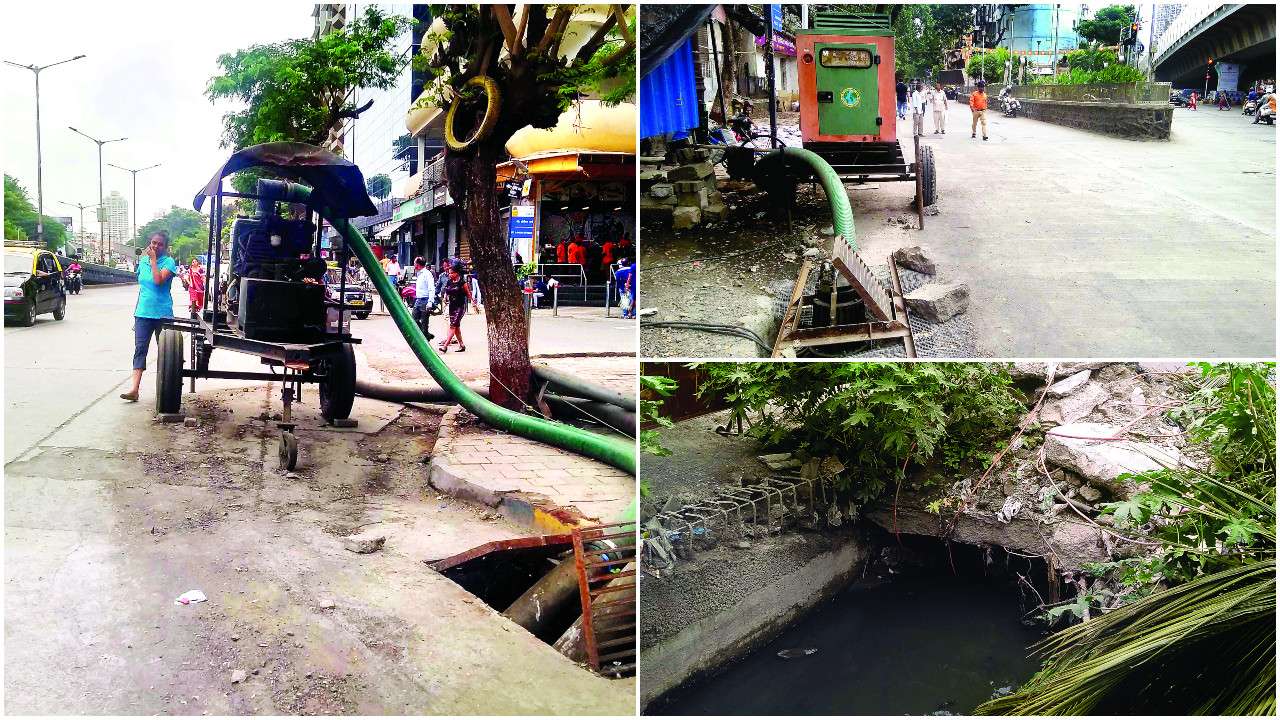
Even more has been spent outside the MCG’s books. Since Gurujam, the state government has continued pumping cash into allegedly fixing drainage: Rs.453 crore for widening Badshahpur drain (stalled); Rs.290 crore for Aravalli check dams and storm channels; about Rs.50 crore just to cleanse clogged master drains.
In 2021–22 the GMDA approved ₹15 crore for a Sector 9A drain (still incomplete), and another ₹124 crore in 2024 for new drains in Sectors 68–80, 37C/37D, 112–115. Township boards and ring-road projects absorbed crores more. With every crorepati builder and NRI taxpayer in town pitching in taxes and duties (import duties, GST, cess on cars alone can total ₹60+ lakh per luxury SUV), one would expect world-class drainage. Instead, monsoon rains turn the richest neighborhoods into water parks.
One resident cracked: “I saw at least five imported cars stranded in waterlogging… Rich people have the influence to pressure government, yet nothing is being done.” His frustration captured the zeitgeist so acutely he declared he’d rather leave the country. On X (Twitter), grief turned to satire: “Who buys ₹10cr flats in Gurgaon without checking the drainage? Just 30 minutes of rain and it’s Venice out here,” mocked one user, calling Gurugram a “bubble propped up by NRIs and investors.” Another quipped, “Millennial city with this drainage system! Where are the taxes going? Down the drain, literally.”.
Voices from the Flood
Anger at this state of affairs has been boiling for years. Hundreds of Resident Welfare Associations and citizen groups have held the authorities to account after each monsoon, issuing blistering reports and court notices. On the streets, RWA leaders like Praveen Yadav publicly fumed: “The drains of a majority of residential areas have not been cleaned since 2023. Every year, a huge amount of money is spent, but we fail. Imagine living in a house worth crores while people are moving around with buckets, throwing out water from swanky basements.” Sector-48 resident Nishant Sharma called the repeated promise of a “waterlogging-free city” a cynical “jumla” (empty slogan) repeated by every government.
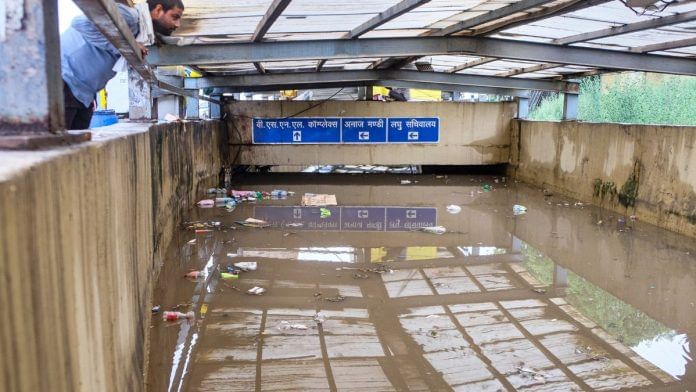
Technical experts agree the problem is engineered. Urban planners note that Gurugram’s older stormwater channels were choked by encroachments and construction long ago; the city’s new master plan bulldozed many natural drains without providing adequate outlets. In effect, we’ve forced all rain into undersized pipes and pumps. No wonder every heavy shower overwhelms the system. As architect Vivek Singh Rao warned, the only fix is drastic: “We must reclaim natural drainage, halt construction in flood-prone zones, and do a topographical survey of the entire city,” something that has never been done.
But cynical blame game ensues instead. When questioned, the MCG puts out press statements urging citizens to not throw trash into drains and promising fines for violators. Elected officials blame each other or previous administrations (the BJP points to “the old Congress regime”; the Congress retorts with “institutional murder” charges). Yet who pays the price? Not the civic bosses, they collect salaries regardless. It’s the autowallahs, delivery boys, and residents whose taxes foot these bills, all paying the price for gross negligence.
Case Studies: People vs. Pavement
The human toll of these failures is heartbreaking. Consider Shailendra’s young widow, Sumanlata. After paying months of rent and supporting her auto-driver husband from afar, she now has no family or income. In a “civilized country,” she could sue for negligence and secure her children’s future; here, she’s left praying for scraps. Or picture 25-year-old Akshat Jain: a graphic designer en route home, electrocuted by an exposed wire in ankle-deep floodwater. His family too filed a negligence case, but justice has a glacial pace. Across the city, parents whispered the same anguished words as their children’s lifeless bodies were carried away in ambulances and tractors.
Meanwhile, high-rise apartments soaked underwater are still charging parking fees as residents slog waterlogged entry gates. Luxury car owners slide through muddy ‘hydrotherapy’ in their own driveways, mocking their decades of taxes, “priceless,” social media sneered. Every year, Gurugram holds its breath hoping the infrastructure will magically hold out, and every year it doesn’t.

At the end: Accountability or Apathy?
These are not “Acts of God”. They are civic crimes of omission. As opposition leader Pankaj Dawar put it, the real deluge is “corruption flowing unchecked.” Citizens are tired of apologies and pump placements. In other countries, a single life lost from such negligence would topple officials and ignite legal reforms. Here, people die with barely a headline. As one commentator grimly noted, even hundreds of deaths in India “doesn’t shake us”, signalling a grim math of population over humanity.
Gurugram’s leaders must remember: these salaries come from taxpayers, the same people whose homes drowned and whose children died. Until there is accountability, until culprits pay fines or time for their negligence, Gurugram’s darkest monsoon nightmares will keep repeating, year after soggy year.