How Corporates Like Kotak Bank Harass Their Customers- Why They Are Not Scared Of The Law?
The Never Ending lethargic, lengthy, time and money consuming Judicial Process Is The Sole Reason For The Exploitation Of Common Man In India

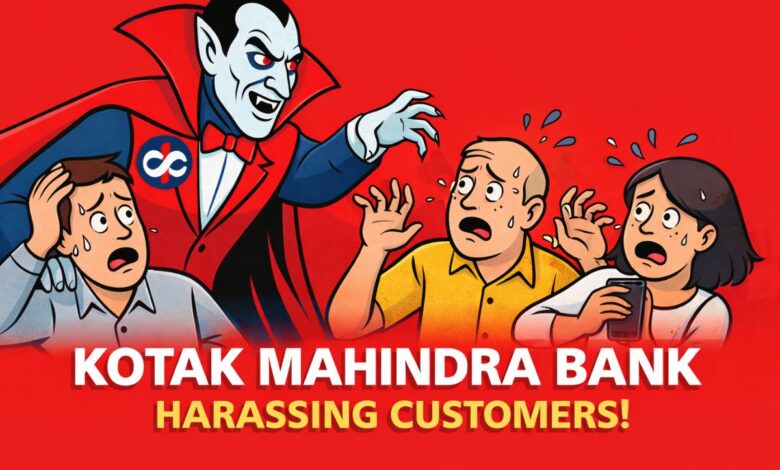
In the bustling heart of Delhi’s Janakpuri, a seemingly routine visit to a bank branch turned into a nightmare of harassment, intimidation, and outright exploitation for one customer. This individual, a loyal patron of Kotak Mahindra Bank (KMB) with a substantial kitty value exceeding 40 lakhs, sought nothing more than the early redemption of his Sovereign Gold Bond (SGB). What ensued was a shocking display of corporate indifference, escalating to physical threats, false allegations, and police involvement—all orchestrated by bank staff who seemed untouchable under the umbrella of a powerful financial institution. This incident is not an isolated aberration but a symptom of a deeper malaise plaguing India’s banking sector and judicial system.
Kotak Mahindra Bank, once hailed as a beacon of modern banking under the stewardship of founder Uday Kotak, has devolved into an entity synonymous with regulatory violations, fraud scandals, and customer exploitation. Founded in 1985 as a non-banking financial company and evolving into a full-fledged bank by 2003, KMB now boasts assets worth trillions and a sprawling network of subsidiaries in insurance, asset management, and securities. Yet, beneath this veneer of success lies a trail of penalties, criminal convictions, and unresolved grievances that expose the bank’s cavalier attitude toward compliance and customer rights.
This article delves deeply into the customer’s harrowing struggle, chronicling every step of his ordeal and the bank’s egregious misconduct. It then exposes KMB’s extensive history of wrongdoings, drawing from documented penalties, court cases, and public complaints spanning from 2017 to 2026. Finally, it critically examines why corporates like KMB can harass and exploit ordinary citizens with impunity, exploiting the lethargic pace of India’s legal battles and a judiciary riddled with inefficiencies, nepotism, and undue influence.
At its core, this is a scathing indictment of a system that prioritizes corporate interests over the common man, allowing harassment and exploitation to thrive unchecked. The narrative underscores how India’s judicial framework, designed to deliver justice, has instead become a tool for the powerful to prolong suffering and evade accountability.
The Customer’s Endless Struggle – Harassment, Intimidation, Torture, and Exploitation at Kotak Mahindra Bank’s Hands
The saga began innocuously enough on a day when the customer visited the Janakpuri A1 branch of Kotak Mahindra Bank to request the early redemption of his Sovereign Gold Bond. Armed with a meticulously prepared four-page letter detailing his request, along with copies of the bond and all necessary verification documents, he approached the operations manager, Nisha Dayal. What should have been a straightforward administrative process quickly spiraled into a confrontation emblematic of corporate bullying.
Nisha Dayal, ostensibly in a position of authority to handle such matters, flatly refused to accept the letter. Instead, she directed the customer to log a complaint through the bank’s customer care hotline—a deflection tactic that reeks of bureaucratic evasion. Undeterred, the customer politely requested that she at least acknowledge receipt of the letter and forward it to the appropriate department, a reasonable ask in any customer-oriented institution. Dayal’s response was not just a denial but an escalation: she grew furious, refusing to provide any rationale for her rejection.
This initial rebuff set the tone for what would become a protracted ordeal of intimidation. When pressed for a written reason on his letter, Dayal’s fury intensified. She demanded that the customer leave the premises immediately, transforming a simple banking transaction into a hostile standoff. The customer, asserting his rights as a high-value client with over 40 lakhs invested in the bank, declared he would stage a peaceful sit-in protest until his letter was either accepted or formally rejected in writing. This act of defiance, born out of frustration rather than malice, was met with disproportionate aggression.
In a move that highlights the bank’s willingness to weaponize security against its own customers, Dayal summoned an armed security guard from outside the branch. She ordered him to physically eject the customer, an act that borders on assault and underscores the physical intimidation tactics employed by bank staff. The customer protested vehemently, pointing out the irony: here was a bank losing market value due to poor customer service, yet treating a loyal client like a criminal. Dayal’s response? A chilling threat to level false sexual harassment allegations against him, a ploy that exploits societal sensitivities and legal loopholes to silence dissent.
Not content with verbal threats and physical coercion, Dayal dialed emergency services (112) to summon the police. Upon arrival, the officers escorted the customer away, but not before he provided them with a detailed four-page account of the incident, including the original SGB redemption letter. This police intervention, instigated by the bank, added layers of psychological torture—public humiliation, the stigma of police involvement, and the fear of baseless charges.
Post-incident, the customer’s pursuit of justice revealed the bank’s exploitative indifference. He filed a formal police complaint at Janakpuri Police Station, escalated it with a criminal complaint to the Deputy Commissioner of Police (DCP) Janakpuri, and even approached the District Magistrate at Dwarka District Court. Simultaneously, he lodged written grievances with KMB’s Principal Nodal Officer, CEO, and founder Uday Kotak himself. These actions, exhaustive and documented, should have prompted swift internal investigation and resolution. Instead, after 45 agonizing days, there was radio silence from the bank’s top management—no call, no acknowledgment, no apology. This deliberate inaction exemplifies exploitation: the bank leverages its resources to ignore complaints, betting on customer fatigue.

The harassment didn’t end there. The customer’s story illustrates a pattern of torture through systemic delays. Forced to navigate multiple bureaucratic channels, he incurred emotional, financial, and temporal costs—legal fees, travel, lost productivity—all while the bank continued business as usual. This is psychological warfare: the knowledge that a powerful entity can stonewall you indefinitely erodes one’s resolve. KMB’s conduct here is not mere negligence; it’s calculated intimidation, exploiting the customer’s vulnerability as an individual against a corporate Goliath.
Critically, this incident exposes KMB’s customer service as a facade. The bank’s refusal to accept a simple letter, escalation to threats and police, and subsequent ghosting reflect a culture where employees like Nisha Dayal operate with impunity, empowered by a hierarchy that prioritizes avoidance over accountability. The customer’s substantial investments should have afforded him VIP treatment; instead, they became leverage for the bank to dismiss him as inconsequential. This exploitation—using customer funds while denying basic services—is a betrayal of trust, amplifying the torture through financial entanglement.
In essence, the customer’s struggle is a microcosm of corporate harassment: initial denial of service, verbal and physical intimidation, false threats, police misuse, and prolonged silence. It’s a torturous cycle designed to break the spirit, ensuring the common man retreats rather than fights.
Section 2: Kotak Mahindra Bank’s Sordid History of Wrongdoings – A Chronicle of Fraud, Penalties, and Customer Betrayal
Kotak Mahindra Bank’s mistreatment of the Janakpuri customer is no anomaly; it’s part of a entrenched pattern of misconduct spanning decades. From RBI-imposed bans to criminal convictions, GST evasions, and consumer disputes, KMB’s rap sheet is extensive and damning. This section uncovers the bank’s past wrongdoings, drawing from verified sources including RBI penalties, court records, and public complaints up to January 2026, revealing a institution that repeatedly flouts laws while exploiting customers.
Starting with regulatory violations, the Reserve Bank of India (RBI) has slapped KMB with over 20 penalties since 2017, totaling more than Rs 10 crore. These aren’t minor infractions; they stem from systemic failures in IT governance, fraud reporting, and customer service. The most egregious was the April 2024 ban on onboarding new digital customers and issuing fresh credit cards, imposed due to persistent IT deficiencies identified in 2022-2023 audits.
Issues included poor inventory and access management, data security lapses, and frequent outages—like the seven-hour downtime on April 15, 2024. This ban, partially lifted in February 2025 after corrective actions, caused an 11% share price drop and slowed credit growth from 52% YoY, yet it highlighted KMB’s negligence toward customer data security, potentially exposing millions to breaches.
Monetary penalties abound: In December 2025, RBI fined KMB Rs 61.95 lakh for violations in Basic Savings Bank Deposit (BSBD) accounts, Business Correspondent overreach, and inaccurate Credit Information Company (CIC) reporting. Earlier, in April 2025, another Rs 61.4 lakh for loan system delivery and statutory restrictions breaches. October 2023 saw Rs 3.95 crore for outsourcing risks, recovery agent misconduct (e.g., harassing calls outside permitted hours), and customer service lapses. Similar fines in November 2023 (Rs 40 million jointly with ICICI), June 2019 (Rs 2 crore for promoter shareholding dilution failure), and 2017 (undisclosed for early compliance issues) paint a picture of habitual non-compliance.
GST and tax penalties further tarnish KMB’s record. In December 2025, demands totaled Rs 2.32 crore (Rajasthan) and Rs 61.2 lakh (Ahmedabad) for Input Tax Credit (ITC) disallowances in FY 2019-2021, with appeals pending but minimal impact—indicating the bank’s ability to absorb fines as business costs.
Criminal cases reveal outright fraud. In April 2025, a Chennai court convicted KMB staff for criminal breach of trust and falsification, fining Rs 20 lakh and jailing the legal head for three months over excess Rs 14.3 lakh collected from customer R. Selvaraj via dual accounts. A 2021-2025 Patna branch manager siphoned Rs 31.93 crore for gambling, misusing KYC, leading to FIRs and a money laundering probe by Bihar’s Economic Offences Unit (EOU).
In July 2025, Mumbai senior manager Gharse cheated a US citizen of Rs 2.7 crore under IPC 409; bail denied. February 2024 arrests in Gurugram involved executives opening 2,000 fake accounts for cybercriminals, siphoning crores. Older cases include 2017 demonetization fraud, 2019 Delhi cheating FIR (Rs 50 lakh unsecured loan), and 2015 SEBI-linked collateral-free shares (Rs 20 lakh).
FIRs proliferate: 2025 saw FIRs against 12 employees (with Airtel Payments) for unauthorized gold loans via WhatsApp, under BNS sections for cheating and conspiracy. 2024 Kolkata FIR under sections for loan defaults; 2021 Patna FIR for Rs 31 crore fraud.
Court disputes number over 100 on platforms like Indian Kanoon. March 2025 Supreme Court (SC) favored KMB in loan interest disputes; September 2023 SC upheld no penalty for lease non-disclosure. But others expose flaws: 2025 Bombay HC allowed a trader Rs 1.75 crore profit from a tech glitch; 2024 SC on SARFAESI auction failures (no deed registration). Cases like Kalpraj Dharamshi vs. Kotak (2020 IBC), Bombay HC on share dilution (2018-2020), and various NI Act cheque bounces highlight KMB’s litigious nature, often dragging proceedings to wear down opponents.
Consumer grievances are rampant: December 2025 Chandigarh dismissed a Rs 50k unauthorized credit card fraud complaint as premature; 2024 Delhi SCDRC ruled against KMB for unauthorized gold auction, awarding market value. 2023 cases include unauthorized transactions against KMB/HDFC, loan disputes (Kotak vs. Randhir Singh), and credit card issues (Anand Murali vs. Kotak). Undated complaints involve harassment for closed loans (e.g., Rs 6 principal ballooning to Rs 34k penalty), UPI blocks, and service deficiencies (Kotak vs. Seetharam Bhat, Manoj Nair).
Subsidiaries amplify the rot. Kotak Mahindra Life Insurance (KMLI) faced IRDAI fines: Rs 22 lakh in 2012 for improper payments; Rs 5 lakh in 2016. Court cases like Dr. K. Venkata Rao vs. KMLI (2022 NCDRC) for dishonored policies. Kotak Securities (KSL) penalties: Rs 3 lakh in 2024 for fund violations; Rs 10 lakh in 2006 for margin failures. Linked to NSE co-location scam and 2026 IEX insider trading (Rs 173 crore seized). Kotak Mahindra Asset Management (KMAMC) fined Rs 1.6 crore in 2022 for FMP violations; barred from new schemes in 2021. Kotak Mahindra Prime (KMPL) consumer disputes: 2024 Ernakulam ruled liable for no NOC post-repayment; harassment during 2020 COVID moratorium.
Other controversies: 2024 Adani-Hindenburg probe implicated KMB in short-selling via Kingdon Capital; 2018-2020 electoral bonds (Rs 60 crore to BJP) amid RBI settlements. X and Reddit brim with complaints of fraud, negligence, and harassment.

This litany of wrongdoings critiques KMB’s ethos: profit over ethics, exploiting regulatory loopholes while customers suffer. The bank’s repeated offenses, with minimal repercussions, embolden further misconduct.
Section 3: Why Corporates Like Kotak Mahindra Bank Harass Clients Without Fear of Legal Consequences
The impunity with which KMB harasses customers stems from a toxic confluence of corporate power, regulatory leniency, and judicial complicity. Corporates like KMB operate in an ecosystem where legal consequences are diluted by influence, resources, and systemic biases favoring the elite.
First, financial muscle buys deference. KMB’s vast resources—trillions in assets, over 100,000 employees—allow it to hire top legal talent, lobby regulators, and absorb fines as operational expenses. Penalties like Rs 3.95 crore in 2023 are negligible against quarterly profits, deterring nothing. This asymmetry crushes individuals: the Janakpuri customer, despite his 40-lakh kitty, lacks comparable firepower.
Second, regulatory bodies like RBI and SEBI are toothless tigers. While imposing bans and fines, enforcement is inconsistent—KMB’s 2024 digital ban was lifted in 2025 despite ongoing issues. No debarments or license revocations occur, signaling that violations are tolerated if the bank is “systemically important.” This leniency encourages harassment: why fear consequences when regulators prioritize stability over justice?
Third, political connections insulate corporates. KMB’s Rs 60 crore electoral bonds to BJP (2018-2024) coincided with favorable RBI decisions on stake dilution and CEO tenure. Such ties ensure investigations stall, as seen in fraud cases dragging without resolution.
Fourth, cultural norms in banking normalize exploitation. Recovery agents harass defaulters with late-night calls, a violation fined in 2023 yet persistent. Employees like Nisha Dayal act with arrogance, knowing internal protections shield them from accountability.
Finally, societal power imbalances amplify fearlessness. Corporates view customers as revenue sources, not stakeholders. Threats like false harassment allegations exploit gender dynamics, silencing victims. No legal consequences follow because proving malice is arduous for individuals.
In sum, KMB’s harassment thrives on economic disparity, regulatory weakness, political patronage, and cultural entitlement— a system rigged against the common man.
Section 4: Exploiting Lethargic Legal Battles – How Corporates Like Kotak Bank Terrorize Customers Unscathed
India’s judicial system, with its glacial pace and structural flaws, is the ultimate enabler of corporate harassment. Cases drag for 20-25 years, allowing entities like KMB to prolong agony, knowing commoners can’t endure the marathon.
The mantra “bail is the rule, jail is the exception” is a lifeline for the powerful. Scam artists and corporates secure bail in one hearing via nepotism, connections, and designated senior advocates. For a Rs 500 crore fraud, pay Rs 5 crore to a lawyer for immediate release, another Rs 5 crore to investigators for loopholes in FIRs and chargesheets. Then, drag proceedings for decades, securing acquittal via “lack of evidence” or “benefit of doubt.”
KMB exemplifies this: fraud cases like the 2021 Patna Rs 31 crore scam linger in courts, with bail denials rare. Even convictions, like the 2025 Chennai case, yield paltry fines and short sentences, no deterrent.
Delays stem from overburdened courts—over 4 crore pending cases nationwide. A simple consumer suit takes decades; civil disputes even longer. Corporates exploit this with adjournments, appeals, and transfers, as in KMB’s 2018-2020 Bombay HC share dilution case, settled out-of-court after years.
The common man surrenders: battling for 20 years drains finances, health, and will. 90% withdraw cases, handing victory to corporates without a fight. KMB’s ignored complaints, like the Janakpuri incident, bet on this fatigue.
Why no fear of law? Judicial nepotism—judges’ relatives as advocates—tilts scales. Political interference ensures favorable benches. Depositing 10% of scam amounts as security allows enjoyment of the rest for years.
Critique of judiciary: Lethargic, inaccessible, corruptible. Reforms like fast-track courts exist on paper but fail in practice. The system tortures the vulnerable, enabling politicians, criminals, and corporates to harass unchecked.
This exploitation is systemic: from police bias toward the powerful (as in calling 112 against the customer) to ombudsman ineffectiveness. No action on KMB because accountability is illusory—fines paid, cases delayed, victims forgotten.
Conclusion: A Call to Dismantle the Machinery of Exploitation
The Janakpuri customer’s torment, KMB’s litany of sins, and the judiciary’s complicity reveal a nation where the common man is expendable. Corporates thrive on harassment because the system is designed for it—delays as weapons, influence as shields. Urgent reforms: digitize courts, impose strict timelines, bar nepotism, enhance regulatory teeth. Until then, stories like this will multiply, eroding faith in institutions. The common man’s exploitation must end; justice delayed is justice denied, but in India, it’s justice destroyed.