How Ease Of Doing Business Became Our Most Challenging Business!
Billions of dollars of investment and thousands of potential jobs vanished not because the business plan was flawed, but because the approval process was interminable.

In a country where we’ve mastered sending spacecraft to Mars for less than the budget of a Hollywood movie, one might assume that setting up a simple business would be, well, simple. But welcome to India, dear reader, where getting a business off the ground often requires more strategic planning than a military operation and more patience than a meditation retreat. The irony of our “ease of doing business” campaigns isn’t lost on anyone who has actually tried to do business here.
Remember that time when our Prime Minister proudly announced that India had jumped 30 places in the World Bank’s ranking of “Ease of Doing Business”? We all cheered. The newspapers splashed triumphant headlines. Ministers patted each other’s backs. Meanwhile, in some government office somewhere, a file containing approval for a potentially life-saving healthcare innovation was gathering dust, moving from desk to desk with the speed of a particularly unmotivated snail.
An ₹800 Crore healthtech startup that developed an AI-powered cold chain for blood delivery across Mumbai hospitals was on the way of becoming an innovative business. Revolutionary technology, right? It cleared the market research, funding, team, everything. But then enters the red tapism of Indian Bureaucracy. When they BMC approval for lift installation, they welcomed their fate! For want of a lift approval, the field was lost. The file gathered dust and 18 months and 9 desks later, the startup had run out of cash, investors had lost patience, and another potentially transformative Indian business was laid to rest in the graveyard of bureaucratic indifference.

This isn’t a new phenomenon. Since the License Raj days, businesses in India have been navigating this labyrinth of stamps, signatures, and seemingly arbitrary approvals. Remember the famous quote from C. Rajagopalachari who compared our licensing system to a modern version of the ancient zamindari system? “I want the youngsters of India to be free from the disease of statism,” he said. Seven decades later, we’re still wrestling with the same ailment, just with fancier names and shinier offices.
Historically speaking, this bureaucratic quagmire has deep roots. The British colonial administration designed a system not meant for efficiency but for control and extraction. Post-independence, rather than dismantling this system, we doubled down on it. The 1950s and 60s saw an expansion of government control over the economy that would make even the staunchest socialist blush. Getting a telephone connection could take years. Starting a factory required permissions from dozens of departments. The infamous “Permit Raja” wasn’t just a clever nickname; it was a lived reality where government officials wielded enormous power over businesses.
Fast forward to the 1990s, when liberalization was supposed to change everything. And it did, to some extent. The most stifling aspects of the License Raj were dismantled. Foreign investment flowed in. New industries bloomed. But beneath the surface, the bureaucratic machinery continued to function with its own peculiar logic and pace.
Consider what happened to Posco’s proposed $12 billion steel plant in Odisha – the largest foreign direct investment in India at that time. After nearly a decade of waiting for approvals and land acquisition, the South Korean steel giant simply gave up in 2017.
Billions of $ of investment and thousands of potential jobs vanished not because the business plan was flawed, but because the approval process was interminable.
Or take the more recent case of semiconductor manufacturers who were wooed to set up shop in India as part of our grand ambitions to become a global chip-making hub. Multiple instances have been reported where potential investors flew in for high-level meetings only to find that their government counterparts hadn’t bothered to show up. As the saying goes, “Time and tide wait for no man” – and neither do global investors with options in more responsive markets.
The tragedy in all this isn’t just about lost businesses or investments. It’s about the dreams that die, the innovations that never see the light of day, and the problems that remain unsolved. When Union Minister Piyush Goyal criticizes startup founders for “not innovating and just producing delivery boys and girls,” one wonders if he’s considered how many innovative ideas have been strangled in the cradle by his own government’s bureaucratic processes.
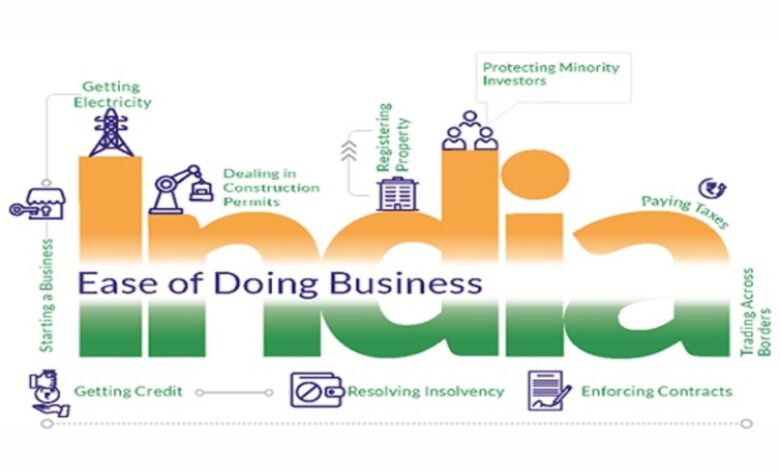
Ashneer Grover’s pointed comment that “only politicians need a reality check in India, and all others know the harsh and fake realities” perhaps is very true. We all know the realities behind atma nirbhar bharat and vishwa guru image. The dissonance between our grand pronouncements about becoming a startup nation and the ground reality faced by entrepreneurs is stark. We talk of becoming a $5 trillion economy while a ₹10 stamp wields more power than a ₹10 Crore idea.
The modern Indian entrepreneur faces challenges that would make Sisyphus sympathize. They must navigate not just market forces but also a bureaucratic obstacle course that seems designed to test their resolve rather than facilitate their success. A small manufacturing unit might need to comply with over 70 laws and file hundreds of returns annually. A restaurant in Delhi reportedly needs 45 different licenses to operate legally. One wonders if the famous Indian “jugaad” mentality developed not despite but because of these hurdles.
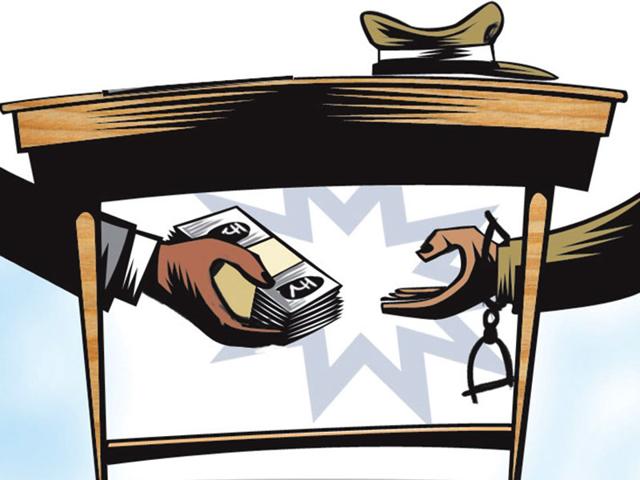
And it’s not just about the big players. The MSME sector, often called the backbone of our economy, bears the brunt of this complexity. Small business owners spend precious time and resources chasing officials for basic licenses, sending WhatsApp reminders for processing applications, and paying “speed money” to move files that should move on their own. The opportunity cost of this time and energy is incalculable.
What’s particularly frustrating is that technology has offered solutions to many of these problems. Digital India was supposed to reduce human intervention and therefore corruption. Single window clearance systems were promised. E-governance was the buzzword. Yet somehow, in practice, the single window often leads to multiple back doors, each guarded by its own gatekeeper with palm outstretched.
The most painful aspect of this situation is that there’s no accountability for the damage caused. No one measures how many businesses die not because they failed the market test but because they couldn’t navigate the compliance circus. No bureaucrat loses sleep over a file that took eighteen months to process. No minister steps down because a billion-dollar investment went elsewhere due to delays in their department.
In a perverse way, our bureaucratic system has achieved what our politicians only dream of – true immortality. Governments come and go, policies change, political slogans evolve, but the fundamental nature of our bureaucracy remains stubbornly constant.
If India truly aspires to be a vishwa guru (world teacher) in business and innovation, perhaps the first lesson should be directed inward. Until we address the fundamental disconnect between our aspirations and our administrative realities, we’ll continue to lose brilliant ideas to bureaucratic black holes. We’ll keep wondering why, despite having some of the world’s best talent and a massive market, we don’t produce global business champions at the rate we should.
As the ancient wisdom goes, “A journey of a 1000 miles begins with a single step.” For India’s ease of doing business journey, perhaps that step is acknowledging that ease isn’t just about rankings and campaign slogans. It’s about fundamentally reimagining the relationship between the state and business – from adversarial to supportive, from controlling to enabling. Until then, our entrepreneurs will continue to need not just innovation and capital, but superhuman reserves of patience and perhaps a sense of humor to survive the great Indian bureaucratic comedy.