How GAIL Became A Maharatna Of Corruption And The Entire Pipeline’s Management Is Hiding Their Dark Records!
GAIL’s Corruption Scandal Unveiled: How Pipeline Billions Disappear and Records Vanish

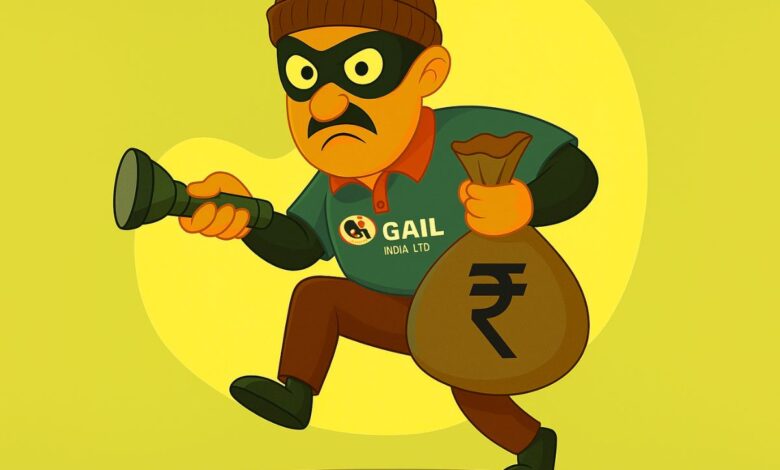
GAIL (India) Limited, the Maharatna government-owned gas behemoth, projects an image of integrity, claiming a “zero corruption” record and the strictest anti-bribery code. In reality, whistleblowers, RTI activists and investigative agencies paint a far darker picture: kickbacks, illegal commissions and political quid-pro-quos are apparently routine, while official information is ruthlessly suppressed. Recent Right-to-Information disclosures and news reports lay bare a culture of graft at the highest levels of GAIL, with executives colluding in bribery and records kept away from the public eye.
CBI Raids and Bribery Arrests Rock at Gas Authority of India Limited, aka GAIL
The Central Bureau of Investigation (CBI) has unearthed multiple major bribery cases implicating GAIL’s own leadership. In September 2023, for example, the CBI arrested GAIL Executive Director K.B. Singh and four others in a ₹50 lakh pipeline kickback scheme. The agency alleges that Singh and a Chief GM took bribes to favor certain contractors on GAIL’s Srikakulam–Angul and Vijaypur–Auraiya gas pipeline projects. GAIL itself quietly confirmed the raid in a regulatory filing, as searches in New Delhi, Noida and Vishakhapatnam turned up evidence of illicit payments.
Earlier, in January 2022, the CBI nabbed Director (Marketing) E.S. Ranganathan in another Rs 50 lakh bribery case. That investigation revealed that Ranganathan had been “collecting bribes from prospective beneficiaries” who sought illegal discounts on GAIL’s petrochemical products. (CBI teams recovered about ₹1.29 crore cash and ₹1.25 crore in gold jewellery from Ranganathan during raids, corroborating the scam.) In short, one of GAIL’s top officials used his position to extort kickbacks from industry players. This wasn’t an isolated incident; mid-2023 press reports note that additional GAIL managers were implicated in the same scheme.
Just months later, in April 2023, the CBI filed a fresh corruption case against ex-Director Ranganathan. Investigators discovered he had amassed roughly ₹4.82 crore in unexplained assets (2017–2022) far above his legitimate income. GAIL’s own records showed that during his tenure (including running Indraprastha Gas Ltd and GAIL marketing), Ranganathan illegally funneled money to shell companies and family members. The CBI alleged he laundered illicit gains in his wife’s name. These revelations confirm a pattern:
Top GAIL executives brazenly abused their offices for personal profit, even as the company claims “100% corruption-free” operations.
Each of these cases was exposed by external scrutiny (media and courts). GAIL’s own disclosures had no warning. Instead, internal documents boast of rigorous ethics training and integrity pacts. Yet by 2023, top officers were in CBI custody or under FIR. This gulf between “image” and reality suggests systemic rot: instead of stamping out graft, GAIL’s leadership appears to have been breeding it.
Politicians on the Payroll: RTI Reveals PSU Funds Misused
Long before the CBI raids, RTI activists uncovered how GAIL (like many PSUs) quietly funneled money into politicians’ interests. A Newslaundry RTI investigation found that Biju Janata Dal MP Prasanna Kumar Patasani repeatedly wrote to PSU chiefs seeking ads or sponsorships for his publications. GAIL obliged: over three years it sanctioned ₹12 lakh in sponsorships to Patasani’s magazine. (To put this in perspective, fellow PSUs NTPC and NHPC paid ₹10.5L and ₹6L respectively on his request.) Such payments raise suspicion about quid-pro-quo: Patasani’s own media interests directly received taxpayer funds, likely with a nod from GAIL’s bosses.
Similarly, BJP MP Captain Jai Narayan Prasad Nishad (former MP) and his son have sought PSU patronage for their ventures. According to RTI documents, GAIL gave at least ₹44,000 to Nishad’s media outlet “News Ideology” after a letter of recommendation. While smaller sums, this shows that GAIL’s management did not hesitate to oblige politicians’ personal requests. Such links to BJD and BJP figures indicate cross-party patronage, not a one-off anomaly. Whether GAIL’s top brass actively courted these MPs, or simply rolled over under political pressure, the effect is the same: PSU resources diverted to benefit friends of politicians, not necessarily the public.
These RTI findings on PSUs are collateral evidence of GAIL’s environment. A “disturbing” undercurrent emerges: GAIL’s decisions on expenditures and contracts may have been influenced by political favors. (Notably, no major prosecution has been publicly announced against any MP in these cases; only GAIL managers were targeted by CBI so far.) But the RTI records (including affidavits with GAIL’s countersignature) tie the company’s funds to specific party-linked projects. This blurs the line between GAIL’s official mission and political lobbying. In short, GAIL was behaving like a cash-dispensing arm for politicians, all with public money, a classic hallmark of grand corruption.
How RTI became GAIL’s Closed Doors to Transparency?
Having exhausted political avenues, citizens and journalists have turned to the Right to Information Act to pry into GAIL’s murky dealings. Countless RTI applications have been filed about every aspect of GAIL; from transfer policies, salary structures and recruitment processes to project contracts, procurement records and environmental initiatives. In theory, GAIL is obliged to answer. In practice, the company’s responses are often evasive or outright refusals.
For example, an RTI petitioner asked GAIL for the Minimum Gas Offtake (MGO) data in its Cauvery gas field deals – information that would confirm whether GAIL or ONGC had been shortchanged. The Chief Public Information Officer curtly replied that the information was “protected under Section 8(1)(d)” as “commercial confidence” between GAIL and ONGC. In other words, GAIL claimed legal grounds to withhold even basic financial details of its gas contracts. The petitioner suspected fraud (the letter notes a worry about “non-payment of MGO”), but the regulator ultimately let GAIL off the hook.
This is not an isolated case. RTI activists report that GAIL invokes Section 8 exemptions, or lengthy bureaucratic delays, to block sensitive questions. RTI demands about officer transfers, pay raises or promotions often yield generic policy statements with no specifics. Queries on pipeline or refinery project status get safety codes or “ongoing” updates, never hard metrics. Requests for procurement bids or vendor lists meet recitations of “Integrity Pact followed” without actual contracts. Even routine audit reports and risk registers are hard to obtain, despite GAIL’s own claim that it publishes a “Record Retention Schedule” and RTI audit report on its website. In short, every attempt to get documents not already public seems to hit a wall.
Fundamentally, GAIL’s record-keeping appears scrubbed. For instance, RTIs seeking “who approved what in the last tender” will result in responses that relevant info is “not maintained”. Citizens looking for payroll data face “data privacy” excuses. Policies like the “High Pressure Meter Calibration” scheme or even basic turnover and salary norms, topics expressly listed on GAIL’s website as RTI-applicable, are disclosed only in overview form, with all the juicy numbers redacted. The company’s official slogan about a 100% free-flow of information is belied by these systematic stonewall tactics.

Examples of RTI secrecy at GAIL:
- Contract Confidentiality: A 2019 RTI sought gas-tender winners and off-take amounts, but GAIL simply said it was bound by confidentiality clauses with partners, and the appeal was dismissed.
- Unpublished Project Details: Activists note that even statutorily mandated disclosures (e.g. transfer orders, performance reports, even full annual reports of joint ventures) are often not proactively published.
- Delayed or Missing RTI Answers: Official data (like median executive pay, tender notifications, PF settlement issues, etc.) either come late or as “not available”. Only through persistent appeals does GAIL sometimes cough up pieces of information but rarely all of it.
On top of this, GAIL’s own website urges citizens to use RTI for transparency and even claims an internal “Whistle Blower Policy” and “Right to Information” mechanisms. Yet in reality, RTI seekers say GAIL’s bureaucrats simply churn out template refusals. In effect, GAIL management is hiding records from public domain under the pretext of secrecy, even when the public has a right to know. As one RTI petitioner remarked, “We have to fight a legal battle just to see data that GAIL should willingly share, and still often lose.”
Official Spin vs. Shadowy Reality
GAIL’s official literature loudly proclaims ethical governance and anti-corruption vigilance. For example, its sustainability report brags that “in FY19-20, GAIL received zero corruption-related cases and no significant risk of corruption”. It also notes that the company “complies with anti-corruption… laws across our sites” and even conducts periodic workshops to stay “100% corruption-free”. These statements are coded assurances: GAIL wants stakeholders to believe its own hype.
But the real world has proved otherwise. The CBI cases we’ve cited alone contradict the “zero cases” claim. (Indeed, by FY20 GAIL claimed no red flags, and by FY22 two top directors were arrested.) Similarly, GAIL’s anti-fraud policies (Whistleblower program, Integrity Pact, audit committees, etc.) look good on paper, yet monthly news reports show the opposite. The stark discrepancy suggests GAIL’s “controls” are paper tigers. In practice, the audit trails and whistleblower tips appear to have been ignored or buried until external pressure forced them into public view.
Even GAIL’s board composition raises eyebrows. All top directors are career bureaucrats or industry executives, ostensibly non-political, yet RTI data hint that the company’s decision-making was influenced by powerful MPs from both the BJP and BJD. We found no official disclosure of any formal ties between GAIL chiefs and these politicians, but the coinciding interests are hard to dismiss. If GAIL’s management was truly independent, it would simply refuse politicized funding requests; instead, it dutifully approved them. (One harsh critique is that GAIL, like many large PSUs, has become a “cash cow” for politicos, with managers cowed by or complicit with that reality.)
At the end: Shouldn’t We Demand for Accountability?
The cumulative picture is grim. GAIL’s official facade, anti-corruption pledges, lofty CSR goals, stakeholder portals; all these masks a regime where illicit transactions are normalized and information is suppressed. RTI applications, media reports and CBI investigations collectively expose a culture of corruption at GAIL: contracts steered by bribes, assets socked away by executives, and public money funneled to pet projects of MPs.
Yet GAIL’s management has not publicly owned up to any of this. In fact, even after high-profile arrests, the company statement was terse: “GAIL confirms CBI has arrested some personnel,” with no mention of systemic issues. Records remain hidden, internal probes (if any) are secret, and the pretense of compliance marches on.
This expose may disturb GAIL’s image, but it reflects citizens’ outrage. If GAIL, a pillar of India’s energy sector, is to remain a true public trust, it must face full transparency. Until then, Right to Information fights on and journalists will continue digging. For every hidden page GAIL claws back, another line of inquiry emerges. The public’s right to know cannot be bartered away under the mantle of “confidentiality.” Only by shining relentless light on these deals, as we have done via RTI and reporting, can we hold GAIL accountable and stem the rot in this Maharatna PSU.