How IPO Bound Cashify Is Cheating Its Vendor Over Unpaid Dues?
A Vendor's ₹36 Lakh Nightmare Raises Questions About What Lies Beneath the Unicorn Dreams- A deep dive into Payment Practices, Vendor Relations, and the Road to Public Markets

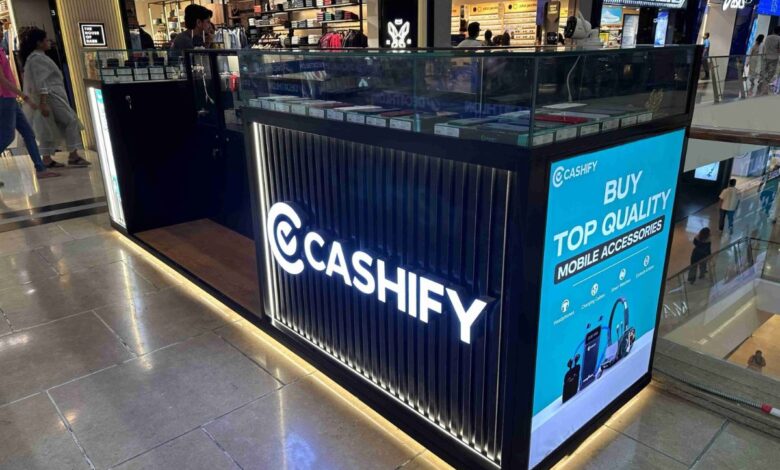
The Cashify Cash Crunch: When India’s IPO-Bound Re-Commerce Giant Allegedly Forgets to Pay the Help
There’s an old saying in business: you can tell everything you need to know about a company by how it treats the people who have no power over it. The customers, yes. But more tellingly, the vendors—the small suppliers, the service providers, the MSMEs grinding away in the background while the big brand takes the spotlight and the glory.
Which brings us to Cashify, India’s self-proclaimed “most trusted” platform for buying and selling used electronics. The company, formally known as Retail Fiesta Private Limited, has been making all the right noises about going public by fiscal year 2028. With reported revenues of ₹1,120 crore in FY25, backing from heavyweight investors like Prosus and Amazon, and a valuation approaching ₹2,000 crore, Cashify represents the kind of startup success story that makes venture capitalists salivate and business school case studies write themselves.
But here’s the thing about IPOs—they have a funny way of forcing skeletons out of closets. And according to a legal notice, currently sitting in a lawyer’s office in New Delhi, Cashify may have some rather expensive skeletons rattling around. Specifically, one vendor—a registered MSME that provided services under a formal agreement—is alleging that Cashify owes them ₹36,24,770 in unpaid invoices. And they’re not happy about it.
Not happy to the tune of ₹92,54,770 in total claims, to be precise, once you add statutory interest, contractual penalties, damages for alleged illegal termination, compensation for harassment and reputational damage, and legal costs. That’s quite a bill for a company preparing to ask the public to invest their hard-earned money in its future.
The Anatomy of an Alleged Stiffing: A Timeline
Let me walk you through how, according to this legal notice, a routine business relationship allegedly transformed into a multi-crore legal dispute. It reads like a tragicomedy in several acts.
Act One: The Courtship (March 2025)
Our story begins in early March 2025, when the vendor—let’s call them VendorCo to protect their identity—reached out to Cashify with a proposal. Email exchanges show discussions about facility visits, mystery shopping insights, and operational planning. Picture eager entrepreneurs presenting their services, Cashify executives nodding thoughtfully, everyone optimistic about a mutually beneficial partnership. By late March, they’re talking implementation. POCs are initiated. SOPs are drafted. This is the honeymoon phase, where both parties are on their best behavior and the future looks bright.
Act Two: The Wedding (April-May 2025)
Throughout April and into May, lawyers are vetting agreements. NDAs are executed with the solemnity of prenuptial contracts. Proforma invoices are submitted. Everything is proceeding with the bureaucratic precision that signals Serious Business. On May 29, 2025, the Service Agreement is formally executed, with retrospective effect from April 1, 2025. VendorCo begins providing services. Cashify accepts these services without protest or objection. Invoices are raised. The business relationship appears to be humming along nicely.
Act Three: The Trouble in Paradise (July 2025)
Then, between July 17-21, 2025—less than two months after the ink dried on the agreement—something shifts. Cashify allegedly attempts to terminate the relationship, citing “alleged performance issues.” VendorCo, naturally, disputes this characterization and points to what they claim are performance highlights. They request discussions. Now, here’s where it gets interesting. According to the legal notice, this termination was “abrupt” and did not follow the mandatory notice or cure provisions in the contract. In plain English: if the contract says “if you have a problem with our work, you must notify us and give us a chance to fix it,” and you instead just say “we’re done here,” you might have yourself a breach of contract problem.
Act Four: The Collections Drama (Late July-September 2025)
What follows reads like a vendor’s worst nightmare. Multiple payment reminders go out. VendorCo invokes MSME guidelines requiring timely payment. They escalate to various heads of departments at Cashify. They send physical invoices via courier (consignment number and all—someone was keeping very careful records).
On September 2025, VendorCo makes a formal escalation noting the ₹36,24,770 in pending payments and threatening statutory and criminal remedies. They file a grievance with the Micro & Small Enterprises Facilitation Council under case number UDYAM-HR-05-0038526/M/00001. The MSEFC issues a notice advising Cashify to pay within fifteen days. According to the legal notice, that notice was ignored.
By September 11, having received no response or payment despite multiple channels of communication and even a quasi-governmental intervention, VendorCo’s lawyers send the legal notice we’re discussing today. The final “pay up or face the legal music” warning.
The MSME Angle: When David Takes On Goliath, He Brings Statutory Interest
Here’s something most people don’t know about Indian business law: if you’re a big company and you stiff a small one, the little guy has some surprisingly sharp legal teeth. The Micro, Small and Medium Enterprises Development Act of 2006—the MSMED Act for those who enjoy acronyms—was specifically designed to prevent exactly this kind of situation. Large companies have historically used small suppliers as informal sources of working capital, paying whenever they felt like it while the MSME struggled with cash flow.
The MSMED Act says: not anymore. Under the law, if you’re a buyer who doesn’t pay an MSME supplier within the agreed period (or forty-five days if no period is specified), you don’t just owe the principal—you owe interest. Specifically, you owe interest at three times the Reserve Bank of India’s bank rate, compounded monthly.
Let’s do some fun math. The RBI bank rate as of September 2025 sits at approximately five point seven five percent. Triple that, and you get seventeen point two five percent per annum, compounded monthly. That’s not credit card interest rate territory, but it’s getting close. And it’s mandatory. According to VendorCo’s calculations in their legal notice, Cashify allegedly owes approximately ₹1,30,000 in statutory interest just through mid-September 2025, and that number grows with each passing month like some kind of financial Tribble.
But wait, there’s more. VendorCo is also claiming contractual interest at eighteen percent per annum under Clause 8.6 of their agreement (another ₹2,50,000). They’re claiming ₹25,00,000 in damages for material breach including illegal termination, breach of trust, and potential criminal liability under provisions addressing cheating and criminal breach of trust. They want ₹20,00,000 for mental harassment, reputational damage, business disruption, and consequential losses. And they want ₹7,50,000 for legal costs.
The grand total? ₹92,54,770. That’s ninety-two lakh, fifty-four thousand, seven hundred and seventy rupees. For a company that allegedly just didn’t want to pay a ₹36 lakh bill.
The Broader Pattern: Not Just Vendors Feeling the Pinch
Now, you might think: okay, this is one disgruntled vendor. Maybe their work genuinely wasn’t up to snuff. Maybe this is just a business dispute that will get settled quietly. Companies have disagreements with suppliers all the time. Fair point. Except this vendor payment allegation doesn’t exist in a vacuum. Remember our earlier investigation into consumer complaints against Cashify? The one that documented hundreds of customers complaining about pricing disputes, payment delays, refund problems, and quality control failures?
Let’s revisit some of those payment-related gems, shall we?
The Delayed Payment Classics:
“I had sold a phone. But its been two days the money is not credited in my account. I keep calling the customer care but they keep telling me to keep waiting more and more days. Now they have started to ignore my calls and messages.” Two days might not sound like much, but remember—Cashify promises immediate payment upon device pickup. When you’re a customer who might have sold your phone to cover an immediate expense, two days of radio silence after handing over your device is an eternity.
The Refund Quagmire:
“They have bad refund process. I requested to cancel a item on 22 Nov and its 13 Dec. Did not got refund still doing conversation.” Three weeks without a refund. For context, Indian e-commerce regulations require refunds within specified timelines, and three weeks isn’t it. One particularly heart-wrenching complaint described a customer who cancelled an iPhone order because their father was hospitalized and they needed the money—but couldn’t get their refund.
The Alleged Coercion:
“Dreadful experience I gave my phone on Cashify at 27/09/2025. The payment was stuck and they asked me to buy boat ear phones and then they will transfer the payment.” Read that again. According to this complaint, Cashify allegedly held a customer’s payment for their sold device hostage until they purchased additional products. If true, this wouldn’t just be poor customer service—it would potentially be illegal coercion.
The IPO Elephant in the Room
So we’ve got consumer payment complaints. We’ve got a vendor alleging ₹36 lakh in unpaid bills. We’ve got a company that wants to go public within the next few fiscal years. And we’ve got a question that any sophisticated investor should be asking: what’s really going on with Cashify’s payment practices?

Here’s why this matters beyond just one vendor’s grievance or scattered customer complaints:
Cash Flow Versus Revenue Growth
Companies preparing for IPOs face intense pressure to show revenue growth. Investors love seeing that upward-sloping line on the revenue chart. But revenue and cash flow are not the same thing. You can book revenue when you make a sale or provide a service, even if you haven’t collected payment yet. In accounting terms, you have “accounts receivable.”
Similarly, you can delay paying vendors, which improves your cash position in the short term even though you’ve booked the expense. You have “accounts payable.” Smart companies manage this balance carefully. Less smart companies—or companies facing cash crunches—start stretching payables. They delay vendor payments, slow-roll refunds, find reasons to reduce what they owe customers for devices purchased. In the short term, this makes the cash flow statement look better than it really is. But eventually, bills come due. Vendors lawyer up. Customers file complaints. The MSEFC gets involved. And suddenly your path to IPO has some expensive potholes.
Working Capital Management or Financial Stress?
Every CFO will tell you that managing working capital—the balance between what you collect and what you pay out—is crucial to business operations. Optimizing payment terms with vendors is standard practice. Net thirty, net sixty, sometimes net ninety days for payment isn’t unusual in B2B relationships.
But there’s a difference between negotiated payment terms and allegedly ignoring contractual obligations. According to VendorCo’s legal notice, they had an agreement. They fulfilled their obligations under that agreement. They raised invoices that were accepted without objection. And then payment just… didn’t happen. That’s not working capital optimization. That’s potentially a warning sign of financial distress or, at minimum, serious operational dysfunction.
The Director Liability Factor
Here’s a fun legal tidbit that should make Cashify’s directors sit up and pay attention: the legal notice specifically mentions personal liability on directors and officers for company offenses under Section 141 of the Negotiable Instruments Act and corresponding provisions of the Bharatiya Nyaya Sanhita (the new criminal code).
What this means in plain English: if a company screws up badly enough, the directors can personally face criminal liability. It’s not just the corporate entity on the hook—it’s the actual humans making the decisions. For a company hoping to attract public market investors, having your directors potentially facing criminal proceedings is what we in the business call “not ideal.”
The Humor in the Horror: A Field Guide to Corporate Payment Avoidance
Look, if you’re going to allegedly stiff your vendors, you might as well do it with style. Based on VendorCo’s timeline and the broader pattern of payment complaints, here’s what appears to be the playbook:
Step One: The Enthusiastic Onboarding
Start with genuine enthusiasm. Respond to proposals promptly. Schedule calls. Visit facilities. Use phrases like “exciting opportunity” and “long-term partnership.” Make the vendor or customer feel special. This is the corporate equivalent of love bombing, and it works because most people want to believe in good intentions.
Step Two: The Bureaucratic Ballet
Execute agreements with all the formal pomp of a treaty signing. NDAs! Legal vetting! Formal signatures! Create the impression of a sophisticated, professional operation where everything is done by the book. This builds trust and, conveniently, creates legal obligations that the vendor will later need to enforce through expensive litigation.
Step Three: The Service Acceptance Without Protest
Accept the work or products. Don’t object at the time. Let invoices pile up without dispute. This is crucial because it becomes much harder later to claim “poor performance” when you accepted the work without complaint at the time.
Step Four: The Vanishing Act
When payment comes due, suddenly become very hard to reach. Emails go unanswered. Calls go to voicemail. The WhatsApp bot is mysteriously “not working.” Customer service representatives develop amnesia about previous promises. It’s like corporate ghosting, except with money on the line.
Step Five: The Escalation Runaround
When the vendor or customer escalates, create a maze of referrals. “Talk to this department.” “No, talk to that person.” “File a complaint through this channel.” “Actually, you need to go to the physical store.” “The store says to contact online support.” It’s bureaucratic tennis, and the vendor is the ball.
Step Six: The Performance Pretext
If the vendor persists, suddenly discover “performance issues” with their work—work you previously accepted without objection. Attempt to terminate the relationship without following contractual procedures. Bonus points if you time this after they’ve completed substantial work but before payment is due.
Step Seven: The Statutory Ignore
When the vendor files complaints with statutory bodies like the MSEFC, simply ignore the notices. What are they going to do, actually enforce their orders? (Spoiler alert: yes, they can, and those orders become executable like civil court decrees.)
Step Eight: The Legal Notice Limbo
Even when you receive a formal legal notice threatening arbitration, civil suits, and criminal complaints, maintain radio silence. After all, litigation is expensive and time-consuming. Many vendors will give up rather than pursue lengthy court battles. It’s a calculated bet on exhausting the other party’s resources and patience. It’s a terrible strategy if you care about things like “business ethics” or “sustainable relationships” or “not getting sued.” But if your goal is to maximize short-term cash retention at the expense of long-term reputation? Well, it’s certainly a strategy.
What This Means for Prospective Investors
Let’s say you’re an institutional investor, a high-net-worth individual, or just a retail investor with some money in your demat account. Cashify announces its IPO. The DRHP (draft red herring prospectus) lands on SEBI’s desk with glossy promises about India’s growing re-commerce market, impressive revenue growth, and a compelling tech-enabled business model.
Should you invest?
Well, here are some questions you might want answered first:
What’s in the Accounts Payable? How much does Cashify currently owe vendors? What are the payment terms? Are there disputed amounts? Any litigation pending? The VendorCo situation suggests there might be more lurking in the accounts payable that hasn’t surfaced publicly yet.

What’s the Customer Refund Liability? If there are systematic issues with processing refunds, that creates a liability that might not be properly accounted for. How much are they holding in customer refunds that haven’t been processed?
What’s the Legal Exposure? Beyond this one legal notice, how many other vendor disputes exist? How many consumer complaints have escalated to consumer courts? What’s the potential liability from all these disputes?
What Do the Unit Economics Really Look Like? If the company is systematically paying vendors late or customers less than quoted to manage cash flow, the true unit economics of transactions might be worse than they appear. Revenue might look good on paper, but what’s the actual cash conversion?
Is This Growing or Struggling? Companies with healthy cash flow don’t typically face vendor payment disputes or delay customer refunds for weeks. These are often symptoms of cash flow stress. Is Cashify growing into a dominant market position, or barely keeping its head above water?
What’s the Governance Like? The legal notice was addressed not just to the company but to multiple named executives including directors. If directors aren’t ensuring basic contractual obligations are met, what does that say about corporate governance? None of this means Cashify is a bad investment per se. But it does mean any prudent investor should dig deeper than the glossy pitch deck and ask uncomfortable questions.
The MSME David Versus the Unicorn Goliath
There’s something almost poetic about this dispute. Here you have VendorCo—a small MSME, exactly the kind of business that India’s startup ecosystem supposedly empowers and partners with—going up against a company valued at nearly ₹2,000 crore backed by some of the world’s most sophisticated investors.
VendorCo doesn’t have a war chest of investor millions. They have an agreement, invoices, email records, and the MSMED Act. David had a sling and five smooth stones. VendorCo has legal notices and statutory interest calculations.
The MSMED Act was created specifically for situations like this—to prevent large companies from using small suppliers as informal banks. The three-times RBI rate interest provision isn’t punitive for its own sake; it’s designed to make payment delays more expensive than just borrowing from a bank, thereby incentivizing timely payment.
The MSEFC (Micro & Small Enterprises Facilitation Council) exists to provide a forum where small businesses can get justice without the cost and delay of regular court litigation. Awards from the MSEFC are executable as civil court decrees, and any challenge requires depositing seventy-five percent of the awarded amount upfront—making frivolous appeals difficult.
In other words, the law is stacked in VendorCo’s favor, precisely because lawmakers recognized that in normal commercial relationships, it’s stacked the other way. The question is whether that legal framework is strong enough to extract ₹36 lakh plus interest from a company preparing for a multi-hundred-crore IPO.
The Way Forward: Questions Cashify Needs to Answer
Look, every company has disputes. Amazon has vendor issues. Apple has supplier controversies. McDonald’s has franchise fights. This is normal in business.
But what separates respected companies from problematic ones is how they handle those disputes.
Respected companies respond to legitimate claims. They negotiate in good faith. If they genuinely believe the vendor’s work was substandard, they document it contemporaneously, follow contractual cure procedures, and if necessary, litigate—but they don’t just ignore statutory notices. Respected companies don’t let customer refunds languish for weeks. They don’t allegedly hold payments hostage to force additional purchases. They don’t have hundreds of complaints across multiple platforms describing identical patterns of behaviour.
So here are the questions Cashify’s leadership—Mr. Mandeep Manocha (Founder/Director), Mr. Khyat Mahajan (Director), Mr. Rahul Vats (Director), and the various heads of departments named in the legal notice—should be answering:
To VendorCo and Similar Suppliers:
- Why were invoices accepted without objection if there were genuinely performance issues?
- Why was the termination allegedly conducted without following contractual procedures?
- Why was the MSEFC notice ignored?
- What’s the actual dispute here, and why can’t it be resolved through the arbitration clause both parties agreed to?
To Customers:
- Why do so many customers report dramatic reductions from online quotes to pickup offers?
- Why do refunds take weeks when regulations require much faster processing?
- What’s being done to fix quality control on refurbished devices?
- How is customer service being improved to actually resolve complaints?
To Prospective Investors:
- What’s the total accounts payable aging schedule?
- How many vendor disputes exist beyond VendorCo?
- What’s the litigation reserve in the balance sheet?
- What are the true unit economics when customer payments match quotes and vendor bills are paid on time?
- How is the company planning to fix these operational issues before IPO?
The Public Interest Dimension
Why does any of this matter beyond the parties directly involved? Because Cashify wants to be a public company. It wants to take money from public investors—potentially including retail investors, pensioners, mutual funds managing common people’s savings.
Public companies have heightened responsibilities. They’re subject to SEBI regulations, disclosure requirements, and governance standards that private companies can sometimes skirt. When you ask the public to invest in your future, you’re implicitly promising that your house is in order. If that house includes allegedly unpaid vendor bills, ignored statutory notices, customer payment issues, refund delays, and quality control problems, the public has a right to know before they invest.
Moreover, the MSME sector is the backbone of India’s economy. These are the companies that employ the most people, drive innovation, and fuel growth. When large companies—especially venture-capital-backed darlings heading for IPOs—allegedly treat MSMEs as disposable or as sources of free working capital, it undermines the entire ecosystem.
If Cashify wants to be “India’s most trusted” platform, trust has to flow in all directions: to customers, yes, but also to vendors, suppliers, service providers, and partners. You can’t be trusted in the marketplace if you’re allegedly unreliable in the back office.
The Bottom Line
As of this writing, according to the legal notice, Cashify allegedly owes one vendor ₹36,24,770 in principal unpaid invoices, with the total claim reaching ₹92,54,770 when you add interest, damages, and legal costs. That vendor has filed a grievance with the MSEFC, sent a legal notice threatening arbitration and criminal proceedings, and appears prepared to pursue this to the end.
This might get resolved quietly. VendorCo might settle for a fraction of their claim. Cashify might dispute the allegations and present a completely different version of events. The truth might lie somewhere between the vendor’s allegations and whatever defense Cashify eventually articulates. But here’s what we know for certain: a formal legal claim exists. Statutory interest is accruing daily. An MSEFC case has been filed. And this is happening while Cashify plans an IPO within the next few fiscal years.
For investors, the lesson is clear: look under the hood. Revenue growth is lovely, but cash flow pays the bills. Market positioning is wonderful, but operational excellence keeps customers happy and vendors paid. Unicorn valuations are exciting, but they mean nothing if the fundamentals are shaky. For vendors and customers, the lesson is equally clear: document everything. Keep emails. Track invoices. Know your legal rights. File formal complaints through proper channels. Don’t assume that because a company has famous investors or impressive valuations, it will treat you fairly. Sometimes it’s precisely the companies racing toward IPOs that cut the most corners.
And for Cashify? Well, here’s some free advice: it’s a lot cheaper to pay your ₹36 lakh vendor bill on time than to face ₹92 lakh in legal claims, MSEFC proceedings, potential arbitration, and the reputational damage of having these issues aired publicly just as you’re trying to convince investors you’re worth ₹2,000 crore. Sometimes the best path forward isn’t the cleverest payment avoidance strategy or the most aggressive working capital optimization. Sometimes it’s just doing what you promised to do, paying what you owe, and treating the people who help build your business with the respect they deserve. Novel concept, I know. But it might just work.
This article is based on a legal documents, filed on behalf of an MSME vendor against Retail Fiesta Private Limited (operating as Cashify). The allegations contained in that notice represent one party’s claims in a legal dispute and have been independently verified. All claims of payment defaults, contract breaches, and damages are as alleged in the legal notice and should be understood as such. This article is published in the public interest to inform potential investors and business partners about matters that may be relevant to their decision-making. Readers are encouraged to conduct their own due diligence and await Cashify’s response to these allegations before drawing final conclusions.