The Green Paradox: How India’s “Carbon Positive” Tobacco Giant ITC Profits From An Industry Burning Through Forests

The Imperial Legacy That Won’t Quit
Picture this: It’s 1910, and the British Empire, in its infinite wisdom, decides India needs more cigarettes. Thus was born the Imperial Tobacco Company—a name so deliciously colonial it could only improve with age. Fast forward 115 years, and that imperial venture has morphed into ITC Limited, a name deliberately stripped of meaning (the acronym officially stands for nothing), as if linguistic gymnastics could obscure a century-long relationship with tobacco.
Today, ITC Limited stands as India’s second-largest FMCG company and the world’s third-largest tobacco company. The numbers tell a story of extraordinary success: ₹73,465 crores in revenue for fiscal year 2024-25, with net profits of ₹20,092 crores. The cigarette business alone, accounting for 38 percent of revenues, generates a staggering 78 percent of the company’s operating profits—an EBIT margin of 58.76 percent that would make any MBA weep with joy.
This is not a company struggling at the margins. ITC commands 80 percent of India’s legal cigarette market, a dominance built partly on genuine business acumen and partly on a regulatory framework that, quite conveniently, banned foreign direct investment in the tobacco industry in 2010. One might call it protectionism; ITC prefers to call it “market leadership.”
The Government’s Peculiar Partnership
Here’s where the story acquires its first layer of irony. The Indian government, which righteously campaigns against tobacco consumption and mandates graphic health warnings covering 85 percent of cigarette packs, is simultaneously ITC’s benefactor and business partner. The Life Insurance Corporation of India holds 15.2 percent of ITC’s shares, making the state insurer the second-largest shareholder after British American Tobacco.

Let that sink in for a moment: India’s government life insurance company is heavily invested in a business whose primary product demonstrably shortens lives.
The government collects approximately ₹340 billion annually in tax revenues from tobacco products and earns ₹60 billion in foreign exchange from tobacco exports. This creates what policy experts euphemistically call a “complex relationship.” Cynics might use simpler terms: financial dependency dressed up as regulation.
When ITC and other tobacco companies shut down their factories in 2010 and again in 2016 to protest pictorial health warnings, one wonders if the government’s subsequent compromises on implementation timelines and rotation schedules were purely coincidental. The companies got their delays; production resumed; tax revenues continued flowing. Everyone won, except perhaps public health.
The Ecological Cost of Addiction
Now we arrive at the environmental heart of this investigation. The global tobacco industry’s environmental footprint has been documented extensively by organizations including the World Health Organization, the Food and Agriculture Organization, and academic researchers worldwide. The findings paint a grim picture that no amount of corporate greenwashing can fully obscure.
Tobacco farming accounts for approximately 5 percent of global deforestation. Between the mid-1990s and 2020, more than half of the 120 tobacco-growing low and middle-income countries experienced combined losses of 211,000 hectares of woodland areas annually. In India specifically, the FAO documented forest losses of 68,000 hectares between 1962 and 2002 directly attributable to tobacco cultivation—an average of 1,700 hectares per year.
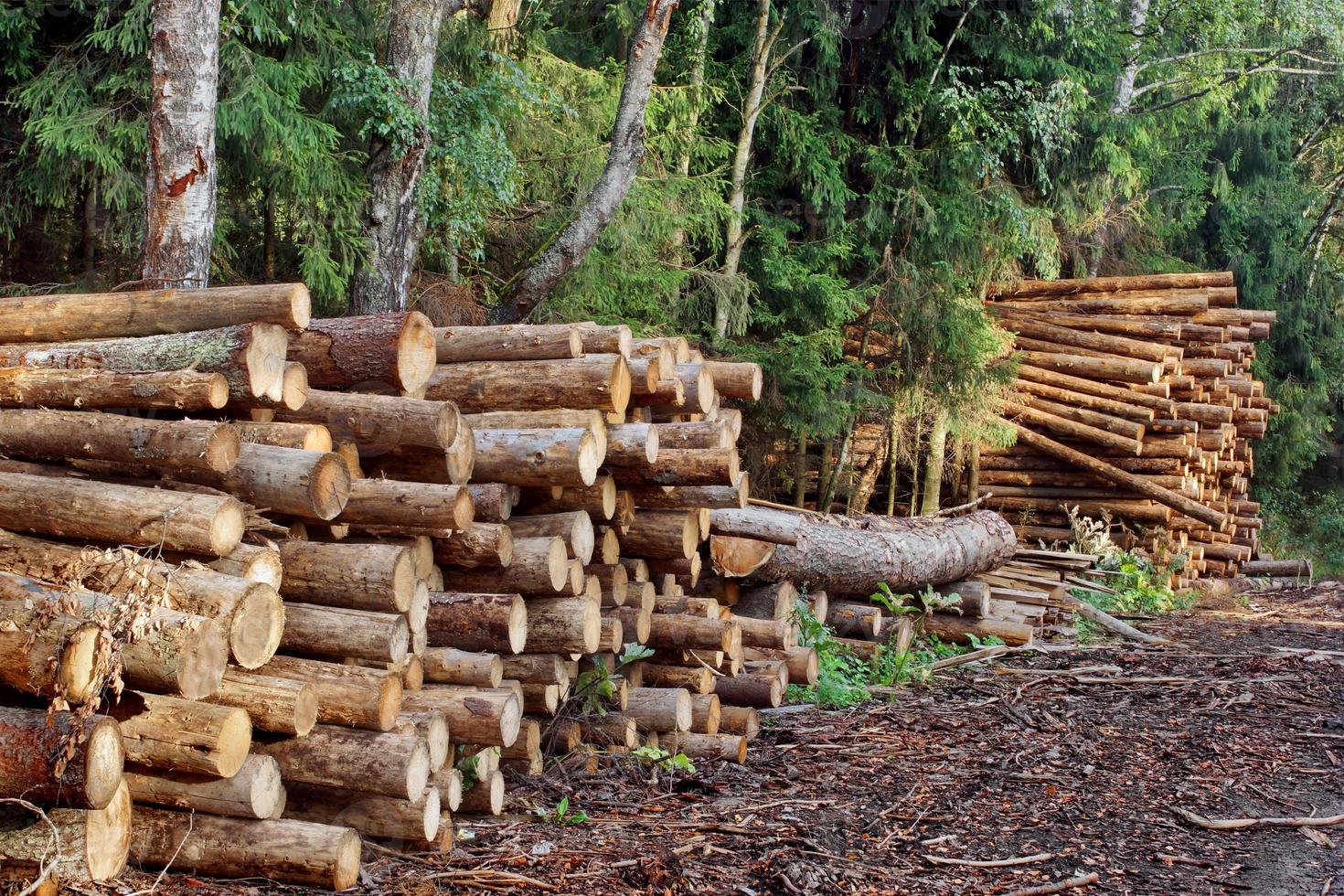
But the real ecological devastation occurs during tobacco curing, the process of drying tobacco leaves to make them shelf-stable. Flue-cured Virginia tobacco, which dominates cigarette production, requires intense heat over four to eight days. Globally, an estimated 11.4 million metric tons of wood are consumed annually for tobacco curing. The WHO calculates that approximately one tree is burned to cure enough tobacco for 300 cigarettes. Put another way, roughly 7.8 tons of wood are required to create one ton of cured tobacco.
In regions like Tanzania and Malawi, tobacco-related deforestation accounts for up to half of total annual forest loss. In Pakistan, tobacco curing was responsible for 27 percent of the country’s deforestation during certain periods. India is no exception to this pattern.
The Karnataka Example: Where Rhetoric Meets Reality
Let us examine Karnataka, one of India’s major tobacco-growing states, where ITC operates significant leaf processing facilities. A 2017 study on fuel consumption in Indian FCV tobacco estimated that 300,000 to 350,000 tons of firewood are used annually just for tobacco curing in Karnataka. The study found an average Specific Fuel Consumption of 4.5 kilograms of fuel per kilogram of cured tobacco across the tobacco-growing districts.
Here’s where industry claims become interesting. A tobacco industry-funded study from the same period claimed there is “no deforestation” from tobacco curing in India, asserting that all fuel comes from sustainable sources like eucalyptus plantations, prosopis juliflora (an invasive weed), coconut fronds, and carpentry waste. According to this narrative, 63 percent of curing fuel comes from alternative sources, with only small percentages from eucalyptus and acacia plantations.
Independent researchers tell a different story. Surveys in tobacco-growing regions consistently document that significant portions of curing wood come from forest depots and natural forests, particularly during peak curing season. Every June, observers note hundreds of lorries laden with wood arriving at tobacco-growing taluks like Hunsur, HD Kote, and Piriyapatna—areas bordering the Nagarhole and Bandipur forest reserves.
The divergence between industry claims and ground realities raises an obvious question: If tobacco curing relies entirely on renewable plantation sources, why do these massive wood shipments coincide precisely with curing season? Why do agents reportedly monitor roadsides for fallen trees that can be diverted to tobacco farmers?
India’s Deforestation Context
To understand tobacco’s contribution, we must place it within India’s broader deforestation crisis. Recent data from Global Forest Watch reveals that India lost 18,200 hectares of primary forest in 2024 alone, part of a troubling long-term trend. Between 2002 and 2024, India lost 348,000 hectares of humid primary forest—5.4 percent of the country’s total. The FAO ranks India as having the second-highest deforestation rate globally between 2015 and 2020, losing an average of 668,000 hectares annually.
The northeastern states bear the brunt: Assam, Mizoram, Arunachal Pradesh, Nagaland, and Manipur collectively account for 60 percent of India’s total tree cover loss since 2001. The drivers are complex—agricultural expansion accounts for 620,000 hectares of loss, illegal logging for 182,000 hectares, and shifting cultivation for 1.39 million hectares.
Tobacco’s role in this picture, while not the sole driver, is significant and systematic. Unlike seasonal agriculture or subsistence logging, tobacco curing creates sustained, predictable demand for fuel wood during specific months each year. This concentrated demand places pressure on forest resources in tobacco-growing regions, contributing to what environmental scientists call “localized deforestation hotspots.”
The “Carbon Positive” Paradox
And here, dear reader, we encounter ITC’s masterstroke of corporate communications: the company has declared itself “carbon positive” for 17 consecutive years, “water positive” for 21 years, and “solid waste recycling positive” for multiple years. These are not minor claims; they position ITC as a global environmental leader, earning the company an AA rating from MSCI-ESG—the highest among global tobacco companies.
How does a company whose primary business depends on a crop that contributes significantly to deforestation claim carbon positivity? Through social and farm forestry programs. ITC reports planting trees on 950,000 acres (approximately 384,000 hectares) and sequestering more than twice the carbon dioxide emissions from its operations. In fiscal year 2021-22, the company reported sequestering 6,182 kilotonnes of CO₂ against total emissions of approximately 1.5 million tonnes.
On paper, this is impressive. In reality, it exemplifies what critics call “carbon offset theater.” Carbon sequestration from plantations requires decades to materialize fully. Young plantations do not provide the biodiversity, ecosystem services, or carbon storage capacity of mature natural forests. Monoculture eucalyptus and acacia plantations—the typical species in such programs—create ecological deserts compared to natural forests, offering little habitat for wildlife and limited watershed protection.
Moreover, ITC’s afforestation programs primarily serve its paperboards business, ensuring a sustainable wood supply for one of its revenue streams. The company’s Paperboards and Specialty Papers division, generating ₹8,334 crores in revenue, relies heavily on these plantation sources. Calling this a “climate mitigation” program rather than “vertically integrated supply chain management” requires considerable linguistic creativity.
The carbon positive calculation also relies on methodological choices that environmental auditors question. It includes Scope 1, 2, and 3 emissions from ITC’s direct operations but notably does not account for the full life-cycle emissions of tobacco cultivation by contract farmers, including their fuel wood consumption for curing. If one includes the carbon emissions from burning 300,000-350,000 tons of wood annually in Karnataka alone for tobacco curing—wood that ITC’s leaf tobacco business ultimately purchases—the carbon equation looks considerably different.
The Circular Logic of Corporate Responsibility
ITC’s sustainability reports make fascinating reading. They describe “comprehensive” CSR initiatives, partnerships with tobacco farmers for “sustainable practices,” and investments in “alternative livelihoods.” The company works with 150,000 Indian farmers through its agri extension network and buys nearly 50 percent of all cigarette tobacco types grown in India.

Here we encounter a philosophical puzzle: Can a company meaningfully promote “sustainable tobacco farming” when the product itself is fundamentally unsustainable? It’s rather like offering a “responsible cocaine trafficking” program or “ethical asbestos mining.” The oxymoron is baked into the concept.
Yes, ITC provides farmers with clonal seeds, technical training, and market linkages. Yes, these programs improve farmer incomes in regions with few alternatives. But these same programs perpetuate dependence on a crop that degrades soil fertility, depletes water tables, requires intensive pesticide use, and—through its curing process—contributes to deforestation.
The Framework Convention on Tobacco Control, which India has signed, specifically warns against tobacco industry CSR initiatives, recognizing them as attempts to establish political influence and deflect attention from their harmful products. Article 5.3 of the FCTC states clearly: “In setting and implementing their public health policies with respect to tobacco control, Parties shall act to protect these policies from commercial and other vested interests of the tobacco industry.”
ITC’s extensive CSR network, its awards for environmental stewardship, its status as “one of India’s most admired companies”—all serve a strategic purpose beyond genuine social welfare. They create political capital, foster dependency among farming communities, and provide rhetorical ammunition against stricter tobacco regulations.
The Numbers Game: Parsing ITC’s Tobacco Impact
Let’s attempt some back-of-the-envelope calculations to understand scale. ITC buys approximately 50 percent of cigarette tobacco grown in India. India produces approximately 190 million kilograms of flue-cured Virginia tobacco annually. ITC thus processes roughly 95 million kilograms. Using the documented specific fuel consumption ratio of 4.5 kilograms of fuel wood per kilogram of tobacco, ITC’s tobacco procurement alone requires approximately 427,500 tons of fuel wood annually.
Now, not all of this comes from natural forests—plantation sources do supply significant portions. But even if we conservatively estimate that 30 percent comes from non-plantation sources (a figure suggested by independent surveys), that’s approximately 128,000 tons of wood from forest depots and natural forest areas annually for ITC’s tobacco procurement alone.
The original claim in the unverified article—that ITC cuts 14 crore (140 million) trees annually—appears to be extrapolation based on flawed mathematics. We cannot verify this specific number from available data. However, the verified figures we do have paint a concerning picture even without such dramatic claims. India’s entire tobacco curing industry consumes hundreds of thousands of tons of wood annually, creating sustained pressure on forest resources.
Government Complicity and Policy Paralysis
The Indian government finds itself in an awkward position. On one hand, it has launched the National Tobacco Control Program, supported the Framework Convention on Tobacco Control, and imposed high taxation on tobacco products. On the other hand, tobacco contributes substantially to excise revenues, employs millions of people, and generates foreign exchange through exports.
ITC reportedly purchased electoral bonds worth ₹15,000 in the now-defunct system of anonymous political donations. While modest compared to some corporate donors, the symbolic value is clear: tobacco companies actively participate in India’s political economy.
Attempts at crop diversification have been tepid. The government’s Crop Diversification Programme managed to shift only 15 percent of land under tobacco cultivation to other crops between 2015 and 2018. Why the limited success? Because tobacco remains economically attractive to farmers despite its environmental costs. Without genuine alternative livelihood programs, farmers rationally choose the crop that provides better returns.
The Tobacco Board, established under the Ministry of Commerce, regulates FCV tobacco cultivation. Its mandate, however, is to promote Indian tobacco in international markets while ostensibly managing production. This creates an inherent conflict: how can one organization simultaneously promote tobacco cultivation (for exports and tax revenue) and limit it (for public health and environmental protection)?
The Global Picture: An Industry Built on Extraction
ITC’s situation reflects a broader pattern in the global tobacco industry. Tobacco cultivation has shifted increasingly to low and middle-income countries, where environmental regulations are weaker and economic alternatives scarcer. As developed nations reduced domestic tobacco farming, companies like British American Tobacco, Philip Morris International, and ITC expanded sourcing from countries like India, Brazil, Zimbabwe, Malawi, and Tanzania.
The environmental and health costs remain in these countries; the profits accumulate elsewhere. ITC exports to 45 countries across more than 70 destinations, with Europe, Asia, and Africa as major markets. In fiscal 2024-25, ITC’s agribusiness segment (which includes leaf tobacco exports) generated ₹15,792 crores in revenue.
When European consumers purchase cigarettes, they rarely consider that the Virginia tobacco inside may have been cured using wood from regions bordering Indian wildlife reserves, or that the farmers who grew it face pesticide exposure, soil degradation, and economic vulnerability.
The Moral Reckoning We’re Not Having
Here’s the uncomfortable truth that lurks beneath sustainability reports and carbon offset calculations: some industries cannot be made sustainable through clever accounting. Tobacco cultivation damages soil, depletes water, requires chemical-intensive farming, and necessitates wood-burning that contributes to deforestation. Tobacco consumption kills approximately 8 million people globally each year. No amount of tree planting can offset these fundamental realities.
ITC is not uniquely villainous among tobacco companies—indeed, by industry standards, it ranks among the better actors in terms of environmental reporting and community programs. But that’s rather like being the tallest building in a town where nothing rises above two stories. The comparison is meaningless when the industry itself is problematic.
The real question India faces is not whether ITC can be a more “sustainable” tobacco company. It’s whether India wants to continue supporting an industry that generates tax revenue and employment at the expense of public health and environmental degradation. This is fundamentally a question of values and priorities, not corporate social responsibility.
What the Data Actually Shows
Let’s be clear about what we can and cannot claim based on verified evidence:
What we know: Global tobacco farming contributes approximately 5 percent to worldwide deforestation. India’s tobacco curing consumes hundreds of thousands of tons of wood annually. Studies document that portions of this wood come from natural forest sources, particularly in states like Karnataka. India is experiencing significant deforestation, losing an average of 668,000 hectares annually between 2015 and 2020. ITC dominates India’s cigarette market and procures approximately half of the country’s cigarette tobacco. The company’s carbon positive claims rely on plantation programs that primarily serve its paperboards business, not on reducing the fundamental environmental impact of tobacco cultivation and curing.
What we cannot verify: The specific claim that ITC cuts 140 million trees annually. This figure does not appear in forestry data, government reports, peer-reviewed studies, or ITC’s own disclosures. The exact percentage of ITC’s tobacco curing fuel that comes from natural forests versus sustainable plantations. While independent surveys suggest significant non-plantation sourcing, precise attribution is difficult without comprehensive field studies.
What requires further investigation: The actual wood sourcing patterns in specific tobacco-growing regions. Ground-truthing would require extensive field research during curing season across multiple districts. The true carbon footprint of ITC’s operations if full life-cycle tobacco production emissions were included. The effectiveness of government crop diversification programs and why they achieve limited adoption.
The Inconvenient Questions
If ITC’s forestry programs are as successful as claimed, why does Karnataka’s tobacco curing still require hundreds of thousands of tons of wood annually? If sustainable alternatives to wood-burning exist for tobacco curing, why haven’t they been adopted at scale in India? If tobacco cultivation creates prosperous farming communities, why do international bodies advocate for crop diversification away from tobacco? If ITC’s diversification into FMCG is so successful, why does the cigarette business still generate 78 percent of profits after decades of investment in other sectors?
These questions don’t have simple answers, but they deserve honest examination rather than corporate euphemism.
A Modest Proposal for Transparency
Here’s what genuine accountability might look like: ITC could commission independent third-party studies on fuel wood sourcing for tobacco curing, with findings published regardless of results. The company could include full life-cycle emissions from contracted tobacco farming in its carbon calculations, not just direct operational emissions. The Tobacco Board could publish comprehensive data on tobacco cultivation’s environmental impacts, including soil degradation, water consumption, and fuel wood sources. The government could genuinely invest in crop diversification programs with funding comparable to tobacco subsidies and support. Civil society could pressure ITC to be transparent about the gap between sustainability rhetoric and agricultural realities.
The tragedy is not that ITC exists or that it earns profits. Capitalism operates by generating returns for shareholders; blaming a company for pursuing profits is like blaming water for flowing downhill. The tragedy is the willful blindness—the elaborate performance of sustainability while participating in an industry with inherent environmental costs that no tree-planting program can truly offset.
Conclusion: The Smoke We Can’t Clear
ITC Limited is a stunningly successful company by conventional business metrics. Its diversification strategy, market dominance, and financial performance would be taught as case studies in any business school. Its sustainability initiatives, taken at face value, appear impressive. But scratch beneath the surface, and a more complex picture emerges.
This is a company that has built immense wealth on an addictive, health-destroying product. It operates in an industry that contributes measurably to global deforestation. It benefits from government policies that, however unintentionally, protect its cigarette monopoly. It cloaks these realities in the language of corporate responsibility, environmental stewardship, and sustainable development.
The irony is almost poetic: India’s “carbon positive” company derives the majority of its profits from an industry that contributes to India’s deforestation crisis. It plants trees with one hand while processing tobacco cured with wood from stressed forest ecosystems with the other. It earns environmental awards while participating in an extractive industry that enriches itself by externalizing health and ecological costs onto communities and the environment.
Perhaps the greatest achievement is convincing the world—and possibly itself—that these contradictions can be resolved through clever accounting, CSR programs, and sustainability reports. They cannot. Some paradoxes cannot be managed away; they can only be acknowledged.
India will eventually have to confront the fundamental question: Is the tax revenue, employment, and corporate prestige generated by the tobacco industry worth the public health catastrophe, environmental degradation, and moral compromise it entails? That conversation requires honesty about trade-offs, not green-washed rhetoric about carbon positivity.
Until then, ITC will continue planting trees, publishing sustainability reports, winning ESG awards, and profiting handsomely from cigarettes. The forests will continue to disappear, slowly and unevenly. The contradictions will remain unresolved. And somewhere in Karnataka, lorries will continue arriving each June, laden with wood, headed for tobacco curing barns, while ITC counts its carbon offsets and celebrates another year of environmental leadership.
The smoke may eventually clear from the tobacco barns. The cognitive dissonance that allows us to call this “sustainable” probably never will.