How Kotak Mahindra Bank’s Defiance Exposes the Rot in Corporate Accountability and Judicial Delays

On 24 July 2026, in Courtroom of the District Judge-05 (South-West), Dwarka Courts, New Delhi, a clear and unambiguous order was passed in Civil Suit CS DJ ADJ 160/26 titled Nitin Naresh vs. Nisha Dayal. The order was neither complex nor ambiguous. It was simple, precise, and binding. A delay of thirty days in filing the Written Statement was condoned—but only on the condition that the defendants pay costs of ₹5,000 to the plaintiff within one week. The Written Statement would be taken on record only after the cost was paid. The next date was fixed for 2 November 2026.
Yet, as of Monday, 27 July 2026—three full days after the order—the ₹5,000 remains unpaid.
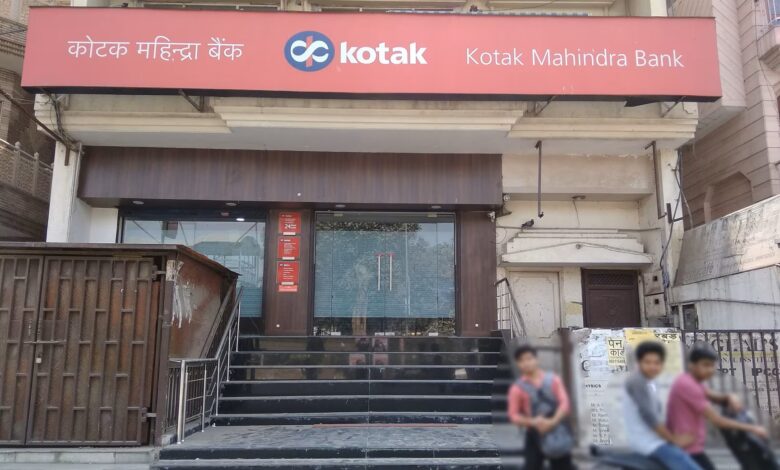
This is not a minor administrative lapse. This is a deliberate, calculated act of non-compliance by one of India’s largest private banks, Kotak Mahindra Bank, and it lays bare a deeper and more dangerous pattern: how powerful corporate entities systematically erode the authority of the courts, mislead the judiciary with convenient narratives, and treat the common citizen as disposable collateral in their litigation strategy.
The Order That Was Meant to Be Respected
The facts recorded by the court are straightforward. Summons had been served on 27 April 2026. The Written Statement was filed only on 29 June 2026—thirty days late. An application under Order VIII Rule 1 CPC read with Section 5 of the Limitation Act was moved seeking condonation of delay. The plaintiff, appearing in person, filed a detailed objection. He even raised his voice in open court, pointing out the irony that a bank entrusted with public money and public trust was claiming it had “misplaced” a copy of the plaint—an excuse so hollow that it would be laughable if it were not so revealing of institutional arrogance.
The learned District Judge, Abhitosh Pratap Singh Rathore, applied a balanced judicial mind. He found the delay neither inordinate nor deliberate. He condoned it. But he attached a cost of ₹5,000 payable to the plaintiff within one week, and made the taking on record of the Written Statement conditional upon payment. Later the same day, when counsel for the defendants claimed that the plaintiff had left without furnishing bank details, the court granted the defendants liberty to pay the cost on the next date of hearing. The order was clear. The responsibility was clear. The timeline was clear.
The Bank’s Response: Delay, Denial, and Deception
What followed is a textbook illustration of how large corporations neutralise judicial directions.
Counsel for the defendants informed the court that the plaintiff had left without providing bank details. This statement, on its face, appears reasonable. Yet the plaintiff asserts—and the contemporaneous record supports—that contact details were shared with Kotak Mahindra Bank on the very same day. Further, the plaintiff’s bank account itself is maintained with Kotak Mahindra Bank. There was, therefore, no genuine impediment to effecting the transfer. The bank already possessed the necessary particulars within its own systems.
On Monday, 27 July 2026, the certified copy of the court order was circulated to the entire relevant team within Kotak Mahindra Bank. Still, no payment has been made. The week granted by the court is already running out. The condition precedent for taking the Written Statement on record remains unfulfilled. And the bank continues to enjoy the benefit of having its pleadings on the court file while withholding the very cost that was meant to compensate the plaintiff for the delay.
This is not oversight. This is strategy.
The Larger Pattern: Corporate Contempt Cloaked as Procedure
What we are witnessing is not an isolated incident of bureaucratic inefficiency. It is a systemic method employed by large financial institutions and corporate litigants across India. The method has several well-worn steps:
- File the pleading late, often with a technical or fabricated excuse (“misplaced plaint,” “internal administrative delay,” “counsel was unavailable”).
- Move an application for condonation, knowing that courts are generally reluctant to shut out a party on technical grounds alone.
- When costs are imposed as a condition, create a fresh layer of difficulty—claim non-availability of bank details, demand formal communication, or simply ignore the direction.
- Use the intervening period to prolong the litigation, force the opposite party (often an individual) to keep appearing, and gradually exhaust his resources and resolve.
- When confronted, express readiness to “comply on the next date,” thereby buying further time without ever facing immediate consequence.
Each of these steps is technically defensible in isolation. Collectively, they amount to a sophisticated form of forum shopping and judicial fatigue. The individual litigant is forced to fight not only the original dispute but also the bank’s procedural attrition. The court is compelled to waste precious judicial time on compliance issues that should never have arisen. And the larger system—already drowning under approximately 5.6 crore pending cases—is further burdened by avoidable adjournments and repeated directions.
The Human Cost and the Institutional Cost
For the plaintiff in this case, the non-payment of ₹5,000 is not merely about the money. It is about dignity. It is about the message that a powerful bank can treat a judicial direction as a suggestion rather than a command. It is about the psychological toll of watching the very institution meant to protect him being outmanoeuvred by the deeper pockets and sharper tactics of a corporate defendant.
For the judiciary, the cost is graver. Every time a court order is diluted by non-compliance, the authority of the court is diminished in the eyes of the public. Every time a large entity is allowed to “buy time” through technicalities and incomplete compliance, the docket grows heavier. The 5.6 crore pending cases are not an abstract statistic. They represent millions of citizens whose lives remain in suspended animation because the system is clogged by precisely this kind of strategic delay.
The Imperative for Structural Response
The solution cannot be limited to expressing judicial displeasure on the next date of hearing. The legal system must develop sharper tools to deal with institutional litigants who treat court orders as negotiable instruments.
First, costs imposed as a condition for condonation of delay must be treated as executable decrees. Non-payment within the stipulated time should automatically attract further consequences—striking off the defence, drawing adverse inference, or imposing escalating costs with personal liability on the authorised officer.
Second, when a party claims inability to pay because of missing bank details, the court should insist on immediate deposit of the amount in court, to be released to the opposite party upon verification. The burden of facilitating compliance must rest on the party that caused the delay, not on the party who has already been prejudiced by it.
Third, repeated or deliberate non-compliance by institutional defendants should invite reporting to regulatory bodies—RBI in the case of banks—for examination of whether such conduct reflects a broader culture of disregard for judicial process.
Fourth, the judiciary must begin documenting patterns of non-compliance by large corporate litigants. A public database of chronic defaulters would create reputational and regulatory pressure that individual cost orders cannot.
Conclusion: A Test of Institutional Will
The order dated 24 July 2026 was not a suggestion. It was a judicial command. Kotak Mahindra Bank’s continued non-payment of the ₹5,000 cost, despite having the plaintiff’s account within its own system and despite having received the order, is a direct challenge to that command.
If a bank that holds the savings of millions of Indians can treat a District Court’s direction with such casual disregard, then the message to every other powerful litigant is unmistakable: the courts can be managed, delayed, and ultimately worn down. The common citizen will pay the price in time, money, and faith.
The legal system cannot afford this message to stand. The authority of the courts is not a matter of convenience for large corporations. It is the foundation upon which the entire edifice of the rule of law rests. When that foundation is allowed to erode—case by case, adjournment by adjournment, unpaid cost by unpaid cost—the consequence is not merely delayed justice for one plaintiff. It is the progressive hollowing out of the institution that is supposed to protect every citizen from precisely this kind of power.
The next date of hearing is 2 November 2026. The question before the court—and before the larger system—is whether that date will mark the restoration of accountability or simply another chapter in the long story of corporate impunity.