How Notorious Companies Like BPTP Able To Launch Their IPO Despite Multiple Scams And Complaints. Settings In SEBI?
The Audacity of Impunity: How Notorious Builder BPTP Is Eyeing an IPO While Its Founder Hides In New York, Homebuyers Bleed, And SEBI Looks The Other Way


“We built their empire on our broken backs.” — A 72-year-old homebuyer who invested his life savings in a BPTP project, still waiting for possession after 14 years.
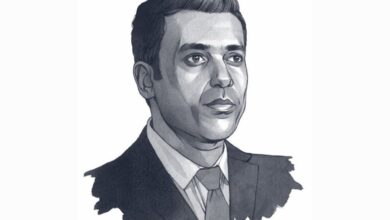
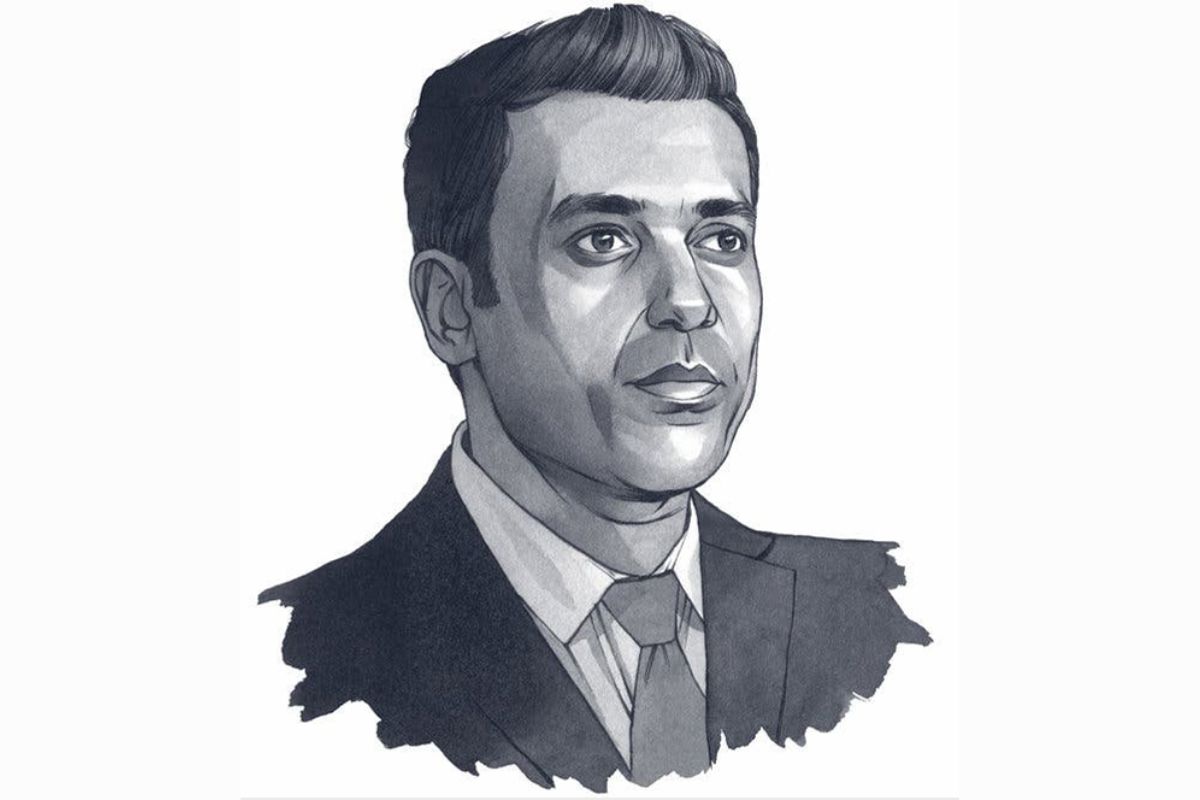
Somewhere in the gilded zip codes of New York City, a man lives well. He attends business events. He accepts awards for “sustainable development.” He video-conferences into company meetings, occasionally appearing as a benevolent patriarch of a real estate empire worth thousands of crores. His name is Kabul Chawla, Chairman and Managing Director of BPTP Limited, (Business Park Town Planners) one of the most controversial real estate companies in the National Capital Region.
Back in India, a non-bailable warrant with his name on it, issued in 2011 by a Faridabad court, gathers dust. Over a thousand families in Faridabad and Gurugram continue paying EMIs on homes they have never occupied. The Enforcement Directorate has raided BPTP’s offices multiple times, three times in 2025 alone. The CBI has knocked on its doors. Ledgers showing alleged diversion of hundreds of crores have been seized. FIRs pile upon FIRs.
And yet, in late 2025 and into 2026 or way ahead in future, BPTP is actively preparing an Initial Public Offering. It has appointed merchant bankers. It has projected revenues of ₹5,500 crore for FY2025-26. It has launched new projects on the Dwarka Expressway. Its CEO has cheerfully declared the company “poised to capitalise on India’s realty boom.”
The question this article asks, with controlled fury and documented evidence is; How?
How does a company like BPTP with FIR against its founder, and multiple ED searches, walk into India’s public markets?
How Notorious Companies Like BPTP Able To Launch Their IPO Despite Multiple Scams & Complaints. Is There Any Settings In SEBI?
The answer lies at the intersection of political patronage, regulatory capture, and institutional ignorance, a story that begins not in any SEBI boardroom, but in the fertile, scandal-soaked farmlands of Haryana under one of its most powerful Chief Ministers.
Part I: The Hooda Years — When Farmland Became Gold for the Connected Few
To understand BPTP’s rise, you must first understand the era that made it possible. Between 2005 and 2014, Haryana was governed by Chief Minister Bhupinder Singh Hooda of the Indian National Congress. Those nine years were, for a select group of real estate developers, the closest thing to a licence to print money that India’s post-liberalisation era had ever produced.
The numbers are staggering in their specificity. In the 23 years before Hooda came to power, successive Haryana Chief Ministers cumulatively granted Change of Land Use (CLU) licences for just 8,550 acres. Hooda’s government, in nine years, granted licences for a dramatically larger area, transforming agricultural land into developable real estate at a pace and scale that left investigators, journalists, and ultimately courts stunned.
Robert Vadra, son-in-law of Congress president Sonia Gandhi, became the most notorious beneficiary, his DLF connection drawing national headlines. But Vadra was, in the larger scheme of Haryana’s land boom, merely the most politically combustible name in a much longer list of winners. And on that list, near the very top, sits Kabul Chawla.
Here is the documented fact that changes everything. BPTP, under Kabul Chawla, received CLU licences for 1,635 acres under the Hooda regime, the single highest allocation to any builder in the state during that period. This was not an accident of geography or merit. This was political alchemy, a politician-builder nexus that turned farmland to gold for those fortunate enough to have the right friendships.
Reporting by The Hindu as far back as 2012 revealed the mechanics of this alchemy with forensic clarity. BPTP, Kabul Chawla, was an unknown, modest construction firm until 2005, operating from a residential address in Najafgarh Road. Then the Hooda government took office. Within years, Chawla had moved to a property on Delhi’s ultra-elite Amrita Shergill Marg, valued at approximately ₹300 crore. BPTP had amassed a land bank exceeding 2,500 acres. Its turnover reached ₹1,400 crore by 2011-12. From nothing to everything, in under a decade, coinciding precisely with Hooda’s tenure.
The anomalies in how this land was acquired were not merely suspicious, but they were documented. The Hindu’s report revealed that BPTP was awarded 14.793 acres of disputed land in Sector 106 of Gurgaon in February 2008, even though a farmer named Surinder Pal Beniwal had filed a complaint against BPTP’s subsidiary, Countrywide Promoters, with the Haryana Town and Country Planning (TCP) department in March 2007, alleging non-payment of the agreed sale amount. The TCP department had even written to BPTP’s subsidiary that “the licence will be considered on the land free from all encumbrances.”
Despite the unresolved dispute, despite the explicit caveat, the licence was granted and then renewed even though BPTP had not obtained possession of the land or begun any construction. This was not an isolated irregularity. It was a pattern of a systemic pattern of regulatory approvals flowing toward politically connected builders while farmers, small landowners, and eventually homebuyers bore the consequences.
Chawla’s connection to the Hooda government was noted across multiple independent reportings and reports spanning years. Reports documented that Chawla had cultivated significant political connections during the Congress era in Haryana, with BPTP securing land allocations and regulatory approvals that even well-established developers could not match. The family connection to the Taneja real estate dynasty, Chawla is reportedly married into the TDI Infrastructure family gave him both a template and an introduction to the world of Haryana’s politically-mediated real estate boom.
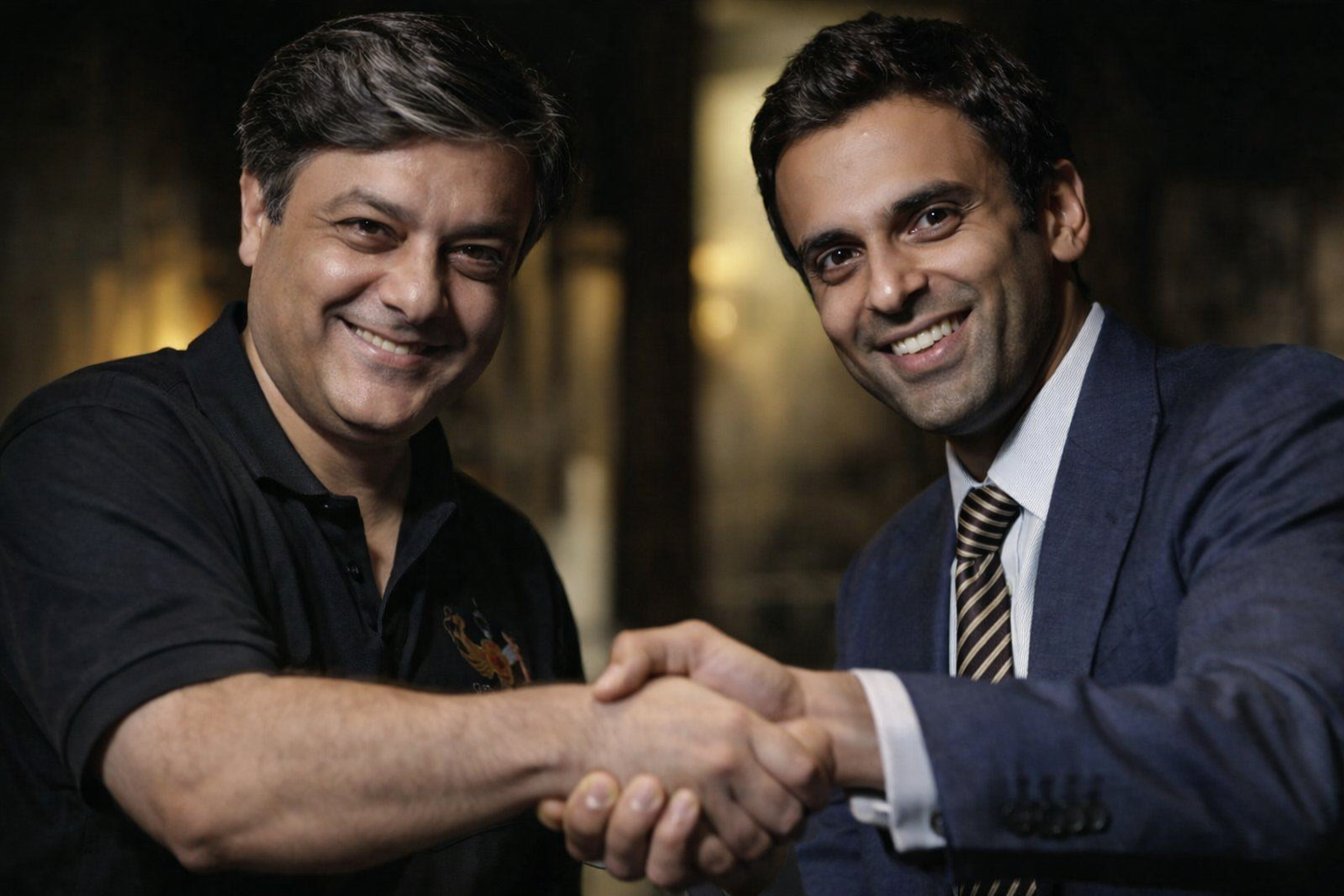
Bhupinder Singh Hooda himself has since faced a cascade of legal consequences for his era in power. The CBI has registered and investigated multiple cases against him, including the Gurugram-Manesar IMT land scam, the Panchkula Industrial plot allotment scam, the AJL-National Herald Panchkula land grab case, the Sonepat-Kharkhoda IMT land scam, the Garhi Sampla Uddar Gagan land scam, and the Haryana Forestry scam. He has been chargesheeted in the Manesar-Gurugram land scam. A 2022 Scribd-published 50-page investigative report submitted to the Supreme Court detailed what it described as an “unholy nexus between Hooda, his associates, and builders”; a nexus in which, the report alleged, an entire administrative machinery was bent to serve builder interests rather than citizens.
The Hooda machine, in other words, was not a government that happened to have some corrupt actors. It was a system of governance that operated as an engine of enrichment for connected builders. And BPTP, more than any other single company was the greatest beneficiary of that engine.
Part II: The Crimes — A Comprehensive Ledger of Allegations
Against this political backdrop, BPTP began building its empire. And as it built, the complaints began. What follows is the most comprehensive accounting available in the public domain of the civil and criminal actions against BPTP and Kabul Chawla.
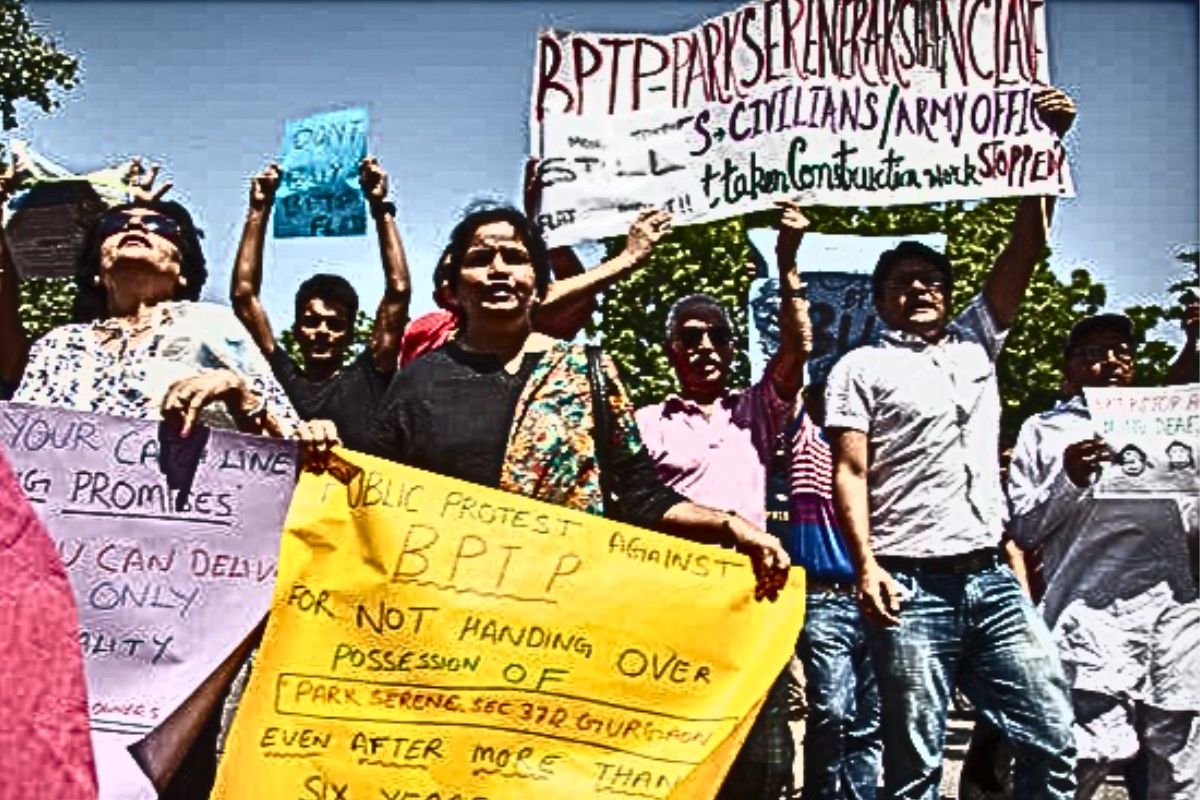
The Founding FIR — Faridabad, 2011. The first formal criminal action arrived in January 2011, when an FIR was registered at Faridabad’s Central Police Station, accusing BPTP and Kabul Chawla of defrauding over 1,000 buyers in the Sector 85 project. These buyers had paid approximately ₹400 crore in total, many paying 95 to 100 percent of the purchase price upfront, for plots and flats in projects including Park Serene and Parklands. The promise was delivery by 2012. The money was collected. The construction was not completed.
The charges filed were under IPC Sections 420 (cheating), 406 (criminal breach of trust), 120-B (criminal conspiracy), 467, 468, and 471, collectively representing deliberate, premeditated betrayal of financial trust, not mere project delays. A non-bailable warrant was issued by a Faridabad court. Within months, Kabul Chawla had reportedly left India, citing “business commitments.” He settled in the United States, from where he has managed his Indian empire through his son Kabir and other intermediaries.
The CBI Investigations — 2013, 2015, 2018. The Central Bureau of Investigation registered cases in 2013 under the IPC for criminal breach of trust and cheating, stemming from buyer complaints in Faridabad. CBI teams raided BPTP’s headquarters in 2015 and again in 2018, seizing ledgers that allegedly showed ₹400 crore siphoned from buyer deposits into ventures unrelated to the construction for which the money had been collected.
The Enforcement Directorate — A Decade of Raids. The ED’s interest in BPTP is not recent theatre, it is a long-running investigation into multiple layers of financial wrongdoing. The original triggers included allegations of Foreign Direct Investment violations dating to 2007-2008, when BPTP reportedly received significant funds from Mauritius-based entities through alleged put-option deals in violation of India’s FEMA (Foreign Exchange Management Act). The ED has revisited these violations repeatedly. In August 2025, ED agents conducted three raids, on August 26 and 29, at BPTP’s premises across Delhi, Noida, and Faridabad, as well as at the residences of Chawla and director Sudhanshu Tripathi.
The raids uncovered what investigators allege to be fund diversions of over ₹500 crore tied to incomplete projects and foreign entities allegedly owned by Chawla, including a New York property reportedly acquired through shell companies. Bank lockers were frozen. Digital evidence was seized. The FEMA probe has since morphed into a Prevention of Money Laundering Act (PMLA) case, invoking both a predicate offence and proceeds of crime.
The RERA Trail — Project After Project, Delay After Delay. The Real Estate Regulatory Authority records for BPTP’s projects tell a story of industrial-scale non-compliance. BPTP’s Faridabad portfolio includes Park Elite Premium (Sector 84), Park Arena (Sector 80), Discovery Park (Sector 80), Princess Park (Sector 86), and the Deck and EWS schemes in Sector 82.
Across all of these, RERA registration records and buyer complaints document a consistent pattern where projects launched between 2009 and 2015, with promised completion dates that were never met, and buyers who have spent years navigating a labyrinth of demands, partial possessions, and legal proceedings.
The Supreme Court Judgements That Confirmed Liability. Multiple Supreme Court proceedings have found BPTP liable to buyers in unambiguous terms. A landmark September 2025 ruling in the Parklands case addressed the asymmetry of BPTP’s contract terms where BPTP charged buyers 18 percent interest on delayed payments but sought to pay buyers only 9 percent interest when BPTP itself caused delays.
The Supreme Court ruled, with elegant precision, that 18 percent was the appropriate rate, correcting a contractual design that had been engineered to maximise developer profit at buyer expense. A November 2024 Supreme Court ruling involving the Terra Flat Buyers Association, a collective of BPTP flat buyers, ordered BPTP to refund money to buyers with 9 percent interest. BPTP appealed in February 2025 on the interest rate question; the Supreme Court partly allowed that appeal on the specific rate, but the core finding of BPTP’s liability for refunds was not disturbed.
The “Fund Parking” Emails, Which Are Evidence of Intent. Perhaps most damning in the record is the existence of emails from 2010, cited in investigations, in which Chawla allegedly instructed associates to engage in “fund parking” abroad, routing money collected from homebuyers to overseas entities rather than deploying it for construction. This is not the language of a developer caught by circumstances. This is, if the emails are what investigators say they are, evidence of deliberate, premeditated diversion of homebuyer funds.
Environmental Violations. Related entities in the BPTP-TDI ecosystem have faced documented environmental violations, including inadequate effluent treatment plants and discharge of untreated sewage, with the ED attaching assets in related proceedings.
Foreign Asset Concealment. Reports allege that Chawla has acquired a luxury property in New York through shell companies, representing proceeds of what they allege to be money laundered from homebuyer collections. As of early 2026, this probe remains ongoing.
Part III: The IPO Game
Against this documented background, FIRs, CBI investigations, ED raids, Supreme Court findings of liability, RERA fines, a non-bailable warrant, a fugitive promoter, BPTP is preparing to go public.
The company’s IPO pitch is, on its surface, glossy. A land bank of 45 to 50 million square feet. Revenue of ₹3,000 crore in FY2024-25, targeting ₹5,500 crore in FY2025-26. A landmark launch, the Gaia Residences project on the Dwarka Expressway, cited as evidence of renewed momentum. CEO Manik Malik projecting that after years of consolidation, BPTP is “poised to capitalise on India’s realty boom.” A separate rental portfolio being structured for steady income. An ambitious target of ₹10,000 crore in annual revenue.
What the pitch conspicuously ignores is everything in Part II of this article. It ignores the warrant. It ignores the families still waiting. It ignores the fund diversion allegations. It ignores the PMLA probe.
There is a historical footnote here that investors deserve to know, that this is not BPTP’s first attempt at a public listing. In 2011, BPTP received an earlier IPO approval that ultimately lapsed without being used. The timing of that lapse coincides precisely with the first FIR, the non-bailable warrant, and the early years of the project delays that have since become BPTP’s defining legacy. The company retreated from the market when scrutiny intensified, waited for the storm to pass or rather, for collective attention to fade and has now returned, calculating that India’s IPO mania will carry it across the finish line.
Part IV: The SEBI Question — Regulatory Failure or Regulatory Complicity?
India’s Securities and Exchange Board of India (SEBI) is constituted, by law and mandate, to “protect the interests of investors in securities and to promote the development of, and to regulate, the securities market.” This mandate, taken seriously, would seem to create an obvious obligation: scrutinise the BPTP IPO with extraordinary rigour, given the public record.
Yet the pattern of India’s IPO market in recent years raises uncomfortable questions about whether SEBI takes that mandate seriously when the applicant is sufficiently large, sufficiently connected, or sufficiently persistent. BPTP’s attempt comes against a backdrop of a market that has seen multiple high-profile listings where companies with weak profitability, unresolved legal proceedings, or serious governance questions were allowed to raise billions from retail investors, with retail investors often suffering severe losses afterward.
Ola Electric raised ₹6,145 crore in its August 2024 IPO. After listing at ₹91 against an issue price of ₹76, the stock subsequently collapsed to approximately ₹24 by March 2026 — a decline of more than 70 percent from its listing price, representing catastrophic destruction of retail investor wealth. The company was not hiding its losses when it listed: it had posted a net loss of ₹1,584 crore in FY24. SEBI allowed it to list anyway. Retail investors paid the price.
The question being asked about BPTP is more acute, because it is not merely about financial losses or weak profitability. It is about whether a company whose promoter has a non-bailable warrant, whose assets have been repeatedly raided and frozen by the Enforcement Directorate, whose buyers have been found by the Supreme Court to be entitled to refunds, and whose internal communications allegedly document deliberate fund diversion can legitimately access India’s public markets.
The concern is not merely speculative. It is grounded in a fundamental principle of securities law, that the IPO process is not a refuge for those seeking to exit legal liability by diluting promoter stakes and transferring financial risk to the public. If Kabul Chawla uses an IPO to liquidate even a portion of his holdings, and if BPTP’s subsequent legal liabilities, from ongoing ED proceedings, from buyer refund orders, from Supreme Court judgements, impair the company’s value, it is retail investors who will hold the loss. Chawla, safely ensconced in New York, will have cashed out.
SEBI’s disclosure norms, critics note, are theoretically robust. IPO prospectuses must disclose litigation. They must disclose regulatory actions. They must disclose the existence of FIRs against promoters. But disclosure is not the same as gatekeeping. A company can disclose that its promoter is facing a non-bailable warrant in fourteen-point font on page 247 of a 400-page Draft Red Herring Prospectus, and still receive regulatory approval to proceed with listing. Retail investors, by and large, do not read page 247 of 400-page prospectuses. They read the headline. They see the brand. They invest.
The deeper, more troubling question, and this is the question that the phrase “setting in SEBI” gestures toward, is whether BPTP’s political connections, which demonstrably operated at the highest levels of Haryana’s state government for nearly a decade, have also found expression in India’s central regulatory architecture. It is not a question that can be answered definitively from public records. But it is a question that the facts demand be asked.
A company that could, by all documented accounts, effectively operate as a parallel power centre in Faridabad and Gurugram during the Hooda era, bending land allocation, regulatory approvals, and police response to its interests does not exist in a political vacuum. Political networks, once built, do not evaporate when Chief Ministers change. They evolve, adapt, and find new expressions.
The fact that Kabul Chawla has lived freely in New York for fifteen years, with a non-bailable warrant outstanding against him, without being declared a fugitive economic offender under the Fugitive Economic Offenders Act (as Vijay Mallya and Nirav Modi were), without his passport being revoked, and without effective extradition proceedings being pursued, this is not an accident. It is an outcome. Outcomes of this kind, sustained for this duration, require active institutional accommodation at multiple levels. Who is providing that accommodation, and at what price, are questions that India’s investigative agencies have not yet publicly answered.
Part V: The Parallel Government — Power Without Election
The allegation that BPTP operates as a “parallel government” in Faridabad and Gurugram is not hyperbole. It is a structural description of what unchecked builder power looks like in India’s NCR real estate corridor.
Consider what BPTP controls, or has controlled: housing for thousands of families, who depend on the company not merely as a developer but as a de facto civic authority, managing water supply, sewage, security, and common area maintenance in gated communities. It controls employment for a significant local workforce. It controls relationships with local police stations, where FIRs against it have historically moved slowly or not at all. It controls access to politicians at the state and national level, through financial contributions and social networks built during the Hooda years. It controls, through its land bank and ongoing development, the economic character of entire sectors in Faridabad.
A company with this degree of embedded power in a geography does not merely operate in that geography, but it governs, in the practical, day-to-day sense that matters to ordinary citizens. Homebuyers who have tried to file police complaints against BPTP in Faridabad have described bureaucratic walls. Courts have moved, but slowly, across years and decades. Regulatory bodies have levied fines that are small fractions of the sums collected from buyers. The overall architecture of accountability has, for fifteen years, produced one consistent outcome: Kabul Chawla remains free, BPTP remains operational, and homebuyers remain without possession.
This is what a parallel government looks like. Not guns and jackboots, but control over the levers that determine whether a complaint is heard, whether a warrant is enforced, whether a licence is renewed, whether a probe is pursued. And if a company can run a parallel government in two of India’s most economically significant cities, is it so implausible that its influence would extend to the corridors of Dalal Street and Janpath, where India’s market regulators operate? The question answers itself.
Conclusion: Justice Delayed Is Justice Denied, And Investor Money at Risk
There are two sets of victims in the BPTP story, and their fates are connected.
The first set, which includes the over one thousand families who paid, in some cases, their entire life savings for homes in Faridabad and Gurugram, who are still waiting after more than a decade are already victims. Their victimhood is documented, adjudicated, and real. The Supreme Court has confirmed their entitlements. RERA has levied fines on their behalf. And still they wait, because the company that took their money can apparently pay small fines, appeal court orders, and continue doing business including preparing an IPO without ever being compelled to make them whole.
The second set, the retail investors who will buy BPTP’s IPO if SEBI approves it, drawn by glossy presentations about land banks and revenue targets and Dwarka Expressway projects, are prospective victims. Their victimhood is preventable. It requires only that India’s securities regulator do its job; conduct the most rigorous possible scrutiny of this application, demand full and prominent disclosure of every proceeding listed in this article, and seriously consider whether the public interest is served by allowing a company of this record to access public capital markets while its promoter remains a fugitive from Indian law.
SEBI’s decision on the BPTP IPO will be read, by every stakeholder in India’s real estate and capital markets, as a statement about what the regulatory compact in this country actually means. If SEBI approves it, the message is clear; in India, if you are large enough, connected enough, and patient enough, there is no crime that cannot eventually be laundered through a prospectus. If SEBI declines or demands structural remediation, the return of Kabul Chawla to face trial, the resolution of ED proceedings, verified refunds to all Supreme Court-adjudicated claimants, the message is equally clear: market access is a privilege earned by conduct, not a refuge for those fleeing accountability.
India’s mythology speaks of a balance between Vishwas (faith) and Shanka (doubt). For BPTP, the scales of institutional faith have been tested, strained, and, for fifteen years, held artificially in balance through a combination of legal manoeuvring, political connection, and the sheer grinding power of wealth. The IPO is Kabul Chawla’s bet that the scales can be held in balance for just a little longer, long enough to convert his land bank into public money, and leave India’s retail investors holding whatever comes next.
SEBI has the power to say no. The question is whether it has the will.
That question and its eventual answer will define what India’s regulatory system stands for. Not in theory. In practice. On the record. For the families in Faridabad still waiting, and for the investors across India who deserve a market that protects them, the answer cannot come soon enough.
Disclaimer: This article is based on publicly documented allegations, court proceedings, and regulatory actions. BPTP and Kabul Chawla have disputed various allegations against them. This article does not constitute legal advice or investment advice.