IAS Astha Jain: Another Pooja Khedkar In Making? Till When Will UPSC Ignore The Loopholes That Are Rotting The Steel Frame Of India?
Category shifts at will. Rank improves dramatically. The system watches. The government stays silent. And thousands of genuine aspirants pay the price.

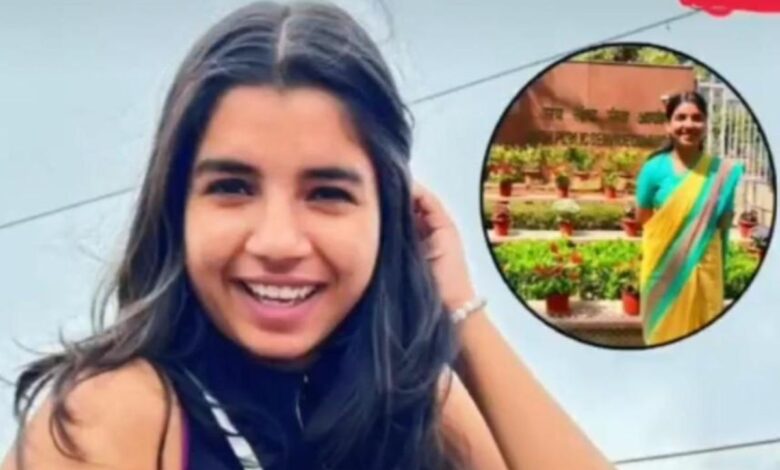
When the UPSC Civil Services Examination 2025 results were declared on March 6, 2026, the name Astha Jain flashed across headlines as one of the country’s brightest new civil servants — All India Rank 9, a journey from a small Shamli town in Uttar Pradesh, the daughter of a kirana shop owner who had beaten every odd to crack India’s toughest examination. It was the kind of story this country loves. Then people looked more carefully at the data.
What they found was not an inspiring story. It was a question mark — a large, uncomfortable, and deeply systemic one — about how India selects the officers who will govern its districts, implement its policies, and serve as the constitutional backbone of its administration. The question is this: How does the same candidate appear under the Economically Weaker Section (EWS) category in one attempt, switch to the General (Unreserved) category in the next, and then return to EWS in the attempt after that — each time with UPSC’s full knowledge, and each time without a single official raising a red flag?
Astha Jain’s UPSC journey: The Three-Attempt Pattern That Demands Explanation
The timeline of Astha Jain’s UPSC journey, as reported across multiple news outlets, is as follows:
In her first attempt in 2023, Astha Jain appeared under the EWS category and secured All India Rank 131. She was selected for the Indian Police Service (IPS) on the basis of this result. (Source: Legacy IAS Academy profile; Oneindia, March 2026)
In her second attempt in 2024, she appeared under the General (Unreserved) category and secured All India Rank 186 — again qualifying for the IPS. (Source: NewsX, March 2026; State Mirror, March 2026)
In her third attempt in 2025, while undergoing IPS probationary training at the Sardar Vallabhbhai Patel National Police Academy in Hyderabad, she appeared again — this time back under the EWS category — and secured All India Rank 9, with a total score of 1,033 marks. (Source: Vajiram & Ravi profile; Legacy IAS Academy, March 2026) This rank almost certainly places her in the Indian Administrative Service.
Read that sequence again: EWS → General → EWS.
The EWS reservation, introduced through the 103rd Constitutional Amendment in 2019, is intended exclusively for candidates belonging to the General category whose family income is below ₹8 lakh per annum and who do not own agricultural land exceeding 5 acres, a residential flat exceeding 1,000 sq ft, or a residential plot exceeding 100 sq yards in notified municipalities. (Source: Office Memorandum, DoPT, January 2019)
The implicit question that thousands of aspirants are now asking — on X (formerly Twitter), Reddit, and every UPSC preparation forum — is a simple one: If a candidate appeared under the General category in 2024, what changed in 2025 that suddenly made her economically eligible for EWS? She had already been serving as an IPS probationer, drawing a government salary. The family’s economic profile, by any reasonable inference, had not deteriorated. And yet, a fresh EWS certificate was reportedly issued and accepted.
As reported by State Mirror, social media users are specifically demanding to know: “If she became an IPS officer under the General category and even began training, how did her financial situation deteriorate so much that she fell within EWS criteria?“ (Source: State Mirror, March 2026)
Neither UPSC nor the Government of India has issued any official statement on the matter as of the date of writing. The silence is, by itself, a statement.
The EWS System: Built to Be Gamed
Before we examine the broader rot, it is important to understand why the EWS quota has become the easiest reservation category to misuse in the UPSC system.
Unlike SC/ST reservations — which require caste certificates issued by state governments and verified through extensive genealogical documentation — or OBC Non-Creamy Layer certificates, which require income verification over multiple years, EWS certificates are income certificates. They are issued annually by a Tehsildar or competent revenue authority, based on a self-declared income affidavit in most states. There is no centralised database cross-referencing EWS certificate holders with ITR filings, property registries, vehicle registrations, or — most critically — government service pay rolls.
This is not a design flaw. It is a design failure — one that was predictable from the moment the EWS quota was announced, and one that the government has chosen not to fix in the six years since its introduction. The result is a system in which a candidate can obtain an EWS certificate in one year, appear under General category in the next, and obtain a fresh EWS certificate the year after — with no automatic trigger, no cross-check, and no accountability mechanism.
UPSC has access to the complete application history of every candidate. It knows Astha Jain appeared under EWS in 2023 and General in 2024. There is no evidence that this data was used to initiate any inquiry before accepting her 2025 EWS certificate.
Pooja Khedkar: The Precedent That Should Have Changed Everything — But Didn’t
The Astha Jain controversy does not arise in a vacuum. It arises in the shadow of the Pooja Khedkar scandal — a case so brazen, so thoroughly documented, and so utterly damning of UPSC’s verification systems that it should have triggered wholesale reform. It did not.
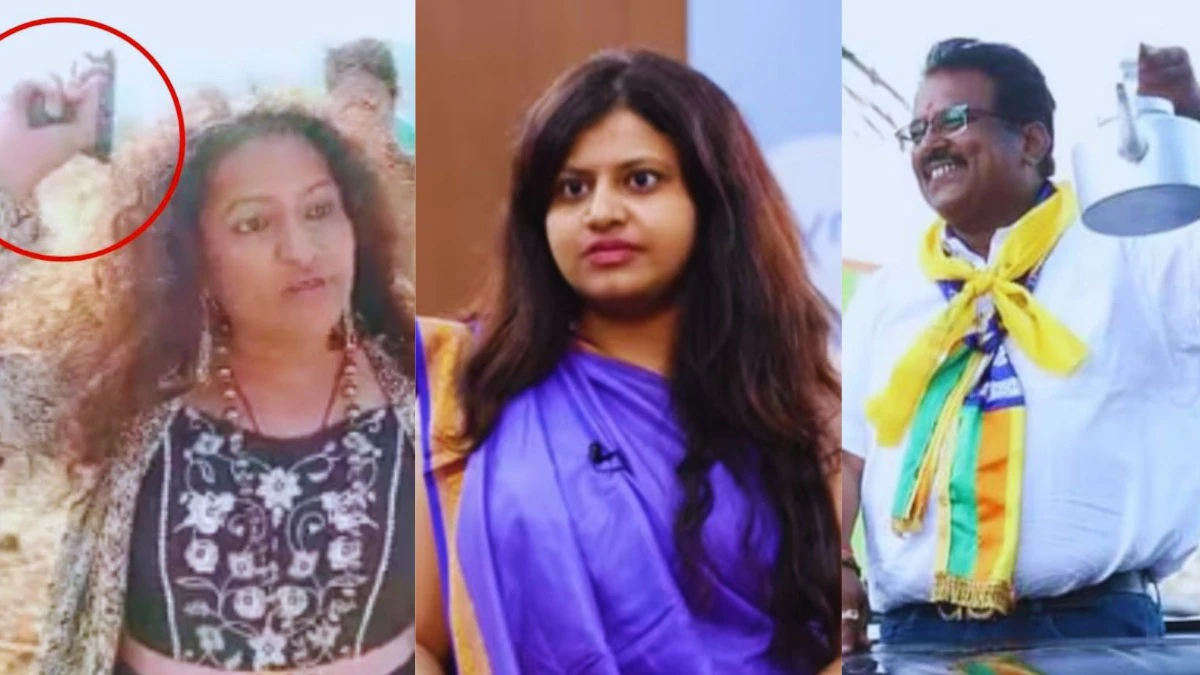
Pooja Khedkar, a 2023-batch IAS probationer allocated to the Maharashtra cadre, secured All India Rank 841 in the UPSC Civil Services Examination 2022. As reported by Business Standard and Republic World, she achieved this rank by claiming OBC Non-Creamy Layer reservation as well as concessions under the disability quota, declaring herself both visually impaired and mentally ill. These concessions gave her additional attempts, age relaxation, and a lower effective cut-off.
What investigators subsequently found was a cascade of fraud. Delhi Police’s Crime Branch, in a status report filed before the Delhi High Court, stated that the disability certificates submitted by Khedkar were forged and fabricated, and that the medical authority named on the certificates denied having issued them. (Source: India TV News, September 4, 2024; Zee News, September 4, 2024) She had also allegedly altered her name on these documents.
Her OBC Non-Creamy Layer certificate was separately found to be fraudulent. The Nashik Divisional Commissioner cancelled it following investigation, with Commissioner Pravin Gedam rejecting her OBC certificate application. (Source: Indian Masterminds, July 2025)
Despite being summoned five times by AIIMS Delhi for medical verification of her disability claim, Khedkar reportedly refused to attend each time, citing COVID infection and other reasons. She eventually submitted an MRI report from a private hospital, which UPSC initially rejected but which was later accepted under circumstances that remain unexplained. (Source: Republic World, July 2024; Business Standard, July 2024)
UPSC cancelled her candidature and debarred her from all future examinations on July 31, 2024. A Delhi Police FIR followed. Her OBC certificate was eventually cancelled. But consider what it took to reach even this minimal accountability: an activist named Anil Kumbhar, years of documentation, a media storm, and a full-blown criminal investigation.
The activist himself, writing to the President of India, noted that Khedkar’s case was not isolated — he pointed out that numerous candidates had, across multiple attempts, suddenly produced disability or reservation certificates they had not used before. (Source: Deccan Herald, July 25, 2024) The President’s office received the letter. The UPSC received the letter. The government received the letter. And the systemic verification gap that made Khedkar’s fraud possible remains unfixed today — as the Astha Jain controversy now demonstrates.
The Structural Rot: What Makes This Possible
The Khedkar and Jain cases share a common infrastructure of institutional failure. Understanding this infrastructure is essential to understanding why this keeps happening.
First, there is no real-time cross-verification. When a candidate submits an EWS, OBC, or disability certificate, UPSC does not independently verify it in real time against state revenue records, AIIMS or government hospital databases, or ITR filings. It relies on the candidate’s submission and the issuing authority’s stamp. The issuing authority — often a Tehsildar’s office — has no obligation to check whether the candidate has filed a different income declaration in a different context.
Second, category changes between attempts raise no automatic flags. UPSC maintains complete records of every candidate’s previous attempts, categories, and results. Yet there appears to be no internal protocol that triggers a mandatory inquiry when a candidate switches from one category to another and back again — particularly when the second attempt was under General category, implying the candidate themselves acknowledged they did not qualify for reservation at that point.
Third, the EWS quota has no sunset mechanism tied to changed circumstances. If a candidate is already drawing a government salary — as Astha Jain was, as an IPS probationer — there is no automatic mechanism to review whether a fresh EWS certificate is consistent with their current economic status.
Fourth, political will is absent. The 103rd Constitutional Amendment that introduced EWS reservation was passed with extraordinary speed in January 2019 — in both Houses within two days, with no standing committee scrutiny. The implementation guidelines that followed contained minimal verification architecture. The government has had six years to fix this. It has not.
Why This Matters: The Genuine Aspirant Who Loses
Every seat captured through a fraudulent or questionable reservation claim is a seat taken from a candidate who played by the rules. In a system that selects fewer than 1,000 candidates from nearly a million applicants, the margin is absolute — you are either in or you are not.
An EWS candidate who qualifies at Rank 9 instead of being required to meet the General cut-off potentially displaces a genuine meritorious candidate who scored higher on a level playing field. More urgently, they take a seat from a genuinely economically disadvantaged candidate for whom the EWS quota was designed — someone whose father does not run a business and whose family cannot afford Scottish International School fees.
The EWS category exists to correct a real injustice: that India’s poorest upper-caste families have no reservation protection. When that category is captured by candidates who oscillate between General and EWS based on convenience, the original purpose of the policy is hollowed out, and the real poor — once again — get nothing.
The Steel Frame Is Rusting
Sardar Vallabhbhai Patel, who built India’s civil service, called the IAS the “steel frame of India” — the structural backbone that holds the republic together regardless of which government comes to power. That frame was built on the premise of merit, integrity, and impartiality.
Today, that frame is rusting — not from political interference alone, but from the corrosion of the very selection process that was supposed to guarantee its quality. When a candidate can flip their reservation category between attempts without triggering a single official inquiry, when a Pooja Khedkar can submit forged certificates five times and still receive her joining orders, when the government watches these patterns in public data and says nothing — the frame is not being maintained. It is being allowed to decay.
The Astha Jain case may or may not ultimately constitute fraud as defined by law. EWS eligibility depends on income criteria that must be assessed on the basis of actual documentation, and that documentation has not been publicly scrutinised. It is possible that a lawful explanation exists for the category switch. But possibility is not the same as innocence, and in an institution that holds itself out as the gold standard of Indian administration, the burden of transparency cannot rest on the public. It must rest on UPSC.
The Commission must issue a public statement on why the category shift in Astha Jain’s case did not trigger an automatic inquiry. It must establish a protocol for cross-verifying EWS certificates against salary records for candidates who are already serving as government officers. It must create a mechanism by which Aadhaar-linked ITR data is used to validate income claims. And the government must act — not next year, not after the next scandal, but now.
Because the next scandal will come. It always does. And each time it comes without consequence, the aspirant who spent three years and ₹3 lakh on preparation, who competed honestly, who lost by a handful of marks to someone gaming the system — that aspirant loses more than an exam. They lose faith in the republic itself.
India cannot afford to keep losing that.
The Astha Jain EWS controversy involves unverified allegations that have not been officially addressed by UPSC or the Government of India as of the date of publication. This article represents investigative commentary in the public interest.