Indian Airforce Crashes- Not A Sacrifice, But A Murder!
The Cost of the Sky: A Critique of India's Military Aviation Safety Crisis


When the Price of Airpower Is Paid in Pilots’ Lives- An Indian Airforce Story!
On the night of 5 March 2026, a Su-30MKI two-seater lifted off from its base in Assam for what was described as a routine night training sortie. It never came back. The aircraft went down in the forested hills of Karbi Anglong, approximately 60 kilometres from Jorhat, taking with it Squadron Leader Anuj Vashisth and Flight Lieutenant Purvesh Duragkar — two young Indian Air Force officers who had dedicated their lives to the defence of a nation that would mourn them in headlines for a day before moving on. A Court of Inquiry was ordered.
The families were left with grief. And the Indian Air Force found itself, once again, explaining an accident that the public had been told, repeatedly and for years, was being taken seriously. It was not an isolated tragedy. According to a report by The Tribune, that 2026 crash took the Su-30MKI fleet’s attrition to 13 aircraft and 5 pilots lost since the type’s induction into IAF service — and this is only one aircraft type in one air force¹³. When examined in the broader context of India’s overall military aviation record, the numbers become genuinely alarming.
Defence analysts and parliamentary disclosures have pointed to India losing over 100 military aircraft across all services in roughly a decade — a figure that encompasses fighters, trainers, helicopters, and transport aircraft — making India one of the world’s most accident-prone military aviation operators by attrition rate.
This article examines that record through the documented history of the Su-30MKI programme, asks hard questions about what it reveals about systemic failures, and argues that the public deserves a far more transparent accounting of why the country’s most expensive weapons system has become, in part, a graveyard of its most skilled people.
The Su-30MKI: India’s Prestige Asset and Its Painful Record
The Sukhoi Su-30MKI is, by any objective measure, one of the finest combat aircraft in the world. A supermanoeuvrable, twin-engine, multi-role air superiority fighter developed jointly by Russia’s Sukhoi Design Bureau and India’s Hindustan Aeronautics Limited (HAL), it forms the backbone of the IAF’s combat fleet. India operates the largest fleet of Su-30MKIs outside Russia — approximately 260 aircraft at peak strength — and the type represents the single largest line item in the IAF’s capital expenditure history. It is the aircraft that India has staked its air dominance strategy upon.
It is also, by the record, an aircraft that has crashed with troubling regularity.
The first crash occurred on 30 April 2009 near Rajmathai village in Rajasthan’s Jaisalmer district, when Su-30MKI SB-021 went down after a technical snag on a routine ferry flight from Pune to Pokhran. Wing Commander Pushpendra S. Narah, the co-pilot, was killed when his parachute failed to deploy correctly — the IAF’s first fatality in a Sukhoi crash. The pilot, Wing Commander S.V. Munje, ejected safely.
Just seven months later, on 30 November 2009, a second Su-30MKI from No. 31 Squadron caught fire in one engine over the Pokhran range and crashed at Jetha Ki Dhani village, again in Jaisalmer. Wing Commander Ashutosh Srivastav and Flight Lieutenant S. Arora bailed out safely. Two crashes in the same year, at the same range, involving the same aircraft type, carrying the same class of technical malfunction. The pattern, even at this early stage, was visible to anyone paying attention.
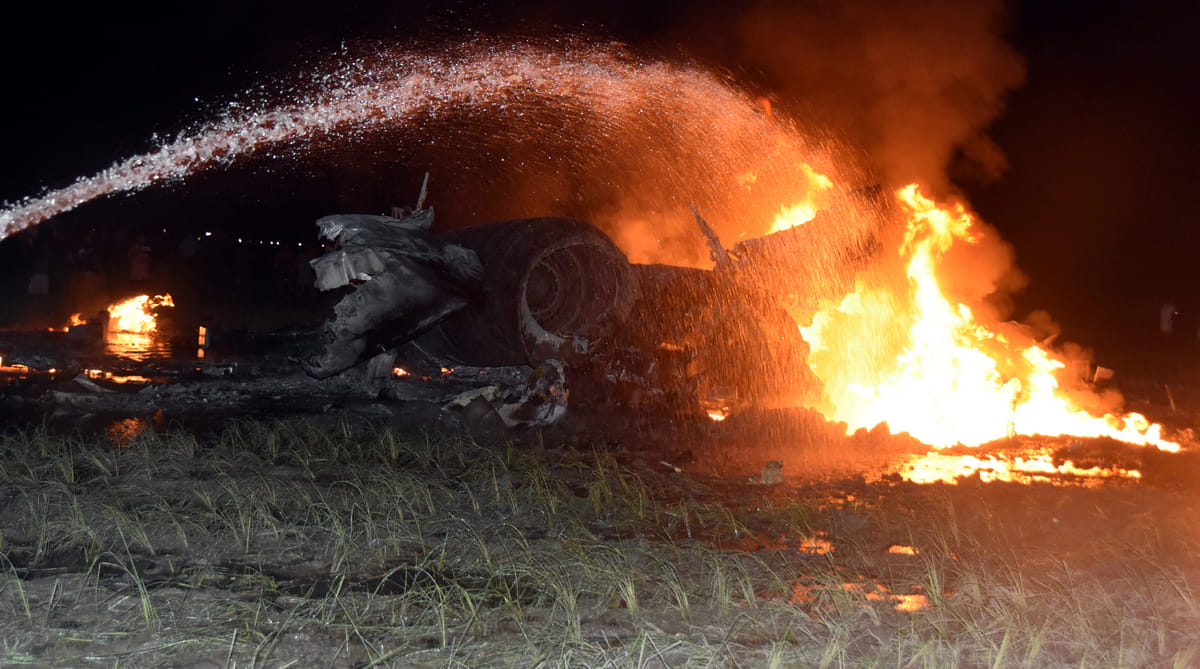
What followed over the next decade and a half was a grim chronicle. A crash near Pune’s Lohegaon Air Force Base on 13 December 2011, attributed to a technical snag on approach, from which both pilots ejected safely. Another crash at Theoor near Pune on 14 October 2014, from the same base, again during a training approach. A crash in Assam on 19 May 2015, when SB-137 of No. 2 Squadron went down during a routine sortie from Tezpur, about 36 kilometres from base. A crash at Shivkar village in Barmer, Rajasthan, on 15 March 2017, in which three villagers were injured by falling debris.
The crash of 23 May 2017 was particularly devastating. SB-063 of No. 2 Squadron, again from Tezpur, went down in dense forest about 60 kilometres from the airfield during a training flight. This time, there was no ejection. Squadron Leader D. Pankaj and Flight Lieutenant S. Achut Dev — who was from Kerala — were killed in the wreckage. No technical snag was survivable enough to trigger an ejection, or the aircraft went down too suddenly, or both. The investigation findings, as is customary with IAF accident inquiries, were not made available to the public in any comprehensive form.
In June 2018, an HAL-built Su-30MKI crashed near Nashik during a routine post-production test sortie, injuring farm workers on the ground when debris fell on their fields. In August 2019, another crash near Tezpur AFS. In January 2023, one of the most startling accidents in recent IAF history: a mid-air collision between a Su-30MKI and a Mirage 2000 during a TACDE exercise near Gwalior, in which both Su-30 pilots ejected safely but Mirage pilot Wing Commander Hanumanth R. Sarathi was killed.
In June 2024, SB-182 — a Su-30MKI that had just completed an overhaul at HAL — crashed near Shirasgaon village, Nashik district, on a post-overhaul test flight. Both pilots ejected safely, but an aircraft that had just been serviced and certified by India’s state aerospace manufacturer was destroyed.
And then, in March 2026, came Karbi Anglong — and Sqn Ldr Vashisth and Flt Lt Duragkar.
A Systemic Failure, Not a Series of Accidents
To call what has happened a series of accidents is to fundamentally misunderstand what a pattern this consistent and this lethal actually represents. Accidents, in the strict technical sense, are random, unpredictable, and low-frequency events. What the Su-30MKI record shows — 13 aircraft destroyed, 6 pilots and aircrew killed — across a 17-year operational period is not a statistical outlier. It is a systemic failure, and it demands to be analysed as one.
The causes that investigators have cited across different crashes point to a cluster of recurring issues rather than a diversity of unique technical events. The phrase “technical snag” appears in the reporting of at least seven of the twelve crashes documented above, a phrase capacious enough to encompass engine flameouts, hydraulic failures, flight control system malfunctions, and avionics faults — without ever specifying, in any publicly available record, whether the same failure mode was recurring across different airframes.
This opacity is itself a problem. When the causes of military aviation accidents are classified or withheld from public view, there is no mechanism by which civil society, Parliament, or independent aviation safety bodies can hold the responsible parties accountable for either the original failure or the adequacy of the corrective action.
The Nashik crashes specifically deserve dedicated scrutiny. Two of the thirteen Su-30MKI losses occurred during test flights at or near the HAL manufacturing and overhaul facility in Nashik — one in 2018 during a post-production sortie and one in 2024 during a post-overhaul flight. The fact that aircraft leaving HAL’s care have crashed during their first flight out of the facility is a quality assurance issue of the most serious kind.
HAL is the organisation responsible for manufacturing, overhauling, and in many cases upgrading India’s front-line combat aircraft. It is also, by institutional design, insulated from the kind of independent audit and accountability that would be mandatory for a private aerospace contractor in any major aviation nation. Parliament has raised concerns about HAL’s quality control and delivery timelines across multiple sessions, yet the organisation’s opacity regarding specific failure investigations has remained largely unchanged.
The 2023 mid-air collision near Gwalior adds yet another dimension of concern. A TACDE exercise — Tactics and Air Combat Development and Evaluation — is among the most controlled forms of combat training the IAF conducts. It occurs over designated airspace, with experienced pilots, under supervision, in conditions specifically designed to simulate combat without creating the proximity risks of actual combat. That a Su-30MKI and a Mirage 2000 could collide during such an exercise, killing an experienced Wing Commander, raises questions not just about the specific flight crew’s situational awareness but about the adequacy of airspace management, collision avoidance systems, and exercise supervision protocols. An answer to those questions has never been provided to the public.
One Fleet, One Window Into a Larger Crisis
The Su-30MKI record, as troubling as it is, represents only a portion of India’s overall military aviation attrition problem. Defence analysts and media investigations drawing on parliamentary replies and RTI disclosures have pointed to India losing more than 100 military aircraft — across all services, all types — over roughly a decade. This figure encompasses the IAF’s ageing MiG-21 fleet (which earned the grim popular nickname “flying coffins” before its retirement process began), MiG-27 losses, helicopter crashes across the Army, Navy, and IAF, and trainer aircraft accidents. The cumulative human cost — in pilots killed, in aircrew lost, in families bereaved — runs into scores of individuals.
The MiG-21 story is the most publicly discussed but perhaps the most instructive. The Soviet-era aircraft was in service with the IAF for over six decades, and by the time its retirement accelerated, it had accumulated a crash record that would be considered catastrophically unacceptable by the standards of any major air force.
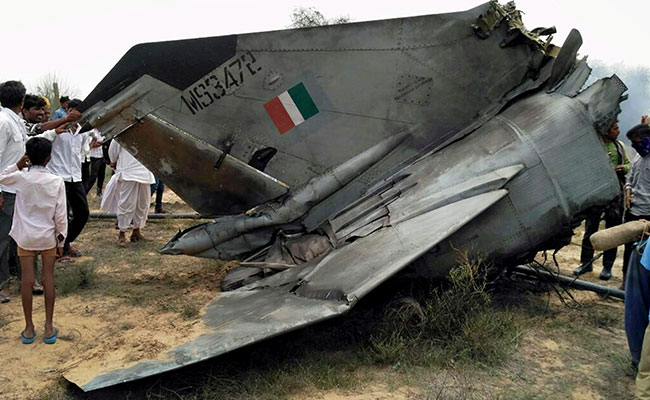
The IAF was aware for years that the MiG-21’s airframe and avionics were approaching the end of their safe service life, yet operational and budgetary pressures kept the aircraft flying. The pilots who died in MiG-21 crashes during those final years of the type’s service were, in a very real sense, the victims of institutional decisions that prioritised fleet strength on paper over the safety of the people operating that fleet.
The Su-30MKI situation is different in kind but similar in structural character. This is not a 1950s Soviet design held together by maintenance heroics. This is a 21st-century supermanoeuvrable fighter, indigenously assembled by HAL, repeatedly upgraded, and theoretically supported by one of the world’s most sophisticated defence industrial relationships with Russia. And yet it has crashed thirteen times in seventeen years. The question of whether that rate reflects a problem with the original design, with the HAL-assembled variant’s quality standards, with the adequacy of IAF maintenance procedures, or with the training protocols under which pilots fly these aircraft — perhaps with the interaction of all four — has never been comprehensively and publicly answered.
The Accountability Deficit
India does not have an independent military aviation accident investigation body equivalent to the National Transportation Safety Board (NTSB) in the United States or the Air Accidents Investigation Branch (AAIB) in the United Kingdom. Military aviation accidents in India are investigated by Courts of Inquiry convened internally by the respective service. The findings of those courts are rarely made public in any meaningful detail, and there is no statutory requirement for them to be. The Comptroller and Auditor General of India has, in various reports, noted concerns about aircraft serviceability and maintenance practices in the defence services, but the CAG’s remit does not extend to detailed accident causation analysis.
This accountability vacuum has real consequences. When the same aircraft type crashes in the same geographic area — Tezpur, Assam, saw Su-30MKI crashes in 2015, 2017, and 2019 — and no public analysis is produced about whether those crashes share a common cause, the corrective action loop that every safety system depends upon is broken.
Pilots continue to fly the aircraft. Ground crews continue to maintain it under the same procedures. And if the same failure mode recurs because no one outside the classification wall can identify that the same failure mode is recurring, then the next crash is not, in any meaningful sense, an accident. It is a foreseeable consequence of a system designed to conceal its own deficiencies from the scrutiny that might force their correction.
What Accountability in Public Interest Actually Looks Like
This article is not an argument for grounding India’s air force, nor is it an argument that the Su-30MKI is an inherently unsafe aircraft. In the context of the total number of sorties flown by a large air force over two decades, thirteen losses is a crash rate that, while unacceptable, is not historically unprecedented for a frontline combat aircraft.
The United States Air Force and Navy have lost F-16s, F/A-18s, and F-15s at comparable or higher rates. The difference is that the NTSB-equivalent process, the congressional hearing, the defence media ecosystem, and the culture of public accountability in those countries ensure that each crash contributes to a public body of learning that demonstrably reduces the probability of the next one.
What India needs — and what the families of Wing Commander Narah, Squadron Leader Pankaj, Flight Lieutenant Achut Dev, Wing Commander Sarathi, Squadron Leader Vashisth, and Flight Lieutenant Duragkar deserve — is a system of military aviation accident investigation that is independent of the services whose interests may, consciously or unconsciously, be served by limiting the public record. A statutory independent military aviation safety board, empowered to investigate accidents, publish findings, and mandate corrective actions, would not compromise operational security. It would save lives.
Parliament has a role to play here. Questions about aircraft crash rates, maintenance budgets, HAL quality control findings, and aircrew fatigue norms are legitimate subjects of democratic scrutiny, and the Standing Committee on Defence has the authority and the responsibility to pursue them with the same rigour it applies to capital procurement decisions. The money spent on acquiring the Su-30MKI fleet — billions of dollars over two decades — is public money. The pilots who fly it are public servants. Their deaths are public losses that demand public accounting.
The Human Cost Behind the Statistics
It is easy, in the analytical mode that defence journalism sometimes requires, to reduce human lives to data points in an attrition table. This article has, by necessity, done some of that. But behind each entry in the incident log above is a story that no statistic can adequately contain. Wing Commander Pushpendra Narah, killed when his parachute failed over the Rajasthan desert in 2009, was the first IAF pilot to die in a Sukhoi crash — a milestone that should have triggered a programme-wide examination of ejection system reliability in the Indian-assembled variant.
Squadron Leader D. Pankaj and Flight Lieutenant S. Achut Dev, who died in dense Assamese forest in 2017, left behind families who were told there would be an inquiry, and who have lived since then with whatever the inquiry concluded, in whatever form the IAF chose to share it with them. The three villagers injured by debris in the 2017 Barmer crash, the farm workers hurt by falling wreckage in Nashik in 2018 — they are not even counted in the military’s own attrition figures, because they were not serving personnel.
Squadron Leader Anuj Vashisth and Flight Lieutenant Purvesh Duragkar, who died on 5 March 2026 in the Karbi Anglong hills, were the most recent names added to this list at the time of writing. They will not be the last, unless the systems that produced their deaths are fundamentally reformed.
Conclusion: The Sky Is Not Free
The men and women of the Indian Air Force do something genuinely extraordinary every day. They fly extraordinarily powerful, complex machines at extreme speeds and altitudes, in conditions that range from peacetime training sorties to operational combat patrols, accepting risks that most of us will never understand from the comfortable distance of ordinary life.
They deserve, as a minimum, an institutional system that takes their safety as seriously as their bravery — one that investigates accidents with the rigour and independence needed to prevent the next one, that holds manufacturers accountable for quality failures that send maintained aircraft crashing on their first post-overhaul flight, and that treats their deaths as institutional failures requiring institutional remedy, not simply as honourable sacrifices in the course of duty.
The 100-aircraft figure that defence reports associate with roughly a decade of Indian military aviation is not a medal. It is an indictment — of procurement decisions that kept ageing fleets flying beyond safe service limits, of maintenance systems that allowed recurring failure modes to remain unaddressed, of accountability structures that insulated decision-makers from the consequences of their decisions, and of a broader culture that has been too willing to accept the deaths of its finest aviators as the unavoidable cost of national security.
The cost of the sky should not be this high. And the fact that it has been, for this long, without the structural reforms that transparency and accountability would demand — that is the real subject of this article, and the real reason it needed to be written.