Is Instamart’s Growth Bleeding Swiggy?
An Investigation into Swiggy's Costly Pursuit of the 10-Minute Delivery Dream

Behind the shining glass towers of Bangalore’s startup hub, where Indian entrepreneurial aspirations are born and billions of dollars disappear overnight, a silent financial hemorrhage is taking place. Swiggy, which was once the poster child to India’s food delivery boom, finds itself caught in a costly competition that could bleed its bank. The problem? Its quick delivery arm Instamart, which was designed to deliver groceries in ten minutes but has instead accumulated mounting losses that continue to deteriorate.
While Swiggy is set to declare its Q1FY26 numbers later today, experts highlight another quarter of losses, slated at ₹763 crore to ₹1,130 crore. But behind these figures is a more serious problem, which is revolving around Swiggy’s desperate struggle to stay competitive in quick commerce has degenerated from smart growth into a money problem that will probably kill it.
The Numbers Don’t Lie: What We Could See Is A Trend of Rising Losses In Swiggy!
Swiggy’s financial path is that of a business increasingly hostage to its own aspirations. In Q1FY25, the firm had lost ₹611 crore. Jump ahead to Q4FY25, and the loss had risen to ₹1,081 crore. Now, when market pundits get ready to make their estimate for Q1FY26, the consensus is bleak: losses will expand again, some estimate, to new highs.
ICICI Securities, which is conservative in its estimates, is estimating a net loss of ₹1,060 crore in Q1FY26. That is a whopping 73% increase from the same quarter of the last year. And to make matters worse, JM Financial’s worst-case scenario estimates a loss of ₹1,130 crore. That indicates Swiggy’s cash cries are piling up rather than subsiding.
But the reality comes to the forefront when we look at these numbers in detail. Swiggy’s food ordering business is still doing pretty good and getting better on the financial front, but it is the quick commerce division that is injecting these massive losses. Kotak Institutional Equities is of the view that Instamart will post EBITDA losses of ₹850 crore in Q1FY26, a number bigger than the losses of many standalone startups.
The Instamart Imperative That Swiggy Is Struggling To Sustain!
To understand why Swiggy keeps investing in what seems like a losing cause, we must first look at the change that has happened in India’s retail landscape. Quick commerce, or the delivery of anything from milk to electronics in minutes, has won over the hearts of urban dwellers in ways few foresaw.
Around 200,000 kirana stores have shut down over the last year because quick-commerce websites are able to deliver products faster and even more cheaply than the conventional kirana stores. This change has resulted in what industry insiders call a “land grab” phase, where the market share loss today will perhaps never be regained.
By January 2024, Zomato-Blinkit was dominating the market, and Zepto grew its market share from 15% in 2022 to around 30% in 2024. In this scenario, Swiggy’s massive investment in Instamart seems more a matter of survival than sheer wastage. The company knows that if it loses in quick commerce, it will be nothing in India’s changing retail scenario.
Despite this strategic imperative, it has come at a huge price. With food delivery, Swiggy has gained scale and operating leverage over almost a decade. Quick commerce, however, demands an entirely different kind of infrastructure. Every Instamart outlet is a large commitment of real estate, inventory, and logistics upfront. More importantly, the cutthroat competition has led to intense subsidization of orders by companies, and hence a vicious cycle of growth at the cost of profitability.
The Economics of Speed: Why Quick Commerce Is Bleeding Money?
The expenditure details of quick commerce explain how Instamart is a costing heavily for Swiggy. In normal e-commerce, companies try to keep costs low, but quick commerce is all about being quick, at any cost. This core model is causing problems that result in ongoing losses.
Firstly, the economics of the store are tough. Swiggy Instamart has more than 1,000 dark stores, and each of them needs the best location real estate to facilitate quick delivery times. The stores command premium rents, especially in metros where most Instamart customers are based. The real estate expense itself can contribute 8-12% to GMV, much more than e-commerce, industry sources claim.
Second, stock levels are extremely high. Quick commerce has a lot of variety products that are in stock instantly, and hence companies maintain stock levels above normal in conventional retailing. This absorbs a lot of working capital and increases wastage, particularly for perishables that constitute a large portion of quick commerce orders.
Third, the unit economics remain poor in the majority of markets. Although Instamart does not reveal Swiggy’s unit economics, business estimates place the majority of quick commerce orders being fulfilled at a loss if the overall expenses are taken into account. The order value per average is increasing, but not high enough to cover all the expenses involved, like last-mile delivery, store maintenance, and customer acquisition.
The Competitive Pressure Cooker
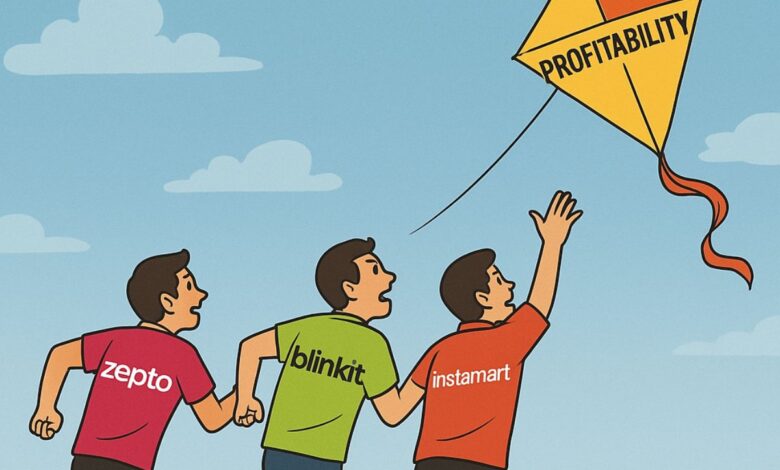
The fast commerce industry has turned into what economists refer to as a “Red Queen’s Race” – businesses need to always run faster simply to remain stationary. In 2024, Blinkit, owned by Zomato, leads the charge with a 46% market share, followed by Zepto with 29% and Swiggy Instamart with 25%. Such a market landscape, where three businesses share effectively the entire market, has exponentially amplified competitive pressures.
Zomato’s Blinkit has come out on top, courtesy the operational efficiency and financial resources of the parent entity. Blinkit has onboarded 368 stores and 1.3 million square feet of warehousing space in the previous 2 quarters, and the ramp-up has resulted in third-quarter losses of ₹1.03 billion ($11.9 million). Even the market leader is burning cash at unprecedented levels, reflecting the capital-intensive nature of the business.
At the same time, Zepto has established itself as a aggressive competitor by raising huge amounts of capital to allow it to grow. The company’s focus on densely populated city centers and being lean has allowed it to grow quickly while keeping its costs lower than its competitors.
Swiggy needs to keep an eye on what its competitors are doing, no matter the cost. If Blinkit opens shop in a new city, Instamart also needs to open shop there. If Zepto launches something, Instamart also needs to launch the same. That is why Instamart is growing more because of competition than because of wise money management.
The Profitability Illusion
Swiggy management has often expressed that Instamart will be profitable, with a goal of achieving break-even by December 2025. However, a closer look at the condition of the industry gives rise to serious doubts regarding the achievability of this goal or whether it is yet another instance of making excessive assumptions while ignoring financial realities.
Swiggy is anticipating becoming profitable by December 2025 but Instamart is losing money by mid-2025. For quick commerce to become profitable, a lot of things have to go in the correct direction simultaneously: cost-effectively scaling store operations, expanding average order size, lowering the cost of acquiring new customers, and making the supply chain efficient rather than fast.
Each of these variables has serious problems. It is hard to achieve cost savings when the competitors are growing simultaneously, reducing the advantage of having additional customers. Discounts and the fact that convenience purchases are small all impact average order sizes. The cost of acquiring new customers is still high due to high competition and the need to create repeat purchasing in a new market.
The emphasis on being efficient runs counter to the promise of quick delivery speed. Reducing delivery time is a matter of investing more in infrastructure, which is counter to the profits and the benefits that attract people in.
The Cost of Being Obsessed
While Swiggy invests a lot of money to be a leader in quick commerce, its core food delivery business is quite different. The food delivery segment has expanded significantly and operates well, with improved profits per order and growing market share. This raises critical questions on how to utilize resources and what the core objectives should be.
Industry analysis is of the view that Swiggy’s food delivery business can be profitable if the company invested its resources in enhancing its services rather than expanding its business to other markets. The company has developed significant strengths in food delivery, including restaurant relationships, delivery staff management, and customer retention.
But the money and administrative attention put into Instamart might have hindered the speed in food delivery. Every rupee spent on expanding quick commerce is a rupee not spent expanding Swiggy’s core business. This opportunity cost becomes important when we look at the way food delivery has more tangible ways of making money versus the unclear finances of quick commerce.
The Wider Implications for Indian Startups
Swiggy’s risk in quick commerce is symptomatic of wider trends within the Indian startup ecosystem that need to be countered. The willingness of the company to forgo profits at the cost of higher market share is a strategy Indian startups have been following for decades. But the risks involved in quick commerce seem greater because this business involves a lot of initial capital and very little ways of expanding economically.
Indian startups are in a phase that investors refer to as “growth at any cost.” In this phase, companies focus on growing their market than being financially stable. While this has resulted in the establishment of some great companies, it has also resulted in massive failures when the market changes or funding becomes hard to come by.
The market is worth approximately $3.34 billion (2024) and is estimated to rise between $5 billion and $5.38 billion by 2025. This indicates that investors have great faith in the future of the market. This is, however, due to the fact that it is thought that the current losses will not be for long and growth will ultimately bring about profits.
The Technology Paradox
One of the fascinating things about the competition in quick commerce is the way it has caused companies to invest heavily in tech and improved operations. That investment has not, however, translated to improved bottom lines. Swiggy, like everyone else, has developed sophisticated systems of demand planning, inventory management, and routing that the traditional retailer would envy.
These technology benefits are real competitive differentiators and intellectual property that potentially have value somewhere else. But in today’s competitive atmosphere, these benefits are rapidly duplicated or copied by competitors, and there is a technology arms race that is good for consumers but that destroys company profitability.
The strange thing is that the more effective these companies are at running their business, the more costly they become. Improved planning is a function of data experts, machine learning algorithms, and continuous upgrades. Route optimization involves real-time monitoring tools, dynamic pricing methods, and coordination among multiple individuals.
Customer attitude and long-term viability
One of the quick commerce domains that are usually not addressed is whether consumers will continue to use such business models in the long term. Currently, statistics indicate that quick commerce customers place orders for very low prices and very quick delivery, which sets up expectations that cannot be fulfilled.
A survey by Inc42 and Clootrack also indicates that customer service is highly important for grocery delivery businesses. The top quick commerce businesses, however, failed in this regard. Blinkit received a poor 2.4 out of 10, and Swiggy Instamart received the lowest rating of 0.5. This indicates that despite a lot of investments, customers are not content, and this puts a question mark on the future of this business.
The issue for such companies as Swiggy is that they have created customer expectations that prove difficult to fulfill profitably. Customers would like their order in 10 minutes for a cost that is sometimes lower than what they pay at regular stores. Altering these customer expectations without losing their market share is a mammoth undertaking no company has ever been able to accomplish.
The Path Forward: Strategic Recalibration or Continued Bleeding?
Since Swiggy is approaching yet another quarter of heavy losses, the company has to make some decisions, each of which will determine its destiny. The first decision is to maintain the present strategy and keep expecting that getting big will eventually turn it into a profitable company. This strategy requires additional money and patience from investors who may be losing patience with the rising losses.
The second choice is strategic realignment. This involves Swiggy narrowing down to specific markets or specific customer segments where it is easier to make money. This will require the company to sacrifice some market share in certain areas but focus more on others. This strategy may be difficult to implement due to intense competition.
The third alternative, one that not many companies are willing to discuss publicly, is to retreat from fast commerce altogether. That would let Swiggy focus on its core food-delivery business and help it become profitable sooner. But the action would probably be seen as retreating from what is now a battle for survival in Indian retail.
Q1FY26 numbers will give us a good idea of where Swiggy is going. Unless unit economics or market share are showing some signs of improvement, investors will once again force a shift in strategy if the losses keep increasing.
The Investor Dilemma
From the perspective of an investor, Swiggy’s strategy of quick commerce reveals a real dilemma between short-term losses and long-term value. Public investors of the company, who have seen the price change with every quarterly announcement, may embrace losses differently from investors who have invested in the company in the first place.
JM Financial thinks people should ‘Buy’ Swiggy and has a target price of Rs 460. Kotak Institutional thinks people should ‘Add’ to their holding, which means that despite mounting losses, there are a few analysts who are positive about the company’s future. But that optimism may be based on assumptions of future profits that are perhaps too optimistic.
Swiggy’s leadership is caught between telling a good story to investors and telling the truth about the large issues in fast commerce. The business must be truthful about the issues that it has today while being optimistic about the future. Balance becomes harder to maintain with every quarter of losses.
At the end: What Is The Price of Desiring Success?
While Swiggy gets ready to announce what may be another quarter of huge losses, the company’s foray into quick commerce marks the perils of being overly aggressive in intensely competitive markets. The chase for Instamart has turned Swiggy from a cash-generative food delivery company into a money-losing company trying hard to shore up its books.
The question for Swiggy is whether instant commerce is something they really require, even if it’s not profitable, or whether it is an expensive diversion from what they excel at. The answer to this question will likely decide not just the financial future of the company but whether it will survive in India’s rapidly evolving retail environment.
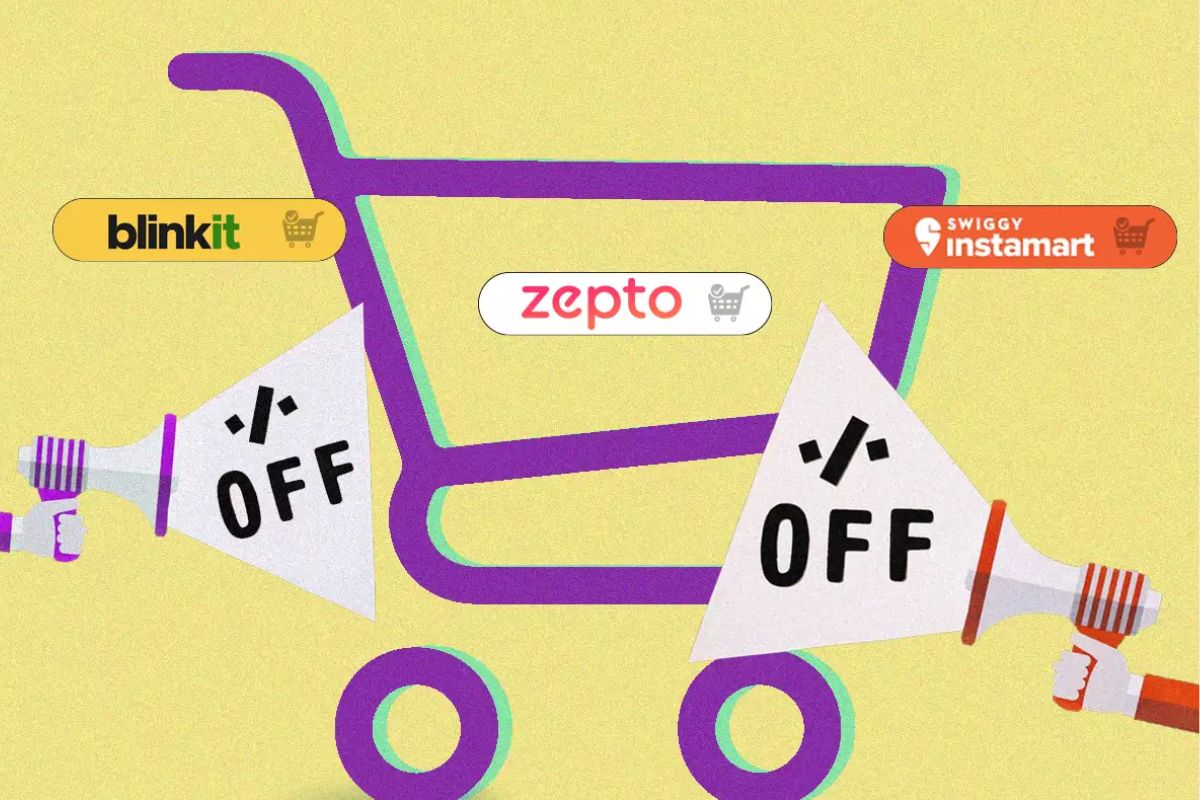
It is clear that the current course of action cannot continue. Swiggy lost ₹3,117 crore, 33% more than last year in FY25, whereas its closest competitor Zomato saw profits. This difference reveals the cost of Swiggy’s fast-delivery dreams and raises simple questions about its plans.
The coming months will be crucial for Swiggy. The company needs to demonstrate that its large gambles in Instamart are translating into improved business performance and a clearer path to profitability. If the Q1FY26 performance today indicates further slowdown without any improvements in key metrics, Swiggy may be compelled to make the hardest decisions in its history.
The sudden commerce revolution has changed the nature of Indians’ shopping. But it is not clear if the startups behind the revolution can make money. For Swiggy, time is of the essence. Every ₹ invested chasing the 10-minute dream delivery gets the company closer to facing financial reality.
The stakes are extremely high. In a game where there is only one winner who can claim it all, losing the ground of quick commerce could be a matter of being forgotten. But winning, as seen by Swiggy’s increasing losses, could very just mean survival. As the company navigates through this perilous phase, this is one thing that is certain: the decisions made in the next months will tell whether Swiggy becomes a large commerce player or a cautionary tale of the risks of expanding at all costs.