Is “Never Settle” Already Settled- The Uncomfortable Story Of OnePlus Shutting Down!
We ask - Is the "Flagship Killer" Became the Flagship Victim?


In the cutthroat theater of India’s smartphone market, where brands rise like phoenixes and fall like dominoes, OnePlus finds itself in a peculiar purgatory. It’s not quite dying, as the company insists; but just bleeding market share, hemorrhaging retailers, shedding products, and watching its once-fanatical customer base drift toward shinier alternatives. At this point, we ask, hey, “Is OnePlus Business as usual”; is everything going all right?
When OnePlus India CEO Robin Liu took to X on January 21, 2026, to quash shutdown rumours with the brand’s famous “Never Settle” tagline, he wasn’t wrong, technically. OnePlus isn’t shutting down. It’s just doing something arguably worse, which is, slowly fading into irrelevance while maintaining the facade of normalcy. The company’s official line was “We’re operating as usual and will continue to do so.” But the market’s verdict was seen different! A 36% market share collapse in just one year, from 6.1% in 2023 to 3.9% in 2024, according to International Data Corporation’s (IDC) rigorous tracking of India’s smartphone battlefield.
Can we call it a stumble? Perhaps, not, as that’s a cliff dive with a smile and a press release…
The Numbers Don’t Lie, Even When the Press Releases Do!
Let’s dispense with pleasantries and examine the autopsy report of a brand that’s very much alive but increasingly struggling to remember why it matters.
According to Omdia’s smartphone shipment data, one of the industry’s most respected tracking systems, OnePlus saw global shipments plummet by more than 20% between 2023 and 2024. This wasn’t a marginal dip or a quarterly blip; but can be callled a systemic hemorrhage. Meanwhile, parent company OPPO actually grew by 2.8% during the same period, shipping 103.6 million units globally. The math is brutal, showing OnePlus dragged down OPPO’s growth numbers even as the parent thrived.
In India specifically, the carnage intensified. Research firm CyberMedia Research (CMR) documented a 13% decline for OnePlus in Q3 2025, with the brand holding just 5% of the tablet market. But smartphones, OnePlus’s core business, tell an even grimmer story.
Another research powerhouse, Canalys, tracked OnePlus’s market dominance in India’s premium segment (above ₹30,000) falling from a commanding 21% share in the first three quarters of 2023 to a pathetic 6% in 2024.
Read that again, from 21% to 6% in twelve months. That’s not market dynamics; that’s market rejection.

China, OnePlus’s home turf, proved even less forgiving. The brand scraped together just 1.6% market share in 2024, a 20% year-over-year decline in a market where even breathing should guarantee you a few percentage points given the sheer volume. When you’re losing ground in both your largest foreign market and your homeland simultaneously, the word “crisis” starts feeling inadequate.
From Where It All Started? — From May 2024, When The Month Indian Retailers Said “Enough”
Here’s where the story gets deliciously uncomfortable for OnePlus’s carefully curated “business as usual” narrative.
In May 2024, a full eight months before the shutdown rumors went viral, thousands of Indian retail outlets quietly stopped selling OnePlus devices. Not because of a dispute. Not because of logistics nightmares. Because selling OnePlus products had become unprofitable.
The complaints were eerily consistent across India’s vast retail ecosystem: delayed warranty processing, razor-thin profit margins that barely covered operational costs, and a general sense that OPPO was treating its OnePlus sub-brand like an afterthought, as the market echoes. When your retail partners, the very people who actually put devices in consumers’ hands—walk away en masse, that’s not a hiccup, but a vote of no confidence delivered with feet.
OnePlus responded with… well, nothing particularly effective. The company allowed OPPO service centers to handle OnePlus repairs and permitted OnePlus to sell phones at cost just to move inventory off shelves. Selling at cost. Let that sink in. That’s not a sustainable business strategy; that’s liquidation with extra steps.
Industry insiders, speaking to Android Headlines in their explosive January 2026 report, painted a picture of a brand on life support: “The $14 billion lifeline was a three-year bet. The bet didn’t pay off. Now they’re cutting losses.” That $14 billion, injected by OPPO in 2022, was supposed to save OnePlus. Instead, it appears to have bought the company just enough time to watch competitors eat its lunch, dinner, and breakfast.
Then came another pain point, when OnePlus’s Price Point became Apple’s Playground.
OnePlus built its reputation on a simple, seductive promise: flagship specs at mid-range prices. The “flagship killer” moniker wasn’t marketing fluff; it was gospel for early adopters who wanted premium Android experiences without Samsung’s price tags.
Then Apple decided to get serious about India.
Through aggressive partnerships with e-commerce platforms, festival season discounts that made the Competition Commission of India sweat, and No-Cost EMI schemes that made iPhones shockingly accessible, Apple didn’t just enter OnePlus’s price segment, but also, it annexed it. In Q3 2025, Apple recorded its highest-ever quarterly shipments in India, reaching 5 million units and securing fourth place in the overall market for the first time. Year-over-year growth? A robust 25.6%.
The premium segment (₹30,000+), which OnePlus once dominated, became iPhone territory. In 2025, premium smartphones accounted for 22% of total Indian shipments—one in every five devices sold. Apple’s iPhone 16 was the most-shipped individual model in the entire country, giving Apple a record 28% share of total market value, according to Counterpoint Research.
So till here, what can we infer (but let’s be blunt)- when a consumer in India walks into a store with ₹45,000 to spend, they’re no longer asking “OnePlus or Samsung?” They’re asking “new OnePlus or last year’s iPhone?” And increasingly, they’re leaving with an Apple logo.
Take comments of Tech analyst Yogesh Brar, who perhaps predicted OnePlus’s struggles months before they became public, explained it with surgical precision: “OnePlus initially gained popularity as an aspirational brand, serving as a stepping stone for consumers before they moved on to premium brands like Apple and Samsung.” But there was a problem? OnePlus never evolved beyond being a stepping stone. It remained the second choice—the phone you bought while saving for an iPhone.
But it was not only the outsider Apple; there are MANY ‘Vibhishan’ as well- The Realme, Vivo, Motorola…
If Apple attacked from above, domestic and sibling brands ravaged OnePlus from below and beside.
Realme, another OPPO sibling under the BBK Electronics umbrella, consistently outperformed OnePlus in market share—13.45% to OnePlus’s 4.82% in Q1 2024. Vivo, yet another BBK cousin, led the entire Indian market with a 20% shipment share in 2025, driven by a staggering 185% surge in its X-series. Even Motorola‘s Edge series found traction in OnePlus’s traditional mid-premium space.
The irony is almost poetic; where OnePlus is getting crushed by brands that share the same parent company, manufacturing infrastructure, and R&D resources. When your own corporate siblings are stealing your customers, the problem isn’t the market, but it’s you.
Faisal Kawoosa, Chief Analyst at Techarc, goes ahead with “Brands such as iQOO by Vivo, Reno by Oppo and Edge by Motorola fared well over these years along with the preference of people to consider an iPhone in the range even if that meant buying an older generation iPhone.” Would it be wrong if we translate this as- even within the BBK family, OnePlus is the unloved middle child nobody roots for anymore!
Then Comes The Green Line… of Death: That Could Possibly Gave OnePlus A Green Signal To Death, as its Flagship Feature Evolved as a Defect
Nothing destroys premium brand perception quite like a widespread hardware defect that your company handles poorly.
Enter the “green line” issue—a mysterious defect that caused vertical green lines to appear on OnePlus phone displays, rendering devices unusable. What started as scattered complaints in 2023 metastasized into a full-blown social media firestorm by mid-2024. Forums exploded. YouTube channels dedicated entire videos to the problem. Customers felt betrayed.

OnePlus’s response was, glacial. The company eventually launched “Project Starlight” and offered free lifetime replacement schemes, but the damage was done. Trust, once shattered, doesn’t restore itself with press releases.
Tarun Pathak, Research Director at Counterpoint, explained the cascading effect: “The brand continues to hold its recall and loyalty, especially with the fast-moving NORD series, but the major issues like the green line, and software bugs on Oxygen OS impacted flagship device sales.”
When your flagship devices—the halo products that define brand perception—become symbols of unreliability, you don’t just lose sales. You lose believers. And OnePlus built its empire on believers.
At last, the nail on the coffin, the OPPO Absorption, ultimately, the Death by Integration
Perhaps the cruelest twist in OnePlus’s story is that it’s being killed by efficiency.
Since OnePlus’s deeper integration with OPPO beginning in 2021, the brand has progressively lost its independence. R&D resources merged. Manufacturing pipelines consolidated. OxygenOS, once OnePlus’s clean, bloat-free answer to Samsung’s TouchWiz, merged with OPPO’s ColorOS into a unified codebase.
On paper, this makes perfect sense. Why run duplicate R&D teams? Why maintain separate software divisions? Corporate consolidation is Business 101.
In practice, it murdered what made OnePlus special.
The brand was built on being the scrappy underdog, the company founded by Pete Lau and Carl Pei that told corporate giants to get bent while delivering phones that enthusiasts actually wanted. It had personality. It had identity. Hardcore Android fans knew OnePlus stood for something.
Now? OnePlus is a brand name slapped on OPPO’s overflow inventory with slightly different marketing materials.
Carl Pei, OnePlus’s charismatic co-founder, left in October 2020 to start Nothing—a company that now threatens to out-OnePlus OnePlus by actually delivering what OnePlus used to stand for: distinctive products for people who care about tech. The Hasselblad camera partnership, announced in 2021 with great fanfare, quietly ended in 2025, replaced by a generic “DetailMax Engine” that sounds exactly as uninspiring as it is.
When you strip away everything that made a brand beloved in pursuit of operational efficiency, you don’t get a more profitable OnePlus. You get a slightly cheaper OPPO that nobody asked for.
The Shutdown That Isn’t (But Kind Of Is)
So is OnePlus shutting down in India?
Legally, corporately, officially? No.
Strategically, operationally, spiritually? It’s complicated, and that “complicated” tilts heavily toward “yes, just slowly.”
Are we just saying in air? What, if, we have the evidence:
Product cancellations: The OnePlus Open 2 foldable and the OnePlus 15s—both rumored flagship devices—were reportedly cancelled. When you’re canceling products in the two hottest smartphone categories (foldables and numbered flagships), you’re not expanding—you’re contracting.
Retail footprint shrinkage: Thousands of stores no longer stock OnePlus devices. The company opened over 200 exclusive OnePlus stores in India between 2020 and 2024, concentrated in tier-2 and tier-3 cities. How many remain profitable? That number, conspicuously, never appears in press releases.
Shipment collapse: From 17 million units in 2024 to an estimated 13-14 million in 2025—that’s more than a 20% drop in a market that grew, albeit marginally.
**Launch……….with silence** While OnePlus technically has products coming (the Turbo 6 series, the OnePlus 16), the cadence has slowed. Fewer devices. Longer gaps. Less noise.
This is what managed decline looks like. OnePlus isn’t making a dramatic exit; it’s being gradually phased into irrelevance while OPPO decides whether to kill the brand outright or keep it as a zombie marque for budget flagships.
Robin Liu’s denials aren’t lies—they’re technically accurate statements delivered with the enthusiasm of someone reading from a legal department script. “Operating as usual” can mean a lot of things when “usual” now includes double-digit market share losses and retailer mass exodus.
So, Could We See Any Path Forward (If There Is One)?
Can OnePlus recover? The optimists, and there are precious few left, point to three potential lifelines:
- Product excellence recovery: The OnePlus 13, launched globally in January 2025 with a Snapdragon 8 Elite processor and a massive 6,000 mAh battery, earned cautiously positive reviews. If OnePlus can string together three consecutive flagship launches without major defects or controversy, it might rebuild trust.
- Brand identity resurrection: OnePlus needs to remember what it stood for beyond “slightly cheaper premium phones.” Performance, customization, community engagement—these were pillars. Kawoosa’s prescription is clear: “Performance, Experience and Personalisation (PEP) are what OnePlus needs to focus on.”
- Nord series rationalization: Here’s the controversial take: OnePlus may need to kill or drastically limit its Nord series. Selling twenty different Nord variants across fifteen price points doesn’t build brand identity—it dilutes it. As Kawoosa warned, “My only suggestion has been that it seriously needs to think about Nord series. I still believe it’s a distraction for OnePlus and its focus on developing premium experiences in the mid-premium market gets diluted along with the brand identity.”
But these are hypotheticals in a market that has already moved on. Samsung dominates foldables with an 88% market share in India. Apple owns the premium conversation. Xiaomi, Vivo, and Realme carve up the mid-range. Where, exactly, does OnePlus fit?
So, here comes the Uncomfortable Truth, about which our headline stated.
OnePlus’s India story isn’t a shutdown. It’s something more insidious; that can be termed as corporate euthanasia disguised as operational adjustment.
OPPO isn’t pulling the plug—that would generate bad press, angry customers, and regulatory scrutiny. Instead, it’s letting OnePlus wither through neglect, under-investment, and strategic cannibalization by sibling brands that OPPO actually cares about. When the end comes—if it comes—it won’t be announced with a press conference. It’ll be a quiet absorption, a brand name that migrates to budget devices in markets that don’t matter, a logo that fades from billboards and showrooms without anyone noticing the exact moment it disappeared.
For consumers, the message is clear: if you’re invested in the OnePlus ecosystem, keep your devices working because the brand’s commitment to your market is provisional at best. For investors and analysts, the lesson is grimmer—this is what happens when a company loses sight of why it existed in the first place and mistakes brand efficiency for brand building.
And for OnePlus itself? Well, perhaps the brand’s slogan should be updated. “Never Settle” worked brilliantly when you had the audacity and products to back it up. Now it just sounds like the tagline of a company that already settled—for mediocrity, for irrelevance, for slow-motion obsolescence—and is too proud to admit it.
The shutdown rumors were false. But the decay? That’s verified, documented, and accelerating. Welcome to the new OnePlus: technically operational, functionally irrelevant, and stubbornly insisting everything is fine while the market writes its obituary in real time.
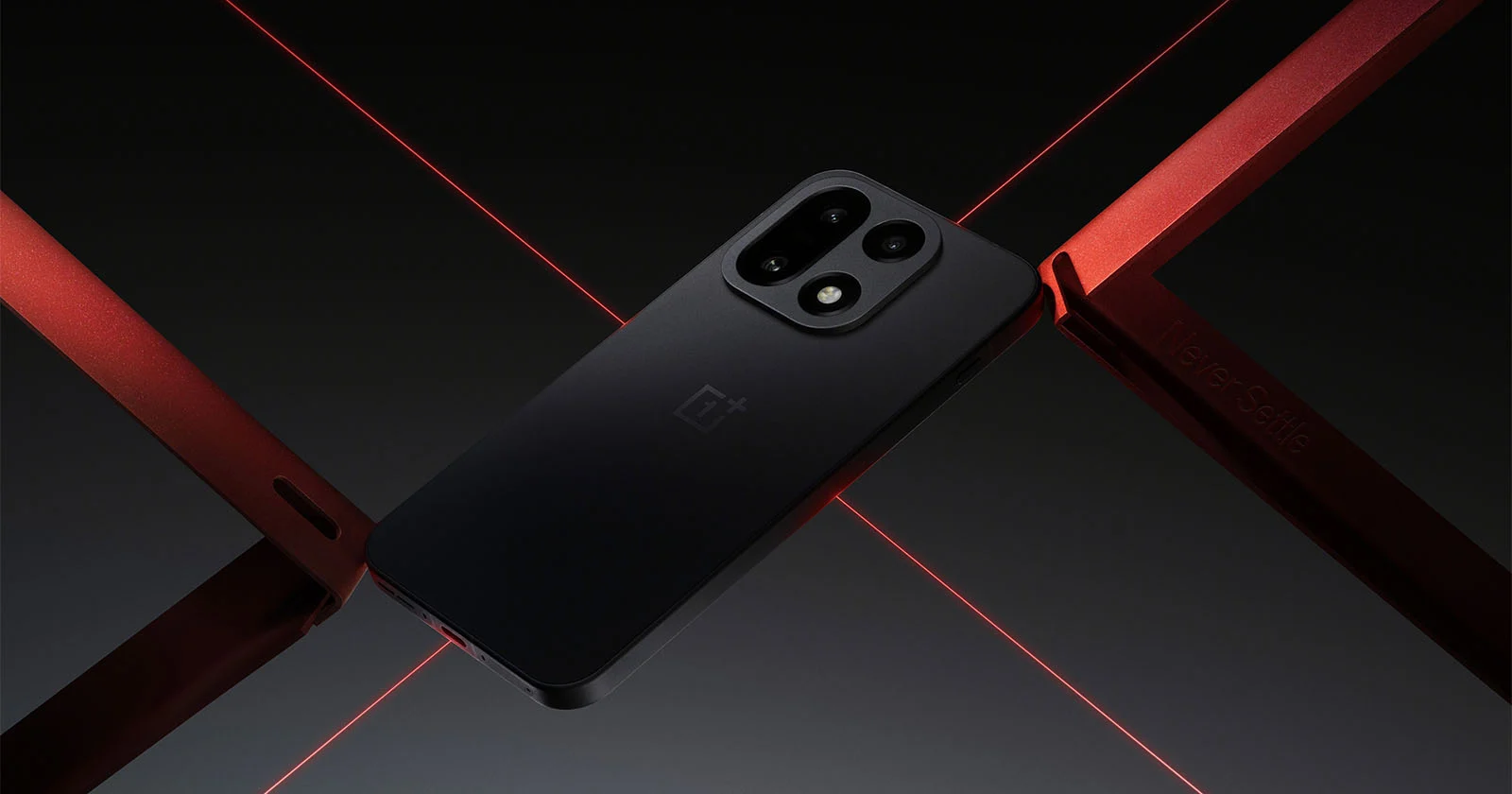
Never Settle. Unless the market settles for you first.