India’s Most Wanted Hawala Man Is Giving Investment Advice, And Suing Journalists: Is There Any Connection Between Hari Shankar Tibrewal And PMO, That Is Keeping Him Safe?

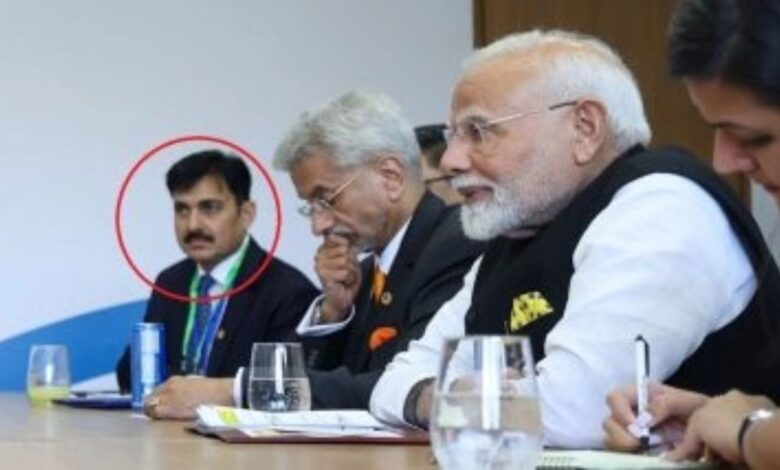
What Connection Did Hari Shankar Tibrewal Have With The PMO?
It’s the start of a new financial year. The rupee wobbles. The markets flutter. And somewhere in the gleaming towers of Dubai, one of India’s most wanted alleged financial fugitives is reportedly offering his views on long-term investment philosophy to financial media.
Why This Is Called The Empire Built on Illegal Bets and a River of Hawala?
To understand why the name Hari Shankar Tibrewal matters, and why it refuses to go away, you must first understand the architecture of the Mahadev Online Book (MOB) syndicate, arguably the most sophisticated illegal betting operation ever run out of South Asia.
Promoted by Chhattisgarh natives Saurabh Chandrakar and Ravi Uppal from their Dubai base, MOB did not merely facilitate illegal gambling. It was a franchise empire. Promoters retained approximately 70–75% of profits generated by betting panels, while the remainder was distributed among the panel operators managing the betting operations. Proceeds of crime were systematically layered through thousands of mule or dummy bank accounts opened using the KYC documents of unsuspecting individuals, before being transferred abroad using hawala channels, cryptocurrency, and complex financial layering, finally invested in high-value assets in the UAE and India.
As of March 2026, the Enforcement Directorate has conducted search operations at more than 175 premises across the country, arrested 13 persons, and arraigned 74 persons as accused in five Prosecution Complaints filed before the Special Court (PMLA), Raipur. Total attachments, seizures, and freezing of properties now stand at Rs 4,336 crore.
The ED, Raipur Zonal Office, issued a Provisional Attachment Order under PMLA, 2002, attaching 18 luxurious immovable properties in Dubai and 2 properties in New Delhi, collectively valued at nearly Rs 1,700 crore. The Dubai assets included high-value villas in Dubai Hills Estate, apartments in Business Bay, SLS Hotel & Residences, and apartments in the iconic Burj Khalifa. India’s financial crimes investigator had reached the world’s tallest building. The symbolism was not lost on observers. Yet in the midst of this widening net, one name consistently slips through: Hari Shankar Tibrewal.

The ED’s Own Words: “A Huge Hawala Operator”
On March 1, 2024, the ED’s official press release stated that Hari Shankar Tibrewal “is a huge hawala operator” who partnered with Mahadev promoters and used his Dubai-based entities to invest betting proceeds into the Indian stock market. On March 8, 2024, the ED further alleged that, as of February 29, 2024, entities linked to him held securities worth roughly ₹580–₹606 crore.
This was not a blog post. Not a leaked WhatsApp forward. This was the Directorate of Enforcement of India, a body operating under the Ministry of Finance, Government of India, publishing its findings in an official press release, the very same release that journalists have since cited and that has triggered a cascade of legal notices. The agency named him. The agency froze his assets. The agency called him, in language unambiguous enough to embarrass a tabloid, a “huge hawala operator.” And yet, as India enters a fresh financial year, Tibrewal remains ensconced in Dubai’s gilded towers, shielded by UAE extradition loopholes and a web of offshore entities, despite raids and asset freezes totalling over ₹1,200 crore.
The question is why Tibrewal has not been arrested, because we know extradition is genuinely complex, and the India-UAE treaty’s “dual criminality” clause creates legitimate procedural obstacles.
The PMO Question: Allegations, Evidence, and the Uneasy Gap Between Them
This is where the story bifurcates sharply between what is documented and what is alleged, and where responsible journalism demands that the distinction be maintained with surgical precision.
Enter Hiren Joshi. A name known within Lutyens’ Delhi circles but largely invisible to the average newspaper reader, Joshi is the PMO’s Officer on Special Duty for Communications and IT, a low-profile RSS loyalist who has been described by Open Magazine as Modi’s “point person” and “left hand” in the media landscape. A former engineering professor from Bhilwara, Rajasthan, he caught Modi’s eye in 2008 by troubleshooting a technical glitch at a Gujarat event. From the Gujarat CMO to the Prime Minister’s Office, he has been the architect of the PM’s digital empire, from tweets in 2014 to orchestrating online campaigns on social media.
In December 2025, Congress spokesperson Pawan Khera accused Joshi of having stakes in Dubai betting applications and receiving commissions for “foreign deals, channel management, and narrative setting.” Viral WhatsApp chats and documents, unverified but widely circulated on X and Facebook, claimed Joshi received ₹30 crore via hawala for Rajya Sabha lobbying and media favours tied to betting app promoters. These are, at this time, political allegations backed by unverified social media material. No ED chargesheet names Joshi. No judicial proceeding implicates him. That must be stated clearly.
What cannot be dismissed as easily, however, is the structural question these allegations raise. If even a fraction of the narrative about a PMO-linked communications providing media cover to a betting syndicate’s narrative management were true, and this remains a hypothetical, then the implications for institutional integrity would be seismic. An agency like the ED, which derives its prosecutorial energy from political will at the top, would be investigatively neutered by the very political architecture it is supposed to serve. This is the systemic concern at the heart of the Tibrewal question. Not whether Joshi is guilty, but whether a structure exists in which guilt could be protected.
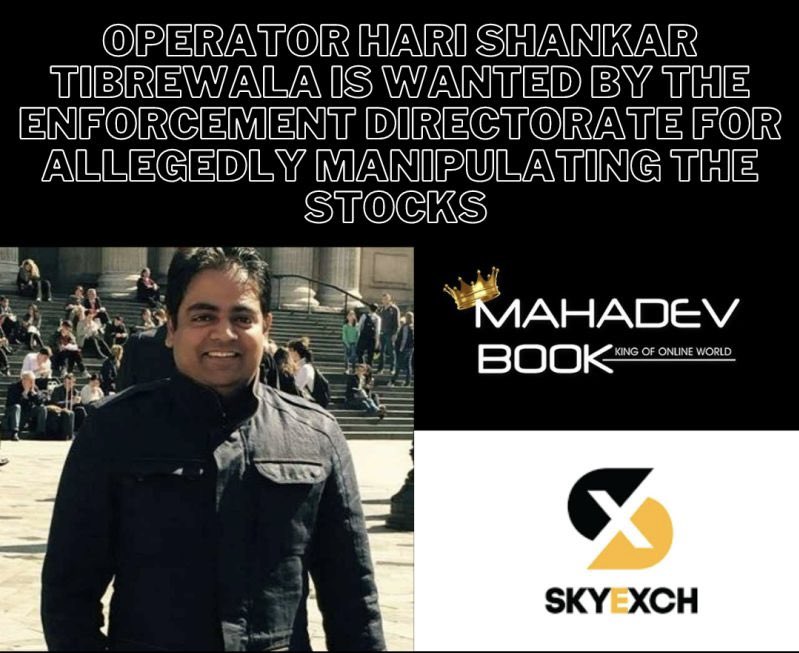
PMO’s official website listed Joshi as OSD as of October 31, 2025. No ED chargesheet names him; probes focus on Chhattisgarh. Yet allegations of shifted duties and rumoured absences fuelled political speculation. The government has not responded to these allegations with anything approaching the force it normally deploys against critics.
The Small-Cap Bubble Connection: SEBI’s Warning and a Name That Keeps Reappearing
Beyond the direct Mahadev probe, Tibrewal’s alleged footprint extends into India’s stock markets in a way that should trouble every retail investor who thinks their mutual fund is insulated from hawala money.
In March 2024, the ED froze security holdings worth ₹580.78 crore in the name of entities beneficially owned by Tibrewal under PMLA, 2002. A week later, on March 8, 2024, the ED found that he was also involved in the manipulation of the stock market in collusion with the promoters of listed companies. By February 2025, ownership of these shares had been formally transferred to the Enforcement Directorate, Raipur.
This timeline aligns uncomfortably with a famous warning by the then-SEBI Chairperson Madhabi Puri Buch, who publicly flagged the formation of a froth in small-cap stocks, noting that it may not be appropriate to allow that froth to keep building. The mechanism allegedly used by entities linked to Tibrewal, route dirty money from illegal betting via hawala through Dubai-based FPIs into Indian SME-listed stocks, then pump valuations and exit; this is what is precisely the kind of quiet, invisible market manipulation that distorts price discovery and burns retail investors who have no idea the shares they hold were artificially inflated by criminal proceeds from cricket betting.
ED documents show that as of the March 2024 press release, entities linked to Hari Shankar Tibrewal held shares in 14 publicly listed companies, which ED took control of by February 2025. Fourteen companies. Fourteen sets of shareholders who may have been unknowing participants in a money-laundering wheel.
And The Saga Then Involves Suing Journalists: The Fourth Pillar Gets a Legal Notice
If the evasion of arrest is the most troubling aspect of this saga, the attempted legal suppression of coverage is arguably its most revealing one. Tibrewal’s legal counsel filed an injunction petition in the District Court of Dwarka (New Delhi), naming nine media organisations, including TICE News, Moneycontrol, Business Standard, Dow Jones, and five others, including Inventiva, seeking removal or redaction of stories and an immediate restraint on further publication.
There is an exquisite irony embedded in this legal strategy. The fun part is that in this defamation case, he has not made the ED a party, even though the ED was the first organization to call him a hawala operator. Read that again. The man who is asking courts to penalize journalists for writing about him being a hawala operator has pointedly not sued the government agency that publicly, officially, and authoritatively declared him to be exactly that.
The explanation is obvious, because suing the ED would require confronting the government’s own documented findings in court. Suing media outlets is a far more asymmetric battlefield. Legal observers note that selective litigation is sometimes used to establish precedent or send a message before approaching big ones, raising questions about what criteria determined which publications were targeted and whether there is a strategic focus on smaller outlets where injunctive relief may be easier to obtain.
This is what those who study press freedom call a SLAPP (Strategic Lawsuit Against Public Participation). It is a mechanism by which the powerful use litigation costs and procedural harassment to chill coverage that serves the public interest, not because they expect to win on the merits, but because the process itself is the punishment.
And yet, even as this legal pressure mounted, Tibrewal appeared on financial media platforms dispensing investment wisdom, discussing market volatility, long-term growth philosophy, and responsible capital allocation. The man named by India’s premier financial crimes agency as a “huge hawala operator,” whose assets have been frozen in a ₹50,000 crore illegal betting probe, was giving interviews about the importance of patient investing. The Fourth Estate, it appears, is permitted only one version of the story.
What We Ask Is The Structural Question That Remains Unanswered?
The ED’s identification of Hari Shankar Tibrewal as a hawala operator is documented. The ₹4,336 crore in total attachments is documented. The defamation suits are documented. The political allegations about PMO involvement remain, as of this writing, unproven claims made by opposition politicians and unnamed sources.
But the question that legitimate public interest demands is this: when a government agency has itself called a man a “huge hawala operator,” frozen hundreds of crores in his assets, named him in multiple rounds of raids, and yet cannot arrest him despite knowing his location, who or what is the obstacle? The extradition treaty is a partial answer.
Geography is a partial answer. But partial answers to such a total failure of justice invite the imagination to fill the remaining space. And in this case, what the imagination fills it with, based on the political allegations, the suspicious resignations, the selective legal notices, and the curious gentleness with which a named fugitive is treated by an otherwise aggressive agency, is deeply uncomfortable.
As on date, total attachment, seizure, and freezing of movable and immovable properties stands at Rs 4,336 crore, and the ED says it remains committed to dismantling and uprooting the entire illegal betting ecosystem. One hopes, for India’s sake, that commitment extends equally to every node of the network, regardless of the political geography those nodes may inhabit.
The money went to Dubai. The villas are being seized. The Burj Khalifa has been reached. The question India has not yet answered is whether the investigation will also reach, if the allegations have any merit, the corridors closer to home.