Kotak Bank’s Dirty Laundry Is Out, A Bank At War With Its Own Customers – Is Kotak Still A Safe Bank?
Banks occupy a unique place in society, they are not just financial institutions but guardians of public trust. Every rupee deposited carries the weight of someone’s hard work, future plans, and family security. That is why banks are expected to operate with the highest standards of transparency, compliance, and ethics. When these institutions falter, the damage extends far beyond balance sheets, it shakes public confidence and puts ordinary lives at risk. Against this backdrop, the unfolding record of Kotak Mahindra Bank raises deeply uncomfortable questions about whether it has lived up to the responsibility entrusted to it.

A bank is not just another corporate entity chasing quarterly profits – it is a custodian of public trust. For millions of ordinary citizens, a bank safeguards life savings, pensions, emergency funds, and dreams built over decades. This makes compliance not a bureaucratic formality, but a moral obligation. Every regulation exists to protect depositors from fraud, misuse, and systemic collapse. Hence, when a bank cuts corners, it does not just break rules, it puts families at financial risk.
Reputation, therefore, is not a branding exercise for banks; it is their currency. A single breach can shatter confidence built over generations, triggering panic withdrawals and long-term distrust. In an industry where trust is everything, even the perception of wrongdoing can be as damaging as the act itself. That is why banks are held to a higher standard than most businesses, because when they fail, the fallout is never private; it is public!
Yet, Kotak Mahindra Bank’s recent history stands in sharp contrast to what a bank is expected to represent. Instead of upholding trust, the institution has repeatedly found itself mired in regulatory crackdowns, employee-led frauds, IT breakdowns, and governance failures. From RBI-imposed bans on onboarding customers and issuing credit cards to repeated monetary penalties for non-compliance, Kotak appears to have normalised regulatory breaches rather than corrected them.
Its systems have failed customers, and disturbingly, its own staff – including managers – have been arrested for defrauding account holders. Cyber scams, money laundering allegations, perjury convictions, and coercive sales practices have all surfaced under its watch. These are not isolated missteps but a pattern, one that raises uncomfortable questions about internal controls, ethical leadership, and the bank’s commitment to ordinary depositors. Therefore, for an institution entrusted with public money, Kotak’s track record does not reflect negligence alone; it signals a dangerous erosion of accountability.
A Pattern, Not A One-Off, How Kotak Bank’s Troubles Span A Decade
Now that the moral benchmark has been set, it is time to examine how Kotak Mahindra Bank has consistently failed to live up to it. A disturbing trail of scandals, regulatory actions, and employee-led frauds has painted a grim picture of an institution repeatedly at odds with the very principles it is expected to uphold.
Kotak has found itself trapped in a cycle of controversy that raises serious questions about its operational integrity and commitment to customers. This is not about one bad year or one rogue employee but a pattern that stretches from 2016 to 2025, revealing systemic flaws embedded deep within the bank’s functioning.
RBI Steps In, When Regulators Were Forced To Pull The Plug
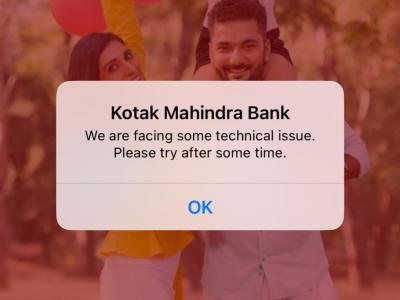
The most damning blow came in April 2024, when the Reserve Bank of India took the unprecedented step of banning Kotak from onboarding new customers through digital channels and issuing new credit cards. The reason was not minor non-compliance, but “serious deficiencies” in the bank’s IT infrastructure – including poor cybersecurity, inadequate data protection, and repeated service outages.
For a bank operating in a digital-first era, this was nothing short of catastrophic. Customers were left stranded during outages, exposed to potential data breaches and financial risks. For the common man who depends on mobile banking for daily transactions, this failure directly translated into disrupted access to their own money and heightened vulnerability to cybercrime.
Although the RBI lifted these restrictions in February 2025, the relief was short-lived. By December 2025, Kotak was slapped with yet another penalty – ₹61.95 lakh – for violating basic banking norms.
What RBI Actually Found
The regulator found that the bank had illegally opened multiple “no-frills” savings accounts for the same customers, misused business correspondents beyond their permitted scope, and submitted inaccurate borrower data to credit bureaus. These are not clerical errors; they strike at the heart of financial inclusion, transparency, and credit discipline. What’s mindblowing is that even after being placed under regulatory watch, Kotak continued to falter.
/afaqs/media/post_attachments/9dd6209083b00171d8f68f1b8e30de3505ff4a2e12a987cf2fe32851a11405d2.jpg)
When Customers Pay The Price, Benefits Cut, Protection Stripped
In October 2024, Kotak quietly stripped away key debit card protections (accident insurance, purchase protection, and baggage cover) without meaningful consultation. For middle-class Indians who choose banks based on such safety nets, this move felt like betrayal.
Worse, the bank’s name kept surfacing in high-profile fraud cases. A Mumbai-based US citizen lost ₹2.7 crore in a scam allegedly involving a senior Kotak manager. In Hyderabad, a nationwide cyber racket siphoned off ₹88.32 crore, with a Kotak sales manager among those arrested. The crucial point being, these were not faceless criminals – they were bank insiders.
Matters worsened when a Kotak legal manager was convicted for perjury in Chennai in 2024 – exposing a culture where legal tactics seemed to matter more than customer justice.
Now, let us look at the branch-level rot where things look even uglier. In Patna, a Kotak branch manager siphoned off ₹31 crore by misusing customers’ KYC data to gamble in the stock market. The Enforcement Directorate later arrested him for money laundering.
Which makes one question – are these sales staff or scammers?
In multiple cities, sales staff were found facilitating cyber fraud, phishing scams, and fake investments. Customers were misled into buying unsuitable financial products under false promises of high returns or loan approvals. These incidents point to either shocking incompetence or deliberate misconduct, both equally dangerous in a bank.
Money Laundering Allegations. Insurance or No Loan, Coercion In Lending
Money laundering allegations have haunted Kotak for nearly a decade. During demonetisation in 2016, an ED probe uncovered how a Kotak branch helped convert black money using fake accounts.
In 2024, the bank again found itself dragged into controversy when Hindenburg Research flagged a Kotak-managed offshore fund allegedly linked to dubious Adani trades. SEBI issued notices, and though Kotak denied wrongdoing, the damage to credibility was already done. When such accusations keep resurfacing, it stops being coincidence and starts looking like a pattern.
Further, aggressive cross-selling has further alienated customers. Many have complained of being pressured into buying mutual funds, credit cards, and insurance products just to access basic services. RBI penalties have explicitly cited misleading sales practices.
Even more disturbing are allegations that customers were forced to buy insurance policies to get loan approvals, a practice bordering on extortion. Courts have pulled up Kotak for such coercive tactics, including excessive foreclosure charges and manipulated loan terms.

The Bank’s Grievance Management, A System That Fails The Customer
Kotak Mahindra Bank’s grievance redressal mechanism has quietly become one of the most controversial in the sector. In October 2023, the RBI imposed a ₹3.95 crore penalty on the bank for deficiencies in customer service, fraud classification, and recovery processes, a rare public rebuke that exposed serious cracks in its complaint-handling system.
The rot became more visible in 2024, when the National Consumer Disputes Redressal Commission issued notices to Kotak and other banks over their handling of so-called “digital arrest” scams. Victims (many of them elderly) were extorted by fraudsters posing as law enforcement officers. Several customers alleged that when they approached Kotak for help, they were met with indifference, delays, and procedural runarounds. The message was clear: once the money was gone, the bank washed its hands off the matter.
This failure was compounded by Kotak’s regulatory troubles. The RBI’s April 2024 ban on new customer onboarding was partly triggered by unresolved IT-related complaints. Customers repeatedly flagged transaction failures, app crashes, and service disruptions – yet their grievances remained pending for months. Many complained of dismissive responses, lack of transparency, and a complete absence of accountability.
Adding to this disturbing picture was the Chennai court’s conviction of a Kotak legal manager in May 2024 for perjury, along with a ₹20 lakh fine. The case exposed a management culture that appeared more focused on legal gymnastics than genuine customer redressal. For customers, this translated into a demoralising experience – where even proven wrongdoing did not guarantee justice.
When Bank Staff Become The Scammers
Perhaps the most disturbing trend is the repeated involvement of senior bank staff in direct fraud.
• In Patna, a branch manager diverted crores.
• In Mumbai, a senior Kotak manager was accused of facilitating a ₹2.7 crore fraud against a US citizen.
• In Hyderabad, a sales manager was part of an ₹88.32 crore cyber scam network.
The pattern doesn’t stop there. In Gurugram, Kotak-linked accounts surfaced in a cyber fraud case that led to multiple arrests. In Faridabad, credit card fraud thrived due to lax verification processes.
This is no longer about “rogue employees.” When frauds erupt across multiple cities, involving staff at different levels, it points to a broken compliance culture.
The Last Bit, A Crisis Of Trust
Kotak Mahindra Bank’s story is no longer just about regulatory fines or isolated fraud cases; it is about a dangerous pattern of institutional decay. Time and again, the bank has found itself on the wrong side of compliance, ethics, and customer trust. From IT failures that locked customers out of their own money to employees siphoning crores, from coercive sales tactics to money laundering allegations, the warning signs are impossible to ignore. What makes this more alarming is not just that these incidents happened, but that they kept happening — across years, cities, and management regimes.
For a bank entrusted with the hard-earned savings of millions, this is not a small lapse; it is a betrayal of faith. Regulators can impose fines, courts can pass orders, and management can issue statements but trust, once broken, is far harder to restore. The real question now is not whether Kotak can fix its systems, but whether customers should continue to place blind faith in an institution that has repeatedly failed them. Because in banking, the cost of complacency is not paid by boardrooms; it is paid by ordinary people who can least afford to lose.