Manu Sharma Who Killed A Model For Liquor Is Now Considered A Liquor Tycoon-
Jessica Lal said no to serving a drink. It cost her everything. Manu Sharma murdered her for that refusal. It cost him, in the final analysis, remarkably little. If that is justice, one wonders what injustice would look like.


When Liquor Denied Becomes Liquor Empire: The Extraordinary Redemption of Manu Sharma
Manu Sharma- A Modern Parable of Privilege, Justice, and the Alchemy of Reinvention
In the annals of contemporary Indian business success stories, few narratives carry quite the same bittersweet irony as that of Siddharth Sharma—formerly known as Manu Sharma—whose journey from convicted murderer to whisky tycoon offers a masterclass in the redemptive possibilities available to those born on the fortunate side of India’s socioeconomic divide. That this transformation centers on the very substance whose denial triggered his crime adds a layer of poetic symmetry that might strain credulity in fiction, yet stands as documented fact in the public record.
Manu Sharma, born Siddharth Vashisht in 1977 in Ambala, Haryana, entered the world with advantages that would shape both his downfall and his resurrection. As the son of Venod Sharma—a prominent politician and former Union Minister associated with the Indian National Congress—and Shakti Rani Sharma, young Manu grew up ensconced in wealth and influence. The family’s conglomerate, Piccadily Agro Industries Limited (PAIL), operated in sugar manufacturing, distilleries, and media, providing a backdrop of affluence that would later prove instrumental in navigating the complexities of India’s criminal justice system and subsequent business rehabilitation.
From an early age, Manu exhibited traits befitting privileged youth. Educated in elite schools in Chandigarh and Delhi, he pursued undergraduate studies in commerce without completing them initially—a detail that, in retrospect, seems less a failure of ambition than a preview of someone for whom conventional achievement paths were optional. His family connections extended impressively beyond politics; his uncle married the daughter of former Indian President Shankar Dayal Sharma, embedding Manu deeply in networks of power that would prove, shall we say, remarkably resilient.
This privilege came under harsh scrutiny when, at the age of 22, Manu became embroiled in one of India’s most sensational murder cases. The incident not only shattered his life trajectory—temporarily, as it turned out—but also highlighted systemic issues in the Indian judiciary, including witness tampering and the persistent influence of elite status on legal outcomes. That Manu has since rebranded himself as Siddharth Sharma, a successful businessman in the whisky industry, raises profound questions about justice, rehabilitation, and the ethics of collective forgetting in pursuit of entrepreneurial celebration.
As of August 2025, at age 48, he remains a polarizing figure—celebrated by some for his entrepreneurial success and business acumen, criticized by others for what they perceive as an undeserved second chance enabled entirely by circumstances of birth. His journey prompts uncomfortable reflection: In a nation where justice is meant to be blind, why does it so often seem to squint through one eye at privilege?
Jessica Lal: The Woman Whose “No” Cost Everything
Jessica Lal, born in 1965, was a vibrant and ambitious woman whose life was tragically cut short at the age of 34. Hailing from a middle-class family in Delhi, Jessica was the elder daughter of Ajit Lal, a former diplomat, and his wife. She pursued her education in Delhi, graduating with a degree in economics from Jesus and Mary College. Known for her striking beauty and charismatic personality, Jessica entered the world of modeling in the 1990s, when India’s fashion industry was burgeoning with possibility.

Jessica’s career as a model saw her grace magazine covers, walk runways, and appear in advertisements. She embodied the modern Indian woman—independent, confident, and unapologetic in her pursuit of personal and professional autonomy. To supplement her income, Jessica worked as a celebrity bartender at high-society events, a role that blended her social skills with her flair for hospitality. Despite her glamorous profession, her life was marked by simplicity; she lived with her family in Delhi and was known for her close bond with her younger sister, Sabrina Lal.
Tragically, Jessica’s story is often overshadowed by the manner of her death, yet she represented the aspirations of many young women in post-liberalization India—women seeking to carve out independent lives in a society still grappling with deeply patriarchal structures. Sabrina Lal, who would fight tirelessly for justice in the years following her sister’s murder, described Jessica as “full of life, always smiling, and deeply caring.”
Jessica’s legacy endures not merely through the legal reforms her case inspired—reforms that came too late for her—but as a stark reminder of the vulnerabilities faced by women in social settings dominated by male entitlement. Her death illustrated with brutal clarity what can happen when a woman in a service role dares to enforce reasonable boundaries against someone unaccustomed to hearing the word “no.”
April 29, 1999: When Entitlement Met Refusal
The murder of Jessica Lal on the night of April 29-30, 1999, at Tamarind Court restaurant in Delhi’s Qutub Colonnade remains one of the most infamous crimes in Indian history. The incident unfolded at a private party hosted by socialite Bina Ramani, where Jessica was serving as a bartender at an unlicensed bar—itself a detail that speaks volumes about the casual relationship between Delhi’s elite and regulatory compliance.
Manu Sharma, accompanied by friends including Vikas Yadav and Amardeep Singh Gill, arrived late and demanded drinks after the bar had closed for the night. One might pause to consider the particular species of confidence required to arrive late to a party and immediately begin issuing demands, but such considerations rarely trouble those who have navigated life as Manu had.
According to eyewitness accounts and court records, Manu, intoxicated and insistent, offered Jessica ₹1,000 for a drink, which she refused, explaining that the bar was out of stock. This refusal—this simple, professional, entirely reasonable refusal—enraged him. In what prosecutors would later characterize as a “spurt of the moment” act, Manu pulled out a .22 pistol and fired a shot into the ceiling to intimidate those around him. When Jessica maintained her position, he aimed directly at her, shooting her in the head at point-blank range. She collapsed immediately and was rushed to the hospital, where she was declared dead on arrival.
The motive, as established in court, was a toxic mixture of entitlement, alcohol-fueled rage, and wounded ego. Manu, emerging from a background where refusal was presumably rare, reacted with lethal violence to what he perceived as an insult. The psychology is simultaneously banal and horrifying: a man so unaccustomed to boundaries that their imposition warranted murder.
Witnesses, including actor Shayan Munshi and Malini Ramani (Bina’s daughter), initially identified Manu as the shooter, describing the chaos that ensued as he fled the scene. The crime scene investigation revealed two cartridges, but the murder weapon was never recovered—a detail that would add layers of complexity to the prosecution’s case and fuel speculation about evidence tampering.
Manu’s actions post-murder painted a picture of someone leveraging family influence to evade immediate consequences. He fled to Chandigarh and surrendered only after a manhunt, with his father Venod Sharma accused of tampering with evidence and pressuring witnesses—allegations that fueled public outrage and suspicions that the fix was in from the beginning.
This incident highlighted broader societal pathologies: the objectification of women in service roles, the dangers of unlicensed bars at elite parties frequented by armed individuals, and the role of firearms in escalating disputes that might otherwise remain merely unpleasant. Manu’s taped confession, leaked to the media in October 2006, provided a chilling blow-by-blow account, confirming his guilt and underscoring the senselessness of destroying a life over a denied drink.
Justice Delayed, Manipulated, Then Eventually Delivered (Sort Of)
The legal saga following Jessica’s murder exposed deep structural flaws in India’s justice system with a clarity that civil society organizations could scarcely have achieved through deliberate demonstration. Manu was arrested on May 6, 1999, and charged under Sections 302 (murder), 201 (destruction of evidence), and other provisions of the Indian Penal Code. The trial, lasting seven years, saw over 100 witnesses—a substantial number, one might think, for establishing what happened.
Yet in February 2006, the trial court acquitted Manu and eight others, citing insufficient evidence. Key witnesses had mysteriously turned hostile, retracting statements they had previously given—a phenomenon that prosecutors attributed to intimidation by Manu’s family, though one might equally characterize it as the natural operation of power differentials in Indian society.
The acquittal sparked nationwide protests, candlelight vigils at India Gate, and a media campaign with the grimly ironic slogan “No One Killed Jessica”—a statement simultaneously false as fact and painfully true as commentary on the trial court’s findings. Public pressure, channeled through sustained media attention that refused to let the case die quietly, forced the Delhi High Court to order a retrial on its own motion.

New evidence emerged, including ballistic reports linking cartridges from Manu’s car to the crime scene and the leaked confession tape. On December 18, 2006, the High Court convicted Manu, sentencing him to life imprisonment. The Supreme Court upheld this conviction in April 2010, criticizing the trial court’s handling of the case and affirming—perhaps reluctantly—the role of public activism in ensuring justice when institutional mechanisms fail.
This sequence of events demonstrated both the power of sustained public outrage and the unsettling reality that justice had required such extraordinary pressure to function. One wonders how many cases lacking similar media attention or public champions simply end with acquittals that satisfy everyone except the deceased and their families.
The Remarkably Comfortable Path to “Redemption”
Manu’s release on June 1, 2020, after serving just over 17 years (equivalent to 23 years with remission—a calculation that would mystify anyone unfamiliar with India’s remission system), raised eyebrows and generated accusations of favouritism that Manu’s defenders characterized as cynical and unfair.
Sentenced to life imprisonment, which typically means 14-20 years minimum in India, Manu’s case was reviewed by the Sentence Review Board (SRB), a body comprising officials including the Delhi Home Minister and Director General of Prisons. The SRB recommended remission under Delhi Prison Rules, citing Manu’s “exemplary conduct” during incarceration—conduct that one might argue should be the minimum expectation rather than grounds for early release, but such is the currency of prison reform.
During his time at Tihar Jail, Manu pursued a postgraduate degree in human rights and law—an educational path whose irony apparently escaped comment from officials. He worked in the jail factory, reportedly increasing its turnover from ₹1 crore to ₹32 crore, demonstrating business acumen that would later serve him well. He founded the Siddhartha Vashishta Charitable Trust to aid prisoners’ children, an initiative that speaks either to genuine reformation or sophisticated reputation management, depending on one’s generosity of interpretation.
Most remarkably, Manu was granted multiple paroles—12 times—and furloughs—24 times—including during the COVID-19 pandemic under jail decongestion measures. Since 2018, he operated under an “open jail” system allowing daytime outings, a privilege that blurs the boundary between incarceration and inconvenience. One struggles to imagine such accommodations for prisoners lacking Manu’s particular advantages of birth and connection.
A crucial factor enabling his release was Sabrina Lal’s 2018 letter forgiving Manu, stating she had “no objection” to his release as her fight had been for justice, not vengeance. This act of extraordinary grace from Jessica’s sister provided moral cover for officials inclined toward leniency, though one might question whether Sabrina’s exhaustion after nearly two decades of fighting should determine when a murderer completes his sentence.
The SRB evaluated factors including the purportedly non-premeditated nature of the crime (though bringing a loaded weapon to a party suggests at least general preparation for violence), low reoffending risk (easily assessed when one’s post-release prospects include managing a family business empire), and positive reports from police and welfare departments. Critics, including women’s rights activists, characterized the decision as establishing a “wrong precedent,” arguing that his influential background had expedited a process that might otherwise have kept him imprisoned for the full statutory minimum.
Former prison officer Sunil Gupta noted that without his high-profile status and family connections, Manu might have been released after 14 years—as though 14 years for murder represents some baseline from which 17 years constitutes meaningful additional punishment. The Lieutenant Governor’s approval under Section 432 of the CrPC formalized the remission, but debates persist about whether genuine rehabilitation occurred or whether privilege once again proved its remarkable capacity to smooth rough edges.
From Killer to Kingmaker: The Indri Phenomenon
Post-release, Manu rebranded as Siddharth Sharma—a name change that presumably polls better with consumers than “convicted murderer”—and immersed himself in the family business, particularly the distillery arm of PAIL. He is now the founder of Piccadily Distilleries and a major shareholder in PAIL, which launched Indri whisky in 2021.
Indri-Trini, marketed as India’s first triple-cask single malt (matured in ex-bourbon, French wine, and PX sherry casks), has achieved remarkable commercial success, selling over 100,000 cases in two years and capturing 30% of India’s premium spirits market. This represents a business achievement that would be celebrated unreservedly in any other context.
Indri’s success—including winning “Best in Show, Double Gold” at the 2023 Whiskies of the World Awards—positions it as the world’s fastest-growing whisky brand, a title that generates considerable pride in certain quarters of the Indian business community. Siddharth’s strategic vision, leveraging Haryana distilleries and expanding exports to the US, UK, and Australia, demonstrates genuine business capability.
However, this connection remains mired in profound irony that no amount of marketing sophistication can entirely obscure: a man convicted of murdering a woman for refusing to serve him alcohol now profits handsomely from alcohol sales. The symbolism is so heavy-handed that fiction editors would reject it as too on-the-nose, yet reality persists in its commitment to irony.
Critics question the ethics of this arrangement, noting that Siddharth’s success rests on infrastructure and connections that existed before his crime and remained available after his release—advantages unavailable to the vast majority of India’s prison population. Supporters highlight his business acumen as evidence of genuine reform, though one might observe that business skills are not incompatible with moral bankruptcy, and success in the market is not redemption for murder.
The most charitable interpretation holds that Siddharth has indeed reformed and deserves the opportunity to contribute to society. The less charitable—and arguably more realistic—interpretation notes that he has leveraged every advantage of birth, connection, and wealth to minimize consequences and rebuild precisely the privileged existence he enjoyed before taking Jessica Lal’s life. The truth likely occupies some uncomfortable middle ground.
Where Privilege Goes After Prison
As of August 2025, Siddharth Sharma (formerly Manu) resides in India, primarily in Haryana and Delhi, overseeing PAIL’s operations. Married to Preity Sharma since 2015—a wedding that occurred during his imprisonment, suggesting either extraordinary devotion or strategic alliance—he maintains a relatively low public profile, though controversies continue to find him.
His business empire expands globally with impressive ambition. PAIL’s £15 million investment in Portavadie Distillers and Blenders in Scotland aims to build a Scotch whisky facility, though his criminal past has prompted HMRC scrutiny and calls for license revocation from Scottish politicians including Brendan O’Hara and Andrew Bowie, who appear less impressed by redemption narratives than Indian officials proved to be.
Siddharth’s name change symbolizes attempted reinvention, creating distance from “Manu Sharma”—a name that Google stubbornly continues to associate with Jessica Lal’s murder despite concerted reputation management efforts. Family ties bolster his position considerably: brother Kartikeya serves as a Rajya Sabha MP, and the family owns iTV Network and sports leagues, demonstrating that the Sharma-Vashisht clan’s influence extends across business, media, and politics.
Despite commercial success, ethical debates persist, with media outlets and activists decrying his ventures as unearned opportunities that mock both Jessica’s memory and India’s supposed commitment to equal justice. Recent searches as of August 25, 2025, show no major updates beyond ongoing controversy surrounding the Portavadie project, which remains contentious and potentially risks his global ambitions should European regulators prove less accommodating than their Indian counterparts.
A Complex Legacy: Forgiveness, Privilege, and the Price of a Drink
Manu Sharma’s life trajectory—from privileged youth to convicted killer to whisky tycoon—mirrors certain uncomfortable truths about India’s evolving justice system and societal values that official narratives prefer to obscure. His story prompts reflection that extends beyond one individual’s actions to systemic questions: Can genuine redemption coexist with unaddressed privilege? When second chances are distributed so unevenly, do they represent justice or merely privilege’s latest manifestation?
As Siddharth Sharma builds his whisky empire, selling premium spirits to consumers who may or may not know the full story, Jessica Lal’s memory endures as a testament to the cost of unchecked entitlement. In a nation grappling with profound inequalities of wealth, opportunity, and justice, Manu’s reinvention challenges us to balance forgiveness with accountability, to distinguish between genuine reformation and sophisticated reputation laundering.
The most troubling aspect of the Manu Sharma story may not be the murder itself—horrible as it was—but rather what followed: the initial acquittal enabled by witness tampering, the remarkably comfortable imprisonment featuring regular paroles and furloughs, the early release after technically meeting minimum requirements, and the seamless transition into business leadership positions that awaited his return. At every stage, systems that should impose accountability bent accommodatingly, while opportunities that should require earning appeared fully formed.
One thinks of Jessica Lal, 34 years old, doing her job, enforcing reasonable boundaries, paying for that professionalism with her life. Then one thinks of Manu Sharma, now Siddharth Sharma, 48 years old, overseeing a whisky empire, traveling internationally for business, celebrated in certain quarters as a success story. The contrast is not merely uncomfortable—it is obscene.
The question that haunts this entire narrative is not whether Manu Sharma deserved a second chance. In principle, a justice system rooted in rehabilitation rather than pure retribution should offer pathways to redemption. The question is whether the second chance he received—complete with business empire, social rehabilitation, and the ability to profit from the very substance whose denial triggered his crime—represents justice or merely privilege operating with its characteristic efficiency.
As we consider Manu Sharma’s transformation into Siddharth Sharma, whisky entrepreneur, we might reflect on what his story reveals about India’s commitment to equal justice under law. In a nation where justice is meant to be blind, the Sharma case suggests it may merely be selective in what it chooses to see. For those born into privilege, the arc of justice apparently bends not merely toward redemption but toward restoration of precisely the advantages that enabled crime in the first place.
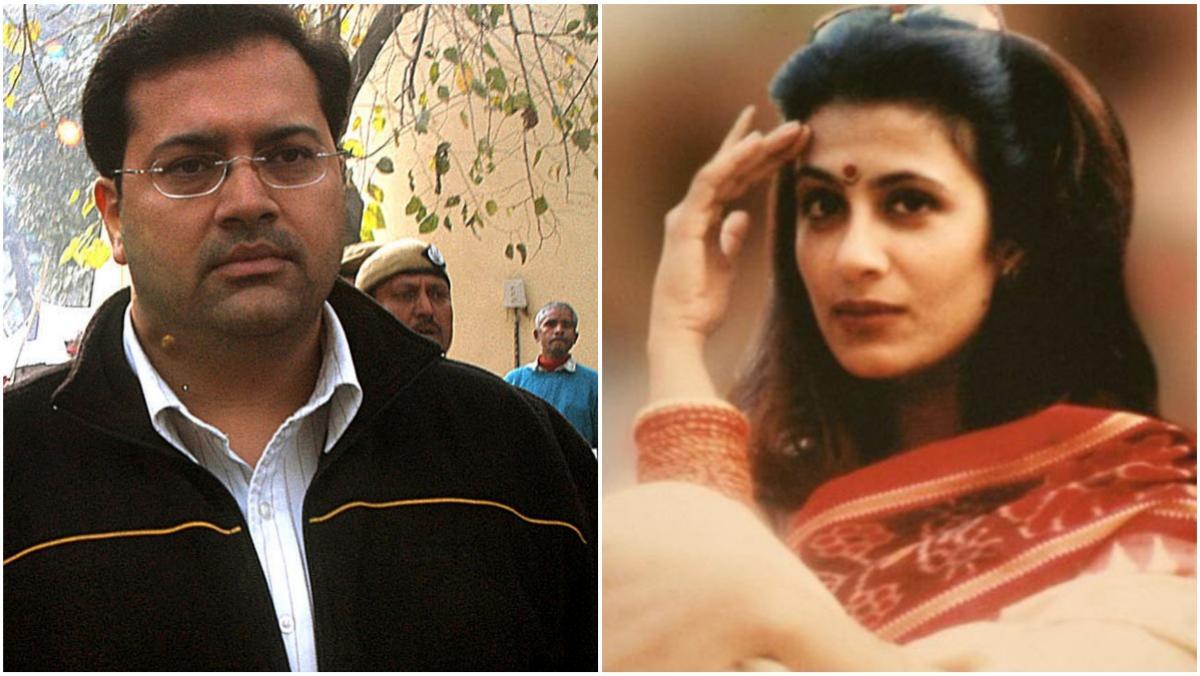
Jessica Lal said no to serving a drink. It cost her everything. Manu Sharma murdered her for that refusal. It cost him, in the final analysis, remarkably little. If that is justice, one wonders what injustice would look like.