Meet Manu Sharma Who Killed Model Jessica Lal For Whiskey Now Owns Whiskey Brand Indri
Manu Sharma, who shot dead a woman for refusing to serve him a Whisky Now Serving Whisky To Entire Country


Manu Sharma, born Siddharth Vashisht in 1977 in Ambala, Haryana, India, is a figure whose life story encapsulates the intersections of privilege, crime, justice, and redemption in modern India. As the son of Venod Sharma, a prominent politician and former Union Minister associated with the Indian National Congress, and Shakti Rani Sharma, Manu grew up in an environment of wealth and influence. His family’s conglomerate, Piccadily Agro Industries Limited (PAIL), has long been involved in sugar manufacturing, distilleries, and media, providing a backdrop of affluence that would later play a pivotal role in both his downfall and resurgence.

From an early age, Manu exhibited the traits of a privileged youth. Educated in elite schools in Chandigarh and Delhi, he pursued undergraduate studies in commerce but did not complete them initially. His family connections extended beyond politics; his uncle was the son-in-law of former Indian President Shankar Dayal Sharma, embedding him deeply in networks of power. However, this privilege came under scrutiny when, at the age of 22, Manu became embroiled in one of India’s most sensational murder cases. The incident not only shattered his life but also highlighted systemic issues in the Indian judiciary, including witness tampering and the influence of the elite.

Manu’s story is not just one of crime; it’s a narrative of how socioeconomic status can shape legal outcomes and post-conviction opportunities. After serving time for a heinous act, he has rebranded himself as Siddharth Sharma, a successful businessman in the whisky industry. As of August 2025, at age 48, he remains a polarizing figure—celebrated by some for his entrepreneurial success and criticized by others for what they perceive as an undeserved second chance. His journey raises profound questions about justice, rehabilitation, and the ethics of forgetting past sins in the pursuit of economic achievement.
Who Was Jessica Lal?
Jessica Lal, born in 1965, was a vibrant and ambitious woman whose life was tragically cut short at the age of 34. Hailing from a middle-class family in Delhi, Jessica was the elder daughter of Ajit Lal, a former diplomat, and his wife. She pursued her education in Delhi, graduating with a degree in economics from Jesus and Mary College. Known for her striking beauty and charismatic personality, Jessica entered the world of modeling in the 1990s, a time when India’s fashion industry was burgeoning.
Jessica’s career as a model saw her grace magazine covers, walk runways, and appear in advertisements. She was not just a face; she was a symbol of the modern Indian woman—independent, confident, and unapologetic. To supplement her income, Jessica worked as a celebrity bartender at high-society events, a role that blended her social skills with her flair for hospitality. Her life was marked by simplicity despite her glamorous profession; she lived with her family in Delhi and was known for her close bond with her younger sister, Sabrina Lal.
Tragically, Jessica’s story is often overshadowed by her death, but she represented the aspirations of many young women in post-liberalization India. Her murder became a catalyst for public discourse on women’s safety, the power dynamics in elite circles, and the failures of the justice system. Sabrina Lal, who fought tirelessly for justice, described Jessica as “full of life, always smiling, and deeply caring.” Jessica’s legacy endures not only through the legal reforms her case inspired but also as a reminder of the vulnerabilities faced by women in social settings dominated by entitlement.
Why Did Manu Sharma Kill Jessica Lal?
The murder of Jessica Lal on the night of April 29-30, 1999, at Tamarind Court restaurant in Delhi’s Qutub Colonnade remains one of the most infamous crimes in Indian history. The incident unfolded at a private party hosted by socialite Bina Ramani, where Jessica was serving as a bartender at an unlicensed bar. Manu Sharma, accompanied by friends including Vikas Yadav and Amardeep Singh Gill, arrived late and demanded drinks after the bar had closed for the night.
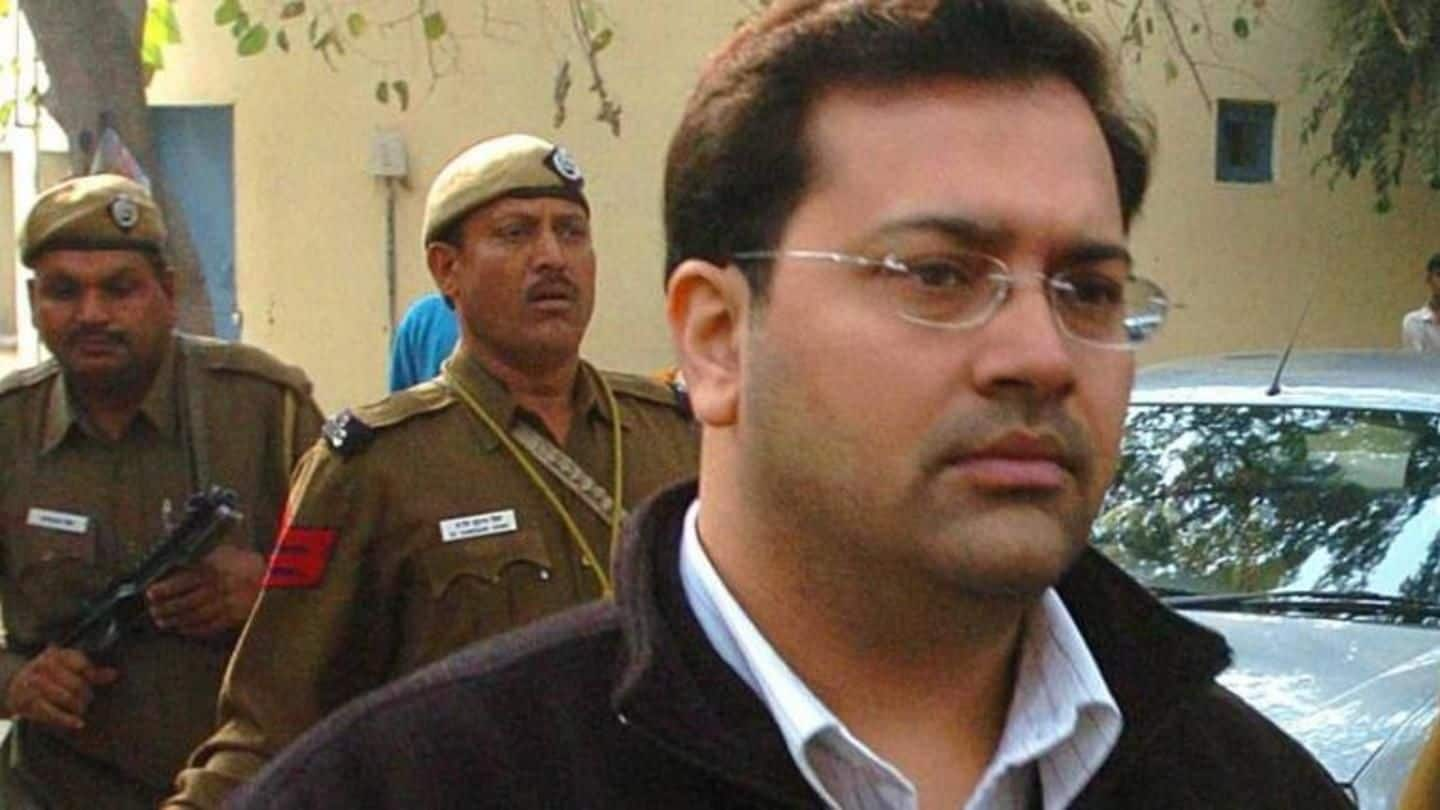
According to eyewitness accounts and court records, Manu, intoxicated and insistent, offered Jessica ₹1000 for a drink, which she refused, explaining that the bar was out of stock. Enraged by the denial, Manu pulled out a .22 pistol and fired a shot into the ceiling to intimidate those around him. When Jessica stood her ground, he aimed directly at her, shooting her in the head at point-blank range. She collapsed immediately and was rushed to the hospital, where she was declared dead on arrival.
The motive, as established in court, was a toxic mix of entitlement, alcohol-fueled rage, and a bruised ego. Manu, coming from a background where refusal was rare, reacted violently to what he perceived as an insult. Prosecutors argued it was a “spurt of the moment” act, but one rooted in a pattern of aggressive behavior. Witnesses, including actor Shayan Munshi and Malini Ramani (Bina’s daughter), initially identified Manu as the shooter, describing the chaos that ensued as he fled the scene.
The crime scene investigation revealed two cartridges, but the murder weapon was never recovered, adding layers of complexity to the case. Manu’s actions post-murder—fleeing to Chandigarh and surrendering only after a manhunt—further painted a picture of someone leveraging family influence to evade immediate consequences. Venod Sharma, Manu’s father, was accused of tampering with evidence and pressuring witnesses, allegations that fueled public outrage. The murder wasn’t premeditated in the traditional sense but stemmed from a culture of impunity among the elite, where a simple “no” from a woman like Jessica could provoke deadly violence.
This incident highlighted broader societal issues: the objectification of women in service roles, the dangers of unlicensed bars at elite parties, and the role of firearms in escalating disputes. Manu’s taped confession, leaked to the media in October 2006, provided a chilling blow-by-blow account, confirming his guilt and underscoring the senselessness of the act.
The Trial, Acquittal, and Conviction
The legal saga following Jessica’s murder exposed deep flaws in India’s justice system. Manu was arrested on May 6, 1999, and charged under Sections 302 (murder), 201 (destruction of evidence), and others of the Indian Penal Code. The trial, lasting seven years, saw over 100 witnesses, but in February 2006, the trial court acquitted Manu and eight others, citing insufficient evidence. Key witnesses turned hostile, retracting statements, which prosecutors attributed to intimidation by Manu’s family.
The acquittal sparked nationwide protests, candlelight vigils at India Gate, and a media campaign with slogans like “No One Killed Jessica.” Public pressure forced the Delhi High Court to order a retrial on its own motion. New evidence, including ballistic reports linking cartridges from Manu’s car to the crime scene and the leaked confession, turned the tide. On December 18, 2006, the High Court convicted Manu, sentencing him to life imprisonment. The Supreme Court upheld this in April 2010, criticizing the trial court’s mishandling and affirming the role of public activism in ensuring justice.
Why Did Manu Sharma Come Out of Jail So Soon?
Manu’s release on June 1, 2020, after serving just over 17 years (equivalent to 23 years with remission), raised eyebrows and accusations of favoritism. Sentenced to life, which typically means 14-20 years minimum in India, Manu’s case was reviewed by the Sentence Review Board (SRB), a body comprising officials like the Delhi Home Minister and Director General of Prisons.
The SRB recommended remission under Delhi Prison Rules, citing Manu’s “exemplary conduct.” During incarceration at Tihar Jail, he pursued a postgraduate degree in human rights and law, worked in the jail factory (increasing its turnover from ₹1 crore to ₹32 crore), and founded the Siddhartha Vashishta Charitable Trust to aid prisoners’ children. He was granted multiple paroles—12 times—and furloughs—24 times—including during the COVID-19 pandemic for jail decongestion. Since 2018, he was in an “open jail” system, allowing daytime outings.
A crucial factor was Sabrina Lal’s 2018 letter forgiving Manu, stating she had “no objection” to his release as her fight was for justice, not vengeance. The SRB evaluated factors like the non-premeditated nature of the crime, low reoffending risk, and positive reports from police and welfare departments. Critics, including women’s rights activists, called it a “wrong precedent,” arguing his influential background expedited the process. Former prison officer Sunil Gupta noted that without his high-profile status, Manu might have been released after 14 years. The Lieutenant Governor’s approval under Section 432 of the CrPC formalized the remission, but debates persist on whether true rehabilitation occurred or if privilege prevailed.
What Is Manu Sharma’s Connection with Indri?
Post-release, Manu rebranded as Siddharth Sharma and immersed himself in the family business, particularly the distillery arm of PAIL. He is the founder of Piccadily Distilleries and a major shareholder in PAIL, which launched Indri in 2021. Indri-Trini, India’s first triple-cask single malt (matured in ex-bourbon, French wine, and PX sherry casks), has skyrocketed to fame, selling over 100,000 cases in two years and capturing 30% of India’s premium spirits market.
Indri’s success—winning “Best in Show, Double Gold” at the 2023 Whiskies of the World Awards—positions it as the world’s fastest-growing whisky. Siddharth’s strategic vision, leveraging Haryana distilleries, has expanded exports to the US, UK, and Australia. However, this connection is mired in irony: a man convicted for a drink-related murder now profits from alcohol. Critics question the ethics, but supporters highlight his business acumen as evidence of reform.
Where is Manu Sharma Now and What Is His New Name?
As of August 2025, Siddharth Sharma (formerly Manu) resides in India, primarily Haryana and Delhi, overseeing PAIL’s operations. Married to Preity Sharma since 2015 (wed during imprisonment), he maintains a low public profile amid controversies. His empire expands globally; PAIL’s £15 million investment in Portavadie Distillers and Blenders in Scotland aims to build a Scotch whisky facility, but his criminal past has prompted HMRC scrutiny and calls for license revocation from Scottish politicians like Brendan O’Hara and Andrew Bowie.
Siddharth’s new name symbolizes reinvention, distancing from “Manu Sharma.” Family ties bolster his position: brother Kartikeya is a Rajya Sabha MP, and the family owns iTV Network and sports leagues. Despite success, ethical debates linger, with media and activists decrying his ventures as unearned. Recent searches (as of August 25, 2025) show no major updates, but the Portavadie project remains contentious, potentially risking his global ambitions.
Conclusion: A Complex Legacy
Manu Sharma’s life—from privileged youth to convicted killer to whisky tycoon—mirrors India’s evolving justice system and societal values. His story prompts reflection: Can true redemption coexist with unaddressed privilege? As Siddharth Sharma builds his empire, Jessica Lal’s memory endures, a testament to the cost of unchecked entitlement. In a nation grappling with inequality, Manu’s reinvention challenges us to balance forgiveness with accountability, ensuring justice serves all, not just the powerful.