Meet Uday Kotak: A Man Who Became the Richest Banker After Years of Scams, Frauds, Extortion, And Customer Harassment

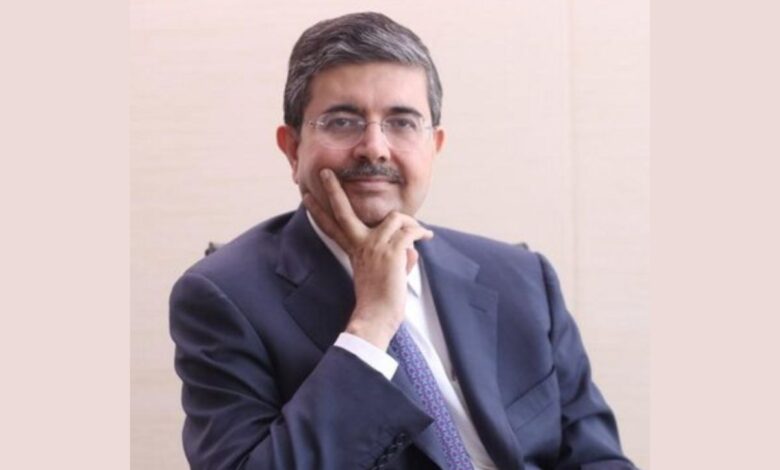
In the glittering world of Indian finance, few names evoke as much awe and controversy as Uday Kotak. As the founder of Kotak Mahindra Bank, Kotak has amassed a staggering fortune, positioning himself as India’s richest banker with a net worth hovering around $14.5 billion as of January 2026. But behind this veneer of success lies a darker narrative—one riddled with regulatory violations, criminal cases, customer exploitation, and a system that seems designed to protect the powerful at the expense of the ordinary citizen.
This article delves into Kotak’s journey, exposing how his empire was built not just on entrepreneurial acumen but on a foundation of systemic wrongdoing, unchecked greed, and a judicial system that has failed to hold him accountable. Through years of scams, frauds, extortion-like recovery practices, and relentless customer harassment, Kotak has turned Kotak Mahindra Bank into a profit machine that funnels ill-gotten gains directly into his personal wealth. We’ll explore his early life, the bank’s evolution, its entanglement in controversies, how these misdeeds inflate his billions, and the broader indictment of India’s lethargic judiciary that leaves consumers vulnerable and exploited.
The Humble Beginnings: Uday Kotak’s Early Life and Formative Years
Uday Suresh Kotak was born on March 15, 1959, in Mumbai, into an upper-middle-class Gujarati Hindu Lohana family deeply entrenched in the cotton trading business. Growing up in a sprawling joint family home where 60 extended relatives shared a single kitchen, Kotak’s childhood was a blend of communal living and early exposure to commerce. He often described this environment as “capitalism at work and socialism at home,” a phrase that ironically foreshadows the contradictions in his later career—where personal ambition trumped ethical considerations.
From a young age, Kotak displayed a knack for numbers, excelling in mathematics, which steered him toward finance. His pastimes included playing cricket and the sitar, though he later abandoned the instrument, perhaps symbolizing his shift from cultural pursuits to cutthroat business. Educationally, he attended Hindi Vidya Bhavan for his early schooling, a decision rooted in family tradition. He went on to earn a Bachelor of Commerce from Sydenham College, where he ranked among the top students in his first year at Bombay University. However, his academic performance waned as he became more engrossed in extracurriculars and early business ideas. Undeterred, he pursued a Master’s in Management Studies from the Jamnalal Bajaj Institute of Management Studies in 1982.
This period was formative, instilling in Kotak a relentless drive. Spurning his family’s trading legacy, he rejected a high-paying job at a multinational to strike out on his own. At 26, armed with borrowed seed capital of about ₹30 lakh from family and friends, he launched Kotak Capital Management Finance Ltd. in 1985. This move, in a closed Indian economy plagued by inefficiencies, set the stage for what would become a financial behemoth. But as we’ll see, this ambition came at a cost, often borne by unsuspecting customers and overlooked by regulators.
Kotak’s early life paints a picture of a self-made man, but critics argue it also reveals a pattern of opportunism. In a nation grappling with economic liberalization, Kotak positioned himself to exploit gaps in the system—gaps that would later widen into chasms of fraud and harassment.
Building an Empire on Shaky Foundations: The Journey of Kotak Mahindra Bank from 1985 to 2026
Kotak Mahindra Bank’s origins trace back to 1985, when Uday Kotak founded Kotak Capital Management Finance Ltd. as a non-banking financial company (NBFC) focused on bill discounting—a niche service that addressed inefficiencies in corporate payments. With initial capital of less than $80,000, Kotak diversified rapidly into lease and hire-purchase financing by 1987, and by the 1990s, into stockbroking, investment banking, car finance, life insurance, and mutual funds. Partnerships, like the one with Goldman Sachs in 1995, fueled growth, though it ended in 2006 when Kotak bought out their stake.
The pivotal moment came in 2003, when Kotak Mahindra Finance became the first NBFC to convert into a full-fledged bank, Kotak Mahindra Bank Ltd., under RBI approval. This transformation allowed Kotak to tap into retail banking, expanding branches and services. By 2014, the acquisition of ING Vysya Bank for $2.4 billion nearly doubled its size, catapulting Kotak’s personal wealth. In 2015, he entered general insurance and payments banking via a tie-up with Bharti Airtel.

The 2020s marked aggressive digital expansion, with the launch of Kotak811, a digital bank app co-headed by Kotak’s son, Jay. By March 2022, the bank boasted assets of $68 billion and over 1,752 branches, ranking as India’s third-largest private bank by market cap. Kotak stepped down as CEO in September 2023, becoming a non-executive director, amid RBI mandates to dilute his stake from 30% to below 20%. In 2024, the bank sold a 70% stake in its general insurance arm to Zurich for $640 million.
By 2026, Kotak Mahindra Group employs over 100,000 people, with subsidiaries spanning banking, insurance, asset management, and more. International arms like Kotak Mahindra (International) Ltd. extend its reach. Yet, this growth has been marred by persistent issues: RBI imposed a digital onboarding and credit card ban in April 2024 due to IT deficiencies, lifted in February 2025 after audits. Penalties continued, including ₹61.95 lakh in December 2025 for BSBD account violations and inaccurate CIC reporting.
Kotak’s net worth trajectory mirrors this expansion: From modest beginnings, it soared to $13.3 billion in March 2024, $14.1 billion in October 2024, and $14.5 billion by January 2026. Owning about 25% of the bank, his wealth is tied to its profits—profits critics say are bloated by unethical practices.
This journey, while impressive on paper, reveals a bank that prioritized growth over compliance, setting the stage for rampant controversies.
The Underbelly of Success: Kotak Mahindra Bank’s Involvement in Scams, Disputes, and Controversies
Kotak Mahindra Bank and its group entities have been embroiled in a litany of scams, frauds, and customer harassments, painting a picture of systemic rot. Since 2017, the RBI has slapped over 20 penalties totaling more than ₹10 crore for IT lapses, fraud reporting delays, and customer service failures. The 2024 digital ban stemmed from persistent IT deficiencies, including data security breaches and outages, causing an 11% share drop.
Criminal cases abound: In April 2025, a Chennai court convicted bank officials for criminal breach of trust, fining them ₹20 lakh after overcharging a customer ₹14.3 lakh via dual accounts. A 2021-2025 Patna branch manager siphoned ₹31.93 crore for gambling, leading to money laundering FIRs. In July 2025, a Mumbai senior manager defrauded a US citizen of ₹2.7 crore. February 2024 saw executives arrested in Gurugram for aiding cybercriminals with 2,000 fake accounts.
FIRs include 2025 cases against 12 employees for unauthorized gold loans via WhatsApp, violating BNS sections. GST demands in December 2025 totaled over ₹2.93 crore for ITC disallowances, often appealed with minimal impact.
Court disputes number over 100 on Indian Kanoon: Supreme Court rulings in 2025 favored the bank in loan interest cases but highlighted SARFAESI auction flaws. Consumer complaints involve unauthorized auctions, harassment, and overcharges—like a ₹6 principal ballooning to ₹34,000 in penalties.
Subsidiaries face similar scrutiny: Kotak Mahindra Life Insurance fined ₹22 lakh in 2012 for improper payments; Kotak Securities penalized ₹3 lakh in 2024 for fund violations; Kotak AMC barred from new FMPs in 2021 for defaults.
Other controversies: 2018-2020 electoral bonds worth ₹60 crore to BJP, coinciding with RBI leniency; 2024 Adani-Hindenburg links via short-selling. Recent X complaints detail recovery agent abuse, UPI blocks, and frauds like a ₹99,000 UPI scam despite blocked channels.
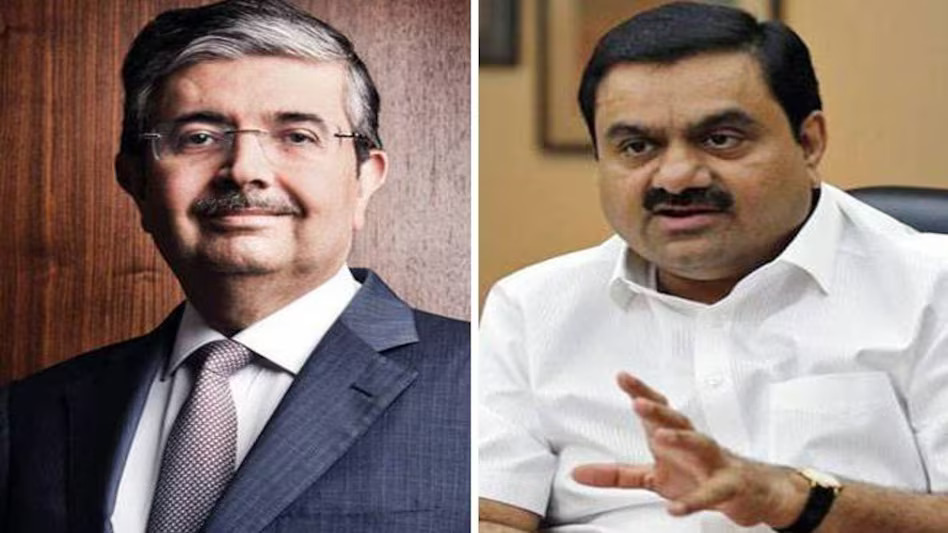
These aren’t isolated incidents but a pattern of exploitation, where the bank prioritizes profits over people.
From Wrongdoings to Wealth: How Scams and Corruption Bolster Uday Kotak’s Net Worth
Uday Kotak’s $14.5 billion fortune is inextricably linked to the bank’s profits, which critics argue are inflated by unethical practices. As a major shareholder, every rupee from overcharges, fraudulent loans, or penalty-avoiding appeals flows upstream to him.
Consider the frauds: The ₹31.93 crore gambling scam or ₹2.7 crore US citizen fraud represent direct losses to customers but minimal dents to the bank’s bottom line, thanks to insurance and write-offs. Meanwhile, aggressive recovery—calling after hours, harassing contacts—ensures loan repayments, boosting interest income. Penalties like ₹3.95 crore in 2023 for outsourcing risks are mere slaps on the wrist compared to the bank’s ₹68 billion assets.
GST evasions and ITC claims save millions in taxes, directly enhancing profitability. Electoral bonds and regulatory settlements suggest influence-peddling, securing favorable policies that drive growth.
Customer harassment—unauthorized debits, gold auctions without notice—generates hidden fees and penalties, padding revenues. In 2024, amid the RBI ban, the bank still grew credit, translating to higher dividends for Kotak.
This cycle—exploit, penalize lightly, profit—has propelled his wealth from $13.3 billion in 2024 to $14.5 billion in 2026, making him a billionaire off the backs of exploited Indians.
The Impotent Indian Judiciary: Enabling Exploitation and Corporate Impunity
India’s slow, overburdened judiciary has failed spectacularly to curb Kotak’s empire. Despite over 100 cases, most drag on endlessly, with appeals and transfers delaying justice. Convictions, like the 2025 Chennai case, result in paltry fines, not systemic reforms.
RBI penalties are routine, but no debarments or executive accountability—Kotak himself faces no personal charges. This lethargy leaves consumers at the mercy of corporates: Harassment complaints flood ombudsmen, but resolutions favor banks.
The system exploits the poor—fake accounts for cybercriminals, gold loan scams—while the wealthy thrive. Without swift justice, figures like Kotak amass billions from corruption, perpetuating inequality and eroding trust in Indian finance.
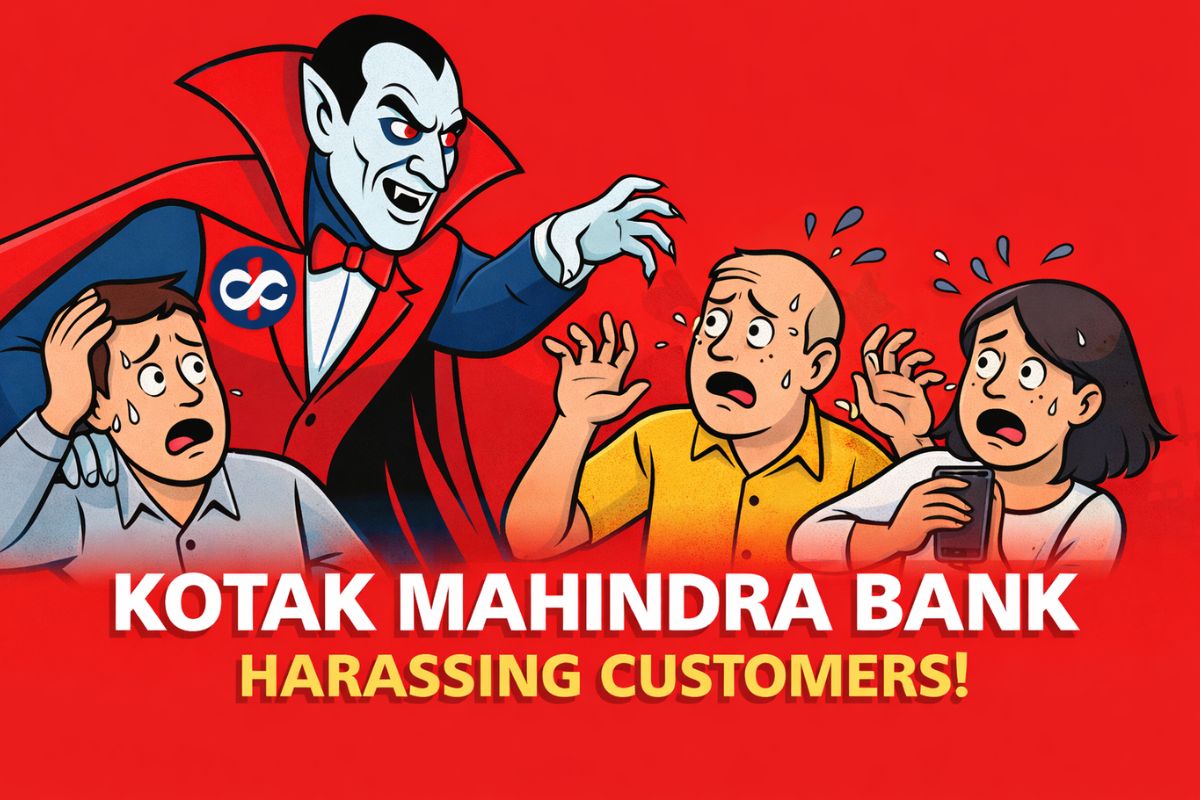
Conclusion: A Call for Accountability in a Broken System
Uday Kotak’s story is a cautionary tale of how unchecked ambition, fueled by scams and harassment, creates billionaires in a flawed system. From his early days to a 2026 net worth of $14.5 billion, his journey exposes the rot in Indian banking and judiciary. It’s time for reform—stricter enforcement, faster courts—to protect consumers from predators like Kotak Mahindra Bank. Until then, the rich get richer, and the rest suffer.