Pahalgam Attack: Is It A Painful Reminder Of Intelligence Lapses And Historical Lessons Unlearnt?


In the aftermath of terrorism attack, questions often speak louder than sympathy! The Baisaran meadow attack near Pahalgam that claimed 26 lives on 22.04.2025, has once again exposed the mounting vulnerabilities in India’s security arrangements.
As WE, THE PEOPLE OF INDIA, mourns, a disturbing pattern can be seen where one could trace back through decades of similar security lapses that have repeatedly cost Indian lives. The troubling question that haunts us is not just how this happened, but why we continue to allow history to repeat itself with such devastating consequences.
Former Army Chief General Shankar Roychowdhury minced no words when he called the Pahalgam terror attack an “intelligence failure” that demands accountability at the highest levels. “I suspect intelligence failure. Somebody must answer for the lapses. There is definitely someone responsible for negligence and they must be held accountable for the consequences,” he stated with the clarity that comes from decades of military experience. “There must be complacency somewhere. How did so many infiltrators manage to get through? This needs to be investigated,” he added, pointing to systemic issues that cannot be brushed aside with political rhetoric.
This incident is also significant since it is the first time the Modi administration has officially admitted a terror-related security lapse in more than a decade. This admission occurred during an all-party conference in New Delhi on April 24, three days after the assault, is a delayed response that calls into question the administration’s efforts! The government finally accepted what security experts had been saying from the beginning: a catastrophic collapse occurred in the three-tiered security grid, accompanied by poor intelligence coordination.
But for those who have followed India’s security landscape over the decades, this admission brings little comfort and even less surprise. The Pahalgam attack is merely the latest chapter in a distressingly familiar narrative of intelligence and operational failures that have repeatedly left Indian citizens vulnerable. From the Kargil intrusion of 1999 to the Mumbai attacks of 2008, from Pulwama in 2019 to the Ladakh standoff in 2020—each tragedy has been marked by similar patterns of negligence, complacency, and a stubborn refusal to learn from past mistakes.
The most immediate question that emerges from the Pahalgam tragedy is embarrassingly straightforward:
Why were there no security forces at the site of the Pahalgam attack?
The crown of India, Kashmir, with its breathtaking beauty of serene lakes and calm mountains, has always required heightened vigilance due to its volatile security situation. The valley’s dense forests and remote terrains have historically provided cover for those seeking to disrupt peace. Yet, following the abrogation of Article 370, the government’s eagerness to display “normalcy” in the Valley led to decisions that now appear dangerously shortsighted.
According to sources within the security establishment, the government was “not keen” on restricting access to potentially vulnerable locations, as such measures would contradict its carefully crafted narrative of peace and stability in Kashmir. Only after 26 lives were lost did the administration finally agree to limit tourist access to these spots. During his post-attack visit to Kashmir, Union Home Minister Amit Shah was informed that over 60 locations opened to tourists after the abrogation of Article 370 lack adequate security deployment and remain “unguarded.” These locations should have been closed or properly secured to prevent precisely the kind of attack that occurred at Baisaran Valley.
The Baisaran Valley itself exemplifies this misalignment between political narratives and security realities. Traditionally open only during the Yatra season for about two and a half months from mid-May to July, the spot has remained accessible year-round since 2020, with over 1,000 tourists visiting daily. Multiple sources have confirmed this change in policy, which dramatically increased the number of potential targets without a corresponding increase in security measures. The failure to implement proper security protocols at such a busy tourist destination becomes even more egregious considering that American Vice President J.D. Vance was on an official visit to India at the time of the attack.
What makes this oversight particularly inexcusable is that we have been here before. Following the Chittisinghpora massacre in March 2000—when 35 Sikh men were shot dead on the eve of then-US President Bill Clinton’s visit to India—clear Standard Operating Procedures were established for security deployment during VVIP visits, with high alerts declared across the region. Yet these protocols were evidently not followed in April 2025. The question thus becomes not one of knowledge but of implementation: Why were the lessons of the past ignored? Who should be held responsible for this failure? Who will take accountability for the 26 lives lost?
Even the response to the attack reflects a troubling level of unpreparedness. The first team of police and CRPF personnel took an entire hour to reach Baisaran Valley, by which time the attackers had completed their gruesome task and melted away into the surrounding forests.
This delay occurred despite prior intelligence inputs warning of terrorist movement in the area and the possibility of an attack on tourists. Media reports citing security sources revealed that the CRPF covered less than half of the seven-kilometer distance from their base using all-terrain vehicles and motorcycles, completing the rest on foot due to the muddy unpaved track. This raises another critical question: Why were there not more soldiers stationed closer to this vulnerable area?
Retired officer GD Bakshi has identified a potentially more systemic problem behind these security lapses, which is the decision to stop military recruiting during the pandemic. “Are we saving money or putting civilians at risk?” he angrily questioned, challenging the government’s goals of cost-effectiveness in terms of national security. Mr Bakshi asserted that the military now has 180,000 vacant openings, which he regarded as damaging to national security. “If we don’t have soldiers, who will fight for us?” he said, emphasizing the critical necessity to solve staff shortages in sensitive areas.
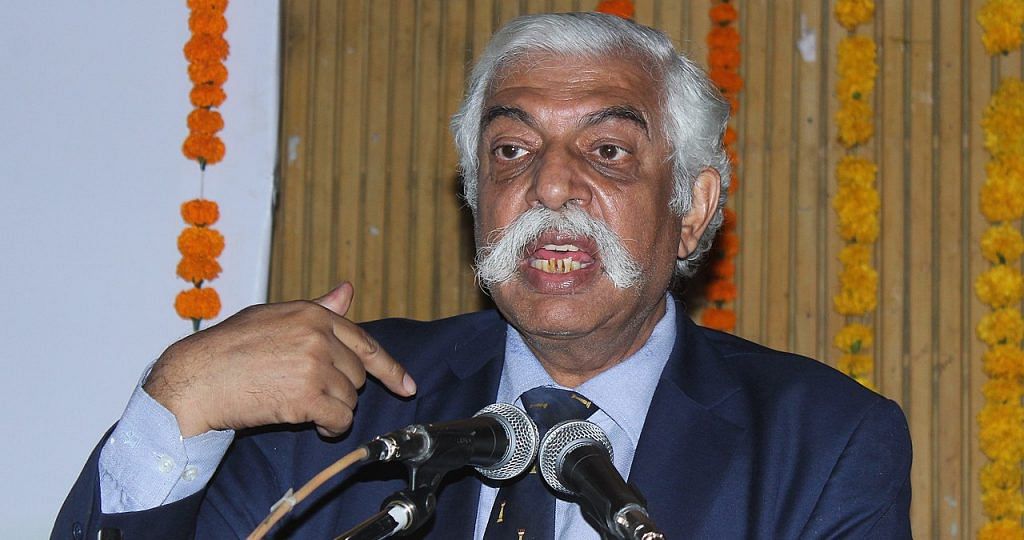
These concerns have been echoed by other military experts, including Major General Gaurav Arya, who have similarly criticized the Modi government’s defense strategies. The deadly Pahalgam attack has raised significant tensions about the presence and deloyment of military in Kashmir, where tourism is not only important for an economic sustainability but also a symbol of India’s soft power and cultural strength. Bakshi has gone so far as to suggest that “now is the time for India to conduct another Balakot-like strike,” emphasizing the need for proactive measures to prevent terrorist activities before they occur, rather than merely reacting to attacks after lives have already been lost.
Several veteran military officers with experience in counter-insurgency operations in Kashmir have suggested that additional safeguards should have been anticipated, particularly after the March 11 hijacking of the Jaffar Express in Balochistan by Baloch militants—an incident that Pakistan blamed on Indian intelligence. Pakistan’s foreign office and military spokesperson, Lieutenant General Ahmed Sharif Chaudhry, claimed that the Balochistan Liberation Army insurgents responsible for the hijacking and execution of 24 hostages—including 18 military and paramilitary personnel—were sponsored by India’s Research and Analysis Wing, allegedly operating from Afghanistan.
Retired Intelligence Bureau officer and security analyst Avinash Mohananey told Rediff.com that the Pahalgam attack was “100% revenge” for the Jaffar Express incident. He described the security failure as “criminal negligence” on the part of the three-tiered security apparatus responsible for protecting the region. This negligence becomes even more troubling when considering that tourist traffic was increasing, making civilians particularly soft and visible targets. The Pahalgam-Anantnag axis has a well-documented history of militant activity, and intelligence warnings had reportedly flagged the re-emergence of hybrid militants—Pakistan-trained fighters now collaborating with local operatives—who had recently shifted their operations from the Jammu-Pir Panjal region into southern Kashmir.
The security arrangement in Pahalgam typically consists of three concentric layers: the outer perimeter is monitored by the Indian Army’s 3rd Rashtriya Rifles battalion, responsible for overseeing infiltration routes and high-altitude surveillance; the middle layer is managed by the CRPF’s 116th battalion, tasked with securing roads and conducting area domination; and the inner core is handled by the Jammu & Kashmir Police, who gather local intelligence and maintain law and order. On April 22, all three layers failed simultaneously—a comprehensive breakdown that allowed terrorists to carry out their attack without hindrance.
The area was left essentially unprotected, with multiple access routes through surrounding forests and trails. The terrorists who claimed 26 innocent lives, were known to be dressed in Indian Army dresses, and were never spotted en route to the meadow, indicating a severe failure in surveillance, and their undetected escape further underscored the breakdown in coordination between the Army, CRPF, J&K Police, and Kashmir’s much-touted Unified Command structure. Perhaps most alarming was the absence of any immediate response despite the terrorists firing over 40 rounds from AK-47 rifles over a 15-20 minute period in an acoustically resonant mountainous terrain where gunfire would normally echo for kilometers.
There were no drones, surveillance cameras, or alert systems in place at Baisaran, despite its popularity as a tourist destination. There was also no evacuation or medical response mechanism in place where the attack took place. Injured victims had to be carried on foot by fellow tourists and pony handlers, adding to the trauma and possibly contributing to the high death toll.” This shows a “catastrophic multi-agency failure” in both anticipating and responding to an act of terror in a known volatile region.
India’s security history is unfortunately replete with similar intelligence failures that have cost thousands of lives. The Kargil conflict resulted in 527 soldiers dead and 1,300 wounded. The 2008 Mumbai attacks claimed 166 lives. In Pulwama, 40 CRPF personnel were killed. And in 2020, 20 soldiers lost their lives in Galwan during clashes with China—an incident that prompted a massive, prolonged, and costly military deployment along the Line of Actual Control. All of these tragedies could potentially have been avoided had the agencies responsible adhered to the fundamental principle that vigilance is the price of safety.
And this pattern of neglect is not limited to a particular government. Throughout India’s independent history, our political leaders have frequently been so preoccupied with internal conflicts over state boundaries, regional interests, and linguistic divisions that they have neglected the primary responsibility of government: protecting the country’s borders and citizens. From the 1962 Sino-Indian War to the present Phulwana and Pahalgam, political concerns have consistently superseded security imperatives, with disastrous implications for the country.
The 1999 Kargil War serves as a particularly instructive parallel to the current situation. Despite intelligence warnings about unusual Pakistani activity along the Line of Control, the Indian security establishment was caught off guard when Pakistani forces infiltrated across the boundary. The subsequent conflict claimed the lives of 527 Indian soldiers, with many more wounded. The Kargil Review Committee, headed by K. Subrahmanyam, identified significant intelligence failures and a lack of coordination between various security agencies as primary causes of the incursion. Two decades later, we seem to be repeating the same mistakes.
Similarly, the 2008 Mumbai attacks exposed glaring vulnerabilities in India’s coastal security and urban counter-terrorism capabilities. Despite intelligence inputs about a potential seaborne attack, 10 terrorists who executed the assault and cut India through many wounds were able to reach Mumbai’s shores undetected. The subsequent siege lasted for four days, claiming 166 lives and injuring hundreds more. The attack prompted need of comprehensive security reforms, including the establishment of the NIA and the strengthening of coastal security. Yet, as the Pahalgam attack demonstrates, many of these reforms have remained either unimplemented or ineffective.
The 2019 Pulwama attack, which killed 40 CRPF personnel, says another instance where intelligence lapses had deadly consequences. Despite the presence of a large security convoy on a major highway in a known conflict zone, authorities failed to detect the explosive-laden vehicle that ultimately caused the tragedy. The attack led to the Balakot airstrikes by the Indian Air Force, which were presented as a decisive response to terrorism. However, the underlying intelligence and security issues that led to the Pulwama attack to occur were never adequately addressed—a pattern that has clearly continued into 2025.
The 2020 Galwan Valley incident, in which 20 Indian soldiers died in clashes with Chinese forces, further illustrates this troubling pattern. Despite satellite imagery and intelligence reports indicating Chinese incursions into territory claimed by India, the political leadership initially downplayed the situation, with Prime Minister Modi famously stating that “no one has entered Indian territory.” This denial of reality, prioritizing political narratives over strategic realities, seems to have carried forward into the current administration’s approach to Kashmir’s security challenges.
While the current government, in a decade, has often responded to these attacks with angry, loud rhetoric and pledges of reform, the actual execution of security measures remains questionable. In Kashmir, for example, the repeal of Article 370 was proposed as a solution to the region’s security issues. However, as the Pahalgam attack indicates, this constitutional reform has been coupled by insufficient security infrastructure to defend the rising number of visitors and civilian movements in formerly prohibited regions.
The government’s approach to recruitment in the armed forces has also come under scrutiny. The Agnipath scheme, introduced as a cost-effective measure to modernize the military, has been criticized by security experts as potentially compromising national security. The scheme, which limits most recruits to a four-year tenure, has been seen as prioritizing financial considerations over the development of a professional, well-trained military force capable of addressing complex security challenges.
As, we, the people of India, bleeds with the implications of the Pahalgam attack, the call for a reevaluation of defense policies grows louder. GD Bakshi’s assertion that the time for mere words has passed resonates with many who believe that decisive action is necessary to ensure the safety of citizens and the integrity of India. In light of these attacks, the question remains: will the government listen the warnings of military experts and take the necessary steps to strengthen India’s national security?
As Bakshi poignantly stated, “We must move beyond saving money and start thinking about saving the country.” This call to action is not just a plea for military readiness but a reminder of the stakes involved in ensuring the safety and security of every citizen. The media continues to ask the questions that demand answers:
- Who will take accountability for the 26 lives lost in Pahalgam?
- Is this not a government failure at multiple levels?
- Why has the government chosen cost-effective schemes like Agnipath that potentially compromise the security of the nation?
- Are citizens paying the ultimate price for governmental failures?
The Pahalgam attack should serve as a wake-up call—a moment for honest reflection on the state of India’s security apparatus and the political priorities that shape it. After each tragedy, there is a flurry of activity: special committees are formed, reports are commissioned, and promises are made. Yet the fundamental issues—the politicization of security, the reluctance to learn from past mistakes, and the prioritization of narrative over reality—remain unaddressed.
In the scenic valley of Baisaran, 26 lives were extinguished because those entrusted with protecting them failed in their duty. Their deaths join the long list of casualties in India’s ongoing struggle with terrorism and security challenges. Until the government acknowledges that projecting an image of normalcy is not the same as ensuring actual security, and until political considerations cease to override security imperatives, such tragedies will continue to occur.
For the families of those lost in Pahalgam, government promises and political posturing offer little comfort. They—and indeed all Indians—deserve a security apparatus that learns from past mistakes, adapts to evolving threats, and places the safety of citizens above all other considerations. Until that happens, the question will remain: How many more lives must be lost before we learn the lessons of history?
The Kashmir Valley has witnessed numerous security lapses over the decades, from the exodus of Kashmiri Pandits in the early 1990s to the recent Pahalgam attack. Each incident has been followed by promises of reform and renewed commitment to security. Yet the underlying issues—poor intelligence coordination, inadequate security deployment, and the subordination of security imperatives to political narratives—persist across administrations.

The 1990s saw a surge in terrorist violence in Kashmir, with attacks on civilians, security forces, and government institutions becoming commonplace. The response was a massive security deployment in the Valley, turning it into one of the most militarized regions in the world. Yet, despite this heavy presence, terrorists continued to find vulnerabilities to exploit. The 1995 kidnapping of foreign tourists by Al-Faran, the 1998 Wandhama massacre that claimed 23 Kashmiri Pandit lives, and the 2000 Chittisinghpora massacre all occurred despite the substantial security presence.
The pattern continued into the new millennium. The 2001 attack on the J&K Legislative Assembly and the 2016 Uri attack that took the lives of 19 soldiers both exposed serious security lapses, prompting steps for reform and retribution, yet the fundamental issues remained unaddressed by our government. The 2019 Pulwama attack, coming after years of supposed improvements in security, demonstrated that the system remained vulnerable to the same types of attacks it had faced for decades.
The Pahalgam attack of 2025 is thus not an aberration but a continuation of this troubling pattern. The question is not whether such attacks will occur again—history suggests they will—but whether the government will finally prioritize security over political narratives, implement the lessons of past failures, and hold accountable those whose negligence or complacency enabled this tragedy.
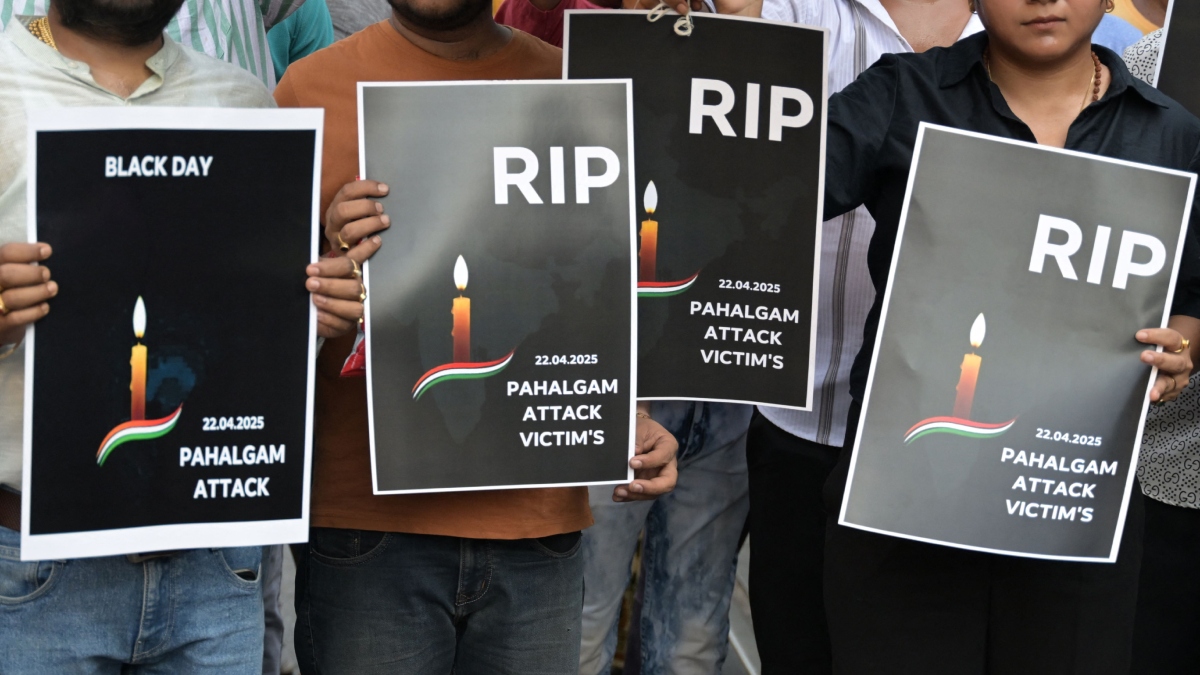
As General Roychowdhury has emphasized, there must be accountability—not just symbolic gestures or reassignments, but genuine consequences for those whose failures led to the loss of 26 innocent lives. Without such accountability, without a fundamental reevaluation of how security is made and implemented in the crown of India and elsewhere, India will remain vulnerable to those who seek to exploit the gaps in its defenses.
In the final analysis, the Pahalgam attack represents not just a failure of intelligence or security protocols but a failure of governance. It is a stark reminder that the primary responsibility of any government is to protect its citizens, and that all other considerations; political narratives, economic priorities, diplomatic posturing, must take the back seat to this fundamental duty of Government of India. Until this principle is fully embraced at all levels of governance, Indians will continue to pay the price for their government’s misplaced priorities.