Quick Commerce Apps Introduce Random Fees – How Far Will They Go To Chase Profitability?

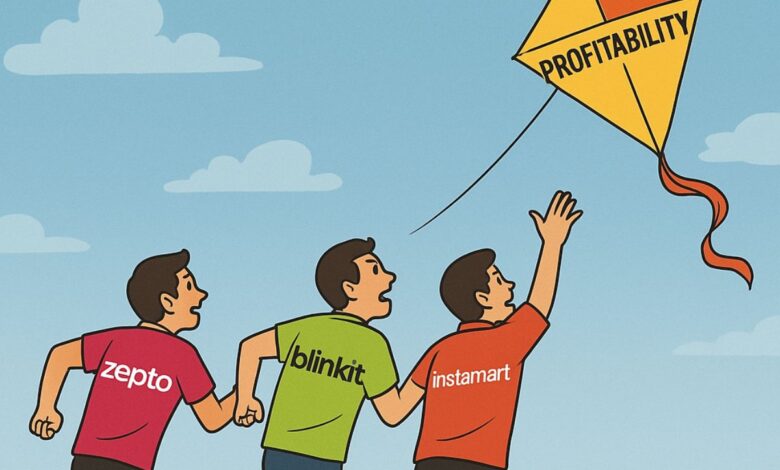
Imagine ordering groceries for home delivery, only to be blindsided by a barrage of bizarre charges at checkout. It’s a stunning wake-up call: the hidden fees of quick commerce apps.
These apps promise blisteringly fast grocery delivery, but silently tack on random, irrelevant fees, from small-order surcharges and weather levies to inflated handling charges, with shockingly little transparency. Consumers are only discovering these toxic add-ons at the end of the checkout process, and the effect is chilling. How far will these companies go down this dark path toward profitability, and at what cost to unsuspecting users?
Dark Patterns Exposed: The Hidden Tricks of Quick-Commerce
The sleight-of-hand begins with drip pricing, a notorious dark pattern where extra costs only appear at final payment. In fact, nearly most of quick commerce apps now hide fees until checkout. On these platforms, that means a “free delivery” banner might vanish at the last moment when a platform fee or tiny “handling” charge is sprung on you.
Investigations confirm this shady choreography: LocalCircles found 48% of Indian apps use drip-pricing, sneaking convenience fees, weather surcharges, and processing charges into orders. Industry watchdogs note quick-commerce apps have mastered this trick, layering on platform, service, “small-cart” and even rain charges after you’ve already hit “buy”. This is no accident as regulators warn, such manipulative pricing is a deliberate design: a dark pattern meant to trick consumers into paying more than the advertised price.
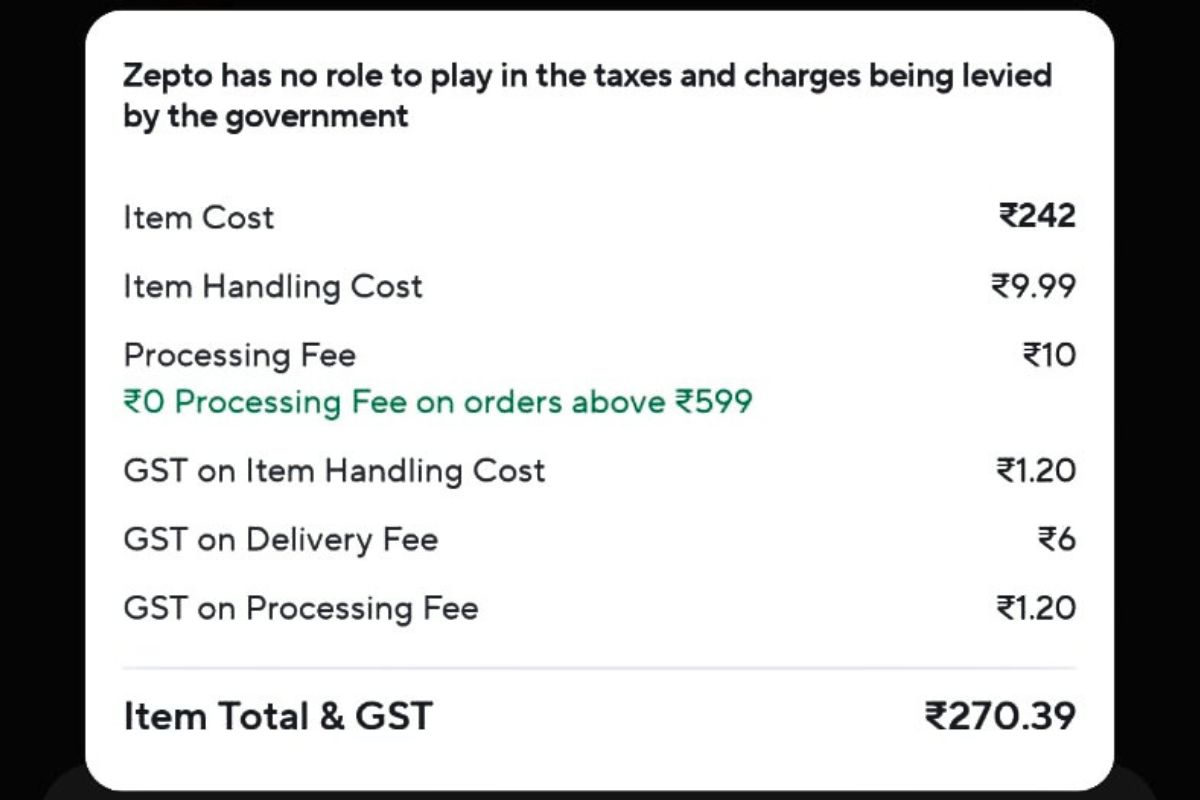
These hidden fees are often couched in vague terms. For example, Zepto now tacks a “handling charge” on orders below Rs 175, and Blinkit adds a “quick delivery” premium on top of normal fees. Instamart raised its minimum order value (MOV) to Rs 99 to avoid free delivery. To a casual shopper, such fees can feel trivial, but they add up, especially when every grocery order carries them.
Even worse, these tiny charges breed confusion and distrust: shoppers in India have flooded social media complaining about “GST on item handling” and “rain levies” suddenly appearing in their bills. The central government has now even labeled hidden charges as one of 13 recognized dark patterns, demanding platforms audit and end such tactics. In other words, the state has formally acknowledged quick-commerce’s hidden fees as manipulative.
Random Charges and Rising Costs: Groceries Get Pricier
These random fees can feel downright malicious. Quick-commerce apps have quietly added a kaleidoscope of extra levies to every order: small-order surcharges, basket-size levies, bulk-purchase charges, surge fees during peak hours, even panic charges when rainwater falls. A recent report detailed how Instamart, Zepto, and Blinkit began imposing new fees for low-value carts, all on top of the usual delivery and platform charges. The result is scary: an item that costs ₹45 can balloon to ₹125 once you hit pay. The companies rationalize this as “unit economics” fixes, but from the consumer side it feels like nickeling-and-diming for every inch of convenience.
Zepto’s app now automatically adds a handling fee unless you meet its Rs 175 cart threshold. Instamart quietly raised its free-delivery bar to ₹99. Blinkit labels one fee “Quick Delivery” and then keeps piling on extra for discounted or bulk orders. On top of that, nearly all these apps charge extra during bad weather or peak demand, slyly explaining it as a “surge fee” when staffing is scarce. Anecdotes abound of customers just trying to buy milk for 10 minutes, only to discover they’re paying hidden GST on a “rain fee.”
Contrast this with brick-and-mortar stores: your neighborhood kirana will sell you groceries at shelf price, no forms to manipulate or checkboxes to click. But quick-commerce apps are skirting that traditional trust, treating shoppers as cages to be shaken until more money falls out. This cloud of extra fees is marketed to “improve take rates” (the share of order value the platform keeps) and pad margins.
Shrugging them off isn’t easy as shoppers have to either grudgingly pay up, add more to their carts to avoid fees, or abandon the service. All the while, the true purpose is laid bare: in a market obsessed with growth, these fees are meant to cover up the bare truth that there is no real profit per order yet.
No Unit Economics: The Cash-Sink Called Quick Commerce
Indeed, the core problem is a brutal one. The 10-minute delivery model that quick-commerce apps sell has no sustainable economics. It’s not just consumers who say so, but even prominent entrepreneurs. Former Shark Tank judge Ashneer Grover blasted this model on social media: “10Min delivery has no economics – low ticket size and low margin can never be solved through forced low delivery cost,” he wrote about Blinkit and Zepto. He’s right. Every grocery order might only be a few hundred rupees, but the cost of paying a delivery rider, maintaining “dark store” warehouses, and handling goods quickly towers over that. The math simply doesn’t add up.
Swiggy’s Instamart and Zomato’s Blinkit have been hemorrhaging money to prove otherwise. According to reports, monthly cash burn for India’s quick-commerce arms more than doubled to ₹1,300–1,500 crore in early 2025. Blinkit’s net profit plunged from ₹175 crore a year ago to just ₹39 crore, and Swiggy’s losses nearly doubled to over ₹1,081 crore in the same quarter. These dizzying losses aren’t flukes, they’re the predictable result of 10-minute delivery, heavy subsidies, and hyper-discounting.
At the same time, all these companies are locked in a discount war. Amazon and Flipkart have stormed into quick commerce, pushing Instamart, Blinkit, and Zepto to slash prices even further just to stay alive. The result is average product discounts of 20–25% (up from under 10% two years ago) on everything from dairy to snacks. In other words, consumers are being “subsidized” by investor cash to try out these services, not by any cost savings inside the model. Zepto alone raked in over $1 billion in funding last year. Every rupee they spend on discounts or handling fees is essentially burning investor money.
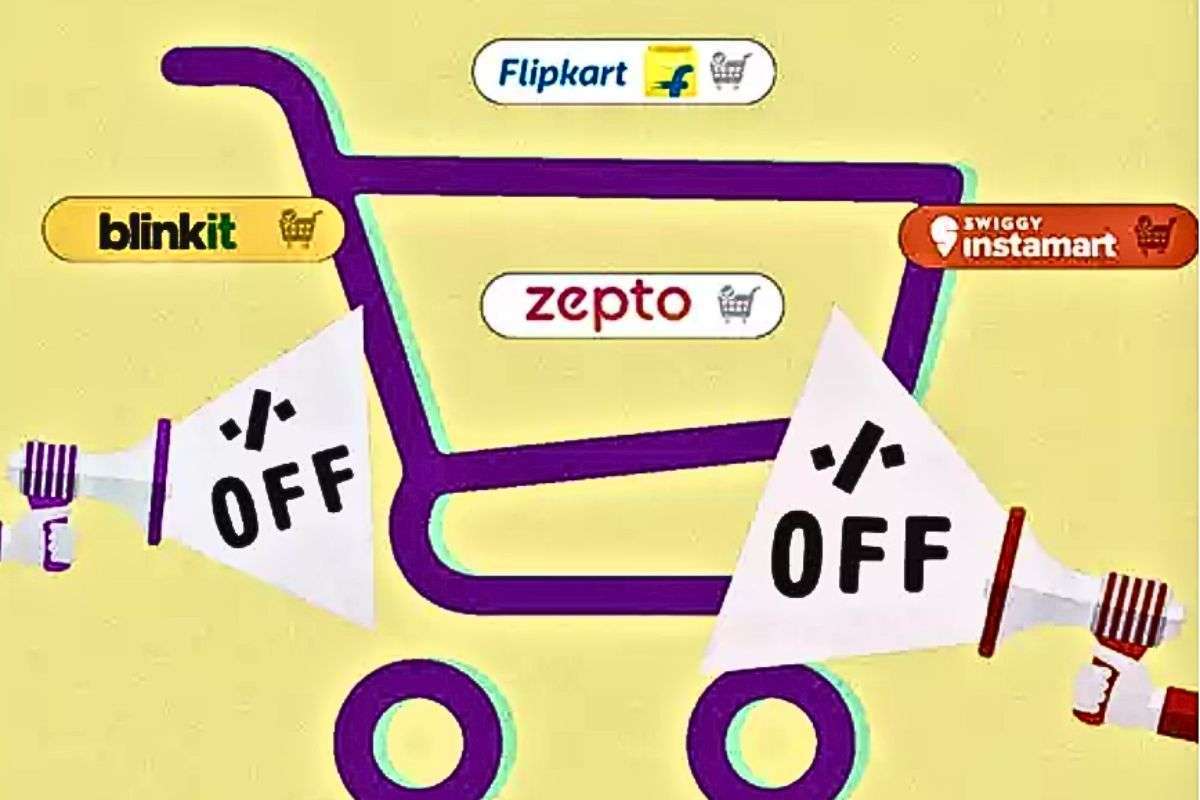
It’s a perverse cycle: companies lose money per order, so they pour in more cash to grow, which forces them to introduce fees and more discounts to keep customers. The net effect is shockingly low take-rates and deep deficits. Research notes that even as quick-commerce sales jump, the quest for scale is eating into every profit. Institutional investors are furious: combined, Swiggy and Zomato have seen some $12 billion wiped off their market value since 2025 began, as shareholders reel at the spending spree in quick-commerce. In short, quick commerce today resembles a bottomless pit and these random fees are patchwork desperately trying to hold it up.
Consumers vs Corporations: Who Pays the Price?
So who really pays for this loss-making model? Ultimately, the burden shifts toward the customer. By hiking cart minimums and adding fees, platforms force shoppers to either spend more per order or pay extra, effectively squeezing everyone for marginal gains. Analysts observe these moves are designed to “push customers towards higher average order values” and shave off smaller carts. Users are now caught in a weird bargain: either bulk-buy items they didn’t need just to dodge fees, or cough up unpleasant charges for quick delivery.
If you dared voice outrage, you’d find you’re not alone. Complaints are mounting on social platforms: “Swiggy Instamart and Blinkit are now charging a service fee for orders below the minimum”, writes one user, captioning their bill with surprise. Civil society has taken notice too. A nationwide consumer survey explicitly called out convenience fees, urging the government to crack down on these dark tricks. And traditional retailers are fuming, a trade federation even petitioned regulators to investigate quick-commerce’s predatory pricing (deep discounts) that undercuts mom-and-pop shops. In effect, two fronts of backlash are forming: ordinary consumers who feel deceived by checkout traps, and business lobbies fighting to prevent being priced out.
To temper the blow, platforms preach transparency, but the evidence suggests otherwise. The charges are often buried under labels like “platform fee” or “processing fee”, which are ambiguous terms that can be altered or removed at will. The companies argue these fees cover costs like store upkeep or ensure “high-quality quick deliveries”. But users have learned the hard way that walking away from an inflated cart costs time and money too. And even when a complaint is lodged, the response is usually a maze of coupon credit or refund, which is hardly a fix to the systemic problem.
It’s telling that the Indian government is finally stepping into this fray. Last year, new guidelines under the Consumer Protection Act targeted dark patterns, explicitly outlawing “drip pricing” and requiring true price disclosure. In June 2025, the Ministry of Consumer Affairs formally asked major apps to audit their billing schemes and scrap manipulative fees. The message is clear: concealing charges is officially recognized as unfair. Already the Competition Commission had clashed with bigger e-commerce giants over predatory tactics, and now quick-commerce is under the microscope too.
Despite the heat, executives in the industry remain brazen. Eternal’s Blinkit CFO candidly admitted in a recent earnings call that they will prioritize market share even at the cost of short-term profitability. Similarly, insiders confess that raising normal delivery fees is off the table; instead, they’ll keep tweaking these incidental charges to jack up revenue. The irony is brutal: these platforms publicly promise cheap, fast deliveries, yet behind the scenes phone it in with a grab-bag of add-on fees that any savvy shopper could see coming. In fact, the quick-commerce giants now trail far behind every other sector in consumer trust for pricing honesty, a reputation worse than even taxi-hailing or travel apps, according to consumer groups.
Lessons from History: Beware the ‘Free’ Bait
This dark chapter doesn’t spring out of nowhere. The tactic of luring customers with low prices, then adding fees later, has haunted business history for decades. Remember when airlines first started charging for checked bags or seat selection, or when online ticketing sites quietly added “booking fees” at payment time? In many cases, public uproar and consumer laws eventually forced transparency. The quick-commerce saga is history repeating itself in fast-forward. Just as deregulated internet shopping once spawned a “free delivery” marketing frenzy (soon followed by surcharges), today’s grocery apps have kicked off another round of covert charges. Regulatory bodies have even christened it drip pricing to highlight its deceptive nature.
In fact, on dark patterns theory, quick commerce is almost a poster child. This new retail model was expected to be different; after all, it had to justify a radical premium of speed. Instead, it has ended up borrowing all the old tricks: fake countdowns, surprise fees, and high-pressure upsells, just like e-commerce and travel portals before it. The difference is scale. Millions of urban consumers now order groceries this way, and millions more could, as Morgan Stanley predicts the market growing to $57 billion by 2030. The stakes are high: either quick-commerce firms evolve or consumers and the market may very well revolt.
How Far Will They Go?
So here we are, caught in a sordid dance. On one side, consumers craving convenience and low prices; on the other, deep-pocketed startups and national giants burning cash to build out a network of dark stores and delivery fleets. And in between, hidden fees quietly swelling the platforms’ cash drawers. The question looms: how far will quick commerce apps push these hidden charges? Will we soon see every grocery item come with a “convenience tax” for the sake of a few-rupee profit bump? Or will consumer outrage and regulation finally force a clean-up of these tactics?
What’s clear is that this is only getting murkier. Companies are likely to experiment with even more opaque fees (imagine “traffic jam surcharge” or “last-mile convenience” fee!). Already, a senior industry official warned that platforms have no easy way to raise standard delivery fees, so “every component” must be maxed out: platform fees, surge fees, even creative future levies. In effect, we are hurtling down the profitability rabbit hole where no trick is too petty and no cost too small to impose on a customer.
The reality is disturbing: these apps are basically saying “pay up or go away.” Their strategy hinges on the notion that customers will either tolerate the fees or pocket the savings of deep discounts. But that approach risks backfiring. Already, people are switching between quick-commerce apps trying to dodge fees, or simply reverting to old-fashioned shopping. If trust completely erodes, the entire model could suffer.
As this corporate game of extremes plays out, one thing is for sure: these hidden fees feel like a betrayal. Consumers who valued quick commerce for convenience now feel preyed upon, and rightly so. Yet the companies behind Blinkit, Instamart, Zepto (together controlling roughly 80-85% of India’s quick commerce market) seem determined to continue squeezing every rupee. Will consumers keep footing the bill for this experiment in loss-making convenience? Or will they finally demand transparency and an end to the dark patterns?
What do you think? Should regulators clamp down, or should we boycott these apps until they clean up their act? Let us know in the comments below.