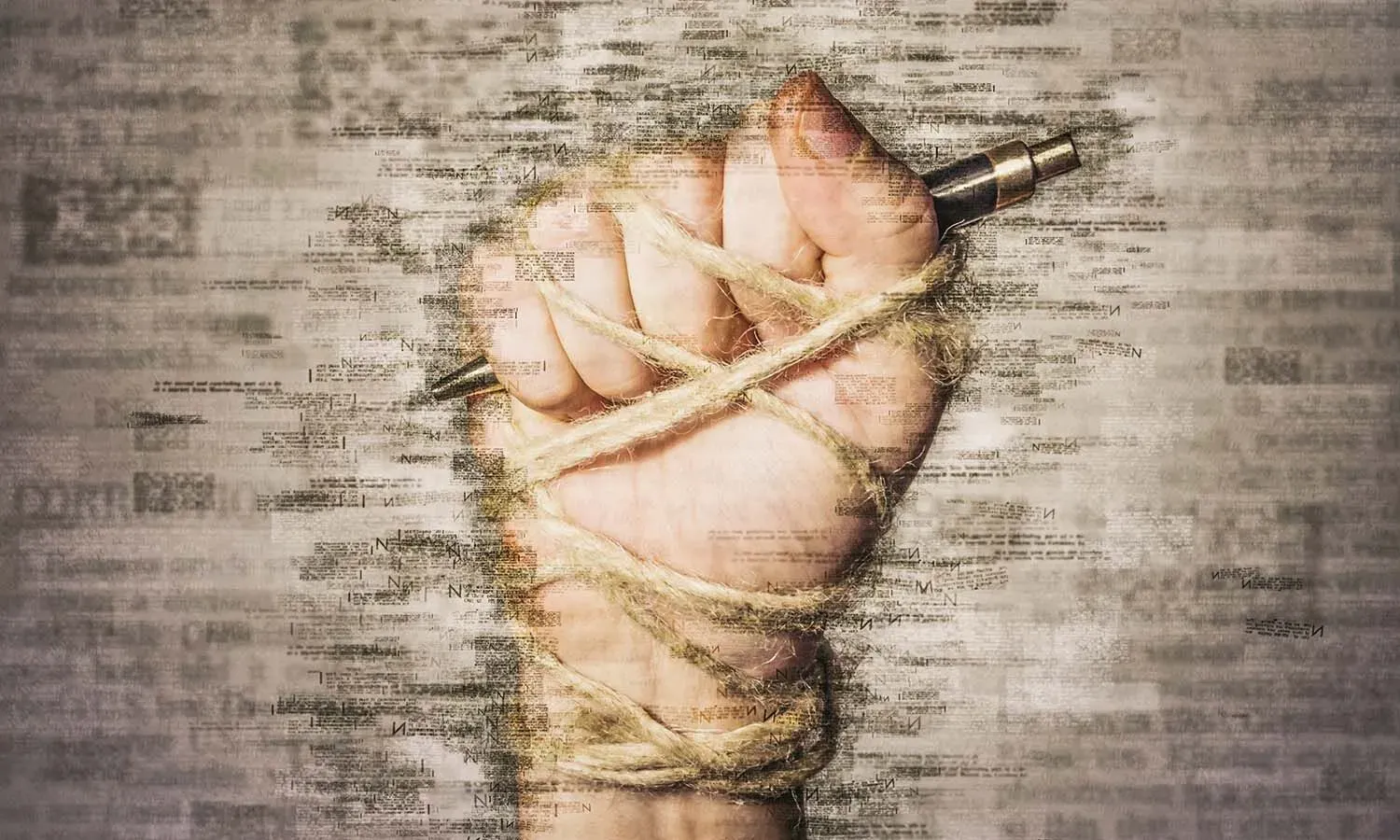
Gag Orders and Billionaire Egos: How Adani’s Lawfare Muzzles the Indian Press
It’s an almost Shakespearean irony that in the world’s largest democracy, a business empire has been writing its own playbook on silencing the press. The Adani Group, led by billionaire Gautam Adani, has developed a thin-skinned reputation: when faced with probing journalists exposing alleged financial misdeeds or environmental abuses, it doesn’t offer counter-evidence or engage in debate. Instead, it unleashes a battery of lawyers and lawsuits.
In recent years, Adani’s conglomerate has pursued an aggressive lawfare strategy – using defamation suits, gag orders, and other legal tactics – to intimidate and censor journalists who dare to investigate its dealings. This strategy has not only targeted individual reporters and independent media outlets, but has even roped in government agencies as enforcers of Adani’s will. The result is a chilling effect on press freedom in India, as reporters operate under the shadow of lawsuits and ex parte injunctions that can scrub the internet of unflattering content at the whim of a billionaire.
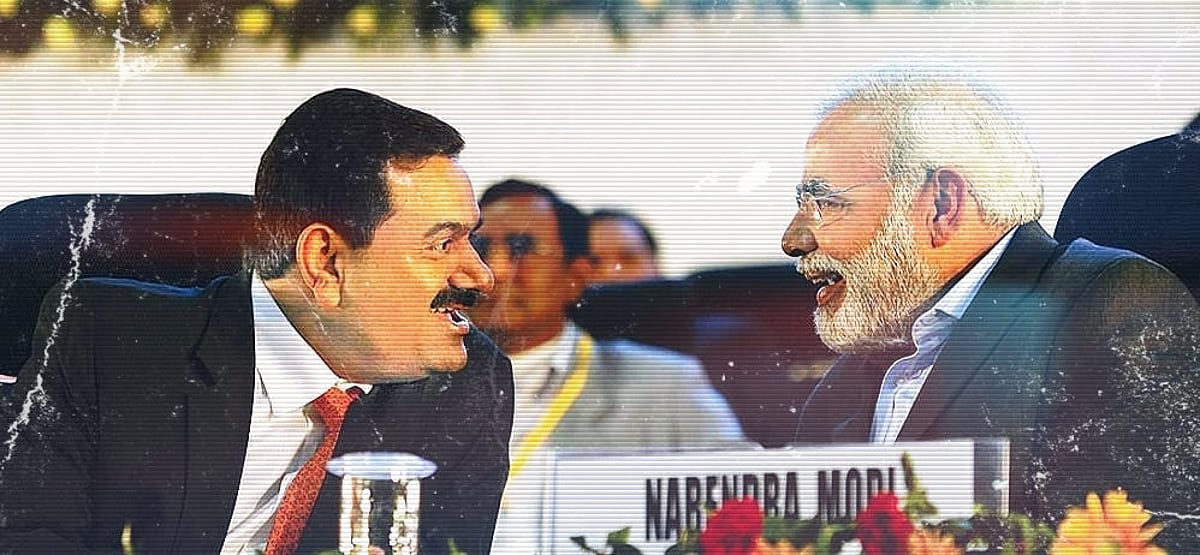
If this sounds alarmingly authoritarian, that’s because it is. In a country already ranked 161st out of 180 in press freedom by 2023, such legal harassment further erodes the fragile freedoms journalists cling to. Adani’s rise has been fuelled by close alignment with Prime Minister Narendra Modi’s government, and the conglomerate’s sensitivity to criticism is matched only by its influence. But how exactly does Adani drag journalists to hide its wrongdoing? What are the incidents where it ‘legally’ attacked journalists exposing its deeds?
The 2025 Gag Order: A Billionaire’s Blanket Censorship
The most brazen example of Adani’s media suppression came in September 2025, when a New Delhi civil court granted Adani Enterprises Ltd (AEL) an astonishingly broad ex parte gag order against critical reporting. Issued without hearing the journalists’ side, the interim injunction restrained 10 named defendants, who are a roster of independent journalists and publications known for investigating Adani, from publishing anything the company deemed defamatory.
The list included veteran reporters like Paranjoy Guha Thakurta, Ravi Nair, Abir Dasgupta, Ayaskanta Das, Ayush Joshi, as well as outlets and even overseas entities that had scrutinized Adani’s business practices. More ominously, the order featured a tenth defendant, listed as “Ashok Kumar” (John Doe), a legal fiction enabling Adani to pursue anyone who might comment negatively in the future. In essence, the court handed Adani a blank check to censor: the conglomerate could compile its own rolling blacklist of content and demand takedowns without further judicial oversight.
Under this unprecedented order, Adani was empowered to act as prosecutor, judge, and executioner (of online speech). The company was allowed to provide URLs of offending articles, YouTube videos, or social media posts to intermediaries (like Facebook, Instagram, YouTube, and news websites) and government agencies, which were then compelled to remove the content within 36 hours. No independent review of whether the content was truly “unverified” or “defamatory” was required – Adani’s accusation was enough. Effectively, a private corporation was granted the power to wipe out critical commentary across the internet to protect its reputation, a role that alarmed press freedom advocates worldwide.
The immediate fallout was mass censorship. Acting as what Reporters Without Borders (RSF) called a “mere ‘post office’” for Adani’s demands, India’s Ministry of Information and Broadcasting sent notices on September 16, 2025, to multiple media platforms and ordered the deletion of 138 videos and 83 posts that mentioned Adani Enterprises.
Targets ranged from independent news sites The Wire and Newslaundry to popular YouTube commentators like Ravish Kumar, Dhruv Rathee, Ajit Anjum, and satirist Akash Banerjee of The Deshbhakt. It didn’t matter that these individuals or outlets were not even named in Adani’s original lawsuit – the John Doe clause gave the company latitude to go after any content it disliked. By the government’s own admission, it did zero vetting of whether the flagged reports were actually defamatory or false; it simply forwarded Adani’s takedown list to social media companies as gospel.
In the words of the Committee to Protect Journalists (CPJ), this state-backed purge of news was “an attempt to silence legitimate reporting and commentary… a dangerous precedent for press freedom in India”.
Adani’s legal team tried to justify this draconian move by framing critical journalism as a coordinated smear. One of the conglomerate’s lawyers claimed negative reporting on Adani represented “vested interests” and “anti-India interests” out to harm the nation by harming Adani’s reputation. The conflation of Adani’s private profits with India’s national interest – a rather grand leap of logic – speaks volumes about the influence the company enjoys in political circles.
But neither the judiciary nor independent observers were convinced by such nationalistic pretense. Press associations and editors’ guilds immediately condemned the gag order as an assault on free speech, pointing out that Indian law does not allow blanket prior restraint on the press without a full trial on merits. Indeed, India’s Supreme Court has repeatedly held that pre-trial gag orders in defamation cases are an extreme measure – to be used only when failing to grant them would cause greater injustice than granting them. In this case, the trial court had imposed the injunction ex parte and without examining whether the articles were malicious or justifiable – a clear violation of the standards for press freedom laid down by higher courts.
Within weeks, the pushback against Adani’s censorship drive achieved a measure of success. Four of the journalists – Nair, Dasgupta, Das, and Joshi – mounted a legal challenge. On September 18, 2025, a Delhi district judge set aside the gag order as applied to those four, calling the original injunction “unsustainable” for denying the journalists a chance to be heard. “Heavens have fallen on what is the law of the land,” argued their lawyer Vrinda Grover, emphasizing that no law in India permits silencing the press in such fashion; the judge agreed, recognizing that the sweeping John Doe order was legally indefensible.
A week later, on September 25, another Delhi court suspended the ban on Paranjoy Guha Thakurta, the veteran journalist and longtime Adani investigator who had also been ensnared by the order. (Paranjoy was not part of the initial four appeals, hence the separate relief.) Cases filed by Newslaundry and Ravish Kumar were also pending, but by late September the absurd breadth of Adani’s censorship had been curtailed by the judiciary.
The International Federation of Journalists (IFJ) hailed the court’s rollback of the gag, stating it “rightly reinforces that legal mechanisms must not be weaponised to silence critical journalism,” and urged Adani to drop all its punitive defamation charges against media. Even as the dust settled, the episode stood as a stark warning: a mega-corporation was nearly handed the keys to India’s information highway, with the ability to delete news at will. That this power was only partially checked after public outcry and legal action illustrates both the fragility of India’s press protections and the audacity of Adani’s approach.
A History of Hounding the Media: Defamation Suits and Gag Orders Galore
To believe that the 2025 gag order was a one-off overreach by an otherwise media-friendly conglomerate would be a mistake. In truth, Adani Group has a years-long history of dragging journalists to court to bury uncomfortable truths.
Public records and reporters’ testimonies reveal multiple defamation cases and legal actions initiated by Adani companies since at least 2017 – seven of which against Paranjoy Guha Thakurta alone remain ongoing as of 2025. This pattern of “strategic lawsuits against public participation,” or SLAPP suits, aims to throttle critical coverage by bogging journalists down in expensive, exhausting legal battles. Below, we recount some of the key incidents where Adani tried to silence media with legal orders:
- The 2017 EPW Article and Aftermath: Paranjoy Guha Thakurta, a respected investigative journalist, co-authored a 2017 piece in the Economic and Political Weekly examining alleged Adani Group tax evasion. Adani’s response was swift and severe – legal notices were sent to the publishers. Under pressure, EPW took down the article, prompting Paranjoy to resign on principle and republish his findings elsewhere. Adani then filed a defamation suit in Gujarat (the home turf of the Adanis). This suit, dragging through the courts for years, exemplified Adani’s preference for suing in plaintiff-friendly jurisdictions far from where the journalists reside. In this case, the suit in Kutch, Gujarat meant Paranjoy, based in Delhi, was summoned across the country.
- September 2020 Gag Order (Ahmedabad): In one of the most sweeping prior restraints before the 2025 saga, an Ahmedabad court issued a gag order in September 2020 prohibiting Paranjoy, fellow reporter Abir Dasgupta, and the independent news portal NewsClick from publishing anything whatsoever on the Adani Group. This astonishing order – practically a blanket ban on naming “Adani” in any context – was sought by Adani after these journalists dug into the conglomerate’s business practices. Given that Adani’s empire spans airports, ports, power, mining, agribusiness, real estate, data centers, and more, the gag order effectively barred these reporters from covering vast swathes of India’s economy. Media freedom advocates noted the order’s absurd breadth: it’s hard to do journalism on corporate affairs in India without touching something Adani is involved in. NewsClick and the journalists signaled they would challenge the gag in higher court – a necessary step, since such prior restraints violate the constitutional protection of free speech. Indeed, legal scholars pointed out that truth and public interest are valid defenses in defamation; shutting down reporting preemptively, without trial, robs journalists of the chance to even present those defenses.
- January 2021 Arrest Warrant for Paranjoy: As if the 2020 gag wasn’t enough, Adani doubled down. In January 2021, a court in Mundra (Gujarat) issued an arrest warrant for Paranjoy Guha Thakurta in a defamation case brought by an Adani company. His alleged offense? Failing to appear for a hearing – never mind that the hearing notice was sent to an old address during the peak of India’s COVID lockdowns. Press freedom groups were outraged. RSF blasted the warrant as a “despicable abuse of power and influence by the Adani Group,” noting it was absurd to criminalize a journalist amid a pandemic for a civil defamation matter. Faced with public condemnation, the Adani side pulled back; the warrant was eventually withdrawn, and Paranjoy secured bail. However, even in victory he was forced to travel over 1,000 km during a COVID surge to attend court in Adani’s backyard. The clear subtext: any journalist criticizing Adani should be prepared to be harried, intimidated, and dragged across the map in legal proceedings – a punitive roadshow intended to deter further scrutiny.
- December 2021: Suits Against Mainstream Outlets (Economic Times & CNBC TV18): Adani’s legal guns were not trained only on independent journalists. In 2021, parts of India’s mainstream financial press came under fire after reporting on regulatory actions affecting Adani. The Economic Times, a leading business daily, published a June 2021 scoop that India’s securities regulator had frozen the accounts of three offshore investors in Adani companies, citing concerns over opacity of ownership. Rather than clarify the matter, Adani Ports Ltd (a group company) filed a defamation case on August 3, 2021 against the article’s authors (Pavan Burugula and Nehal Chaliawala) and the editor Bodhisatva Ganguli. Tellingly, this suit was filed in Ahmedabad, Gujarat. Just weeks later, on September 20, 2021, Adani Transmission Ltd lodged a criminal defamation complaint in a small Kutch court against two journalists from CNBC-TV18 (Latha Venkatesh and Nimesh Shah) who had discussed the same story on air. By stacking a criminal case on top of the civil suits, Adani ensured these journalists faced not only damages but potential jail time. And by choosing a remote forum, Adani forced the reporters to make arduous trips to Gujarat. The 62-year-old Latha Venkatesh – one of India’s most respected business TV anchors – pleaded for an exemption from personal appearances, citing the pandemic health risk. The court denied her requests twice, insisting she appear in person or risk arrest. Fearing incarceration, Venkatesh had no choice but to fly to Ahmedabad to get her statement recorded in the midst of a COVID wave. Adani’s message was heard loud and clear in Indian newsrooms: report on our troubles, and we will make your life miserable. As one observer noted, the police and judicial process in this instance seemed to act as “handmaidens” of the Adani Group, deploying state power to cow the media.
- Targeting Digital Creators and Smaller Outlets: Adani’s intolerance for criticism extends to YouTubers and regional media as well. In early 2021, a YouTube commentator named Vinay Dubey found himself restrained by a court order obtained by Adani Agri Logistics. Dubey had posted videos alleging Adani was building private silos to hoard grain for profit – a sensitive claim amid India’s farmer protests. Adani sued, calling his commentary incendiary. A court prohibited Dubey from publishing any content about Adani until the next hearing– effectively silencing him in the interim. Adani argued Dubey’s video could “instigate farmers,” but critics noted that using injunctions to quash such political speech was a gross overreach, especially when the remedy of counter-speech or factual rebuttal was available. Meanwhile, small news websites that probed Adani’s environmental and labor practices have also faced legal threats. The Wire and Newsclick received multiple legal notices from Adani entities over investigative reports (ranging from coal pricing to land conflicts), often couched in menacing language but not actually pursued to trial – suggesting the goal was to intimidate rather than adjudicate the truth.

- Harassing Foreign Journalists and Activists: Even beyond India’s borders, Adani’s influence has muzzled critics. In 2017, a team from Australia’s ABC Four Corners – an investigative TV program – traveled to Gujarat to report on Adani’s controversial Carmichael coal project. Local police, seemingly alerted to their presence, detained and interrogated the journalists for hours in the port town of Mundra. Officers – who curiously took orders via phone during the interrogation – eventually released the team with a warning: leave town or face trouble, and by the way, your footage is deleted. The clear implication was that Adani’s clout could extend to orchestrating police action to shield its facilities from prying foreign cameras. In another case, Adani Group’s Australian subsidiary (operating the Carmichael mine) launched a sweeping civil action in 2020 against Ben Pennings, an environmental campaigner leading protests against the mine. The company alleged “a sustained campaign of harassment” by Pennings and, incredibly, sought a court order to raid his home in a bid to seize evidence. When that failed, Adani hired private investigators to surveil Pennings’ family, even photographing his young child – a tactic that, once revealed, drew widespread disgust in Australia. Adani confirmed the covert surveillance had taken place, apparently deeming such intrusions a legitimate method of protecting its interests. The episode highlighted the extremes to which Adani will go: not just suing opponents, but prying into their personal lives – a form of intimidation beyond the pale of normal corporate conduct.
Each of these incidents, taken alone, might be seen as a powerful entity overreacting to criticism. But together they paint a consistent picture: Adani Group systematically uses legal and extralegal means to shut down dissent. Little wonder that in October 2025, Reporters Without Borders included the Adani Group on its global list of “Press Freedom Predators,” specifically calling it out for subjecting journalists to judicial harassment. This unenviable distinction places Adani alongside authoritarian governments and rogue actors who “kill, censor, imprison, or harass” journalists. In Adani’s case, the weapon is the law – wielded with a heavy hand.
Courts, Constitution and the Pushback
Not all is bleak. The Indian judiciary, despite some troubling ex parte orders at lower levels, has shown a capacity to correct course. The 2025 Adani gag order was largely overturned on appeal, as discussed, with judges recognizing that fundamental press freedoms were at stake. The higher courts have precedent on their side: the Supreme Court’s reaffirmation of the Bonnard v. Perryman principle (a UK case from 1891) dictates that pre-trial injunctions in defamation cases should be exceedingly rare.
Simply put, if a journalist potentially has a defense like truth or fair comment on a matter of public interest, a publication should not be banned before that defense can be considered at trial. The Delhi gag order on Adani’s critics flew in the face of this principle, especially as it covered articles dating back years (some as old as 2017) which had never been proven false. By vacating that injunction, the courts signaled that Adani’s clout is not absolute – at least not in the courtroom when judges faithfully apply constitutional norms.
Journalists themselves are fighting back with the tools of transparency. They have filed legal challenges, penned open letters, and continued reporting in the face of lawsuits. The fact that Ravish Kumar, Paranjoy Guha Thakurta, and others went to court to overturn the gag shows a refusal to be cowed. And they are not alone. Press clubs and journalist unions have stood in solidarity.
The Editors Guild of India publicly slammed the Adani gag order, calling it an attempt to “prevent legitimate journalistic scrutiny”. The International Federation of Journalists and its Indian affiliate, the IJU, welcomed the lifting of the gag and urged Adani to stop abusing legal provisions. Even former Supreme Court justices weighed in via media op-eds, reminding everyone that defamation law is meant to protect reputation against falsehoods – not to shield the rich and powerful from accountability or criticism.
Meanwhile, India’s independent digital media – the likes of The Wire, NewsLaundry, Scroll, The Caravan – have continued to publish hard-hitting reports on Adani, from alleged stock manipulation to environmental violations. The AdaniFiles website (run by watchdog activists) and AdaniWatch (an initiative of an Australian environmental foundation) have kept international spotlight on the group’s activities. In fact, some of the very content Adani tried to purge has only garnered wider attention after the gag attempt. For example, the contentious articles that Adani wanted down included deep-dives into its complex offshore investors (raising questions of possible stock price manipulation) – topics originally read by niche audiences but now known much more broadly, Streisand-effect style.
However, these pushbacks occur against a worrying backdrop. The government’s willingness to act as Adani’s censorship arm, as in 2025, indicates an alignment of corporate and state power that is unhealthy for democracy. Prime Minister Modi’s closeness to Gautam Adani is no secret; Adani’s meteoric business expansion has paralleled Modi’s time in high office. It was hardly surprising then when Adani Group made a hostile takeover of NDTV in 2022, one of the few TV networks that had maintained an independent editorial line.
The takeover led to the exit of journalists like Ravish Kumar (who then turned to YouTube to continue reaching audiences). That avenue too was temporarily gagged by Adani’s court order – neatly exemplifying how control of media ownership and legal intimidation can work in tandem to stifle criticism. As RSF noted, India’s media landscape under Modi has become an “unofficial state of emergency” where government allies (Adani being a prime example) dominate and dictate the narrative.
Democracy at a Crossroads
The saga of Adani versus the free press is more than a tale of one conglomerate’s hypersensitivity. It poses a fundamental question: Can a democracy thrive when its richest men can so easily throttle the information flow? Public-interest journalism – on corruption, corporate malfeasance, environmental harm – is an essential check in any society. When reporters exposing potential wrongdoing are met not with explanations or rebuttals, but with court summonses and multi-crore lawsuits, the message to all truth-tellers is to beware.
Over time, this breeds self-censorship. Journalists may decide that digging into Adani’s affairs (or those of any powerful corporation or politician) simply isn’t worth the risk to their livelihood or liberty. Indeed, in private, many Indian journalists admit they hesitate before taking on Adani; some stories are softened, others dropped, thanks to the “chilling effect” of Adani’s notorious litigiousness.
For the public, the stakes are high. Take the example of the Hindenburg Research report in January 2023, which accused Adani Group of accounting fraud and stock manipulation. Adani vociferously denied the allegations. While international media dissected the Hindenburg claims, much of the Indian media treaded cautiously. Part of that reticence can be traced to the climate of fear Adani’s lawsuits have created.
If journalists cannot freely report and investigate such consequential allegations due to fear of being hauled to court or gagged, who will hold the powerful to account? An unchecked Adani Group – whose businesses range from ports to power to food storage – affects everything from electricity prices to agricultural supply chains. Its actions (or potential misconduct) impact the average Indian’s life. Thus, silencing journalists is not just a matter of one company’s thin skin – it directly hurts the public interest by obscuring information citizens have a right to know.
Moving forward, there are signs that Indian civil society is waking up to these challenges. Legal scholars are advocating for anti-SLAPP legislation in India – laws that could allow early dismissal of meritless defamation suits aimed at silencing critics. Courts are being urged to enforce stricter standards before granting injunctions, perhaps even penalizing abuse of the legal process for intimidation. Journalists are also getting savvier about covering their bases: meticulous sourcing, obtaining documents via Right to Information (RTI) filings (so that allegations are backed by official records), and collaborating with international outlets for sensitive stories (to dilute the pressure). These are important adaptive strategies in an environment where press freedom is under siege.
The role of international attention cannot be understated. The Adani Group, aiming to be a global player, has to reckon with the fact that suing or gagging every journalist outside India is far harder. When The Financial Times, The Guardian, or Bloomberg publish investigations about Adani, they bring a level of scrutiny that’s difficult to quash. And as seen with RSF’s Predator list and coverage by Nieman Reports and CPJ, Adani’s tactics are increasingly being called out on the world stage. This global pressure can serve as a counterweight to domestic suppression.
In conclusion, the Adani Group’s attempt to dictate press coverage through legal might is a case study in the abuse of India’s judicial system to stifle dissent. It reflects a broader trend in the country’s political economy – the blurring of lines between powerful corporations and an accommodating state apparatus, both intent on controlling the public narrative. Yet, the very ferocity of Adani’s approach has galvanized a counter-response from journalists, lawyers, and civil society who refuse to let India’s hard-won freedoms be eroded without a fight.
As one embattled journalist put it, “We will write, and if they sue us, we’ll still write – because the truth matters.” The courts have an obligation to protect that truth-telling mission enshrined in India’s constitution. Ultimately, a billionaire’s ego should never hold more weight than a citizen’s right to know. The Adani saga is far from over, but one lesson is clear: silence can be bought or bludgeoned only for so long before truth cuts through – and when it does, the emperors of industry may find their clothes in tatters.