Swiggy’s recent turbulence reads like a cautionary fable: once a start-up darling with unicorn status, it now scrambles to stem losses and stabilize operations. The Bengaluru-based food and grocery platform has slashed staff, shuttered fledgling services and watched losses mount, even as it promised investors an imminent IPO. In hard numbers, the story is bleak: consolidated net loss zoomed 33% year-on-year to ₹1,065 crore in Q3 FY26, and earlier reports show a ₹501 million (≈₹4,130 Cr) full-year loss in FY2022–23.
Swiggy claims its core food-delivery arm is profitable, but group-level red ink persists. Under the gloss of upbeat user-growth figures, a deeper truth emerges: the company is burning cash on expansion and quick-commerce bets that have yet to pay off. Here, we walk through Swiggy’s financial woes, strategic missteps and competitive pressures.
The Uncomfortable Numbers inside Swiggy
First, the money. Swiggy’s financial statements and regulatory filings reveal sustained losses even as revenue grows. In Q3 FY26 (Oct–Dec 2025), Swiggy reported ₹6,148 crore in operating revenue — a hefty 54% jump year-on-year — but total expenses soared even faster, up 49% to ₹7,298 crore. The result was a net loss of ₹1,065 crore, a 33% increase from ₹799 crore a year earlier. Costs rose so much that even a seasonal bump in business could not pull the company into the black.
In fact, Swiggy itself admitted that after a brief dip, Instamart’s losses widened again to ₹908 crore in Q3FY26. (Instamart is the quick-commerce grocery arm, akin to “grocery delivery in minutes”.) Likewise, Swiggy’s consolidated full-year losses have been staggering: it lost $501 m (about ₹4,130 Cr) in FY2022–23 on revenues under $1 bn, and for the nine months ending Dec 2023 it lost $207 m (₹1,636 Cr) on ₹7,800 Cr revenue. By contrast, the company’s food-delivery segment turned a small profit of ₹282 Cr in Q3 FY26 — proof that the core business can be profitable. But two other segments (quick commerce and supply-chain) are so loss-making that the net picture remains grim.
- Skyrocketing expenses: Over the past year, Swiggy’s costs outpaced revenues. The company says it deliberately avoided deep discounting to preserve margins, but that meant forgoing volume in a brutal price war (more on that below). Meanwhile, it continued investing in new verticals. In Q3 FY26, total expenses leapt 49% year-on-year. By contrast, many digital businesses focus on profit first; Swiggy’s founder admits “overhiring” was a mistake and that trimming headcount is painful but necessary.
- Revenue growth vs. losses: Swiggy’s topline is growing: Q3 revenue of ₹6,148 Cr was up 54% YoY. Food delivery (excluding restaurant partners’ share) climbed 25% YoY to ₹2,041 Cr, and Instamart’s gross merchandise value (GOV) jumped 103% YoY. Yet profits elude the company. In quick commerce (Instamart), higher order volume came at a severe price: EBITDA losses were ₹782 Cr in Q3 (vs ₹725 Cr a year earlier). These deficits mean Swiggy must keep burning cash to fuel growth, worrying investors and regulators alike.
- Cash burn and runway: Swiggy’s backers (including Prosus, SoftBank and Accel) have watched billions flow out. After losing ₹3,629 Cr (≈$456 m) in FY2022, the company is under pressure to show better numbers before an IPO. Indeed, insiders say investors are demanding profitability targets to be met ASAP. Swiggy itself reported healthy cash reserves, but CEO Sriharsha Majety conceded in a townhall last year that financial discipline must now outweigh unfettered growth.
Cutting the Ranks: Layoffs and Cost-Cuts
Painful cost-cutting has been Swiggy’s immediate remedy. In a wave of layoffs over the past year, the company has eliminated hundreds of positions. In January 2023, it let go about 380 employees (~6% of staff) due to “overhiring” and slowing growth. A year later, it quietly announced another 350–400 cuts — roughly 6–7% of its workforce — across tech, support and corporate teams. Even major Bangalore tech firms like Google and Amazon have been doing this amid a tough macro climate, but Swiggy is among the first Indian startups to visibly bite the bullet. The company says these layoffs and other “cost optimizations” are aimed at shoring up finances before an IPO.
By the numbers: – First round (Jan 2023): ~380 jobs cut after a “townhall” memo blamed macro slowdown and overhiring. Swiggy management apologized to employees, citing a “difficult decision” to restructure the team. The CEO pledged generous severance (3–6 months’ salary, vested ESOPs, etc.) but the hit to morale was clear. – Second round (Jan 2024): ~400 more jobs slashed as Swiggy prepared for an IPO. This was widely reported in the press and on LinkedIn, where even delivery partners began complaining about unresolved claims (a sign that back-office strains reached beyond staff). Officially, Swiggy didn’t confirm details, but a spokesperson indicated cost cuts were “ongoing”.
Altogether, roughly 6–10% of Swiggy’s staff may have been cut in the past year. (Inc42 notes it has ~6,000 employees, so 400 jobs is about 6%.) The fallen workers span from customer-support and tech to sales, as one insider told Inc42, with “those hired at very high salaries” most vulnerable. Even so, reports suggest a few senior execs had already left on their own due to the increased pressure to hit targets.
Layoffs aren’t the whole story. Swiggy has also cut other expenses: it shelved a planned hike in commission fees from ₹5 to ₹10, trimmed marketing spend and pivoted product focus. Even Swiggy’s experiments have been trimmed (see next section). In short, management is singing a new tune: “discipline, not discounts” was the theme from the Q3 earnings call, and that includes swifter “transition support” for laid-off staff. The company insists this drive will ultimately strengthen its balance sheet, but there’s no hiding that morale is bruised and growth targets have been reset.
Hasty Deliveries, Hard Falls: Snacc and Other Misfires
Swiggy’s aggressive expansion into so-called “dark stores” and hyper-fast delivery has produced some spectacular flops. The poster child is Snacc, a standalone app launched in January 2025 promising 10–15-minute snack and beverage delivery. Conceived as a response to rivals Zepto’s Zepto Cafe and Zomato’s Quick, Snacc was meant to capture the impulse-snack market. Instead, it quietly shuttered in February 2026 after barely a year of operation.
An internal memo cites “profit pressures” and “challenging unit economics” as reasons for the kill. In other words, too much money was being eaten by the venture. Swiggy’s leadership admitted “product-market fit was emerging” but that the “broader economics made it difficult to scale” Snacc. In a company email they said they would reallocate the Snacc team to other departments “with transition support” — a nod to the human cost but little consolation for local cafes and kitchens now left hanging.
Snacc wasn’t alone. In January 2023, Swiggy also pulled the plug on its Meat marketplace, after CEO Majety conceded the service “didn’t hit product-market fit” despite repeated iterations. The company will still deliver meat via Instamart for those customers, but the dedicated vertical was closed immediately. These retreats suggest Swiggy is applying a harsher test for profitability: any new experiment must stand on its own soon or get thrown overboard.
Several of Swiggy’s dark-store experiments have also hit bumps. Its grocery business Instamart is massively expanding (revenues +76% YoY) but at the cost of ever-growing losses. However, Instamart’s woes come from a cutthroat market (more below). Meanwhile, Swiggy’s “Bolt” and “99store” food wings are reportedly doing better — Bolt had 20.5% growth in GOV and, with 99store, now accounts for over 20% of platform volume. Perhaps sensing where the consumer remains loyal, Swiggy seems to be funneling energy back into its core branded deliveries rather than standalone microsites.
Even so, Snacc’s demise sends a stark message: fancy convenience is no substitute for a sane business model. One could quip: Swiggy’s dreams of instant donuts proved too bitter to swallow. More seriously, the Snacc episode underscores that Swiggy’s quest for growth has been lopsided. As the company told staff in its memo, it is refocusing on “scalable platforms that create long-term value” – shorthand for profitable growth.
The Quick-Commerce Quagmire
Swiggy’s troubles are inseparable from the brutal “quick commerce” race in India. Instamart, Swiggy’s grocery arm promising 10–45 minute delivery, has seen dizzying demand — but margins are razor-thin or negative. In investor presentations and letters (cited by Economic Times), Swiggy admits it’s purposely avoiding the fire sales that rivals use to win orders. CEO Majety’s shareholder letter bluntly blames “fierce and often irrational competition” for slowing growth in low-value orders.
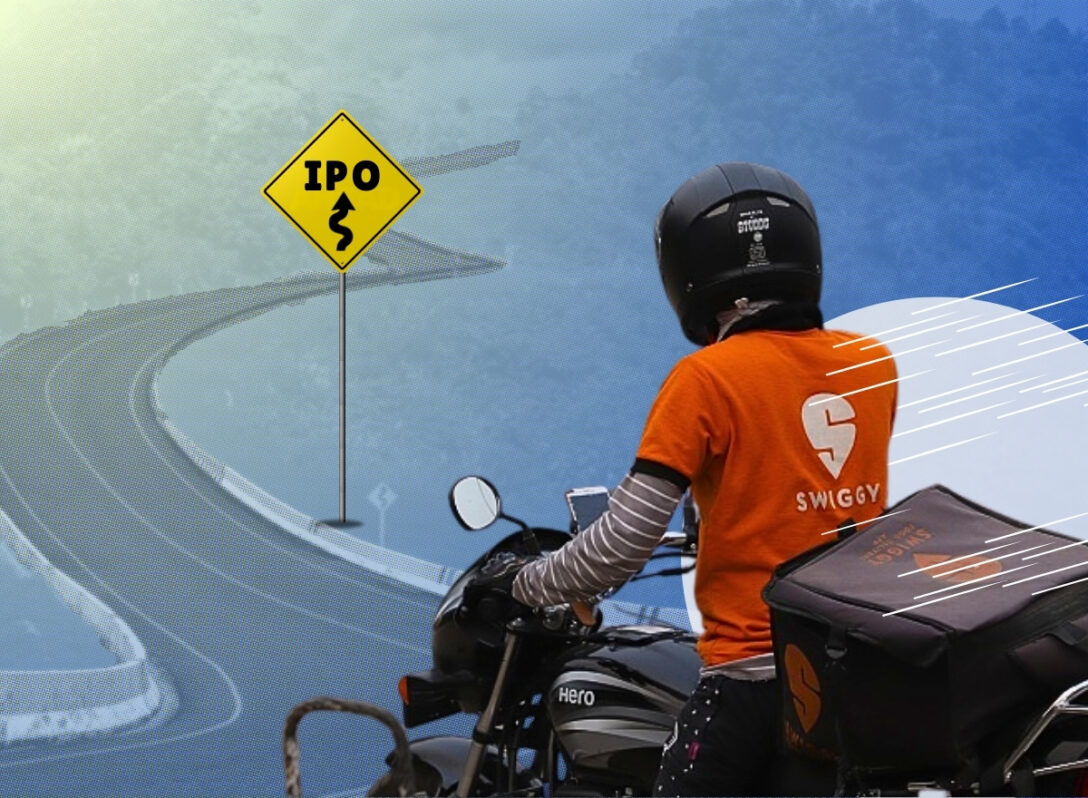
The company laments that rival discounting has cannibalized smaller carts, so Swiggy even introduced bigger “Maxxsaver” bulk-order plans. But with competitors slashing prices (in November 2025 Zepto lowered fees, forcing Swiggy to follow suit, albeit unsuccessfully), Swiggy finds itself sacrificing volume to defend long-term unit economics. As one shareholder letter put it: “We have chosen not to participate in fuelling [the irrational discounting] behavior, even if it means near-term impact on volume growth.
That stance has a cost. Instamart’s operating loss widened to ₹908 Cr in Q3FY26 even as gross order value doubled YoY. The CFO notes competition hit the bottom of the average-order-value pyramid hardest. In plain language, attracting bargain-hungry customers is so price-driven that giving up on deep discounts inevitably throttles order count. Still, Swiggy argues low-AOV segments aren’t sustainable — it’s better to forgo a markdown-driven volume than keep burning money on the wrong customers.
Financially, quick commerce is the main drag on Swiggy’s books. In Q3 FY26, Instamart revenue was ₹1,016 Cr (+76% YoY) but losses surged 50% to ₹791 Cr. Contrast that with the hero narrative of food delivery profitability, and the puzzle is clear: Swiggy is loading cash into a money pit in hopes of winning a fight it may not dominate. Analysts (e.g. Morgan Stanley) note Swiggy is “tough balancing growth and profitability” in quick commerce with uncertain timing. Investors see a path — the CEO reiterates the goal of contribution-margin breakeven in quick commerce one day — but for now the numbers bite.
Competitor Conquests and the Harsh Market
Swiggy’s pain is magnified by rivals’ actions. Its fiercest competitor, Zomato, has also felt the heat but seems ahead on several fronts. Zomato shuttered its Quick 15-minute meal service in May 2025 after poor response. Yet Zomato’s main food-delivery business is already profitable, giving it a PR edge over Swiggy. According to brokerage reports, Zomato has quietly pulled ahead in market share too: one firm estimates Zomato holds ~54% of food delivery GMV versus Swiggy’s 46% (as of late 2023).
In user count, AllianceBernstein notes Zomato leads ~60% to 40%. Tier-2+ cities and new user acquisition have tilted slightly Zomato’s way, even though Swiggy remains formidable in many metros. This public scoreboard comparison means Swiggy cannot afford missteps on big metrics — every point of market share and every rupee of profit will matter at IPO time.
The quick-commerce fray also featured unexpected players. Zepto, backed by Atlantic and Mirae, tried the café model and sold higher-margin ready-to-eat items (and even coffee machines) through dark stores. It then scaled back in July 2025 citing staffing and sourcing woes. A new startup, Swish, is raising VC cash to challenge both Swiggy and Zepto in this segment. These comings and goings underline a simple fact: the entire ultra-fast delivery market is under existential pressure. Cut-rate pricing has been unsustainable, and even well-funded players are recalibrating. Swiggy’s decision to junk Snacc and not double-down on more quick-commerce freebies is perhaps pragmatic, but it highlights how desperate the company’s situation has become.
The IPO Pressure Cooker
Underlying many of these moves is Swiggy’s IPO narrative. Earlier in 2024, media reported Swiggy plans for a public listing “this year”. In December 2025 it confidentially filed preliminary IPO papers with SEBI. Investors like SoftBank and Prosus expect big returns; thus, they are said to be pushing for profitability now. One founder-trader quipped that Swiggy now needs to “beat Zomato on every metric to get a good valuation”. That level of scrutiny puts enormous pressure on a startup that until recently thought growth was the goal.
From the perspective of a political-economic analyst: Swiggy’s situation is reminiscent of other tech bubbles. Venture capital once funded endless expansion, but with a global funding winter and inflation-wary public markets, the tune has changed. Swiggy is now the canary in the Indian startup coal mine. The company’s maneuvering (staff cuts, disciplined operations, whining about rivals) reflects a forced pivot from “growth at all costs” to a hybrid mode more like a traditional business. It is walking a tightrope: it needs to keep growing GMV to justify the IPO size, yet stop the bleeding.
Leadership and Long-Term Strategy
How is Swiggy’s leadership responding beyond cost cuts? CEO Majety and his team have publicly doubled down on efficiency and product innovation. In Q3 earnings remarks, Majety touted “disciplined fiscal prudence” and playing the long game: use fresh capital (from a recent share sale) to keep investing, but move steadily toward break-even. He painted a picture of “robust cash reserves” and steering strategy carefully — a far cry from the heady hyper-growth rhetoric of 2015–2020. Internally, Majety did apologize for mistakes (“I should have done better on hiring”) and promised to make affected employees comfortable during transitions.
Yet even as he speaks of prudence, the CEO is determined not to surrender the quick-commerce war on principle. Majety’s message: yes, food delivery is basically there (with bigger profits each quarter), so now Swiggy can afford to pump resources into Instamart to capture a future market. This is a calculated gamble. Swiggy believes its “wallet penetration” in groceries will pay off once the discount arms race subsides. The question remains whether they can outlast — and out-plan — rivals. How long investors trust that strategy is an open question. As one analyst put it, there is “limited visibility” on when the competition will cool.
Behind the scenes, funding seems ample for now. Swiggy has raised tens of millions more for Instamart and other units, and had a ₹1,100 Cr share sale in late 2025. Its cash pile as of Dec 2025 is estimated over ₹15,000 Cr. But burn rates of ₹750–900 Cr per quarter mean that even gigatons of cash have a half-life. Like a political candidate in a referendum, Swiggy must quickly show it can control its deficit — or voters (in this case, investors and the market) may vote it down.
The Human and Market Toll
Amid all these numbers, the human side cannot be ignored. Laid-off Swiggy employees and contractors have spoken of stress. One vendor complained publicly on LinkedIn that even after Swiggy announced winding down its operations, reimbursements and settlements have dragged on for months. Disgruntled gig workers have quietly noted that delivery incentives have been pared, even as the company is supposed to be “profitable” now. Prospective IPO investors will surely vet how Swiggy treats its ecosystem — an image tarnished by cries of “accountability issue” from partners.
On the market side, consumer sentiment has a flip side. A thousand small customers who experienced Snacc’s brief existence may have shrugged, but see Instamart’s prices creeping up or discounts disappearing. Loyalty can fray. Swiggy’s brand promise (deliver anything, anytime) is now being tested by patience: will customers stick with Swiggy when Zomato eats their lunch (and dinner)? We saw last mile segments implode in other markets (remember Tesco’s “whirlify our sausages”?), and India may see similar shakeouts if these losses continue.
A Bitter Pill – and a Dash of Hope
There is irony in Swiggy’s predicament. A company that once bragged about changing dinner tables now finds its own table turned. What was a hot startup darling is now under intense scrutiny — by analysts, by cynics, by its employees. Yet it is not hopeless. Several facts hint at a possible rebound, if well-managed:
- Profitable core: Swiggy’s main food delivery arm is already in the black at the operational level. In Q3 FY26 alone, that unit earned ₹282 Cr profit. That’s a sign that with scale and discipline, the original business model works. Perhaps by pruning slow bets, Swiggy can funnel resources into these profitable quarters.
- Market leadership: Despite Zomato’s lead, Swiggy still dominates parts of key cities and demographics. Its brand recognition and technology platform remain valuable. It also co-owns a stake in Swiggy Stores, a micro-supplies venture. If cash burn is reined in, a price war pause would benefit Swiggy’s healthier wallets.
- IPO as focus: The imminent IPO might force greater transparency and efficiency. New public shareholders usually demand cost controls. The confidential filing mode means Swiggy has until late 2026 to impress regulators and then public markets. If economic conditions ease, Swiggy could emerge leaner.
- Regulatory clarity: India’s e-commerce rules are evolving. If regulators curb excessive discounts (as has been rumored), that might level the playing field and reduce losses for all players. Swiggy’s bet on sustainability might pay off if the government and public opinion penalize “predatory pricing”.
So yes, Swiggy is in pain today — but as any seasoned policy journalist knows, markets can turn. Consumer trends can swing back, and a clear strategy (even if throttled) can still succeed. The key is whether Swiggy’s management and investors will stick to substance over flash, even if it’s an uncomfortable campaign.
Key Takeaways
- Swiggy is facing heavy losses and restructuring pressure. Its Q3 FY26 net loss hit ₹1,065 Cr (a 33% jump YoY) despite 54% revenue growth. Expenses (₹7,298 Cr) have outpaced income (₹6,148 Cr), driven by losses in quick commerce and other ventures.
- Hundreds of jobs were cut in 2023–24. Swiggy has laid off roughly 6–10% of staff (≈400 people) in successive rounds. These included engineers, support staff and corporate roles, as the company “right-sized” after overexpansion.
- Speed-focused apps have fizzled. Snacc (10–15 min snacks) and a dedicated meat marketplace were shut down within months. The company cited “challenging unit economics” and lack of product-market fit for these closures.
- Quick-commerce losses loom large. Instamart (15–45 min grocery) is growing but bleeding cash. Operating losses reached ₹908 Cr in Q3 FY26, while revenue only recently crossed the ₹1,000 Cr mark.
- Competition is cutthroat. Rivals Zomato and Zepto have also scaled back discounting, and analysts call the market “irrational”. Zomato now leads with ~54% share of food-orders (by GMV) against Swiggy’s 46% and is already profitable, making Swiggy’s task harder.
- IPO pressures loom. SoftBank and Prosus, Swiggy’s main backers, want profitability ahead of an IPO. Swiggy quietly filed IPO papers in late 2025 and has been cutting costs to spruce up its balance sheet.
- Leadership promises prudence. CEO Majety claims food delivery margins are improving and pledges “disciplined fiscal prudence” even as Swiggy “deepens wallet penetration” in groceries. Analysts note he’s walking a tightrope between growth and margin targets.
- There is a silver lining. Swiggy’s core remains strong enough that the food-delivery arm is profitable and GTV is up. If the company can stabilize quick-commerce losses and emerge leaner, it may regain investor confidence and market momentum. But for now, the road is bumpy.
No sugarcoating: Swiggy is under strain from self-inflicted expansion pains and ferocious competition. Yet markets do change and Swiggy’s leadership, like any seasoned politician, is recalibrating its message — to employees, customers and investors alike. Only time will tell if this bitter pill leads to a more sustainable future, or if Swiggy remains a cautionary tale of startup excess in India’s booming economy.