Opening Scene: Let’s Start With The Theatre of Absurd Accountability
Let’s set the stage. A sleepy tehsil in Shahjahanpur wakes up to an unusual performance. A newly posted IAS officer, presumably carrying the weight of idealism that hasn’t yet been crushed under the bureaucracy’s ancient rot, walks in for a routine inspection. What does he find? People urinating outside functioning toilets.
Yes, you heard that right. Functioning Toilets. Not locked. Not broken. Not invisible. Fully alive and well. And yet, the great Indian bladder democracy asserts itself on public walls.
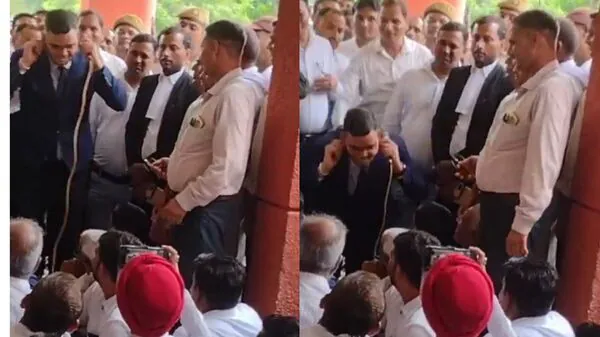
The IAS officer, poor soul, still believing in corrective action, makes them do sit-ups. In public. A small shock administered to a numbed civic nerve. But now, the plot thickens. The urinating elite weren’t unlettered villagers. They were lawyers. Professionals. Literate by all government standards, and yet they decided to treat the outer wall of a toilet as more inviting than the porcelain within.
And when these urinating custodians of justice took offense and accused the officer of humiliation, what did our civil servant do? He held his ears and performed sit-ups in front of them. A public spectacle of mutual guilt. Everyone got their moment. Social media got its dopamine. And India got another viral story that it would forget in 48 hours.
But for once, maybe we shouldn’t forget. Because this circus isn’t isolated. It’s an entire countrywide epidemic dressed in a kurta of respectability and a tie of education, all while squatting over the sewers of civic shame.
We Believe In The Great Indian Myth, Where Education Is A Civic Vaccine!
Now, who were these wall-baptizing citizens again? Lawyers. Not illiterate migrants. Not half-drunk drifters. Lawyers. People who’ve cleared entrance exams, passed law school, and understand the word “urinal” isn’t just a concept, but an actual object with plumbing.
This is where the parody begins to bite. We spend years forcing children to memorise the Preamble of the Constitution, but we never teach them that the Constitution doesn’t permit pissing on public walls.
We equate education with enlightenment, but it seems all we’re producing is a generation of degreed degenerates who think civic responsibility is someone else’s job.
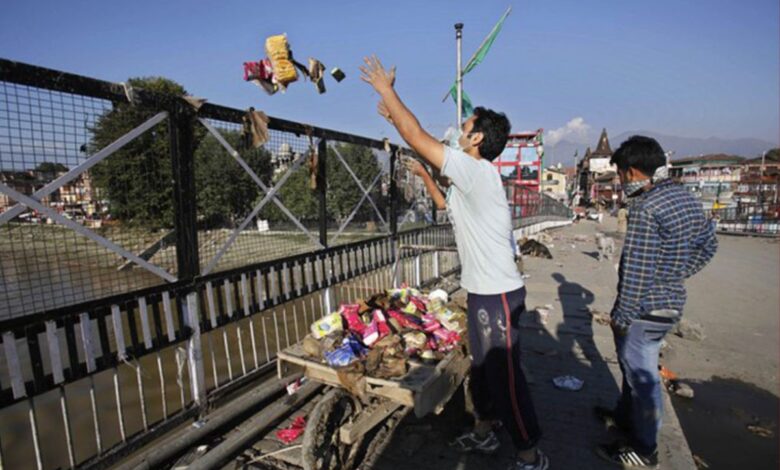
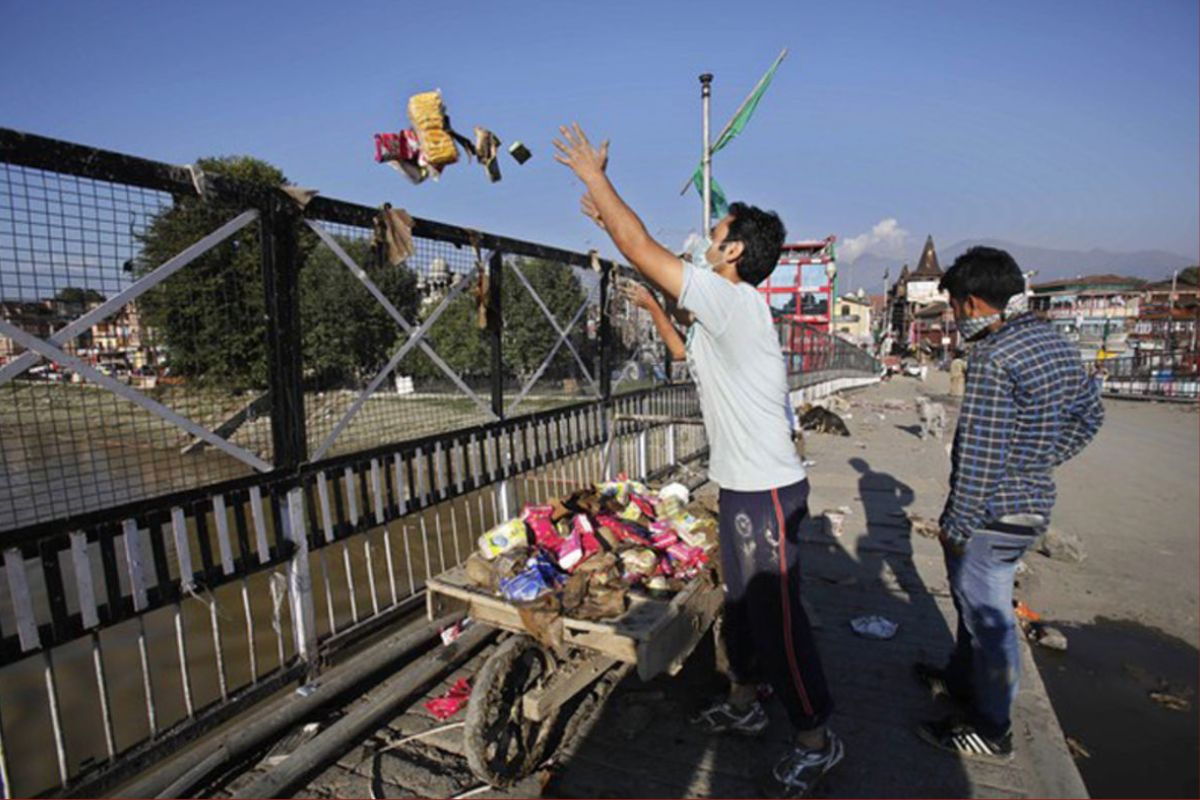
Walk through India’s educated corridors and watch this dysfunction unfold in grotesque harmony. A man driving a ₹1 crore SUV tosses a wrapper out of the window. A group of college-educated engineers finishes a picnic and leaves behind plastic bottles as a shrine to their outing. Chartered accountants participate in religious processions that end in a battlefield of crushed flowers, burnt camphor, and sewage overflow.
Somehow, in this country, we’ve separated literacy from civility, qualifications from character, and degrees from decency. And we wonder why nothing changes.
Infrastructure: Is That Built To Be Ignored?
Let’s go back to that tehsil office. Toilets were there. They weren’t locked. They weren’t clogged. They weren’t haunted. Yet, people urinated outside.
Why? Because, brace yourselves, “maintenance is poor.” A clever excuse on rotation. If the toilet is dirty, don’t use it. Pee outside. If the park has litter, throw more plastic. If the footpath is broken, park your car on it.
This is the genius of Indian civic logic. The more broken a public asset becomes, the more justifiable it is to break it further. It’s like watching a house on fire and deciding to toast marshmallows.
Here lies the wicked loop. People don’t use public infrastructure because it’s not maintained. It’s not maintained because people don’t use it properly. And the administrators? They’re too busy transferring each other to actually fix anything. The result? A mutually assured destruction pact between public infrastructure and public behavior.
You’ll see it everywhere. Railway stations cleaned in the morning, turned into open trash carnivals by night. Parks with benches reserved for lovers and wrappers. Housing societies where the front porch sparkles, but the street corner reeks.
We’ve mastered a strange form of civic schizophrenia, where we demand Scandinavian facilities but behave like we’re still living in a feudal cesspool.
We Rarely See This Kind Of Social Mirror, Where We Could Observe Someone, Or A Person Of IAS rank, Performing Guilt In Public!
Now let’s talk about that IAS officer’s sit-ups. It was dramatic, sure. But something happened in that moment. The lawyers who were protesting fell silent. The social media jury applauded. Something shifted.
Why? Because for once, an authority figure didn’t outsource accountability. He owned it. He mirrored the same consequence he imposed. And in this distorted theatre of civic failure, that moment of shared guilt felt revolutionary.
But let’s not kid ourselves. This shouldn’t be extraordinary. This should be normal. When religious leaders talk about cleanliness but leave festival grounds looking like war zones, people notice. When politicians inaugurate public toilets and then relieve themselves on highways during campaign trails, people notice. When police officers break traffic rules with their beacons flashing, people notice.
What we lack isn’t just enforcement, it’s example. Role modeling is not an NGO concept. It’s governance 101. But in India, leadership means exemption. Netas don’t queue. Babus don’t wait. Gurus don’t clean. They preach. They punish. But rarely do they reflect.
Civic behavior isn’t taught through sermons. It’s taught through sight. You don’t tell people not to spit; you stop spitting. You don’t shout about plastic,you stop using it.
Until the day our leaders, our babus, our celebrities treat public spaces as their own, we will continue to live in two Indias: one of slogans, and one of sewage.
What Is Sad To See Is The Epidemic Of Loss Of Individual Logic!
Here’s where the rot deepens. Civic failure in India isn’t about one person doing one bad thing. It’s about millions of people doing what makes sense to them individually, but kills the collective.
Take traffic. One guy jumps a red light. He gets home faster. Multiply that by a thousand, and now everyone is stuck. Nobody moves. Chaos wins. The reward of selfishness becomes the punishment of everyone.
The same logic applies to every aspect of public life. Why wait for a dustbin when I can just throw this chip packet under a tree? Why park properly when I can squeeze my car on the footpath? Why respect a queue when I can push ahead and get my work done?
And in this race to individual efficiency, we destroy public functionality. Our cities don’t collapse from terrorist attacks or tsunamis, they collapse because everyone is trying to outsmart everyone else.
We are the only country where people will steal manhole covers and then complain about waterlogging. Where people break traffic dividers and then curse potholes. Where people throw garbage in the river and then pray to it.
We are not victims. We are perpetrators in denial.
Let’s Not Forget Our National Culture Where The Alibi For Every Public Crime
But wait, there’s always the trusty fallback: culture. “This is how things are in India.” “People are like this only.” “You can’t change society overnight.”
This fatalistic shrug is our national defense mechanism. It allows us to do nothing while pretending that we’ve thought deeply about everything.
But culture isn’t divine. It’s man-made. It evolves. It adapts. And sometimes, it decays. What we call “culture” is often just bad habits passed off as heritage.
We urinate in public not because it’s our culture, but because we’ve normalized it. We break queues not because we’re genetically wired to, but because no one has enforced a consequence. We dump garbage anywhere because we’ve never had to clean it up ourselves.
In truth, our civic behavior is not a cultural mystery. It is the direct product of structural negligence, institutional hypocrisy, and a staggering absence of shame.
Change won’t come from textbooks. It’ll come from consequences. Real, visible, equal consequences. Not the kind where a slum-dweller is fined ₹500 for spitting, but a film star throws a cigarette butt and walks free.
The Shahjahanpur Moment: A Forgotten Spark?
The IAS officer in Shahjahanpur did something symbolic. He dared to say: “I’m part of this mess too.”
For a brief moment, accountability didn’t feel like punishment. It felt like a partnership. But will this moment scale? Will it sustain? Or will it vanish like every other viral clip in our attention-deficit nation?
Because here’s the truth: unless such moments become patterns, unless gestures become policy, and unless modeling becomes mandatory, nothing will change. The urine will keep flowing. The wrappers will keep flying. And India will keep dreaming of being a “Vishwaguru” while standing knee-deep in its own garbage.
At The End: This Is A Mirror Too Dirty to Ignore!
This isn’t an article. It’s a scream.
A scream of frustration at a country that builds toilets but forgets to teach people to use them. A scream at a nation that demands smart cities but can’t manage basic cleanliness. A scream at a society that sends satellites to Mars but can’t stop peeing on Earth.
If the Shahjahanpur video teaches us anything, it’s this that real change isn’t about building more infrastructure. It’s about rebuilding ourselves. It’s about confronting the mirror and asking why we continue to tolerate filthnot just on the streets, but in our civic souls.
We need to start asking: “What is the government doing?”
But first, start asking: “What the hell are we doing?”
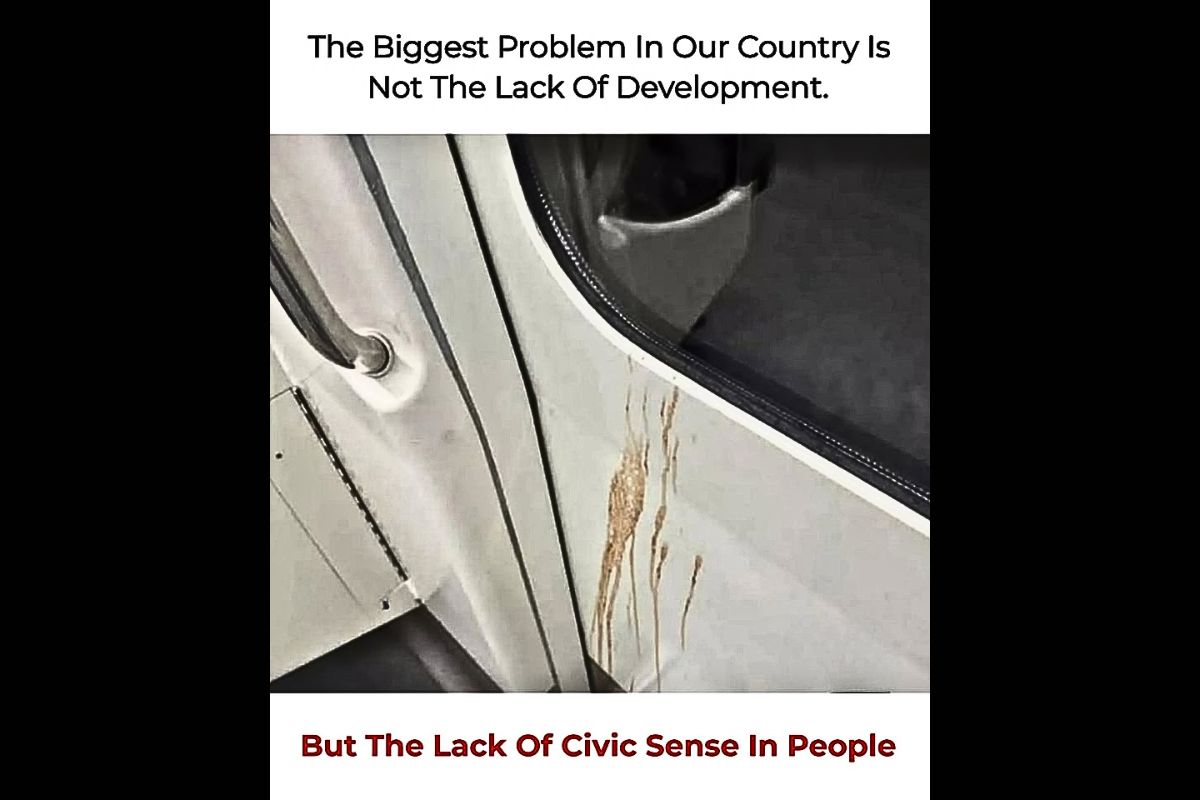
Because until the day a wrapper on the road feels like a personal insult, until the day urinating in public earns not just a fine but social disgust, until the day we stop glorifying academic degrees and start demanding public decency, we will remain what we are today:
A brilliantly educated nation with a disastrously uncivilised public life.
And no amount of GDP growth will ever deodorize that stench.