The Patchwork, Pothole Paradox Of India: Where We Pay Road Taxes To Do Cardio With Our Bikes/Cars!

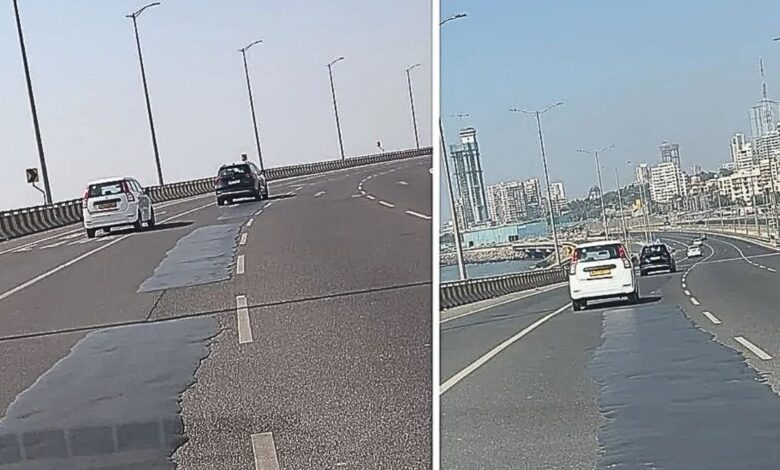
The humble pothole—nature’s way of reminding us that, despite our technological advances and soaring skyscrapers, we still haven’t mastered the ancient art of making a road that doesn’t disintegrate like a soggy biscuit in tea. If potholes, cracks, and sudden depressions on your colony road have become such familiar companions that you’ve given them nicknames and send them holiday cards, perhaps it’s time to reconsider your relationship with subpar infrastructure. It’s time to shake off that cozy blanket of apathy and become appropriately offended, because these patchwork abominations aren’t just limited to your neighborhood streets—they’ve graduated to highways with honors.
Let’s Start With The Grand Illusion of Urban Development
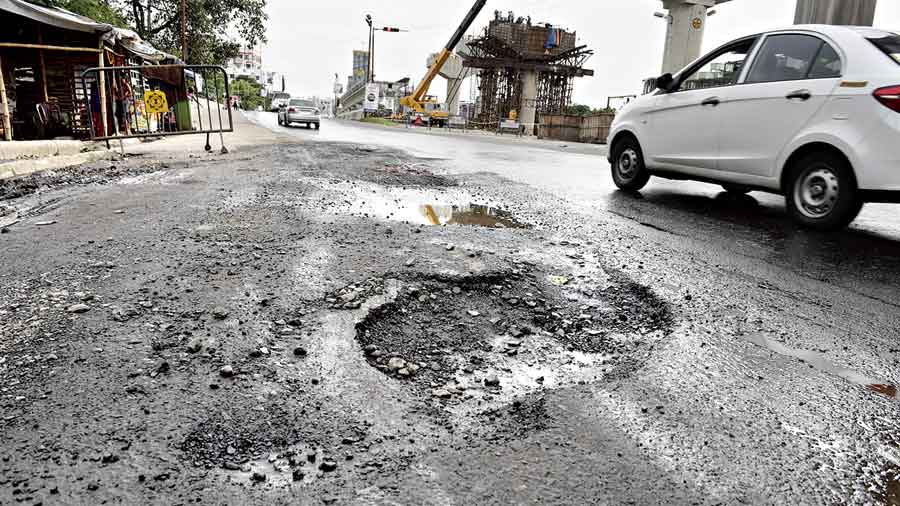
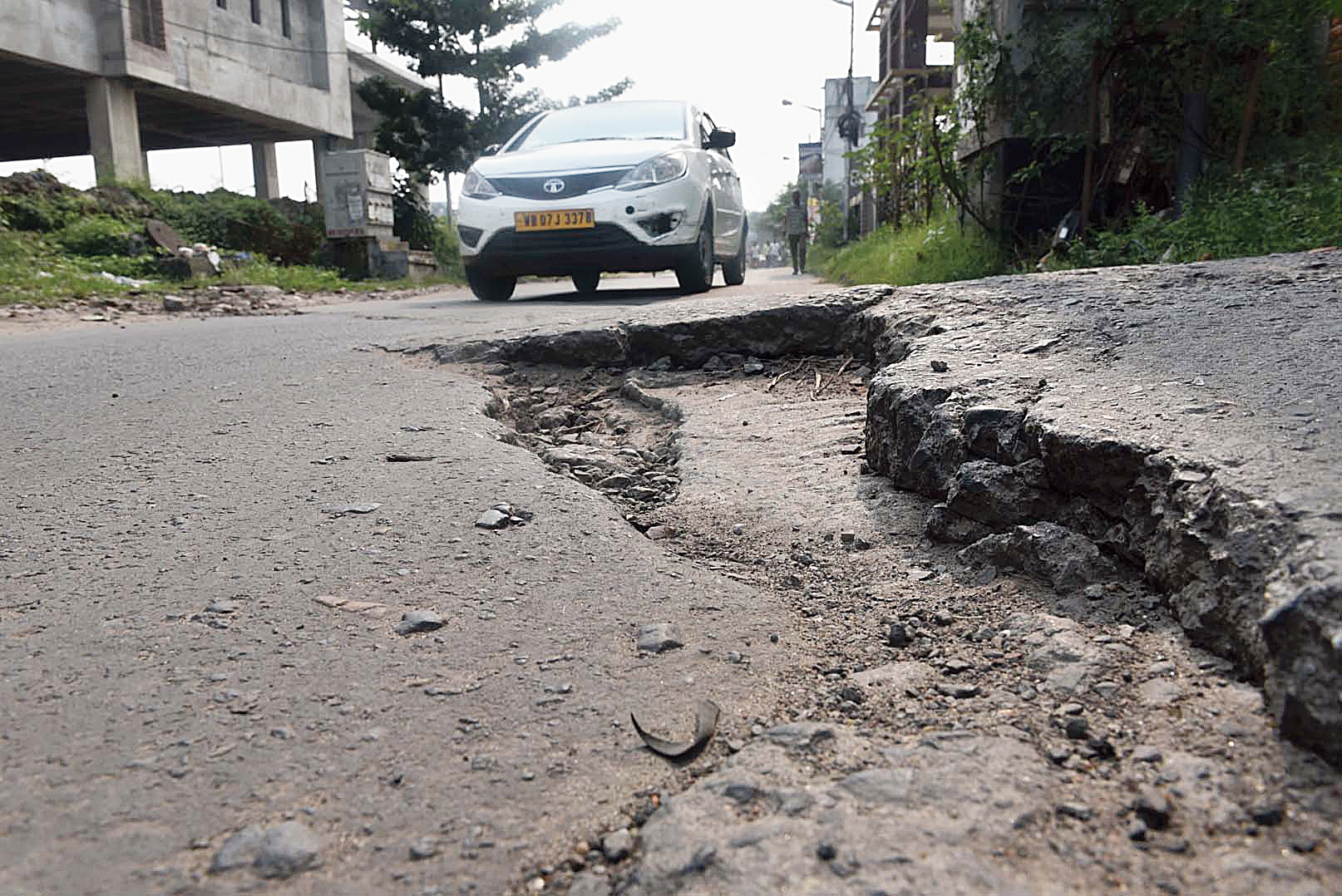
Picture this: You’re driving home after a particularly exhausting day, your mind wandering to the sweet embrace of your couch, when suddenly—your car performs an impromptu interpretive dance as it encounters a pothole the size of a kid’s pool. Your coffee spills, your phone goes flying, and just like that, your suspension system begins to contemplate early retirement.
“But that’s just how Indian roads are,” you might think, as if roads deteriorating faster than ice cream on a summer sidewalk is some immutable law of physics rather than a failure of infrastructure management.
Let’s be abundantly clear: it is not normal for roads to resemble the surface of the moon. It is not a quirky cultural feature. It is not something we should accept with a resigned shrug and a “what can you do?” attitude. Other countries—magical, mystical places like Sweden, Germany, and Japan—somehow manage to maintain roads that don’t double as obstacle courses.
Justify The Above Statement With The Mumbai Coastal Road Project: A Case Study in Expensive Disappointment
Consider the Mumbai Coastal Road Project—a ₹14,000 crore endeavor that promised to revolutionize the city’s transport infrastructure. With that kind of money, one might reasonably expect roads smooth enough to iron clothes on.

Instead, what do we get? A viral video showcasing patchwork on a key stretch that looks like it was completed by a team of enthusiastic but untrained kindergarteners during arts and crafts hour. For ₹14,000 crore, we could have hired the world’s top road engineers, paved the streets with premium materials, and still had enough left over to fill every pothole in the country with solid gold—and yet here we are, looking at a road that’s already falling apart before the congratulatory garlands have wilted.
The BMC (Brihanmumbai Municipal Corporation), in their infinite wisdom, is now “considering” adding an additional exit at Nepean Sea Road—a suggestion that residents have been making for months with the kind of patience usually reserved for teaching calculus to cats. It’s heartwarming to see such responsiveness from our civic bodies, isn’t it? Nothing says “we value public input” quite like acknowledging a suggestion after it’s been repeated so many times that it’s become a neighborhood lullaby.
Now Comes The Political Pothole Ballet
Of course, no infrastructure failure would be complete without the traditional dance of political finger-pointing. Right on cue, Shiv Sena (UBT) has accused the previous Eknath Shinde-led government of favoritism toward specific contractors, suggesting that roads were assigned based not on merit but on the depth of political connections.
This performance is remarkably similar to the blame-game theatrics we witnessed after the Delhi Terminal collapse. It’s a familiar routine: Project fails → Opposition blames ruling party → Ruling party blames previous administration → Everyone blames contractors → Contractors blame specifications/materials/weather/alignment of stars → Nobody takes responsibility → Rinse and repeat for the next disaster.
Meanwhile, the common citizens—you know, the ones these projects are supposedly meant to serve—are left navigating these concrete catastrophes daily, their vehicles aging in dog years with each commute.
What Is The Real Cost of Crumbling Roads?
Let’s talk about what these infrastructure failures actually cost us, beyond the obvious annoyance and the occasional expletive-laden tirade when your car hits a particularly vicious crater.
First, there’s the financial toll.
The average motorist in pothole-plagued areas spends thousands extra annually on vehicle repairs—bent rims, damaged suspension systems, premature tire wear, and alignment issues that make your car drift to the left like it’s politically conscious. These aren’t minor inconveniences; they’re significant financial burdens that badly affect those who can least afford them.
Then there’s the safety aspect.
Potholes and Patchworks aren’t just uncomfortable; they’re dangerous! They cause accidents. They injure motorists, especially those on two-wheelers who might as well be playing a high-stakes game of “the floor is lava” during monsoon season. In the worst cases, they contribute to fatalities—deaths that could have been prevented by basic infrastructure maintenance.
And what about the economic impact?
Goods transported across these lunar landscapes take longer to arrive and sustain more damage en route, costs that are inevitably passed on to consumers. Productivity is lost as commute times stretch due to traffic slowed by road hazards. Tourism suffers when visitors’ lasting impression of a city is their dental fillings being rattled loose.
The Global Perspective: How Others Do It Better
It’s worth noting that our pothole predicament isn’t some unsolvable cosmic riddle. Other countries have figured this out, and no, they don’t possess magical road-preserving technology that’s been kept secret from us.
- In the Netherlands, for instance, roads are continuously monitored using sophisticated sensors that detect early signs of deterioration, allowing for preventive maintenance before small issues become gaping maws in the asphalt.
- Germany’s famous autobahns are constructed with multiple thick layers designed to withstand heavy use and extreme weather conditions for decades.
- Japan employs special rapid-repair techniques that allow them to fix road damage in hours rather than weeks.
Even more impressive is how these countries handle accountability. When infrastructure fails prematurely in places like Sweden or Switzerland, there are consequences—investigations are conducted, responsibility is assigned, and measures are taken to prevent recurrence. The concept seems almost revolutionary: people who fail at their jobs face repercussions rather than promotions.
We Indians, Beleive In The Normalization of Mediocrity!
Perhaps the most troubling aspect of our pothole problem is how thoroughly we’ve normalized it. We’ve accepted substandard infrastructure as inevitable, like death, taxes, and disappointing sequels to beloved movies.
This normalization is evident in our everyday behaviors. We warn new drivers about particular stretches of road as if we’re providing useful local knowledge rather than highlighting systemic failure. We develop muscle memory for swerving around the same potholes day after day. We even incorporate these obstacles into our mental maps.
What’s worse, this acceptance extends beyond roads to other infrastructure. Erratic water supply? Normal. Frequent power outages? Expected. Bridges with visible cracks? Just don’t look down! We’ve set the bar so low it’s practically subterranean.
The Tender Trap Is The System
To truly appreciate why our roads resemble poorly maintained crazy golf courses, we need to understand the tender and contract system that governs infrastructure projects.
Infrastructure projects typically follow this lifecycle:
- Government identifies need (often decades after citizens have been screaming about it)
- Budget is allocated (after significant inflation of original estimates)
- Tender is floated (with specifications that somehow manage to be both overly specific and dangerously vague)
- Contractors bid (often unrealistically low to secure the contract)
- Lowest bidder wins (because apparently, we believe in miracles and the money goes in corruption)
- Corners are cut to maintain profit margins (surprising absolutely no one)
- Project is completed, often delayed and over budget (ribbon-cutting ceremony ensues)
- Roads begin deteriorating almost immediately (shock and confusion all around, as seen in case of Pragati Maidan Tunnel)
- Repair tenders are floated (return to step 3)
This cycle creates a perverse incentive structure where quality is sacrificed at the altar of cost-cutting, and long-term durability is less important than short-term profit. The contractor who promises to do the job cheapest—not best—wins, which is roughly equivalent to choosing a heart surgeon based solely on their willingness to offer a discount.
The Quality Compromise In Indian Roads.
The issue of road quality brings us to another uncomfortable truth: standards exist, but enforcement is spotty at best and non-existent at worst. Materials that don’t meet specifications, inadequate thickness, improper gradients for water runoff—these technical failings are common but rarely result in penalties severe enough to deter future violations.
In many cases, there’s also a disconnect between design and reality. Roads are often designed without adequate consideration for actual traffic volumes, weight loads, or local weather conditions. A road designed for 1,000 vehicles per day but used by 5,000 will deteriorate faster than expected, but this is treated as a surprise rather than a predictable outcome of poor planning.
Then there’s the matter of coordination—or rather, the spectacular lack thereof—between various agencies. It’s not uncommon to see a newly paved road dug up weeks later for pipe-laying or cable installation, creating a patchwork that’s about as aesthetically pleasing and functional as a quilt made by someone who’s never seen fabric before.
The Monsoon Excuse
The monsoon—nature’s annual reminder that water and poorly constructed roads mix about as well as oil and, well, water. Every year, without fail, roads melt away like chocolate in a toddler’s pocket, and every year, authorities express shock and dismay, as if the concept of seasonal rain is a brand new meteorological phenomenon that couldn’t possibly have been predicted.
“But the monsoon is particularly harsh on roads,” they say, conveniently ignoring the existence of countries like Malaysia, Singapore, and parts of Japan that experience similarly heavy rainfall without their infrastructure dissolving like an aspirin in a glass of water.
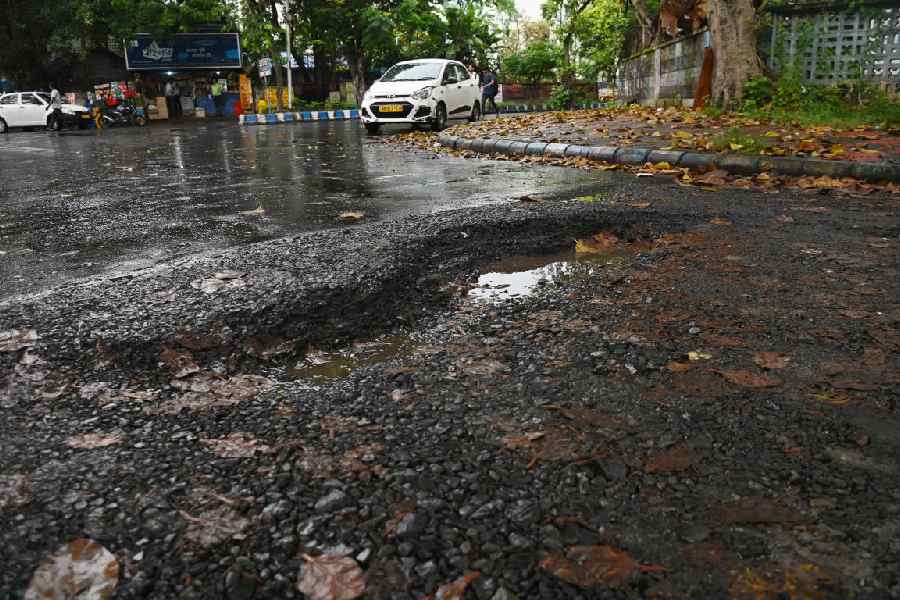
The monsoon isn’t the problem; it’s the excuse. The real issues are inadequate drainage systems (that has caused situations like deaths of UPSC aspirants), poor-quality materials that can’t withstand water exposure, and construction techniques that prioritize speed and cost over durability and resilience.
The Citizen’s Dilemma
As citizens, we find ourselves in a peculiar position. We pay taxes that should fund proper infrastructure, yet we’re forced to pay again—through vehicle repairs, lost time, and sometimes medical bills—for the failure of that infrastructure. It’s like paying for a meal and then being charged extra because the chef burned it.
Our options seem limited. Complain to local authorities? File an RTI? Start a social media campaign? These approaches occasionally yield results, especially when an issue goes viral or affects influential areas, but they’re band-aids on bullet wounds—addressing specific instances without changing the system that produces them.
So we adapt. We learn which roads to avoid. We modify our vehicles with sturdier suspensions. We leave earlier to account for traffic slowed by road hazards. We become expert pothole slalom drivers. These adaptations, while necessary for survival, further normalize the problem.
Is There Any Way Forward: From Resignation to Righteous Indignation
If we want better roads—and by extension, better infrastructure overall—we need to transform our resigned acceptance into constructive outrage. This doesn’t mean angry tweets and then forgetting about the issue when the next entertainment scandal breaks; it means sustained, focused pressure for systemic change.
The state of our roads is both a symptom and a symbol of larger governance issues. It reflects our collective tolerance for mediocrity, our resignation to inefficiency, and our adaptation to failure rather than demanding success, and most importantly, the baltant corruption in infra and road projects.
The Mumbai Coastal Road Project, with its ₹14,000 crore price tag and premature damage, is not an anomaly but a high-profile example of corrupted business as usual. The political blame game that followed is equally predictable, a choreographed performance that distracts from the fundamental issues without resolving them.
As we navigate our pothole-ridden roads, swerving around craters and bracing for impact when avoidance is impossible, perhaps we should channel our frustration into something more productive than muttered curses. Perhaps we should recognize that those potholes are not just holes in the road but holes in our expectations, our standards, and our demands for basic competence from those who serve us.
So the next time you feel your vehicle dip into an unexpected depression on what should be a smooth surface, don’t just sigh in resignation. Be offended—not just momentarily, but persistently. Because until we collectively refuse to accept roads that resemble Swiss cheese as an inevitable part of urban life, we’ll continue to navigate not just physical potholes but the pothole-sized gaps in accountability, quality, and governance that created them.
And remember, these aren’t just colony things or highway things—they’re governance things, accountability things, and ultimately, things we shouldn’t have to put up with in a functioning society. It’s time we filled the potholes in our expectations and paved the way for the infrastructure we deserve.