The Silent Casualties Of Speed: Are We Losing Kiranas To Quick Commerce?
Will Society Regret Letting Kiranas Die at the Hands of 10-Minute Delivery? What Happens When the Quick Commerce Funding Stops? Will Kiranas Become The Silent Casualties of 10-Minute Speed? Who Wins the Long War for India's Groceries? What Will Communities Look Like Post-Quick Commerce?

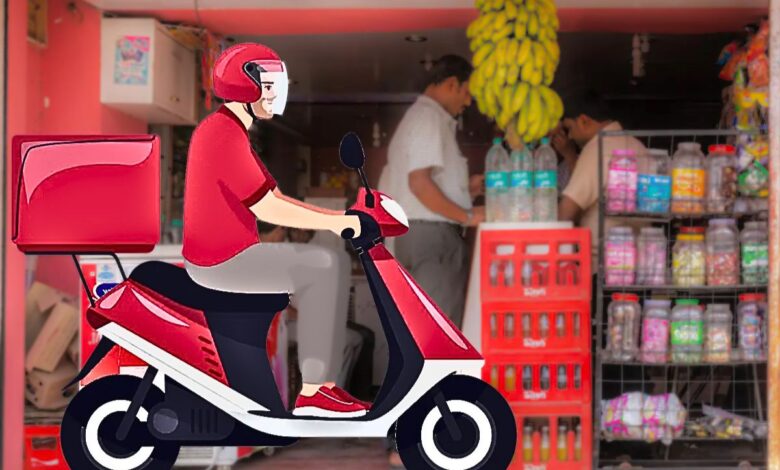
In the narrow lanes of urban India, a quiet economic transformation is being witnessed. Where once the cheerful voice of the neighborhood kirana owner greeted customers by name, algorithmic notifications now ping smartphones instead. The humble kirana store, that family-owned corner shop that has been the backbone of Indian retail for generations, faces an existential challenge unlike any it has weathered before.
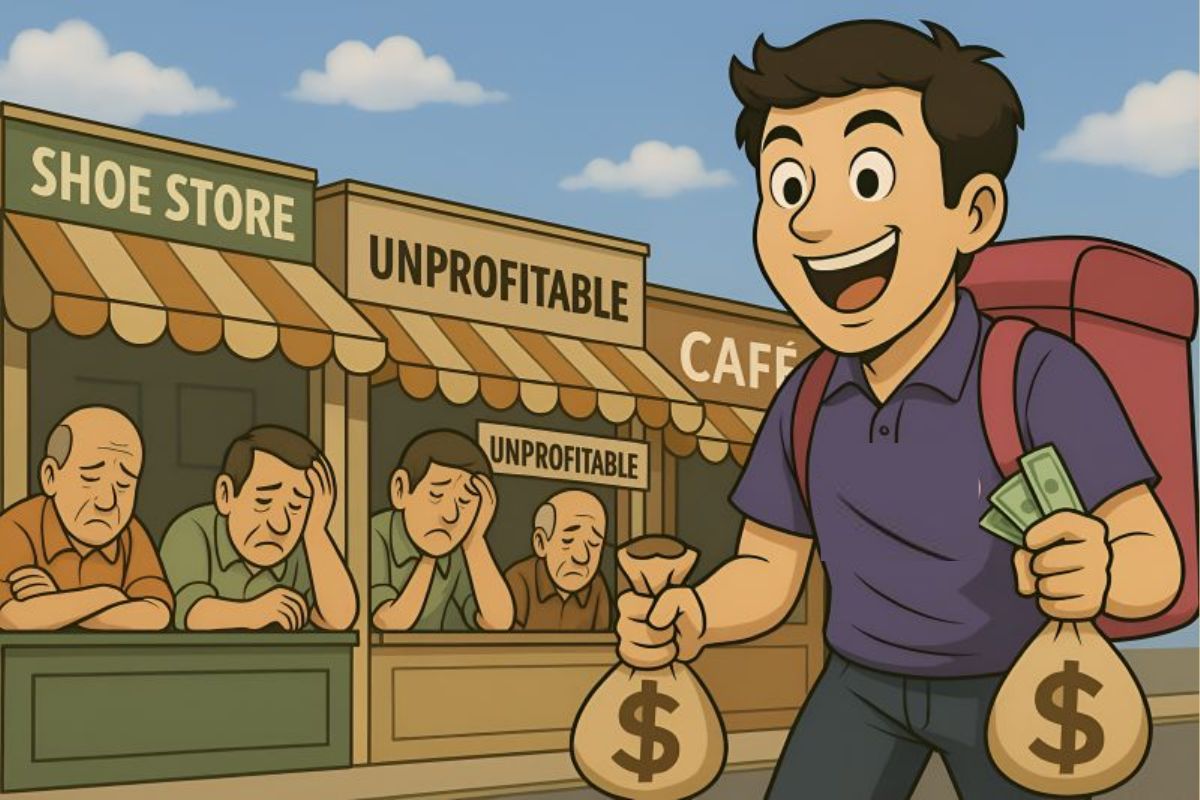
Earlier, 50 shops were comfortably in profit, serving their communities and making modest but sustainable incomes. Now, 51 struggle in losses. The difference? Just few venture capital-funded quick commerce startup that arrived not to participate in the market but to dominate it entirely. These new entrants aren’t playing the same game as traditional retailers. They don’t enter markets with profitability as an immediate goal; they enter with market capture as their mission, backed by millions in funding that allows them to operate at losses that would bankrupt a family business within weeks.
The pattern is almost formulaic in its predictability. The quick commerce app launches with fanfare and impossibly attractive offers; 30% discounts on everyday items, free delivery, cashbacks that seem too good to be true, loyalty points that gamify the shopping experience, and partnerships with social media influencers who convince their followers that this new way of shopping is not just convenient but somehow morally superior to the old way. For every ₹2 crore in revenue, these companies willingly burn through ₹10 crore, a financial strategy that would be considered commercial suicide in any traditional business school.
This phenomenon isn’t unique to our times, though the digital acceleration has certainly intensified it. Throughout history, disruptive commercial models have challenged established systems. When department stores first emerged in the late 19th century, small specialty shops suffered dramatically. The arrival of Walmart and other big-box retailers in small-town America hollowed out main streets that had thrived for generations. In each case, the new model offered something the old couldn’t match, usually price and convenience, while sacrificing something many didn’t immediately realize was valuable, like personalized service or community connection.
The neighborhood residents initially celebrate these new options as blessings; ofcourse who wouldn’t welcome lower prices and the convenience of having groceries arrive at their doorstep within minutes? Meanwhile, legacy shopkeepers watch with growing alarm, recognizing these “innovations” as existential threats rather than genuine market improvements. They’ve seen this movie before, even if the technology driving it changes with each generation.
But the story often doesn’t end with the triumph of the new over the old. Many of these startups eventually face their own reckonings when investor patience wears thin and the pressure to demonstrate a path to profitability intensifies. Funding rounds become harder to close, valuations adjust downward, and operations are abruptly scaled back or shuttered entirely. “The emperor has no clothes” moment arrives for many of these companies, especially when economic conditions tighten and the era of easy money concludes.
The damage, however, cannot be undone so easily. Consumer psychology has been fundamentally altered. Shoppers who have grown accustomed to artificially subsidized prices and conveniences grow resistant to paying what goods and services actually cost. The market’s understanding of “reasonable pricing” becomes distorted. Margins that were once considered fair and necessary for a sustainable business are now viewed as excessive or exploitative. The kirana owner who needs to make a 15% margin to support his family is suddenly cast as greedy compared to an app willing to lose money on every transaction.
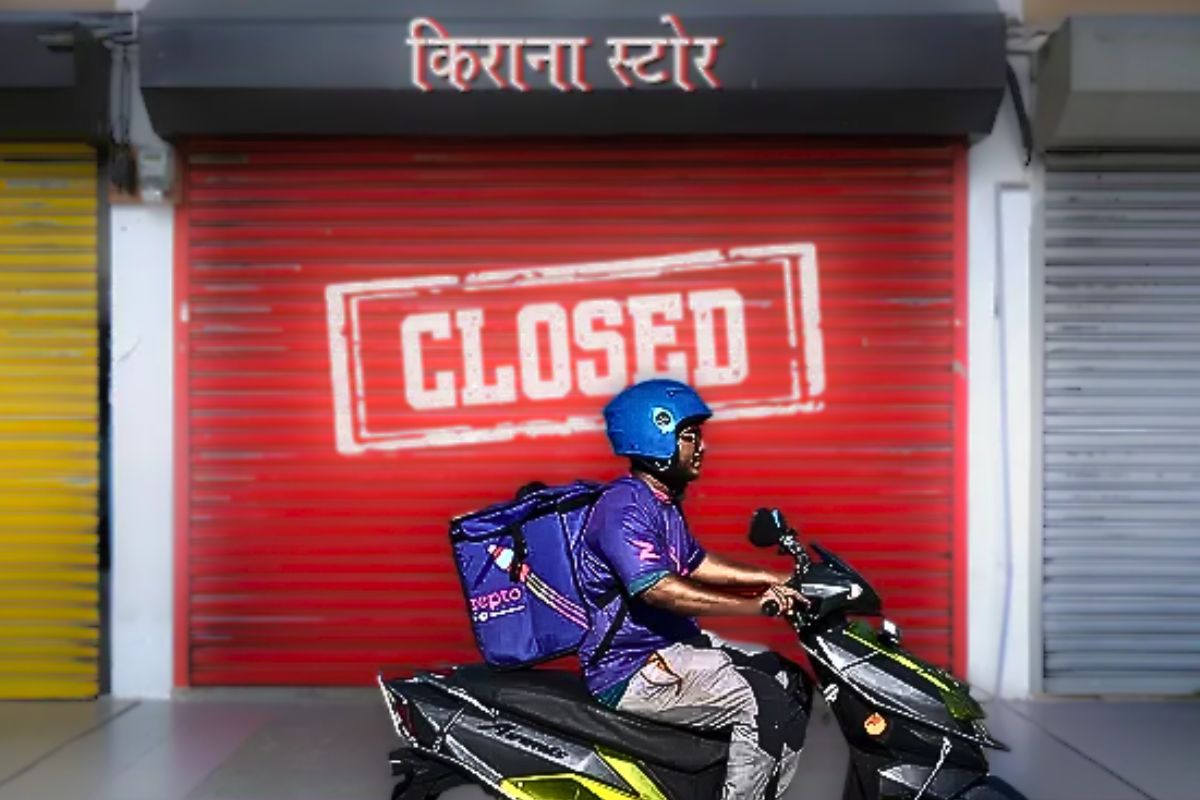
This psychological shift proves devastating. Even kirana shops that have faithfully served communities for three generations, stores where the owner knew your grandfather and keeps track of your children’s growth, find themselves unable to compete in this new paradigm where price trumps all other considerations. They close their shutters one final time, taking with them not just economic activity but social capital that had been accumulated over decades.
This isn’t merely anecdotal. The pattern repeats across sectors and geographies. From retail to food delivery, beauty services to education, transportation to healthcare, venture-funded disruptors have changed fundamental market dynamics across the board. The playbook remains consistent: use capital as a weapon to reset consumer expectations, establish market dominance, then figure out profitability later (if ever).
As Warren Buffett famously observed, “Only when the tide goes out do you discover who’s been swimming naked.” When the tide of venture funding recedes, as it inevitably does, the underlying economic realities reassert themselves. But by then, the landscape has been permanently altered. The local businesses that operated on fundamentally sound economic principles have often already disappeared, leaving gaps in communities that algorithms and delivery riders can’t fill.
The contrast could not be starker. Startups play with capital, other people’s money, and can afford years of losses in pursuit of growth metrics and market share. Traditional businesses play with survival itself. Their livelihoods, their families’ welfare, their employees’ jobs. For one, failure means a disappointing entry on a resume and perhaps a difficult conversation with investors. For the other, failure means the end of a life’s work and possibly financial ruin.
This asymmetric competition raises profound questions about the nature of progress and innovation. Are we witnessing creative destruction, i.e. the necessary pain of economic evolution, or something more troubling? Is there wisdom in allowing venture capital to essentially subsidize consumer behavior for years, creating artificial markets that collapse when the funding does? What happens to communities when local economic ecosystems are dismantled and replaced with centralized, technology-mediated alternatives?
Looking back through economic history provides some perspective. The critics weren’t simply afraid of technology; they were responding to genuine economic displacement that threatened their livelihoods. The anti-monopoly movements of the early 20th century weren’t motivated by irrational fear of size but by legitimate concerns about concentrated economic power. Today’s concerns about quick commerce and venture-funded disruption follow in this tradition of questioning whether all forms of “innovation” truly serve the broader social good.
Recent years have shown that the quick commerce model itself faces significant challenges. Companies like GoPuff in the U.S. and various players in the Indian market have struggled to achieve profitability despite massive funding. Gorillas in Europe drastically reduced its operations after rapid expansion. Even Instacart, one of the more established players, had to revise its valuation downward significantly before going public. The “growth at all costs” model has come under increased scrutiny as interest rates have risen and investors have become more discerning.
What might the future hold? Perhaps we’ll see a rebalancing. A recognition that the convenience of ten-minute delivery comes at costs both economic and social that aren’t immediately visible on an app interface. Maybe consumers will rediscover the value of local relationships and knowledge that traditional retailers provide. Or perhaps we’ll witness the emergence of hybrid models that combine technological efficiency with community rootedness.
The kirana store has survived many challenges over the decades, from supermarkets to shopping malls, from online retail to the pandemic.
Their resilience stems from deep community integration, understanding of local preferences, the flexibility that comes with owner-operation, and the relationships built over generations. These advantages aren’t easily replicated by algorithms, no matter how sophisticated.
As Mark Twain might have said if he were observing today’s retail landscape, “The reports of the kirana’s death have been greatly exaggerated.” While their form may evolve, perhaps incorporating more digital elements themselves, the fundamental need they fulfill remains. Commerce isn’t just about transactions; it’s about trust, relationship, and community. The kirana owner who extends credit during a family emergency, who sets aside the last package of a customer’s favorite biscuits, who remembers dietary preferences without needing an app; this creates value that goes beyond price and convenience.

The question isn’t whether kiranas will survive but what social fabric we wish to preserve as we embrace technological change. As with most complex economic transitions, the answer likely lies not in absolute victory for either model but in thoughtful integration that preserves the best of both worlds. The challenge for society is ensuring that this integration happens by design rather than by default, with communities having a voice in how their local economies evolve.
For now, the battle continues, venture capital on one side, generational knowledge on the other. But perhaps it’s worth remembering that in the long arc of economic history, sustainable models eventually win out over unsustainable ones. The only question is what remains when the dust settles and the funding runs dry.