The Silent Descent: Is Air India’s Deadliest Crash A Symptom Of Systemic Negligence And A Dangerous Cover-Up?

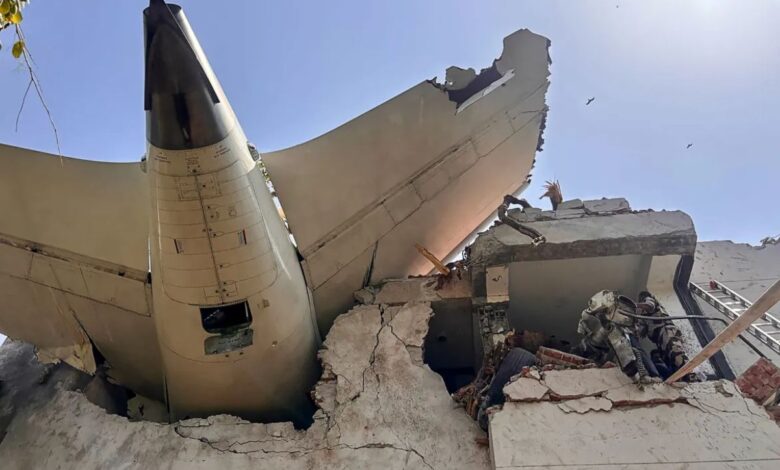
The charred remains of the ill-fated Boeing 787 Dreamliner that crashed outside Ahmedabad in June 2025 might have stopped making noise, but what lingers in the silence is far louder. 241 lives lost, not in war, not in a natural disaster, but in what could be the gravest indictment of institutional failure, corporate greed, regulatory complacency, and a complete collapse of accountability in Indian aviation. The crash was not a freak accident; it appears now, with mounting evidence and disturbing whistleblower accounts, to be a preventable tragedy, veiled under the carefully tailored corporate image of a national carrier that was once considered the jewel of the Indian skies.
Air India’s recent history is no stranger to turbulence. But what has unfolded in the past few weeks, the whispers of silenced employees, the unexplained silence of the DGCA, and the PR-gloved evasiveness of Air India’s top brass, threatens to rewrite the airline’s trajectory from a troubled national brand to a possibly hazardous corporate time bomb. One has to ask:
Is Air India becoming another dangerous airline, spiraling not just in the sky but ethically, operationally, and morally?
According to a report by the Times of India, two long-serving senior flight attendants of Air India, in a letter sent to the Prime Minister’s Office, claimed that the technical issue with the very Boeing 787 Dreamliner that crashed had been flagged a year before. Specifically, they identified a malfunction related to the aircraft’s door, which is a critical safety component.
Their warning, rather than followed with corrective action, was brutally welcomed with corporate punishment, as the whistleblower duo were terminated from their roles, allegedly for refusing to retract their statements. This forces us to think that this is not just a management dispute; it’s a damning suggestion that Air India may have knowingly dismissed warnings that may have prevented the deaths of 241 lives!
What kind of system punishes its truth-tellers and rewards its deniers? What kind of regulatory authority, in this case the DGCA, hears such reports and initiates merely an “informal inquiry”? What happened to the promise of rigorous oversight after the Mangalore crash of 2010, or the Kanishka bombing of 1985? Have we learned nothing, or have we learned to simply bury uncomfortable truths?

The whistleblowers’ letter accuses Air India and the DGCA of suppressing the last year May incident involving the same aircraft and excluding critical eyewitnesses from the investigation. Not only does this raise ethical questions, but it could emerge as a legal calamity; as these aren’t fringe voices; these are career crew members with over 2 decades of service each. Their complaint, filed with the Central Vigilance Commission, seems to have disappeared into the bureaucratic abyss.
If their allegations are true, and so far, no official has adequately or convincingly refuted them, then what occurred was not just an accident. It was murder by omission, death by negligence, and a cover-up stained with the blood of 241 innocent lives.
What We Could Witness Is A Pattern of Disasters: Whistleblowers from the Past
This is not the first time Air India has been accused of ignoring internal warnings. Go back to 2010, when an Air India Express Boeing 737-800 overshot the runway in Mangalore, killing 158 people. The inquiry concluded that the pilot had made critical errors, but insiders later revealed that pilot fatigue and poor rostering had been repeatedly brought to management’s attention. After the crash, a former AI pilot and whistleblower, Captain Mohan Ranganathan, slammed the DGCA for allowing airports like Mangalore to operate despite known safety limitations. His warnings, too, were largely ignored until it was too late.
The Kanishka bombing of 1985, though a terrorist attack was also preceded by intelligence failures and inadequate security procedures. Families of the victims have long claimed that Air India failed to act on preemptive warnings of possible attacks on its transatlantic routes. Four decades later, the institution seems to remain addicted to the very habit that haunts all bureaucratic setups: burying problems until they explode.
The Tata Acquisition: Are They Chasing Profits Over Passengers?
When the Tata Group reacquired Air India from the government in 2022, many considered it a homecoming. The Tatas had once founded the airline, and the public sentiment largely approved of the move. However, that nostalgia seems to be fading. The acquisition was a rosy return or it was a salvage mission? Air India came riddled with debt, bloated with bureaucratic inefficiencies, and equipped with an aging fleet. The Tatas inherited a mess, yes. But in seeking to make the airline leaner and more profitable, have they made it more dangerous?
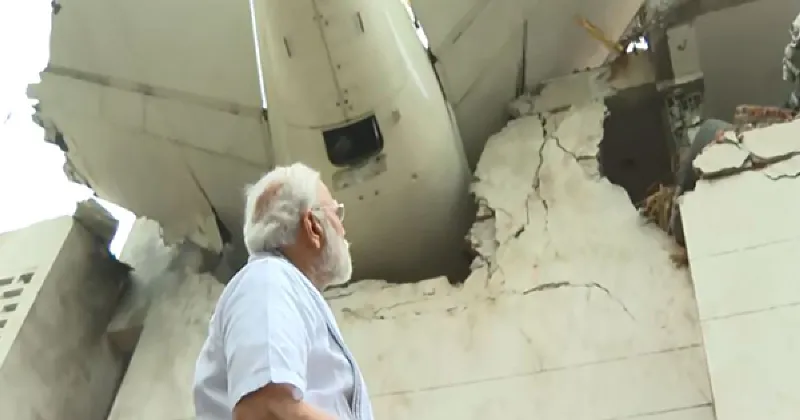
There are growing concerns that cost-cutting measures may be compromising safety. Maintenance delays, overworked staff, and bare-minimum safety checks have begun to define the new Air India. After the recent crash, Air India CEO Campbell Wilson publicly stated that the aircraft was “well-maintained,” with its last major check in June 2023 and the next scheduled for December 2025. But what does “well-maintained” mean in a context where whistleblowers allege that mechanical faults were already known and ignored?
Why did Tata choose to continue operating and even expanding their fleet of Boeing 787s despite repeated global concerns about the Dreamliner series? Boeing itself has been under scrutiny in the U.S. for safety concerns, particularly with its 737 MAX series, but the 787 is no stranger to scrutiny either. In recent years, there have been multiple incidents involving battery fires, pressurization issues, and engine complications. If the Tata Group was aware of recurring issues of Boeing 787, through global data and its own crew, why did they continue business as usual?
This isn’t just miscalculation; it is dangerous gambling with human lives.
Why There Exists An Illusion Of Oversight?
India’s civil aviation sector is now the third-largest in the world by domestic passenger volume. It prides itself on modernization, innovation, and expansion. But beneath this glossy exterior is a regulatory body that has repeatedly failed to enforce its own rules. The DGCA, like many Indian institutions, is susceptible to political interference, underfunding, and a culture of complacency. It too has blood on its hands.
When the watchdog becomes the lapdog of powerful airline operators, the public becomes the ultimate casualty. The DGCA’s job is not to protect corporations from bad press; it is to ensure that every Indian who boards a plane can trust that the aircraft, the crew, and the institution responsible for both, are operating at the highest safety standards. Instead, what we see today is a regulatory framework that bends under pressure and breaks under scrutiny.
Are We Becoming A Nation Held Hostage By Silence?
Let us imagine, for a moment, the final moments of those 241 people aboard that doomed flight. Did they know something was wrong? Did the crew, familiar with the aircraft’s quirks and defects, feel helpless as the plane plunged toward its fatal end? These are not just numbers. These were students, parents, children, doctors, software engineers, newlyweds, elderly citizens. Their stories are gone now, sealed under the rubble of what might be corporate malpractice and institutional cowardice.
No statement from the airline. No visible outrage from Parliament. No promise of systemic overhaul from the DGCA. And worst of all, no legal action against those who may have knowingly put a faulty aircraft in the sky.
The absence of national mourning is perhaps the most chilling indicator of how numb we’ve become. But the silence of powerful institutions, the Tata Group, DGCA, and the Ministry of Civil Aviation screams complicity.
Who Will Be Held Accountable?
This is the question that must haunt every Indian now: who will be held accountable?
Will it be the whistleblowers, already sacked and sidelined?
Will it be the anonymous technicians or mid-level executives, conveniently scapegoated for systemic failure?
Will it be the CEO, who continues to issue bland reassurances while his fleet bleeds trust?
Or will it be the system itself, Air India, DGCA, Tata, and even the Central Government, which let this happen in the name of profits, prestige, and political convenience?
Someone must answer. And not with vague statements. But with resignation letters, criminal charges, and institutional reform.
Is There Any Road Ahead: Will It Be Reform Or Requiem?
The 2025 Air India crash must not become another data point in aviation history. It must become a national reckoning. India must overhaul not just its aviation protocols, but its entire culture of accountability.
Until whistleblowers are protected, rather than punished…
Until safety takes precedence over profitability…
Until regulators regulate, rather than appease…
We cannot say with certainty that boarding an Indian flight is safe.
The skies over India may be full of planes. But they’re also increasingly full of ghosts; ghosts of passengers who died because someone decided not to listen. And until those ghosts find justice, Air India will remain not just an airline in crisis, but a dangerous symbol of everything wrong with our regulatory, corporate, and political ecosystem.