
Tulsi Tanti: The Visionary Who Battled Adversity to Pioneer Renewable Energy in India
In the chapters of India’s renewable energy revolution, few figures stand as prominently as Tulsi Tanti, a man who not only foresaw the potential of wind energy in the country’s landscape but also battled staggering financial odds to make his vision a reality. Starting with a modest textile operation, Tanti’s journey to becoming a leader in green energy epitomizes the resilience and ingenuity that defines transformative entrepreneurship.
Tulsi Tanti’s entry into the renewable energy space was born out of necessity. In 1994, his Surat-based textile business, Sulzer Synthetics, was suffocating under the weight of exorbitant electricity costs. Faced with mounting operational challenges, Tulsi Tanti took an unconventional step: he purchased two wind turbines from Danish manufacturer Vestas to generate power for his own operations. This decision, initially driven by financial prudence, would soon prove to be the spark that ignited a much larger ambition.
When other businesses observed the success of Sulzer’s wind energy experiment, they expressed interest in following suit. Sensing a burgeoning opportunity, Tulsi Tanti turned to his brothers in Pune and presented an audacious idea: to create a company that offered a comprehensive package of wind energy solutions. The Tanti family pooled together Rs 1.5 crore, and in 1995, Suzlon Energy was born.
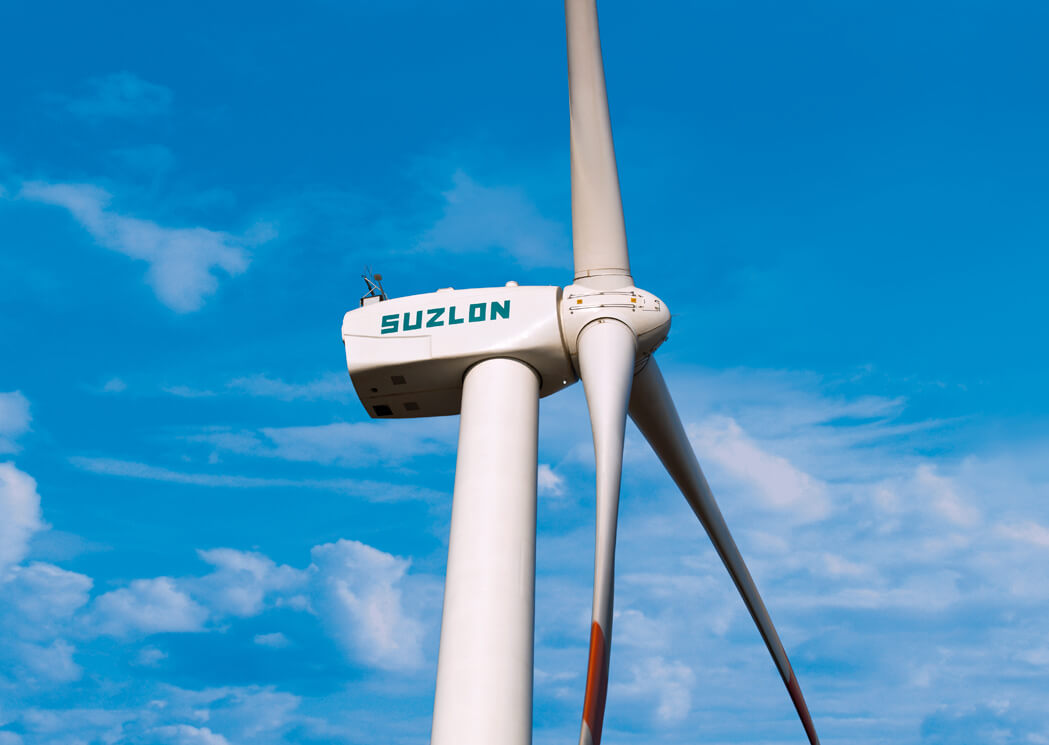
Suzlon’s model was both simple and revolutionary. Customers would provide an initial 25% of the capital needed for wind energy projects, while Suzlon would facilitate the remaining 75% through bank loans. The name itself—Suzlon—embodied its mission: “Suz” (intelligence) paired with “Loan.” It was a business model that empowered companies to adopt renewable energy without bearing the full financial burden upfront.
But Tulsi Tanti quickly realized that creating a sustainable wind energy ecosystem required more than financial innovation. At the time, India lacked the infrastructure to manufacture wind turbine generators (WTGs) domestically. Undeterred, Suzlon entered into a joint venture with Germany’s Südwind Energy, gaining access to the necessary technical expertise. This collaboration allowed Suzlon to set up its first 0.27 MW WTG for Indian Petrochemicals in Gujarat, marking a significant milestone in India’s renewable energy journey.
By the turn of the millennium, Suzlon had reached a capacity of 100 MW. Its success in India laid the groundwork for global expansion. In 2003, the company secured its first international order, delivering 24 turbines to DanMar in the United States. The foray into international markets not only boosted Suzlon’s revenue but also established it as a credible player on the world stage.
In 2005, Suzlon made history by becoming the first Indian renewable energy company to list on the stock market. Its IPO, oversubscribed 15 times, raised Rs 1,500 crore. The company’s meteoric rise continued, with revenues surging to Rs 13,679 crore and Suzlon becoming India’s largest wind energy provider. It even acquired Germany’s REpower (later rebranded as Senvion), solidifying its position as the world’s fourth-largest wind energy company at the time.
However, Tulsi Tanti’s journey was far from smooth sailing. The acquisition of REpower presented unforeseen challenges. The promised technology transfer did not materialize as anticipated, and Suzlon found itself grappling with quality control issues. The company paid Rs 411 crore for faulty components, marking the beginning of a period of significant financial strain. By 2010, Suzlon reported its first major loss—Rs 989 crore. The debt burden swelled to a staggering Rs 17,810.96 crore by 2014. For many, this would have been a breaking point. But for Tanti, it was a call to action.
To combat the mounting debt, Tulsi Tanti pursued a bold financial restructuring. He negotiated with banks to convert loans into foreign currency convertible bonds, agreeing to monetize assets to repay the debt. True to his word, Suzlon sold Senvion to Centerbridge Capital for Rs 7,500 crore. The infusion of funds provided the lifeline Suzlon needed to stabilize. Tanti also secured a strategic investment of Rs 400 crore from Sun Pharma’s Dilip Shanghvi, establishing a joint venture that ensured Suzlon’s operations could continue uninterrupted. The efforts paid off: by 2020, Suzlon’s debt had decreased to Rs 4,453 crore, setting the stage for a remarkable turnaround.
Beyond financial maneuvers, Suzlon’s impact was felt across India’s renewable energy landscape. By 2020, the company had achieved a landmark 10,000 MW of installed wind energy capacity. Tanti’s relentless drive to expand Suzlon’s capabilities and reach helped the company maintain a 32% share of India’s wind energy market. The company’s dedication to innovation and efficiency allowed it to serve over 1,900 customers, with 9,700 turbines operating globally.
Today, Suzlon stands as a testament to Tulsi Tanti’s vision and tenacity. The company has 20.5 GW of installed capacity worldwide and continues to be a cornerstone of India’s renewable energy sector. Its net debt now stands at Rs 1,180 crore—a remarkable 94% reduction from its peak in 2014.

Tulsi Tanti’s journey from a struggling textile entrepreneur to the “Wind Man of India” is a story of resilience, vision, and unwavering determination. Though he tragically passed away in 2022, his legacy endures. Tanti not only transformed Suzlon into a renewable energy powerhouse but also played a pivotal role in shaping India’s energy future. Through his work, he proved that even the most formidable challenges can be overcome with innovation, persistence, and a deep commitment to sustainability.