Uday Kotak’s ‘Generous’ Electoral Bond ‘Investment’: Buy Your Way To Padma Bhushan Glory And A Lifetime Free Pass From Pesky Probes!
Uday Kotak's Electoral Bond Donation Aka Investment Ensures That He Will Get Padma Bhushan Award 2026 And No Agency Will Ever Take Any Coercive Action Against Him

Introduction: The Interplay of Power, Patronage, and Protection
In the intricate web of Indian corporate and political landscapes, few figures embody the convergence of business acumen, regulatory navigation, and strategic philanthropy as vividly as Uday Kotak. The founder of Kotak Mahindra Bank (KMB), one of India’s largest private sector banks, Kotak has built a financial empire from humble beginnings in 1985, transforming a modest finance company into a diversified conglomerate spanning banking, insurance, asset management, and more. As of 2026, his net worth hovers around $14.5-14.6 billion, largely tied to his approximately 25% stake in KMB. Yet, beneath this success story lies a narrative of controversies, penalties, and alleged wrongdoings that have plagued Kotak and his group for decades.
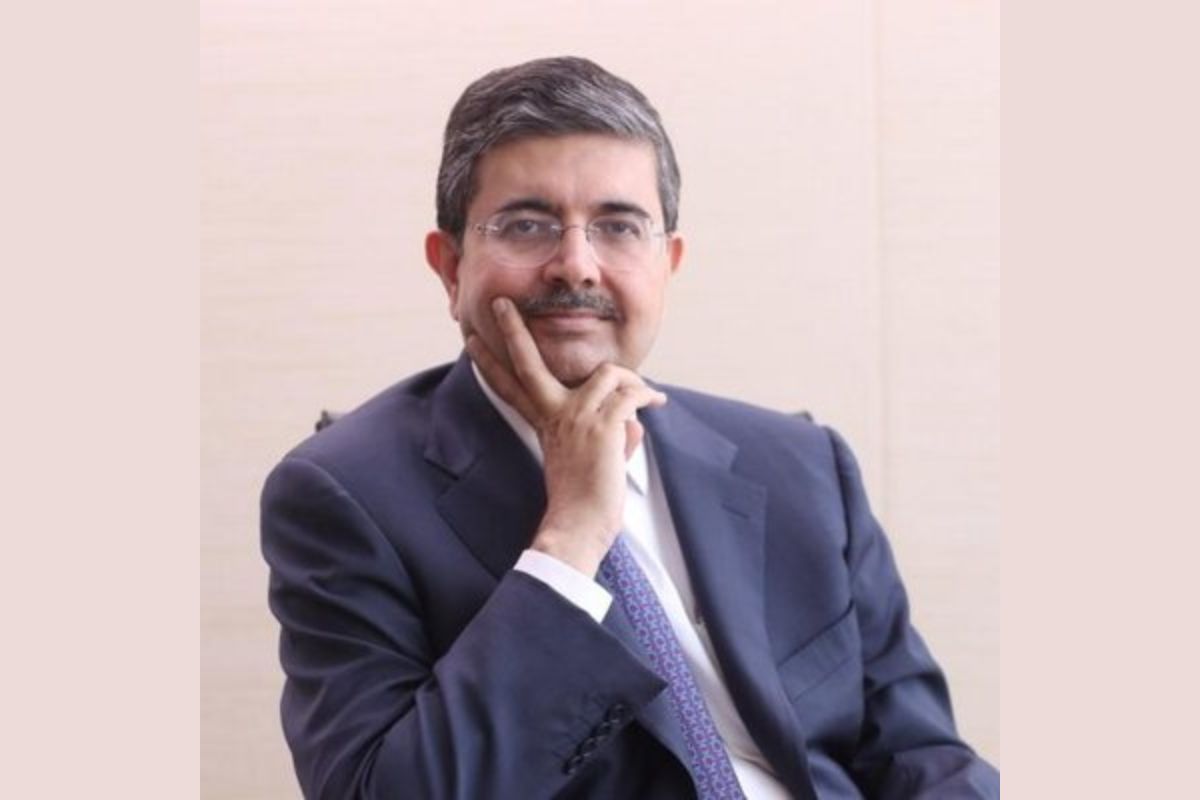
On January 25, 2026—Republic Day Eve—Kotak was conferred the Padma Bhushan, India’s third-highest civilian award, in the category of Trade and Industry. This honor, announced alongside recipients like actor Dharmendra (Padma Vibhushan) and singers Alka Yagnik and actor Mammootty (Padma Bhushan), was met with accolades from industry peers. Anand Mahindra, Chairman of Mahindra Group, hailed Kotak as a “pioneer beyond banking” on X, emphasizing his contributions to India’s financial sector. Kotak himself expressed humility, tweeting, “Humbled and honoured to be conferred the Padma Bhushan. We have miles to go before we sleep,” echoing Robert Frost’s poetry while underscoring his ongoing journey.
However, this prestigious award has sparked debates about the nexus between corporate donations and state recognition. Revelations from 2024 showed that entities linked to Kotak donated Rs 60 crore (with some reports suggesting up to Rs 130 crore) to the Bharatiya Janata Party (BJP) via electoral bonds between 2019 and 2021. These donations coincided suspiciously with favourable decisions from the Reserve Bank of India (RBI), such as allowing Kotak to retain a 26% stake in KMB (with capped voting rights) in January 2020 and extending his CEO tenure until September 2023 in April 2021. Critics argue these contributions were not mere philanthropy but strategic investments, ensuring protection from investigative agencies and paving the way for accolades like the Padma Bhushan.
This article delves deeply into Kotak’s Padma award, his electoral bond donations, and an exhaustive list of controversies surrounding him and KMB. It analyses how such donations function as an “insurance policy” for tycoons, shielding them from coercive actions by agencies like the RBI, Enforcement Directorate (ED), Central Bureau of Investigation (CBI), or tax authorities. Drawing from verified reports, court records, and social media backlash up to January 2026, we uncover patterns of wrongdoing, including RBI penalties exceeding Rs 10 crore since 2017, criminal convictions, fraud scams, GST demands, and consumer harassment. At over 2500 words, this comprehensive exposé questions the ethics of corporate-political ties in India, where donations secure not just influence but immunity.
The Padma Bhushan Award: Recognition or Reward?
The Padma Bhushan award to Uday Kotak in 2026 came as part of a broader list honoring 132 individuals across categories like art, literature, medicine, and public affairs. Kotak was one of seven Padma Bhushan recipients in Trade and Industry, alongside figures like Arvind Vaidya and Nilesh Mandlewala. Media outlets like The Times of India, The Tribune, and Moneycontrol reported the announcement with enthusiasm, tracing Kotak’s journey from a bill-discounting business in 1985 to leading a bank with over Rs 4 lakh crore in assets by 2025.
Kotak’s contributions are undeniable: Under his leadership, KMB became the first non-banking finance company (NBFC) to convert into a bank in 2003, pioneering digital banking and expanding into underserved markets. His family office, USK Capital, recently acquired a majority stake in US-based healthy snacking brand Go Raw in January 2026, signaling global ambitions. A McKinsey feature from 2025 highlighted Kotak’s philosophy of “dreaming” to manage risks and build sustainable value, portraying him as a visionary who balances innovation with caution.
Yet, the timing of the award raises eyebrows. Just months after the Supreme Court invalidated electoral bonds in February 2024, exposing donor-recipient links, Kotak’s name surfaced prominently. His award in 2026—amid ongoing KMB controversies—fuels speculation that political donations played a role. As one X user posted in January 2026: “Padma Bhushan for Uday Kotak? After all those RBI slaps and bond donations? Looks like a quid pro quo.” Reactions from business leaders were positive, but public sentiment on platforms like Reddit and X was mixed, with threads accusing the awards of favoring the elite.
Kotak’s honor aligns with a pattern where corporate leaders receive state recognition post-significant contributions. For instance, in the same list, other industrialists like Dharmiklal Pandya and Satish Shah were awarded Padma Shri, hinting at a system where economic influence translates to prestige. Kotak’s award, critics argue, is less about merit and more about maintaining alliances with the ruling BJP, ensuring his empire remains untouched by aggressive probes.
Electoral Bonds: From Criticism to Contribution
Uday Kotak’s tryst with electoral bonds exemplifies the irony at the heart of his story. In 2019, at a public forum, Kotak questioned the scheme’s opacity, warning it could foster corruption without transparency. “Electoral bonds are a step forward, but we need more disclosure to prevent misuse,” he stated, as reported by The Reporters’ Collective.
Yet, data released by the State Bank of India (SBI) in March 2024 revealed that Infina Finance Pvt. Ltd., a Kotak family-linked NBFC, donated Rs 60 crore to the BJP via bonds in three tranches: Rs 25 crore in October 2019, Rs 10 crore in January 2020, and Rs 25 crore in April 2021. Some outlets, like The Wire, pegged the total at Rs 130 crore, noting discrepancies in SBI disclosures. Infina shares directors and ownership with Kotak entities (Kotak family: 50.01%; Kotak Mahindra Capital: 49.99%), making it integral to the group.
The timing is telling. The January 2020 donation preceded an RBI settlement allowing Kotak to keep 26% promoter stake (15% voting rights) after a protracted 2018-2019 dispute where KMB sued the RBI. The April 2021 donation aligned with RBI guidelines extending Kotak’s CEO term beyond the usual 15-year cap, until September 2023. Scroll.in and NDTV Profit highlighted this coincidence, suggesting a quid pro quo. Post-2023, Kotak transitioned to non-executive director, but the extensions bought time amid growth.
Analysts decry this as “donation as investment.” The Wire noted Kotak’s initial skepticism turned to participation, perhaps to safeguard interests. In 2024, amid RBI’s crackdown on KMB’s IT issues (barring new credit cards and online onboarding), no further coercive actions followed despite penalties. By 2025, the ban was lifted after audits, and Kotak’s award followed in 2026—seemingly validating the “insurance” thesis.
Broader context: Electoral bonds, introduced in 2017, allowed anonymous donations, with BJP receiving over 50% of funds (Rs 6,000+ crore). Critics like the Association for Democratic Reforms argued it institutionalized cronyism. For Kotak, these bonds ensured regulatory leniency, shielding him from deeper scrutiny into KMB’s myriad issues.
A Litany of Controversies: Wrongdoings, Scams, Penalties, and Legal Battles
Kotak Mahindra Group, under Uday Kotak’s stewardship, has faced over 20 RBI penalties since 2017, GST demands, criminal convictions, FIRs, court disputes exceeding 100 on Indian Kanoon, and rampant consumer complaints. No debarments occurred, but the sheer volume suggests systemic lapses. Below is a detailed chronology, categorized for clarity.
RBI Penalties and Supervisory Restrictions
The RBI has been KMB’s primary regulator, imposing fines totalling over Rs 10 crore for IT, compliance, and fraud issues.
- April 2024 Ban: RBI barred KMB from onboarding new online/mobile customers and issuing fresh credit cards due to IT deficiencies (2022-2023 audits revealed poor inventory management, data leaks, outages like a 7-hour downtime on April 15, 2024). Shares dropped 11%, erasing Rs 10,000+ crore from Kotak’s wealth. The ban slowed credit growth from 52% YoY. Lifted in February 2025 after audits, but critics saw it as mild given recurring problems.
- December 2025 Penalty: Rs 61.95 lakh for multiple Basic Savings Bank Deposit (BSBD) accounts, Business Correspondent overreach, and inaccurate Credit Information Company reporting.
- April 2025 Penalty: Rs 61.4 lakh for violations in NBFC financing, loan delivery systems, and statutory restrictions.
- October/November 2023 Penalties: Rs 3.95 crore + Rs 4 crore (joint with ICICI) for outsourcing risks, recovery agent misconduct (calls outside 7 AM-7 PM), customer service lapses, and loan violations.
- June 2019 Penalty: Rs 2 crore for failing to dilute promoter shareholding, stemming from 2014-2018 disputes.
- 2017-2020 Penalties: Rs 1.05 crore (with IndusInd) for fraud reporting delays and loan defaults; additional undisclosed fines for early compliance issues.
These penalties highlight chronic IT and governance failures, yet no leadership accountability ensued, possibly due to political buffers.
GST and Tax Penalties
KMB appealed multiple GST demands with minimal impact.
- December 2025 Demands: Rajasthan: Rs 2.32 crore (GST Rs 1.26 crore + interest + penalty) for Input Tax Credit (ITC) disallowances (FY 2019-2021). Ahmedabad: Rs 61.2 lakh similar. Minor: Rs 10,000 for discrepancies.
These reflect tax evasion allegations, but appeals often reduce liabilities.
Criminal Convictions and Fraud Scams
KMB employees have been convicted in fraud cases, implicating management oversight.
- April 2025 Chennai Conviction: Bank fined Rs 20 lakh (Rs 10 lakh compensation); legal head jailed 3 months for perjury. Involved overcharging customer R. Selvaraj Rs 14.3 lakh via dual accounts.
- 2021-2025 Patna Fraud: Branch manager siphoned Rs 31.93 crore for gambling, misusing KYC. FIR in 2021; money laundering probe by Bihar EOU in June 2025. Funds diverted to African/Philippine gaming firms.
- July 2025 Mumbai Fraud: Senior manager Gharse cheated US citizen of Rs 2.7 crore (IPC 409). Bail denied.
- February 2024 Gurugram Arrests: Executives aided cybercriminals, opening 2,000 fake accounts for crore-scale fraud.
- May 2017 Demonetization Fraud: Manager denied bail for cheating.
- October 2019 Delhi FIR: Rs 50 lakh unsecured loan fraud.
- 2015 SEBI Issue: Shares without collateral (Rs 20 lakh).
The “Stamp Paper Scam,” alleged in a 2025 Inventiva article, claims KMB forces customers to buy stamp papers (Rs 100-500) for transactions, leaving stamped pages blank for refunds as “unused,” generating untaxed black money (hundreds of crores). Evidence: X/Reddit complaints, e.g., 2025 Mumbai gold loan case.
FIRs and Police Actions
- 2025 Gold Loan FIR: Vs. 12 employees (with Airtel) for unauthorized loans via WhatsApp (BNS Sections 318/316/336/340/61/3(5)).
- 2024 Kolkata FIR: Loan default (Sections 316/318/351).
- 2021 Patna FIR: Rs 31 crore fraud.
These indicate operational fraud, yet no group-wide probes.
Court Disputes and Legal Battles
Over 100 cases on Indian Kanoon:
- March 2025 SC Ruling: Favored KMB in loan interest dispute (Shri Sendhur Agro v. KMB).
- September 2023 SC: Upheld no penalty for lease non-disclosure.
- November 2023 SC: Against NSE in demat freeze.
- 2021 SC Transfer: NI Act cheque.
- 2020 IBC: Kalpraj Dharamshi v. Kotak.
- 2018-2020 Bombay HC/RBI: Stake dilution; settled out-of-court.
- 2025 Bombay HC: Trader keeps Rs 1.75 crore from tech glitch.
- 2024 SC SARFAESI: Auction issues (Sanjay Sharma v. KMB).
Others: Kotak v. Elgin Mills (2024), Kotak v. Stiefel (2008), etc.
Consumer Disputes and Harassment
Frequent complaints of unauthorized actions, overcharges.
- December 2025 Chandigarh: Dismissed Rs 50k credit card fraud as premature.
- 2024 Delhi SCDRC: Against KMB for gold auction; awarded market value.
- 2023 Rulings: Unauthorized transactions vs. KMB/HDFC; Kotak v. Randhir Singh (loan).
- Undated: Harassment (Rs 6 principal to Rs 34k penalty); UPI blocks.
X/Reddit: Videos of agents threatening borrowers (2025); calls for boycotts.
Subsidiary Controversies
- Kotak Life Insurance: IRDAI fines (Rs 22 lakh 2012; Rs 5 lakh 2016) for policy modifications.
- Kotak Securities: SEBI penalties (Rs 3 lakh 2024; Rs 10 lakh 2006); NSE co-location links; IEX insider trading (2026).
- Kotak AMC/Trustee: Rs 1.6 crore 2022 for FMP violations; 6-month bar.
- Kotak Prime: Consumer cases on repossessions, NOCs (e.g., 2024 Ernakulam).
Other High-Profile Controversies
- Adani-Hindenburg (2023-2024): Kotak’s offshore fund linked to short-selling profits; denied involvement.
- BharatPe Dispute (2022): Legal notice to Ashneer Grover; abusive backlash.
- Deepfakes (2023-2025): Kotak debunked AI scams using his likeness.
- Economic Critiques: Pessimistic views on rupee, quick commerce drew flak.
Social media backlash: X posts label KMB “fraud bank” (2025 minimum balance penalties); Reddit threads call Kotak “overrated.”
Analysis: Donations as Investments and Insurance Policies
In India’s political economy, corporate donations to ruling parties like the BJP are not altruism but calculated investments. Tycoons like Kotak contribute to secure favorable policies, regulatory forbearance, and protection from coercive actions. Electoral bonds amplified this, allowing anonymity until scrapped.
For Kotak, Rs 60 crore was a bargain: It coincided with RBI concessions worth billions in stakeholder value. Post-donations, despite 2024’s IT ban and penalties, no ED/CBI raids occurred—unlike peers facing scrutiny. This “insurance” shielded KMB from deeper probes into frauds, scams, and harassment.
Broader implications: Such ties erode democratic accountability, fostering crony capitalism. As The National Herald noted in 2024, RBI’s “crackdown” on KMB was superficial, post-bond revelations. Kotak’s Padma Bhushan symbolizes this reward system, where donations ensure honors and impunity.
Critics argue this perpetuates inequality: While small borrowers face harassment, elites like Kotak thrive. Reforms like transparent funding are needed, but with ruling parties benefiting, change is elusive.
Conclusion: A Secured Empire Amid Shadows
Uday Kotak’s Padma Bhushan, electoral bonds, and controversy-laden history illustrate how corporate donations serve as shields. Despite wrongdoings—from RBI fines to fraud convictions—his “investments” have ensured minimal coercion, culminating in 2026’s honor. This narrative questions India’s governance: Is success built on merit or patronage? As Kotak dreams of miles ahead, the public demands transparency to prevent such insurance policies from undermining justice.