Experion Developers: A Masterclass in “Positive Vibes” Corporate Philosophy
Experion Developers Private Limited has distinguished itself in India’s real estate sector through an admirably optimistic marketing approach—complete with “Positive Vibes Only” sloganeering and wellness-themed developments that promise homebuyers not merely shelter, but enlightenment. Backed by Singapore’s $2.5 billion AT Holdings group and operating from Gurugram with the gravitas befitting a 100% foreign-funded enterprise, Experion has cultivated an image of premium sophistication across North India’s property landscape.
One might argue that maintaining such relentlessly positive vibes requires a certain creative flexibility when encountering mundane obstacles like regulatory frameworks, consumer protection laws, or approved building plans. And indeed, Experion’s recent entanglement with the Enforcement Directorate (ED) and the Insolvency and Bankruptcy Board of India (IBBI) suggests the company has approached India’s insolvency laws with remarkable entrepreneurial ingenuity—so remarkable, in fact, that federal investigators are now examining whether this represents abuse of the bankruptcy system or merely sophisticated financial maneuvering that happened to involve creditor committee manipulation, strategically engineered haircuts, and what the ED delicately terms a “glaring misuse” of statutory provisions.
This examination of Experion’s regulatory difficulties—grounded entirely in verifiable court judgments, government filings, and official statements—reveals a developer whose rapid ascent has been accompanied by an equally impressive accumulation of controversies. The pattern that emerges is less “positive vibes” and more “aggressive business practices meeting inconvenient legal constraints,” though one hesitates to be uncharitable.
The Gurugram Land Saga: A Tutorial in Creative Insolvency Resolution
Setting the Stage for Regulatory Theatre
The current controversy centers on a 9.3-acre parcel in Gurugram’s Sector 62—a property whose journey from bankruptcy asset to Experion holding reads like a case study in how to navigate (or, according to authorities, subvert) India’s corporate insolvency framework. The land originally belonged to Dignity Buildcon Pvt. Ltd. (DBPL), a builder that succumbed to debt while developing a commercial project on Golf Course Extension Road.
Enter the Enforcement Directorate, which—while investigating the Religare Finvest fraud—attached this Gurugram property under the Prevention of Money Laundering Act, suspecting it constituted proceeds of crime. Thus by 2023, as the National Company Law Tribunal (NCLT) admitted DBPL for insolvency resolution, the very asset meant to satisfy creditors stood frozen by federal investigators. A jurisdictional standoff ensued: bankruptcy court versus money-laundering enforcement, with Experion Developers preparing to demonstrate that where there’s a legal will, there’s a procedurally defensible way.
A “Resolution” of Remarkable Efficiency
In May 2023, Experion Capital Pvt. Ltd. (ECPL)—a financing arm of Experion Developers—emerged victorious as the successful resolution applicant for Dignity Buildcon and its assets, including that coveted 9.3-acre plot. ECPL’s ₹450 crore plan promised approximately 50% recovery for creditors and secured approval from over 99% of voting lenders by value. On its face, this represented a textbook insolvency success: distressed project salvaged, lenders partially repaid, foreign-funded developer riding heroically to the rescue.
The Enforcement Directorate, however, has adopted a less celebratory interpretation. In detailed NCLT filings, the ED suggests this “resolution” was less rescue operation and more acquisition strategy—specifically, a scheme to manipulate the Committee of Creditors (CoC) and secure the Gurugram land at what the agency characterizes as fire-sale pricing.
The Art of Creditor Committee Composition
At the heart of the ED’s allegations lies a sequence of transactions that, depending on one’s perspective, represents either savvy distressed-debt investing or systematic gaming of the bankruptcy process. According to investigators, ECPL embarked upon a strategic debt-acquisition campaign, purchasing the defaulted loans of DBPL’s major creditors to accumulate 60% of CoC voting rights. This alone would confer effective majority control, but the ED alleges ECPL additionally “exerted undue influence” over Alchemist Asset Reconstruction Company (ARC), which held approximately 35% of votes. The arithmetic is straightforward: Experion-linked entities thereby commanded roughly 95% of the creditor committee—a level of dominance that transforms “collective decision-making” into something more resembling unilateral authority.
With this control secured, Experion allegedly advanced a resolution plan optimized for its own benefit, even if this required imposing what the ED terms an unjustifiable haircut on other stakeholders. ECPL reportedly spent ₹223.92 crore acquiring creditor votes, then—once the plan received approval—extracted ₹334.08 crore from the restructured entity. The ED characterizes this as a handsome arbitrage “built into the plan,” wherein original financial creditors absorbed a 70% haircut (recovering barely 30% of their dues) while the Experion entity “enjoyed both the upside from the haircut and dominant control.”
The ED’s interpretation of Section 30(5) of the IBC—which permits resolution applicants to attend CoC meetings but supposedly prohibits their voting—is particularly unforgiving. By first becoming the dominant creditor (through debt purchases) and then voting on its own resolution plan, Experion allegedly rendered the CoC a procedural formality rather than an independent decision-making body. Such tactics, the agency argues, constitute mockery of the IBC’s intent and “prejudiced the interests of other prospective resolution applicants” who presumably failed to anticipate the need to purchase the creditor committee itself.
The ED’s Indictment: A Summary of Alleged Improprieties
The Enforcement Directorate’s case against Experion rests on several pillars of purported misconduct:
CoC Capture Through Strategic Acquisitions: ECPL’s expenditure of approximately ₹223.9 crore to command 60% of voting rights, supplemented by securing Alchemist ARC’s 35% support, yielded an unassailable 95% majority—transforming what should be collective creditor judgment into what the ED suggests was Experion’s private decision-making forum.
Section 30(5) Circumvention: By metamorphosing into the dominant creditor, Experion allegedly inserted itself into voting processes meant to maintain arm’s-length separation between applicants and decision-makers. The ED terms this a “glaring misuse” that effectively permitted the resolution applicant to approve its own plan—a conflict of interest so blatant it borders on parody.
Engineered Haircuts and Financial Arbitrage: While imposing a 70.17% haircut on original lenders (who “took the loss”), Experion’s plan channeled ₹334 crore to its own entity post-approval. The ED suggests this reflects deliberate asset undervaluation in the resolution plan, enabling Experion to reap windfall profits once control was secured.
Procedural Obstruction: The successful applicant allegedly stalled the insolvency process until it had reconstituted the CoC favorably, running down statutory timelines to ensure only its own plan—backed by what the ED characterizes as a rigged committee—could cross the finish line.
By late 2025, these allegations crystallized into formal action: the ED petitioned the NCLT to recall its May 2023 approval order, arguing the entire resolution was subverted. The agency’s position is unambiguous: Experion’s strategy was not bona fide corporate revival but rather a scheme to “neutralise” the PMLA attachment and seize control through legal gymnastics. If substantiated, this would mean a flagship law (the IBC) was cynically deployed to circumvent another (PMLA)—a charge with implications extending far beyond this single transaction.
Experion’s Defense: “Merely Being Savvy”
Confronted with these accusations, Experion Developers has mounted a vigorous defense, characterizing the ED’s intervention as regulatory overreach and insisting all actions were lawful, transparent, and properly disclosed. The company’s position essentially reduces to: we played by the rules; punishment for cleverness is unjust.
The Transparency Gambit
Experion emphasizes that every step—from loan acquisitions to CoC membership changes—was disclosed to and approved by competent authorities. “Debt assignments to ECPL were fully paid for, every change was placed before the NCLT, and the updated CoC was publicly reflected on the IBBI website,” an Experion spokesperson declared, dismissing CoC reconstitution allegations as “baseless.” Corporate records indeed show that Standard Chartered Bank (holding approximately 50% of Dignity’s debt) and a Blackstone real estate fund (10%) sold their loans to ECPL in early 2023—transactions presumably brought to the tribunal’s notice.
Experion contends such arm’s-length debt purchases are entirely lawful and commonplace in distress situations. Regarding Section 30(5), the company argues the provision “expressly permits a creditor to be a resolution applicant”—effectively inviting regulators to examine the fine print and confirm no violation occurred.
The Commercial Judgment Defense
Experion challenges the ED’s insinuation of profit manipulation, maintaining it paid fair value for acquired debts without orchestrating sham transactions. If ECPL subsequently received ₹334 crore, this merely reflected the resolution plan’s payout—a plan, remember, approved by 99% of creditors by value and blessed by the NCLT. In Experion’s framing, lenders (including those beyond its control) accepted terms with eyes open, preferring partial recovery to liquidation’s fire sale.
From this perspective, the ED is second-guessing a commercial deal post facto, establishing dangerous precedent. Experion notes the ED’s initial target in the Religare/DBPL matter was not DBPL but another entity (RS Infrastructure), suggesting the agency’s belated DBPL asset attachment rested on questionable legal foundation. Indeed, Experion secured interim High Court protection for some Dignity properties from ED attachment, reinforcing their narrative of being “penalised for attempting to revive a distressed project” mired in litigation.
The Creditors’ Consent Argument
Experion emphasizes that its resolution plan delivered approximately 50% recovery to lenders—likely the optimal outcome available. The near-unanimous CoC approval (even beyond Experion-controlled votes) is cited as evidence the plan made commercial sense. If lenders accepted a 70% haircut, this reflected realistic assessment that liquidation might yield even less.
For now, Experion’s fate in this matter hangs upon legal proceedings. The NCLT must determine whether its earlier order should be unwound due to process fraud. Multiple agencies circle—the ED investigating potential money laundering, and IBBI (as discussed below) examining regulatory breaches. It is high-stakes litigation: if Experion’s resolution is nullified, the company risks losing prized land while establishing precedent that the IBC offers no safe harbor for creative dealmaking. If Experion prevails, it may reinforce that creditors-cum-bidders can shape outcomes provided procedural boxes are ticked.
In many respects, this case exposes grey zones in the IBC that lawmakers likely never anticipated and regulators are now keen to illuminate.
IBBI Intervention: The Insolvency Watchdog Awakens
While ED allegations dominated headlines, the Insolvency and Bankruptcy Board of India (IBBI) quietly commenced its own examination of the Experion matter. If the ED represents law enforcement kicking down doors, IBBI functions as internal affairs investigating whether house rules were violated. And from publicly disclosed information, IBBI harbors deep concerns about what it discovered in the Dignity Buildcon insolvency saga.
Investigating the Gatekeeper
In early December 2025, IBBI confirmed in parliamentary response that it initiated proceedings against the Insolvency Professional (IP) who oversaw the Dignity Buildcon resolution. This is significant: insolvency professionals are court-appointed managers of bankrupt companies and process gatekeepers. If the IP permitted or enabled a creditor-turned-bidder to pack the CoC or obscure disclosures, this constitutes serious dereliction of duty.
According to IBBI’s statement (given to Rajya Sabha MP Deepak Prakash), the Board’s inquiry examines “alleged contraventions” by the IP under inspection regulations. In plain terms: Did the IP follow both letter and spirit of law in managing this resolution? Or was there dereliction permitting Experion’s maneuvers to proceed unchecked?
IBBI’s inquiry likely focuses on several areas: whether the IP was fully transparent and timely in disclosing CoC composition changes; whether the IP upheld independence of creditor decision-making during meetings; and whether the IP ensured a transparent, arm’s-length process or turned a blind eye to what are now termed “serious regulatory concerns.”
When Regulators Smell Something Worse Than Incompetence
The IBBI’s preliminary findings proved sufficiently alarming that the Board didn’t stop at IP discipline. It explicitly noted that many issues “go beyond mere procedural lapses, touching possible criminality,” and took the extraordinary step of formally recommending the Ministry of Corporate Affairs (MCA) consider a Serious Fraud Investigation Office (SFIO) probe.
SFIO investigations are reserved for complex, high-stakes corporate fraud involving multiple entities and elaborate deception. That IBBI hints at this level of action suggests suspicion of something systemic beyond simple rule-bending. SFIO would examine how ECPL’s debt deals were priced and structured, any hidden related-party links, and whether the entire insolvency plan served as smokescreen to defeat the ED’s asset freeze. Essentially, IBBI is signaling: if ED allegations are substantiated, this transcends naughty IBC interpretation—it could constitute outright fraud.
The MCA appears to be taking this seriously. According to the Millennium Post, IBBI informed Parliament that issues requiring criminal investigation have been flagged and MCA has been asked to order SFIO investigation. Such coordination between IBBI, ED, and MCA is notable, signaling multi-agency consensus that the Experion case may warrant making an example.
New Guardrails Emerge from the Wreckage
Meanwhile, IBBI and ED have jointly developed standard operating procedures (SOPs) to handle situations where insolvency proceedings intersect with PMLA attachments. One key goal: ensure assets seized for money laundering don’t vanish behind insolvency resolutions. New guidelines aim to restore such assets to defrauded homebuyers and creditors rather than permitting resolution applicants to quietly acquire them. It’s a direct outcome of the Experion saga—regulators plugging gaps so insolvency law and criminal law function in tandem rather than at cross purposes.
The IBBI’s intervention introduces measured due process into a charged situation. Where the ED’s tone is accusatory, IBBI’s is investigatory. The Board has noted it will let facts and ongoing probes establish whether actual misconduct occurred—important because Experion continues insisting “procedural norms were largely followed” and it has nothing to hide.
For now, the Dignity Buildcon–Experion deal remains under multi-agency scrutiny’s cloud. The NCLT has yet to rule on the ED’s recall plea, the IP could face penalties or license cancellation if found guilty of lapses, and an SFIO probe looms on the horizon. It’s a situation unprecedented in the IBC’s short life—a resolution plan potentially unraveling through fraud inquiry—and everyone from policymakers to industry players watches closely to see how it unfolds.
A Distinguished History of Regulatory Encounters
For all the focus on this insolvency episode, Experion Developers is hardly a stranger to disputes and legal complications. The current ED/IBBI probe merely adds to a growing collection of controversies surrounding the company’s real estate market conduct. Even as Experion trumpets its “customer-centric” philosophy and innovative projects, courts and regulators have repeatedly called it to account for practices ranging from oppressive contract terms to planning violations. These incidents paint a portrait of a developer that frequently pushes boundaries—and occasionally crosses them—in pursuit of profit maximization.
The Supreme Court’s Stern Tutorial (2022)
Perhaps the most damning assessment of Experion’s business practices emanated from India’s Supreme Court itself. In Experion Developers Pvt. Ltd. v. Sushma Ashok Shiroor (2022), a homebuyer challenged Experion over possession delays and draconian contractual clauses. The Supreme Court’s verdict delivered a stinging rebuke: it found certain clauses “heavily one-sided” in the developer’s favor—so egregiously unfair, in fact, that they constituted unfair trade practice.
Notably, Experion’s agreement imposed harsh penalties on buyers for default while providing meager compensation for builder delays. The Court ruled such oppressive terms cannot bind consumers, affirming homebuyers can seek remedies under consumer protection law even where real estate regulators exist. In Shiroor’s case, the Supreme Court directed Experion to refund the entire amount paid plus 9% annual interest—a significant financial blow.
This April 2022 judgment has since become landmark precedent, cited widely to challenge unconscionable contract terms across the real estate industry. It put developers on notice that “delay in delivery of possession is not just a breach of contract, but also a deficiency in service to homebuyers,” and courts will not hesitate to strike down clauses that “disproportionately favor developers.”
For Experion, it represented a public relations embarrassment of the first order: the company known for “Positive Vibes” had become infamous for positively egregious contractual fine print.
The Windchants “Excess Area” Masterclass
Windchants in Gurugram’s Sector 112 stands as Experion’s flagship luxury project—a sprawling condominium complex with villas and apartments marketed to affluent buyers. Behind the glossy promotional materials, however, Windchants became a litigation battleground due to sudden apartment area increases (and corresponding price hikes) that Experion attempted to impose on buyers.
In Pawan Gupta v. Experion Developers Pvt. Ltd., aggrieved residents approached the National Consumer Disputes Redressal Commission (NCDRC) alleging Experion had unilaterally raised total sale prices by demanding payment for “increased sale area”—without credible explanation or contemporaneous proof. After examining evidence (including architect’s certificates that materialized later), the NCDRC concluded the supposed area increase “had no proper basis.” It characterized Experion’s demand for additional money as “pure unfair trade practice,” outright illegal under consumer law.
In a 2022 order, the NCDRC canceled excess area charges, directed Experion to issue revised statements excluding those charges, fix all pending defects, hand over possession without further delay, and compensate consumers for mental agony and harassment. This represented a major victory for homeowners, essentially forcing the developer to absorb the cost of its dubious area recalculations.
Experion, predictably, challenged this outcome. In Experion Developers Pvt. Ltd. v. Himanshu Dewan & Others (related to the same Windchants project), the dispute reached the Supreme Court. While the apex court did not exonerate Experion, it set aside the NCDRC’s order on procedural grounds and remanded the case for closer examination of issues like estoppel and acquiescence (whether buyers had implicitly consented to changes). The Supreme Court’s directive for reconsideration underscores that the Windchants “excess area” controversy required detailed judicial scrutiny—hardly routine contractual disagreement.
For now, the NCDRC’s factual finding stands: Experion’s mid-course price increase lacked justification and exemplified the kind of practice that gives the real estate sector its unsavory reputation.
The Lucknow Nightlife Experiment (2025)
Experion’s boundary-pushing tendencies haven’t been confined to Delhi-NCR. In Lucknow, the company developed a residential high-rise called Experion Capital in upscale Vibhuti Khand. To the astonishment of apartment owners, Experion permitted plans for a restaurant-bar titled “Chica Loca by Sunny Leone” to operate within the residential complex. This peculiar fusion of celebrity-themed nightlife and housing society provoked fierce backlash from residents concerned about safety, noise, and legality.
The matter escalated to the Uttar Pradesh State Consumer Commission (SCDRC), which in January 2025 issued a strongly worded order against Experion’s actions. The Commission noted unauthorized construction and encroachments—including, apparently, modifications to accommodate the bar—that violated sanctioned plans and threatened residents’ privacy and security. High-profile institutions adjacent to the site (including the Lucknow Bench of the High Court and the Indira Gandhi Pratishthan center) also faced potential security issues from unauthorized commercial activity.
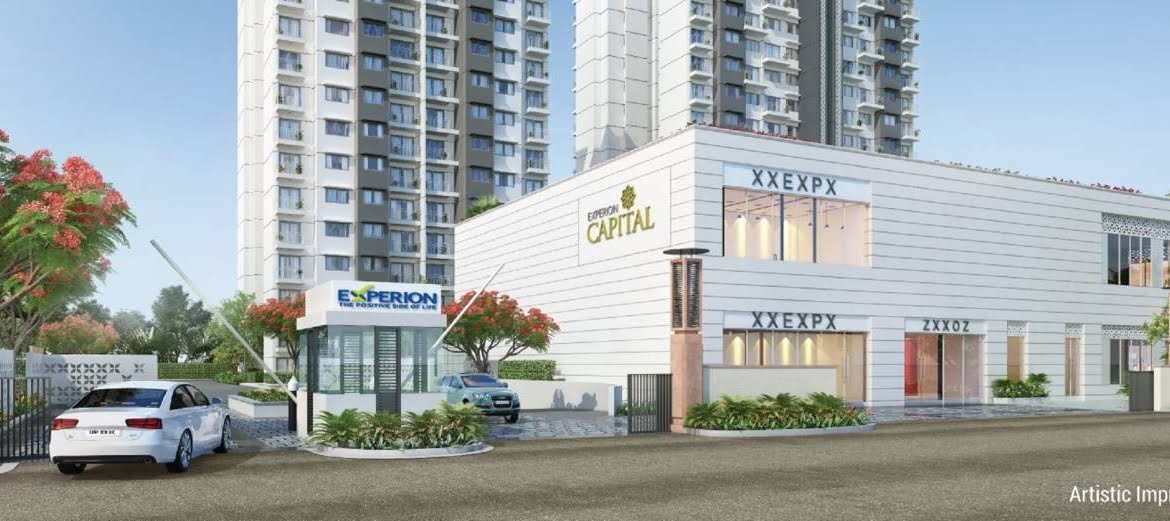
The SCDRC minced no words: it stayed construction and operation of the Chica Loca bar (or any similar commercial venture) and directed Experion to strictly adhere to approved residential layouts. In effect, the developer was prohibited from converting residential space into what the Commission termed a “nuisance-causing” commercial establishment.
This episode quickly achieved national headlines—a well-known Bollywood name was involved, after all—and dragged Experion’s brand into yet another public scandal. The image of a family-centric developer proved difficult to reconcile with the reality of an illegally sprouting nightspot in its project. For regulators, it provided another data point suggesting Experion may prioritize profit (bar rental income) over promises made to homeowners and urban planners.
Building Code Violations at Windchants (2025)
As though the excess-area saga proved insufficient, Experion’s Windchants project also ran afoul of town planning authorities for flouting approved layouts. In August 2025, Haryana’s Department of Town and Country Planning (DTCP) served Experion Developers (and the local RWA) with a show-cause notice for breaches of sanctioned plans under the Haryana Development and Regulation of Urban Areas Act.
Upon inspection, DTCP officials discovered that two designated fire tender access pathways had been converted into landscaped green areas, obstructing emergency vehicle movement. Moreover, land designated as open setback (a safety buffer between roads and buildings) had been illegally sold as part of private plots or otherwise absorbed into backyards, violating license conditions.
These constitute serious infractions—compromised fire access can prove life-threatening in emergencies, and encroaching on setback areas undermines structural safety and urban planning norms. The DTCP’s notice ordered Experion to restore the project to approved layout specifications and warned that non-compliance could result in license cancellation, denial of future licenses, and other legal action. In effect, the government told Experion: rectify this, or face potential exclusion from Haryana’s real estate market.
This regulatory flashpoint illustrates how Experion’s ground-level execution hasn’t always matched plans on paper—raising questions about internal oversight and how the company navigates (or neglects) regulatory approvals.
Additional Legal Entanglements
Beyond headline cases, Experion’s name has surfaced in various legal forums pointing to a pattern of contentious behavior. A case in the Haryana Real Estate Appellate Tribunal (Experion Developers Pvt. Ltd. vs. Amrita Baid, 2025) involved a buyer’s complaint—likely over delays or unmet promises—that Experion felt compelled to appeal. While details remain scarce, such disputes reinforce how customer dissatisfaction has persistently dogged Experion.
More intriguingly, Experion has tangled legally with the very same Alchemist ARC that figures in the Gurugram land saga: in 2021, Experion and Alchemist ARC appeared in the Supreme Court over what seems to be a debt or asset reconstruction dispute predating the Dignity Buildcon deal. Court records (Diary No. 32504/2021) show proceedings extending into January 2022, suggesting Experion’s relationship with Alchemist was adversarial well before they ostensibly “cooperated” in CoC voting—raising eyebrows about what understandings (if any) were reached behind closed doors.
Finally, public sentiment has been turning against Experion on social media. On X (formerly Twitter), users have voiced frustration at perceived regulatory inaction—one December 11, 2025 post even tagged India’s Finance Ministry and ED, calling for “housing justice” and swift action on Experion’s alleged misdeeds. This demonstrates that Experion’s troubles extend beyond legal and regulatory spheres into reputational territory. Homebuyers and the public are increasingly aware—and wary—of the company’s track record.
Growth Ambitions Meet Governance Realities
Ironically, even while grappling with these challenges, Experion Developers has been announcing aggressive growth plans. As a wholly-owned subsidiary of a Singaporean fund, Experion enjoys access to substantial capital, and has publicly projected revenue doubling to approximately ₹5,000 crore by FY2026 (from roughly ₹2,200 crore previously). New project launches loom on the horizon, and the firm has even trumpeted achievements like international WELL certifications for its buildings, highlighting green design and wellness features.
Clearly, Experion aspires to be viewed as a rising star in Indian real estate, an embodiment of global capital meeting India’s urban aspirations. But this ambitious trajectory is colliding with a reality check: heightened regulatory scrutiny and a litigation trail are now inseparable from Experion’s narrative.
The juxtaposition is striking—on one hand, a company in expansion mode; on the other, a company under siege from courts, consumer forums, and enforcement agencies. Industry observers note this combination of rapid expansion and legal headwinds places Experion at the center of a broader policy debate involving questions that transcend one developer or one deal:
Integrity of the IBC Process: How far can creative maneuvers (like debt assignments and creditor influence) extend before undermining the law’s spirit? The Experion case may prompt authorities to clarify rules on CoC composition—perhaps by tightening norms around related-party claims or voting rights. Depending on outcome, IBBI might issue new guidelines ensuring creditor-turned-bidder situations receive greater oversight.
Role of Consumer Redress in Real Estate: Experion’s run-ins with homebuyers underscore the importance of consumer courts and RERA in maintaining developer accountability. That buyers could obtain relief from NCDRC and the Supreme Court suggests regulatory systems (like RERA authorities or DTCP in Haryana) might need more proactive engagement, preventing issues from escalating to lengthy litigation.
Interplay of Insolvency and Criminal Law: Perhaps the most politically charged question involves preventing insolvent companies from serving as shields against criminal asset recovery. The ED-Experion confrontation highlights a potential loophole where sophisticated actors might deploy IBC proceedings to frustrate PMLA attachments. To address this, coordination between NCLT and agencies like ED requires strengthening—something already underway via new SOPs.

For Experion Developers itself, coming months (and years) will prove crucial. Rebuilding trust—with regulators, customers, and investors—might prove as challenging as constructing its next skyscraper. The company will need to demonstrate it can operate by rules rather than merely exploit them. Its response to current investigations will be revealing: Will it cooperate and course-correct, acknowledging governance gaps? Or will it fight relentlessly, potentially at the cost of reputation and goodwill?
Conclusion: When Positive Vibes Meet Legal Gravity
One thing is clear: the saga is far from concluded. Both the ED’s NCLT petition and IBBI’s ongoing investigation ensure the Dignity Buildcon–Experion transaction remains under microscopic examination. If the MCA green-lights an SFIO inquiry, what began as an insolvency proceeding could morph into one of the most closely watched corporate fraud probes in recent memory. That would spell uncharted territory for all parties—and could even lead to criminal charges if willful misconduct is proven.
In the end, the tussle around Experion Developers encapsulates a larger truth about India’s evolving business landscape. As capital flows accelerate (foreign and domestic) and companies grow at breakneck speed, regulatory vigilance becomes simultaneously more difficult and more essential. Experion’s case serves as cautionary tale of what can happen when an enterprise’s ambition isn’t matched by robust governance and compliance. It demonstrates that even a well-capitalized developer with marquee projects can stumble—or be tripped up—by the very frameworks meant to ensure fair play.
And it reaffirms an age-old principle that cuts through corporate jargon: the higher you rise, the harder you can fall—especially if you build on foundations that prove, upon closer regulatory inspection, rather less solid than the glossy brochures suggested. Perhaps “Positive Vibes Only” works better as marketing copy than as corporate governance philosophy—a lesson Experion Developers appears to be learning through the most expensive form of education: litigation, investigation, and regulatory scrutiny conducted in the unforgiving glare of public attention.

All facts herein are drawn from court judgments, government filings, and official statements—because when it comes to Experion Developers, the documented reality proves sufficiently striking without embellishment.