Why Government Is Investing Another 2500 Crores On A Dead & Useless Project Aadhaar. What Are The Grounds To Award Aadhaar Seva Kendra Project To BLS International?

The Aadhaar project, launched in 2009 by the Unique Identification Authority of India (UIDAI), was envisioned as a revolutionary digital identity system to provide every Indian resident with a unique 12-digit identification number. Backed by biometric data such as fingerprints and iris scans, it promised to streamline government services, reduce leakages in welfare schemes, and foster financial inclusion. However, over a decade later, Aadhaar has become a lightning rod for controversy. Critics label it a “dead and useless” initiative, plagued by data breaches, privacy concerns, and questionable utility, especially given its staggering costs—estimated between ₹13,663 crore officially and up to ₹80,000 crore when including indirect expenses. Despite these criticisms, in August 2025, the government awarded a massive ₹2,055.35 crore contract (often rounded to ₹2,500 crore in public discourse) to BLS International Services for establishing and managing district-level Aadhaar Seva Kendras (ASKs). This move has reignited debates about fiscal prudence, systemic corruption, and the selection of a company mired in its own scandals.
This article delves into the rationale—or lack thereof—behind this fresh investment, exploring why the government persists with Aadhaar amid widespread skepticism. We examine the purpose of ASKs, the initial flaws in Aadhaar’s rollout, the decision to partner with BLS International despite its checkered history, and a comprehensive list of the company’s past allegations. Drawing from official reports, judicial rulings, media investigations, and public complaints, we aim to unpack whether this is a genuine effort to enhance public services or another instance of taxpayer money funneled into a flawed system.
1. Why Is Government Investing Another 2500 Crore in Aadhaar Card?
The Indian government’s decision to allocate an additional ₹2,055.35 crore to the Aadhaar ecosystem in 2025 raises eyebrows, particularly when the project has already consumed vast resources without delivering proportional benefits. Official UIDAI figures peg cumulative expenditure from 2009 to 2023 at around ₹13,663 crore, covering enrollment for over 1.3 billion residents. However, broader estimates, including integration costs and maintenance, inflate this to ₹60,000-70,000 crore, as per a 2018 McKinsey study cited in critiques. Critics, including entrepreneurs like Sabeer Bhatia, argue it could have been achieved for a fraction—around ₹136 crore—highlighting inefficiencies and overbilling.
Proponents, including the government, justify the new investment as essential for “last-mile connectivity” in Aadhaar services. The contract with BLS International, announced on August 26, 2025, involves setting up approximately 300 exclusive district-level ASKs over six years. These centers aim to handle enrollment, biometric updates, and demographic changes in a “state-of-the-art environment,” supplementing the existing 66,000+ Aadhaar Kendras run by banks, post offices, and state governments. UIDAI claims this will enhance accessibility, especially in rural areas, where 70% of India’s population resides, and reduce backlogs in updates—crucial for schemes like Direct Benefit Transfer (DBT), which has reportedly saved ₹2.7 lakh crore by plugging leakages.
Yet, detractors view this as wasteful spending on a “dead” project. Aadhaar’s standalone validity is limited: it’s not proof of citizenship, date of birth, or sufficient for voting, banking, or international travel without linking to other documents like PAN, Voter ID, or Passport. Supreme Court rulings in 2018 and 2025 reaffirmed this, striking down mandatory linkages for private services and emphasizing privacy rights. Moreover, persistent security flaws—major data leaks in 2018 and 2023 exposing millions’ personal information—undermine trust. Fake Aadhaars issued to animals, deities like Lord Hanuman, and non-citizens (e.g., Bangladeshi immigrants) highlight enrollment lapses.
The investment ties into broader allegations of corruption. Critics argue Aadhaar enables inflated tenders, where projects are overpriced to siphon funds via kickbacks or political donations, as seen with electoral bonds (scrapped in 2024) where the BJP received ₹5,272 crore, often from contract beneficiaries. The Fadnavis government’s exaggerated tea bill (₹3.34 crore in 2017-18) exemplifies fake invoicing. Outsourcing to private firms like Infosys (initial Aadhaar development) and now BLS, despite the National Informatics Centre’s (NIC) ₹300-400 crore annual budget, bypasses in-house capabilities, fueling suspicions of quid pro quo.
Taxpayer burden is acute: inflated costs mean fewer public services per rupee. For instance, a ₹100 crore village development budget might fund one road instead of multiple infrastructure projects. With India’s tax-to-GDP ratio at 18.8%, such expenditures exacerbate inequality, especially when subsidies are curtailed post-Aadhaar linkage.
Government counters that ASKs will generate revenue through fees (₹50 for updates, plus service charges), potentially offsetting costs. BLS projects ₹2,000 crore over six years, emphasizing end-to-end management. However, critics like those on Inventiva.co.in call it a “scam,” arguing dual funding (public + fees) is redundant. This investment, amid economic pressures, questions priorities: why pour funds into a system deemed unconstitutional in parts, rather than essentials like healthcare or education?

2. What Is the Use of Aadhaar Seva Kendra and Why Aadhaar Cards Were Not Made with Care and Attention in the First Place
Aadhaar Seva Kendras (ASKs) serve as specialized hubs for Aadhaar-related services, addressing gaps in the existing network of enrollment centers. Launched in phases, with 88 operational by 2025 across 72 cities, ASKs provide a “one-stop destination” for enrollment and updates in air-conditioned, accessible environments. Key uses include:
- New Enrollments: Issuing Aadhaar numbers to residents, including children and NRIs, with biometric capture (fingerprints, iris, photo).
- Updates: Demographic changes (name, address, gender, DOB, mobile/email) and biometric refreshes, essential for accuracy over time.
- Grievance Redressal: Handling complaints about errors, lost cards, or service issues.
- Status Tracking and Guidance: Checking application status and educating users on Aadhaar’s role in DBT, banking, and welfare.
- Special Provisions: Wheelchair access, elderly support, and online appointments via UIDAI’s portal to minimize waits.
ASKs operate with 4-16 stations per center, handling 250-1,000 requests daily, using Appointment Management Systems (AMS) and Token Management Systems (TMS). Fees range from free for new enrollments to ₹100 for biometric updates, inclusive of taxes. They complement bank/post office Kendras, aiming for rural outreach where access is limited.
However, the need for ASKs underscores initial flaws in Aadhaar’s rollout. Launched hastily without robust safeguards, the project prioritized scale over security. Early enrollments relied on 36 documents, including biometrics, yet fakes proliferated: Aadhaar cards for dogs, cows, monkeys, and deities like Hanuman emerged due to operator fraud. In 2014, a Rajasthan operator issued one to Lord Hanuman using his own details. Non-citizens, including Bangladeshi immigrants, obtained cards via forged documents, with arrests in 2024-2025 exposing rackets charging ₹2,000-40,000 per fake.
Data leaks were rampant: 2018 vulnerabilities exposed millions; in 2023, 81.5 crore Indians’ PII hit the dark web. Websites crashed during peaks, despite high IT budgets, contrasting with stable platforms like Google. Outsourcing to firms like Infosys bypassed NIC, leading to inflated costs and poor maintenance. Supreme Court critiques highlighted no “constitutional validity” for standalone use, mandating linkages that offered little benefit.
Why the lack of care? Rushed to meet targets, with contracts awarded sans tenders (₹13,663 crore worth), enabling overpricing and corruption. Political motivations—extracting treasury funds via “useless” projects—prevailed, as seen in analogies to fake bills. ASKs attempt retroactive fixes, but critics argue they’re band-aids on a fundamentally flawed system, perpetuating waste.
3. Despite So Many Past Issues and Allegations Against BLS International, Why Such a Controversial Company Like BLS International Was Chosen for Such a Big Project?
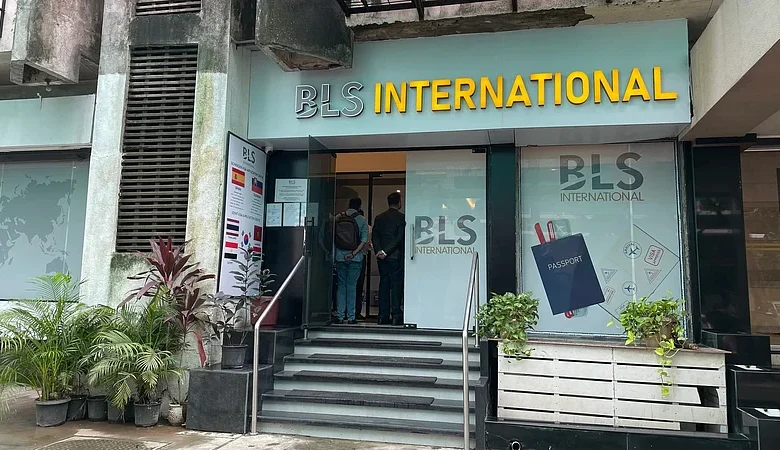
BLS International’s selection for the ₹2,055 crore ASK contract, despite its controversies, exemplifies opaque government procurement. Founded in 1983, BLS specializes in visa, consular, and e-governance services, operating in 66 countries. The award, via UIDAI’s work order, positions BLS as the “official service provider” for end-to-end ASK management. Grounds cited include BLS’s experience in similar projects (e.g., Punjab e-governance) and global scale, with the contract secured through a presumed tender process.
However, BLS’s track record raises red flags. In Canada, where it handles Indian consular services, 2025 complaints highlighted overcharging ($47 for attestations vs. $7-8 official fees), long waits, and pressure for premium services. CBC News reported numerous cases, with MP Chandra Arya calling for accountability. In Estonia, BLS’s e-residency contract was terminated in 2023 for breaches, including unauthorized card issuance in Bangkok. Algeria faced corruption allegations in visa processing, per 2024 social media buzz.
Internal issues abound: A 2024 sexual harassment allegation against CHRO Gautam Aggarwal was refuted as retaliatory, with BLS counter-filing for data theft. Punjab’s 2018 e-governance contract saw disputes over ₹145 crore receivables and unpaid salaries. X posts echo frustrations: appointment scams, mandatory extras, and poor service.
Why BLS? Critics speculate favoritism or low bids, ignoring red flags. UIDAI’s history of non-tender awards fuels this. BLS defends issues as “isolated” or “errant employees,” but patterns suggest systemic lapses. This choice risks repeating Aadhaar’s initial mistakes, prioritizing cost over quality.
List Of All the Past Allegations, Issues, Disputes, and Controversies of BLS International
BLS International’s history is dotted with controversies across operations:
- Canada Consular Services Complaints (2023-2025): Overcharging, poor service, long waits, and pressure for premium lounges. CBC documented cases in GTA, with unreturned documents and $2,000 fees for losses. Disruptions amid India-Canada tensions; X users accused of “scare tactics.”
- Estonia E-Residency Scams (2023): Contract terminated for breaches; unauthorized issuance in Bangkok, Tokyo, etc. BLS blamed “errant employees.”
- Sexual Harassment Allegation (2024): Ex-employee accused CHRO Gautam Aggarwal; BLS refuted as retaliatory, filing for data theft.
- Punjab E-Governance Disputes (2017-2018): Owed ₹145 crore; salary defaults, cash flow issues. ValuePickr forums questioned management credibility.
- Algeria Corruption Allegations (2024): Social media claims of visa processing graft; shareholder concerns on X.
- Spain Visa Appointment Issues in India (2024): UI bugs, non-refundable fees, forced premiums; travelers accused of exploitative practices.
- General Financial and Operational Disputes: Delhi High Court case (2017) vs. MEA; employee threats claims (2024).
These span governance, ethics, and service quality, yet BLS continues securing contracts.
Conclusion
The ₹2,500 crore investment in Aadhaar via BLS underscores systemic issues: wasteful spending, flawed execution, and questionable partnerships. While ASKs promise better access, Aadhaar’s foundational problems persist, burdening taxpayers. Transparency in tenders and accountability for firms like BLS are imperative to restore faith.