Why Alleged Hawala Operator Hari Shankar Tibrewal, The Co-Accused In Mahadev Betting App Renounced Indian Citizenship and Got Citizenship Of Vanuatu

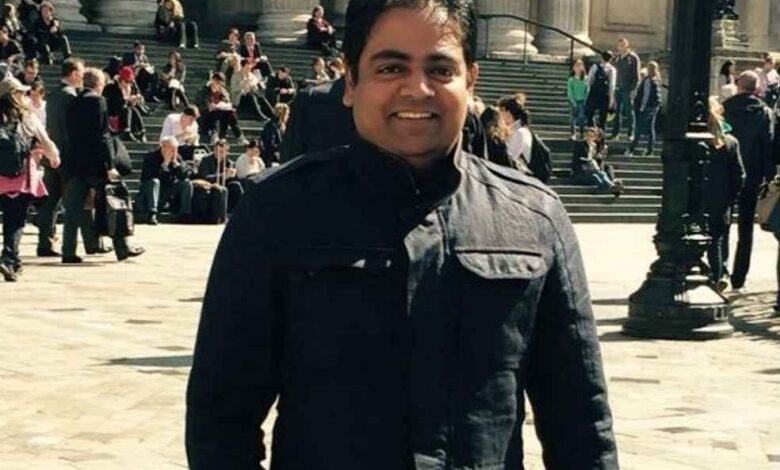
In a move that has sparked intense debate in India’s legal and financial circles, Alleged hawala operator Hari Shankar Tibrewal, (Kindly refer to the ED press release on the below link https://enforcementdirectorate.gov.in/sites/default/files/latestnews/Press%20Release%20-%20Mahadev%20Online%20Book%20-1.3.2024.pdf) a co-accused in the notorious Mahadev betting app scam, has reportedly renounced his Indian citizenship to acquire that of Vanuatu, a Pacific island nation known for its lax “golden passport” program. As of November 14, 2025, this decision by Tibrewal—a Kolkata-born hawala operator whose networks are accused of laundering over Rs 1,186 crore in illegal betting proceeds—comes amid escalating investigations by the Enforcement Directorate (ED) and Central Bureau of Investigation (CBI). The Mahadev betting app scam, involving an estimated Rs 6,000 crore in proceeds of crime (POC), has already resulted in multiple arrests, asset freezes, and international extradition battles. Tibrewal’s shift to Vanuatu citizenship, acquired through a citizenship-by-investment (CBI) scheme requiring around US$130,000, highlights how alleged criminals exploit global havens to evade justice. But why Vanuatu, and what does this mean for the ongoing probe into one of India’s largest online gambling frauds?
Hari Shankar Tibrewal, the alleged hawala operator whose role in the Mahadev betting app scam has made him a focal point of ED scrutiny, is no stranger to legal maneuvering. His renunciation of Indian citizenship raises questions about the effectiveness of international cooperation in tackling financial crimes. This news analysis article explores Tibrewal’s background, the full scope of the Mahadev betting app scam, and the motivations behind his Vanuatu choice. For those searching “Hari Shankar Tibrewal hawala operator” or “Mahadev betting app scam,” we provide a detailed, comprehensive overview, drawing from ED press releases, Supreme Court and High Court judgments, and recent developments like Ravi Uppal’s escape from Dubai. From Tibrewal’s early fraud cases to Vanuatu’s appeal as a criminal sanctuary, this piece covers every aspect, shedding light on how hawala operators like him navigate the shadows of global crime.
The Mahadev betting app scam, fueled by alleged hawala operators like Hari Shankar Tibrewal, continues to unfold with new revelations, but his Vanuatu citizenship marks a bold challenge to Indian authorities. Let’s dissect the story step by step.
a. Who Is Hari Shankar Tibrewal
Hari Shankar Tibrewal, the hawala operator and co-accused in the Mahadev betting app scam, is a enigmatic figure whose life has been marked by financial acumen and legal controversies. Born in Kolkata, West Bengal, Tibrewal grew up in a middle-class family amid the city’s teeming markets, where informal trading and underground finance were commonplace. While his exact birthdate is not publicly available—estimates place him in his late 50s or early 60s as of November 14, 2025—Tibrewal’s early exposure to Kolkata’s informal economy laid the foundation for his career as a hawala operator. Hawala, an ancient trust-based system for transferring money without formal records, became his expertise, allowing him to move vast sums anonymously through coded messages and networks of agents.
Tibrewal’s transition to a full-fledged hawala operator was gradual, but his early legal battles hint at a propensity for financial maneuvering. Court records from the Supreme Court and various High Courts reveal a series of cases involving cheating, forgery, and conspiracy, often resolved through strategic withdrawals or compromises. One landmark case was the Supreme Court Special Leave Petition (Criminal) No. 8015/2014, decided on October 17, 2014. Tibrewal challenged a Calcutta High Court order (CRM No. 7763/2014, dated July 23, 2014) denying him anticipatory bail in a West Bengal fraud matter under IPC Sections 406 (criminal breach of trust), 420 (cheating), 467 (forgery of valuable security), 468 (forgery for purpose of cheating), 471 (using forged documents as genuine), and 120-B (criminal conspiracy). The bench, Justices Sudhansu Jyoti Mukhopadhaya and S.A. Bobde, dismissed the petition but granted liberty for regular bail, ensuring lower courts decided uninfluenced by higher rulings. This case involved allegations of financial misconduct, a theme that would recur in Tibrewal’s profile as a hawala operator.
Tibrewal’s legal woes extended to the Punjab and Haryana High Court, particularly in connection with Haryana FIR No. 76/2012 registered at Police Station Udyog Vihar, Gurgaon, for similar offences of cheating and forgery. In CRM-M-37544-2013, decided on November 19, 2014, by Justice M.M.S. Bedi, Tibrewal withdrew his anticipatory bail petition, citing the need to pursue regular bail in a related Calcutta case. The court disposed of it without prejudice, noting the presence of complainant counsel Gautam Dutt and state representatives. This strategic retreat allowed Tibrewal to consolidate his defenses as a hawala operator facing increasing scrutiny.
The saga continued with CRM-M-18869-2016 on May 26, 2016, where Justice Jaspal Singh directed the Additional Sessions Judge, Gurgaon, to decide Tibrewal’s regular bail application (BA No. 177/2016) within seven days from receipt of the certified order copy. This urgency reflected the mounting pressures on Tibrewal as a hawala operator. In CRM-M-34883-2016 (O&M), decided on October 6, 2016, by the same judge, Tibrewal sought quashing of a lower court order dated August 26, 2016, and permissions for passport release and foreign travel. The court allowed amendments (via CRM No. 30760/2016), indicating Tibrewal’s growing international ambitions, a move that would later facilitate his role in the Mahadev betting app scam.
The resolution came in CRM-M-8964-2017 on May 30, 2017, where Justice Surinder Gupta quashed the entire Haryana FIR based on a compromise affidavit from the complainant’s representative, Ravinder Kumar. With no objections from the state (Additional Advocate General Vikramjeet Singh) or complainant (counsel Mrs. Kiran Bala Jain), the court exercised its inherent powers under CrPC Section 482 to end the proceedings, emphasizing the interest of justice and peace. This quashing, like others, demonstrated Tibrewal’s ability to negotiate out-of-court settlements, a skill honed from years in the hawala trade.
The Calcutta High Court also featured in Tibrewal’s legal history, with CRR 1579/2017 on June 12, 2017, an application under CrPC Section 482 for quashing or relief in a West Bengal matter. The case was disposed of after adjournments for compliance with Section 41A notices (notice to appear before police). These early cases collectively illustrate Tibrewal’s resilience as a hawala operator, capable of navigating complex legal landscapes to avoid conviction through compromises and withdrawals.
By the early 2020s, Tibrewal had relocated to Dubai, a global hub for hawala operators, where he allegedly used legitimate fronts to mask illicit operations. In the Mahadev betting app scam, his expertise as a hawala operator came to the fore, laundering vast sums through SkyExchange and FPI routes. ED investigations (press release March 1, 2024) label him a “huge hawala operator” who owned illegal betting websites and invested proceeds in Indian stocks, leading to freezes of Rs 580.78 crore in securities.
Tibrewal’s renunciation of Indian citizenship for Vanuatu’s in 2024, amid ED asset attachments (Rs 388 crore in December 2024), positions him as a fugitive hawala operator exploiting global CBI programs. This switch, requiring a significant investment for fast-track passports, grants him visa-free access to over 130 countries and protection from Indian extradition, making it a calculated escape in the Mahadev betting app scam narrative.
b. What was Mahadev Betting App Scam
The Mahadev betting app scam is a monumental fraud that exploited India’s digital boom to create a Rs 6,000 crore empire of illegal gambling and money laundering. Launched in 2018, the app—ironically named after the Hindu deity Mahadev (Lord Shiva) to evoke divine luck—served as an “umbrella syndicate” for a network of betting platforms, allowing users to place wagers on sports, elections, and rigged virtual games. What set it apart was its sophisticated franchise model and laundering network, with hawala operator Hari Shankar Tibrewal playing a central role in cleaning the funds through international channels.
The scam’s operational model was brilliantly user-friendly yet criminally efficient. Bettors downloaded the app or accessed web portals to create anonymous IDs, depositing money via UPI, bank transfers, cryptocurrencies, or bank accounts. Wagers were placed on live events such as IPL cricket matches, tennis, football, political elections, poker, and virtual games like “badminton” or “chance,” with odds manipulated from Dubai-based servers to ensure the house’s advantage. The franchise system was key—promoters sold “panels” or branches to associates for upfront deposits of Rs 15-30 lakh, sharing profits on a 70-30 basis (70% to panel owners, 30% to the core syndicate). Over 3,200 panels operated across India, enrolling between 1.2 and 9.9 million users, many from low-income households in Chhattisgarh, the app’s birthplace. During the COVID-19 lockdowns, when physical casinos were shut, the app’s usage exploded, generating daily revenues of Rs 200-240 crore as people turned to online entertainment for escapism and quick wins.
The true criminality of the Mahadev betting app scam lay in the laundering of these proceeds. Funds were layered through benami (dummy) bank accounts, siphoned offshore via hawala networks (facilitated by operators like Tibrewal), and “cleaned” through foreign portfolio investments (FPI) and foreign direct investments (FDI). Shell companies, often fronted by associates, invested in Indian stocks, manipulating prices by pumping small-cap shares (such as those of Gensol Engineering) before dumping them, causing losses to retail investors while creating legitimate-looking returns. ED estimates show Rs 1,186 crore laundered this way, with Rs 580.78 crore in Indian securities and Rs 606 crore via FPI frozen as of February 2024.
Political dimensions added explosive controversy to the scam. ED investigations revealed Rs 508 crore allegedly paid to Chhattisgarh’s then-Chief Minister Bhupesh Baghel for 2023 election expenses, delivered by couriers like Asim Das (intercepted with Rs 5.39 crore cash on November 3, 2023). Emails from high-ranking accused Shubham Soni confirmed these payments, triggering CBI involvement. Bollywood glamour further masked the fraud: 17 celebrities attended Chandrakar’s Rs 200-250 crore Dubai wedding in February 2023, with performers like Kapil Sharma reportedly compensated via hawala channels.
The app exploited India’s fragmented gambling laws—banned in most states but loosely regulated online—using VPNs, mirror sites, and Dubai servers to evade blocks. Sister platforms like Lotus365 (Girish Talreja) and SkyExchange (owned by Tibrewal) extended the network’s reach. A protected witness’s statement (Hindustan Times, September 19, 2024) exposed the “cooperative of 7 men” paying Rs 5 lakh bribes to lower operatives for staged confessions, protecting the core group from exposure.
ED press releases provide critical insights. The March 1, 2024, release described Mahadev as a syndicate “arranging online platforms for illegal betting,” with Tibrewal as the hawala operator investing proceeds via FPI, leading to freezes of Rs 580.78 crore. The November 3, 2023, release highlighted the election funding, with Das admitting ties to “Politician ‘Baghel’.” The April 21, 2025, release noted Rs 3.29 crore cash seizures amid expanding probes into stock manipulations.
The Mahadev betting app scam not only defrauded bettors but also undermined financial markets, allegedly influenced politics, and exploited digital anonymity. For “Mahadev betting app scam” searchers, it’s a stark reminder of how hawala operators like Hari Shankar Tibrewal can turn virtual vices into real-world empires, with lasting impacts on India’s economy and society.
b. What was Mahadev Betting App Scam
The Mahadev betting app scam is a landmark case in India’s fight against digital crime, representing a perfect storm of technological innovation and criminal ingenuity that generated Rs 6,000 crore in POC. Launched in 2018, the app—named after Lord Shiva to invoke trust—operated as an “umbrella syndicate” for illegal betting, with hawala operator Hari Shankar Tibrewal central to its laundering success.
The scam’s mechanics were user-friendly yet criminally sophisticated. Bettors created IDs to wager on cricket, elections, tennis, poker, and rigged virtual games, depositing via UPI/crypto. Panels (3,200+) franchised for Rs 15-30 lakh, sharing 70-30 profits. Revenues peaked at Rs 240 crore daily during COVID.
Laundering involved benami accounts, hawala (Tibrewal’s domain), FPI (Tano Fund), and stock manipulations (Gensol pumps/dumps). Political payoffs (Rs 508 crore to Baghel) and Bollywood ties (Chandrakar wedding) added layers.
ED releases (March 2024) detail Tibrewal’s SkyExchange role. Witness statements expose the “cooperative,” with Rs 5 lakh bribes. The scam exploited gambling laws, using VPNs for resilience.
c. Who All Were the People Behind Mahadev Betting App Scam
The scam was led by a “cooperative of 7 men,” with associates.
Sourabh Chandrakar: Juice seller turned promoter.
Ravi Uppal: Tyre owner; political fixer.
Hari Shankar Tibrewal: Hawala expert; launderer.
Girish Talreja: Cash handler.
Shubham Soni: Email leaker.
Unnamed: Ahuja Brothers.
Associates: Nitin Tibrewal (FPI); Chokhani (investments); Kedia (broker); Das/Yadav (couriers); Garg (FPI); Baghel (beneficiary).
Celebs: Sahil Khan.
d. Mention the Entire Timeline of the Scam
Pre-2018: Origins.
2018: Launch.
2019: Growth.
2020-2021: Peak.
2022: ED ECIR; attachments.
2023: Wedding; cash interception; arrests.
2024: Raids; arrests; attachments.
2025: Dismissals; bails; escapes; raids.
e. what is the present status of the case
Ongoing with 44 accused; Rs 2,295+ crore attached.
f. Where are all the absconding accused
Uppal untraceable; Chandrakar UAE; Tibrewal Dubai/Vanuatu.
g. What was the role of Hari Shankar Tibrewal in the entire scam
Financial architect; laundered Rs 1,186 crore.
h. What all the cases are filed against the people involved in Mahadev Betting App
ECIR; CBI FIRs; HC/SC petitions; SEBI probe.
i. Why Criminals Like Hari Shankar Tibrewal has choosen Vanuatu as their safe haven
No extradition; CBI ease; secrecy.
j. who all other Indians have taken citizenship of Vanuatu
Lalit Modi; 30+ HNIs; fraud accused.
k. Vanuatu as safe haven for criminals as following content in this point
Vanuatu has been identified as a potential safe haven for criminals, particularly those involved in financial crimes and transnational organized crime, due to its offshore financial center status, weak anti-money laundering enforcement, and its controversial “golden passport” (Citizenship-by-Investment or CBI) program. Key issues contributing to this status include: Citizenship-by-Investment Program: The CBI program, which offers fast-track citizenship for a significant fee (around US$130,000), has been exploited by foreign nationals with questionable backgrounds. A notable case is that of Andrew Tate, who obtained a Vanuatu passport while under investigation for human trafficking and rape charges in Romania (the government is now considering revocation of his citizenship). Financial Secrecy Laws and Tax Haven Status: Vanuatu operates as an offshore tax haven with secrecy laws that have prevented authorities from accessing information about beneficial ownership of entities, except under a court order. This environment facilitates the laundering of proceeds from corruption, fraud, and tax evasion. The European Council has blacklisted Vanuatu as a non-cooperative tax jurisdiction. Weak Border Controls and Law Enforcement: The country’s geography, with many islands, makes border monitoring challenging and vulnerable to exploitation by traffickers and smugglers. State-embedded actors, including immigration and border officials, have reportedly accepted bribes to facilitate the entry of criminals and illicit operations. Lack of Extradition Agreements: Vanuatu lacks certain key international treaties and extradition agreements, which has led human rights organizations like Amnesty International to warn that it could be a safe haven for individuals suspected of serious crimes such as war crimes and crimes against humanity. Corruption: Corruption within government institutions and law enforcement is a persistent challenge that enables criminal activities to continue.
Vanuatu’s features make it ideal for hawala operators like Tibrewal, enabling asset hiding and evasion.
Disclaimer: This Article of Inventiva is based on press release of ED on 1st March 2024 where Enforcement Directorate has itself called Hari Shankar Tibrewal as Hawala Operator.
Kindly refer to the ED press release on the below link