Prologue: A Room Full of Adults
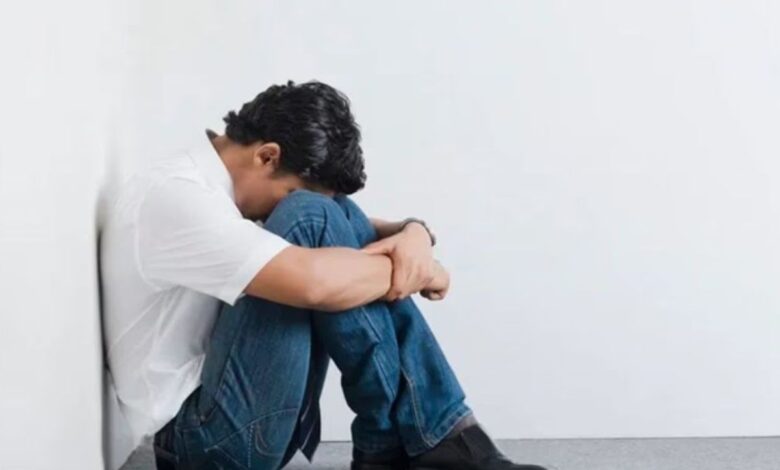
Picture a boy at a family gathering. He is perhaps twelve years old. The house is loud and warm — relatives arriving, incense burning, someone laughing too loudly in the kitchen. At some point during the evening, an older male relative touches him in a way that feels wrong. The boy looks around the room. Every adult face is busy with celebration. Nobody is watching.
He has no words for what just happened, because no adult in his life has ever given him vocabulary for this possibility. Since he was three years old, every signal he has received from the world has told him that boys are not supposed to be hurt. Boys are not supposed to cry. Boys handle things. Boys are strong. So he says nothing. He will say nothing for the next twenty years. He may say nothing for the rest of his life.
This is not an imaginary scenario. It is the condensed experience of thousands of Indian men who only speak about such events — if they speak at all — in anonymised online communities, in the darkness of a therapy room, or in the last conversation before a crisis.
In 2022, the National Crime Records Bureau documented 1,22,724 male deaths by suicide in India, against 48,172 female deaths by suicide — a ratio of approximately 72.5 to 27.5 (NCRB, Accidental Deaths and Suicides in India, 2022; Wikipedia, Suicide in India, citing NCRB). In 2023, India recorded 1.71 lakh total suicides — the highest in over a decade — and men accounted for approximately 73 percent of that number (FACTLY, March 2026, citing NCRB 2023).
A peer-reviewed study published in The Lancet Regional Health Southeast Asia found that suicide death rates among Indian men were twice those of Indian women in 2014 and had grown to 2.5 times by 2021, with a 107.5 percent increase in men citing family problems as a reason for suicide between 2014 and 2021 — approximately double the rate of increase among women (The Lancet, Changing Pattern of Suicide Deaths in India, PMC, August 2023). The suicide death rate among currently married men stands at 24.3 per lakh — three times that of currently married women at 8.4 per lakh (The Lancet, PMC, 2023).
These are not numbers. They are the arithmetic of silence. They are what happens when a society builds boys who cannot ask for help.
This piece is a systematic examination of how that silence is constructed — and why India’s legal architecture makes it impossible, in many cases, for men to break it even if they find the courage to try.
Part One: The Architecture of Silence — How India Builds Boys Who Cannot Speak
Chapter 1: The First Lesson in Being MEN
The social conditioning of Indian boys begins remarkably early and operates with remarkable consistency across class, religion, language, and geography. The specific phrases vary by region and household, but the instruction is universal: a boy’s emotional experience, particularly pain and vulnerability, is unwelcome. “Ladkiyon ki tarah mat ro” — don’t cry like a girl. “Mard banta hai” — be a man. “Tu toh hero hai” — you are a hero. “Chup kar, kuch nahi hua” — be quiet, nothing happened.
These phrases, examined through the lens of developmental psychology, function not merely as discouragement from crying but as prohibitions on the internal acknowledgement of distress itself. Research published in the Journal of ResearchGate (2025) specifically examining Indian male populations found that traditional masculine role norms in India are strongly associated with self-stigma around help-seeking, and that this self-stigma operates as a direct mediator between exposure to traditional masculine norms and the suppression of mental health help-seeking behaviour (ResearchGate, Masculine Norms and Mental Help-Seeking in Indian Men, 2025). The study found that masculine norms create a pattern of “emotional restrictiveness, avoidance of femininity, self-reliance, and dominance” that are “transmitted through socialisation processes and reinforced through cultural expectations.”
Indian boys are not taught what to do when something bad happens to them. They are taught not to have bad things happen to them — and when they do, the lesson they have absorbed is that having a bad thing happen is itself a kind of failure of maleness. The abuse or harassment becomes a source of shame rather than a signal to seek help.
This is the foundational injury. Everything else in this article flows from it.
Chapter 2: School — Where Vulnerability Is Punished
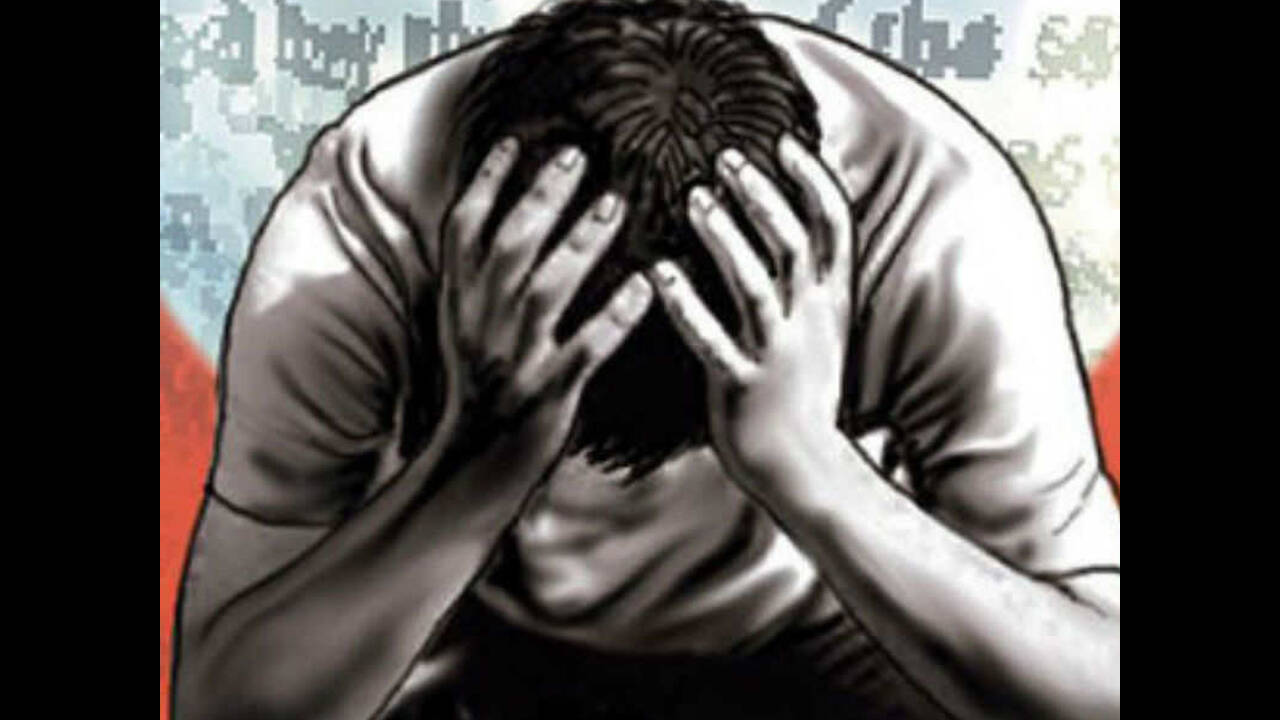
If the family is where the first silence is installed, the school is where it is reinforced with extraordinary efficiency. India’s school environment operates on a hidden curriculum that runs parallel to its formal academic one: social hierarchy is established through the suppression of vulnerability, and boys who breach this norm face immediate and often violent peer correction.
Boys who cry are called “chhakkas” — a term that simultaneously degrades them for perceived weakness and for perceived femininity, linking emotional expression inextricably with disgrace and emasculation. Boys who report bullying are “tattlers,” outside the social contract of male peer culture. Boys who disclose abuse by a teacher are, in the rare instances they speak at all, frequently met not with protective intervention but with disbelief, minimisation, or — in documented accounts from counsellors — with responses like “he probably misunderstood” or “boys don’t have these problems.”
The structural consequence is that India has near-zero formal complaint mechanisms specifically designed for male students experiencing peer sexual harassment or teacher abuse. The POSH Act, which is the only statutory framework for workplace sexual harassment complaints, does not apply to schools as employer-employee relationships in a way that protects students. POCSO provides technical coverage for all children regardless of gender — but its practical application for male child victims is severely limited by the disclosure barriers that this article documents.
The National Mental Health Survey (2015–16) found that nearly 14 percent of India’s population suffers from some form of mental disorder (PublicHealth360, 2025). The Live Love Laugh Foundation’s 2018 national survey, conducted across eight cities with 3,556 respondents, found that only 10 to 12 percent of people with mental health conditions in India seek help, with stigma being the primary documented barrier (World Economic Forum, 5 Charts That Reveal How India Sees Mental Health, 2018). The gap between those numbers — 14 percent affected, 10 to 12 percent of those seeking help — represents millions of people suffering in preventable silence. Male-specific barriers make that gap even wider for men and boys.
Chapter 3: The Mythology Machine
India’s religious and mythological tradition has produced extraordinary complexity in its representations of the human experience — but its popular cultural reception has been curated, over centuries, toward a single and narrowly defined template of acceptable masculinity. Ram does not weep when Sita is taken.
Arjuna’s weeping in the Bhagavad Gita is treated as a crisis requiring correction — Krishna’s entire subsequent discourse is premised on pulling Arjuna out of his grief rather than validating it as a natural human response to watching those he loves face destruction. Bajrang Bali is worshipped for physical invincibility. The heroes of popular Hindu mythology are, without exception, defined by their capacity to endure and to act — never by their capacity to feel and to disclose.
This is not a critique of these texts in their original depth and complexity. It is an observation about their popular reception, and about what children absorb from the cultural shorthand of devotional images, comic books, television serials, and the collective narrative of what it means to be male in India. When a boy’s entire symbolic world presents strength as the only sacred male attribute, he internalises the corollary: that emotional exposure is a form of spiritual failure. To ask for help when hurt is to confess that you are not the hero the culture demands you be.
The consequences of this mythological conditioning extend beyond abstract psychology into documented institutional abuse. Certain traditional institutions — religious gurukuls, wrestling akharas, various forms of residential instruction organised around the ideal of the self-reliant male student — have historically created environments in which the very ethos of the institution actively suppressed male students’ capacity to report abuse.
The prohibition on complaint is built into the cultural architecture of the setting. Investigations in recent years — including documented cases within cricket academies, wrestling training centres, and some religious residential schools — reveal that male-on-male abuse in these settings remained unreported for years, in many cases decades, precisely because the institutional ethos made complaint unthinkable for those who had been conditioned to see endurance as virtue.
Chapter 4: Bollywood’s Perfect Crime
The Hindi film industry has spent seventy years manufacturing a template of male heroism — a figure who absorbs extraordinary physical and emotional violence without complaint, whose silence is coded as dignity, and whose eventual act of revenge is coded as justice. The hero does not process trauma. He avenges it.
This matters for the specific purpose of this piece because popular media is one of the primary mechanisms through which social scripts are delivered to children and absorbed before they have the critical capacity to examine them. A boy who grows up watching male characters in Bollywood films absorbs, film by film, a lesson: that sexual or physical violence experienced by a man is either a prelude to revenge (serious films) or a source of comedy (comic films).
The prolonged cultural joke made of male domestic abuse victims — visible in films including Judwaa, Golmaal, and a long lineage of mainstream comedies — communicates with extraordinary clarity that a man who is hurt by a woman is not a victim deserving sympathy but a figure deserving laughter. When the same scenario — a person being physically assaulted by someone in a position of power over them — is played as tragedy for female characters and comedy for male characters, children watching internalise a hierarchy of whose pain deserves to be taken seriously.
It is worth noting, to be fair, that Bollywood has made genuine strides in portraying the serious dimensions of violence against women, with films like Pink (2016), Thappad (2020), and Darlings (2022) engaging with female victimhood with increasing sensitivity and craft. The parallel tradition of films examining male victimhood — sexual abuse, emotional violence, harassment — is functionally absent from mainstream Hindi cinema as of 2026. This asymmetry both reflects and reinforces the cultural consensus that male suffering requires a different kind of narrative architecture, if it requires any narrative architecture at all.

Chapter 5: The Mother Paradox — Love That Silences
Perhaps the most politically sensitive, and most important, element of this analysis involves the role of the primary emotional educator in most Indian boys’ lives: the mother. The relationship between Indian mothers and sons is among the most emotionally complex and culturally loaded in the world — characterised simultaneously by extraordinary depth of feeling, genuine self-sacrifice, and, in the specific context of this analysis, by an often unconscious administration of the same emotional suppression norms that the broader culture installs.
“Tu toh mera bahadur beta hai, tu nahi royega.” You are my brave son, you will not cry.
This is not cruelty. It is love operating through a socialised belief system that the mother herself has inherited and never had the occasion to examine critically. She has been told, as a woman, that strong men do not cry, and she transmits this belief to her son with the purest of intentions — wanting to equip him for a world she understands to be hostile to male vulnerability. The tragedy is that in doing so, she becomes one of the architects of the vulnerability she is trying to protect him from.
A 2021 Deloitte report found that 80 percent of Indian employees suffer from mental health issues, but only 39 percent seek help due to fear of stigma and job loss (PublicHealth360, citing Deloitte 2021). The Vandrevala Foundation, which operates a national mental health helpline in 11 languages and has handled over 1.7 million cases (Vandrevala Foundation Wikipedia, 2023), documents consistently that women are more willing than men to use digital communication channels for mental health outreach — 53 percent of women preferred WhatsApp contact compared to 42 percent of men (Vandrevala Foundation, YourStory, March 2023). The gender gap in help-seeking is not an invention of advocacy; it is measured data from organisations that have spent years trying to bridge it.
The mother is not the problem. The problem is the system of beliefs that she, like her son, was given without being asked whether she wanted them.
Part Two: The Law Does Not See Him — How India’s Legal Framework Renders Male Harassment Invisible
Chapter 6: The POSH Wall
Consider the following scenario, documented not as a hypothetical but as a structural reality that lawyers, HR professionals, and advocacy organisations have repeatedly described in published analysis. A male software engineer in Bengaluru is repeatedly touched without consent by his female manager during team meetings. He reports the conduct to his company’s HR department.
The HR officer explains, with genuine regret, that the company’s Internal Complaints Committee operates under the Sexual Harassment of Women at Workplace (Prevention, Prohibition and Redressal) Act, 2013 — known as the POSH Act. Under Section 2(a) of that Act, the protected party is defined as an “aggrieved woman.” Section 4 mandates that the Internal Complaints Committee is constituted to hear complaints from aggrieved women. The legal framework, by its explicit design, does not cover him.
This is not an interpretation. It is the statute’s plain language. As legal analysis published in the International Journal of Law and Legal Affairs confirms: “If any other individual apart from a woman faces any kind of sexual advances or harassment at the workplace, they do not have any formal recourse in the POSH Act” (IJLSSS, The POSH Act — Tracing Its Evolution, Scope, and Gender-Neutral Applicability, 2025). Law firm Nishith Desai Associates, in its authoritative guide to POSH compliance, confirms the same: “The POSH Act is not a gender-neutral legislation and protects only women. Therefore, the safeguards under the POSH Act are not applicable to ‘men’ victims” (Nishith Desai, Prevention of Sexual Harassment at the Workplace).
The December 2011 Parliamentary Standing Committee’s 239th report, which examined the Bill before it became law, explicitly considered the question of male inclusion. The committee noted that there was “substance” to the submission that the Act should address male harassment. A 2010 Economic Times-Synovate survey of 527 male respondents across Indian cities found that 19 percent reported experiencing sexual harassment and that 51 percent reported encountering incidents of harassment in their workplaces (IJLSSS, 2025; Mondaq, Towards Gender Neutrality, 2023).
A 2013 survey by Viacom 18 found that 43 percent of male corporate professionals in India had encountered unwelcome sexual advances from colleagues. The Standing Committee, in full possession of this evidence, still excluded gender neutrality from the Act. The stated reason was that women bear a disproportionately significant impact of workplace harassment — a genuine and important point, but one that does not logically require excluding male victims from any statutory remedy whatsoever.
The result, as analysis of the POSH Act concludes, is that “men and individuals of other genders who are victims of workplace sexual harassment in India face the absence of effective legal recourse and a lack of sympathy and recognition of their experiences by law enforcement agencies and colleagues”.
The Bharatiya Nyaya Sanhita (BNS), which replaced the IPC in 2023, provides some indirect recourse for male harassment victims through Section 503 (criminal intimidation) and Sections 499–500 (defamation) but contains no dedicated workplace sexual harassment provision that protects male employees (IJLRA, Rights of Men Against Sexual Harassment at Workplace, 2025). India, as of 2026, remains without a gender-neutral workplace harassment statute — a position that contrasts with the United Kingdom’s Equality Act 2010 and Canada’s Human Rights Act, both of which protect all employees regardless of gender identity.
Chapter 7: The Criminal Law’s Gendered Architecture
If the workplace protection gap is damaging, the gap in India’s criminal law is constitutional in its implications. Under IPC Section 354 — which addressed “assault or use of criminal force to outrage the modesty of a woman” — the protected party was explicitly a woman. Section 354A, which codified sexual harassment, covered only female victims. Section 375, which defined rape, specified that the perpetrator “is a man” and the victim “is a woman” in its primary application (Legal Service India, The Debate Around Gender Neutral Rape Laws, 2025).
In practice, this meant that a man who was sexually assaulted by another man had recourse only through the deeply problematic Section 377 — “carnal intercourse against the order of nature” — a provision so archaic in its framing, so loaded with the history of colonial criminalisation of homosexuality, and so stigmatising in its language that it was practically unavailable to straight male assault victims and deeply traumatising for gay male victims.
The 2012 Delhi gang rape and the subsequent formation of the Justice Verma Committee represented a pivotal moment at which India had the opportunity to build a genuinely gender-inclusive criminal law framework for sexual violence. The committee’s January 2013 report noted explicitly that “all persons regardless of their gender are entitled to legal protection” and recommended that the victim’s identity in rape law be made gender-neutral (Change.org, Make India’s Rape Laws Gender-Neutral in the BNS, 2024, citing Justice Verma Committee Report).
This was a carefully considered recommendation from the country’s senior-most legal mind, supported by evidence of sexual violence experienced by men, transgender persons, and non-binary individuals. In February 2013, the government initially issued a Criminal Law (Amendment) Ordinance that included gender-neutral language for both victim and perpetrator.
What happened next is important to understand precisely, because it is frequently mischaracterised. Women’s rights organisations — many of them deeply committed, evidence-led, and representing communities that have faced generations of systematic violence — raised legitimate concerns that “blanket gender-neutrality” (covering both victim and perpetrator) could be weaponised against women in a patriarchal justice system that was already unreliable in protecting female victims (Feminist Law Archives, PLD India, Gender Just, Gender Sensitive and NOT Gender Neutral Rape Laws, 2013; Queerbeat, July 2025). These concerns have genuine empirical basis, and they deserve respect.
However, the legislative response to these concerns went further than the concerns required: the Criminal Law (Amendment) Act, 2013, when it replaced the Ordinance, removed gender-neutral language entirely — not just for perpetrators, but for victims as well (Legal Service India, 2025; Amnesty International, 2013). As Amnesty International noted: “By defining rape in terms of acts committed by a man against a woman, the Act ignores the recommendations of the Verma Committee to criminalise sexual assault of men and transgender individuals” (Amnesty International, India New Sexual Violence Law, 2013).
The Bharatiya Nyaya Sanhita 2023, which replaced the IPC entirely, had a second opportunity. The Parliamentary Standing Committee on Home Affairs had explicitly recommended retaining a gender-neutral provision for sexual acts without consent against any person, regardless of gender (Change.org, 2024). That recommendation was not accepted. As a result, India entered 2026 with criminal law that, in its primary sexual offence provisions, still does not recognise men as rape victims — thirty-three years after Delhi High Court Justice Jaspal Singh observed, in Sudesh Jhaku v K.C. Jhaku (1996), that “men who are sexually assaulted should have the same protection as female victims” (LHSS Collective, Gender-Neutral Rape Laws in India, 2024).
Chapter 8: POCSO’s Promise and Its Practical Failure for Male Children
The Protection of Children from Sexual Offences (POCSO) Act, 2012 is the most important counter-evidence to the argument that India’s legal framework entirely ignores male victimhood. POCSO is technically gender-neutral in its definition of “child” — it covers all persons under 18 regardless of gender, and its offence provisions do not specify the sex of the victim. This is a genuine legal achievement that advocates for gender-neutral sexual offence law frequently cite as a model (Change.org, 2024).
Yet the practical gap between POCSO’s gender-neutral language and the reality of male child abuse disclosure in India is vast. Male child sexual abuse is structurally underreported not because it does not occur but because the same silence-building machinery documented in Part One of this article ensures that most male victims never tell anyone.
The Kailash Satyarthi Children’s Foundation and multiple researchers in child protection have noted the discrepancy between global prevalence estimates — which typically suggest approximately 1 in 6 boys experiences sexual abuse before the age of 18, per WHO-cited research — and the proportion of male victims in India’s POCSO case data. The cases do not enter the legal system because boys have been taught, thoroughly and consistently, that what happened to them is not something one speaks about.
Additionally, POCSO’s gender-neutral language does not automatically translate into gender-sensitive complaint infrastructure in the settings where male child abuse most commonly occurs — schools, sports training academies, religious residential institutions, and informal care settings. These environments do not have the equivalent of an Internal Complaints Committee, do not have trained counsellors specifically equipped to create safe disclosure spaces for male children, and do not have mandatory reporting cultures that would supplement what a child is unlikely to report for himself. The law covers him. The system designed to receive his disclosure does not exist.
Chapter 9: MeToo, Media, and the Architecture of Disbelief
India’s #MeToo moment in 2018 was a watershed for women’s disclosure of harassment — it provided a mechanism for speaking that partially bypassed the formal legal system’s documented inadequacies, used social media as an equalising platform, and produced consequences — terminations, resignations, social consequences — for perpetrators who had previously faced none. This was important and necessary, and this article is not diminishing it.
What the 2018 moment also demonstrated, precisely through contrast, is the absence of an equivalent infrastructure for male disclosure. The handful of cases where men spoke publicly about harassment — Utsav Chakraborty’s account of facing harassment from a female comedian, various anonymous accounts in creative and tech industries — were met with a qualitatively different public reception than female accounts.
Social media responses included widespread mockery, demands for evidence of a kind rarely applied to female accounts, and organised counterattack. The feminist legal aid infrastructure that had been built over decades to support female complainants had no parallel for male complainants. No equivalent of iCall’s documented experience of creating safe telephone-based disclosure spaces was oriented toward male victims’ specific barriers to speaking.
The result is that the 2018 wave produced, for male harassment victims, a public lesson: that speaking will be treated as performance, as manipulation, as agenda, or as comedy — but not as genuine distress deserving of serious response. This lesson, delivered publicly and widely, deepened the silence rather than breaking it.
Part Three: The Numbers That Cannot Lie, and the Future That Must Be Built
Chapter 10: What Happens When Men Cannot Speak
The consequences of male silence around harassment and distress are documented and measurable. The suicide data is the most extreme end of the spectrum. In 2022, 1,22,724 Indian men died by suicide against 48,172 women — a ratio that has been worsening, not improving, across the decade (NCRB, 2022; FACTLY, 2026). The increase in family problems cited as a reason for male suicide was 107.5 percent between 2014 and 2021 — double the rate of increase among women facing the same category of problems (The Lancet, PMC, 2023).
Among married men specifically, the suicide death rate of 24.3 per lakh is three times that of married women (The Lancet, 2023). Student suicides show a similar asymmetry: in 2022, male students constituted 53 percent of total student suicides, and male student suicides surged 99 percent over the preceding decade (IC3 Institute, Student Suicides Report, 2024, citing NCRB).
These numbers do not have a single cause, and attributing all male suicide to unspoken harassment would be simplistic. Economic pressure, agricultural distress, academic competition, and substance use are all documented contributors. But the specific inability of Indian men to disclose distress — to identify what happened to them as harassment, to name it as harm, to seek help specifically for it — creates a downstream effect that mental health researchers consistently identify as significant. When the only available response to pain is silence, silence accumulates into crisis.
The 2018 TLLLF national survey found that only 10 to 12 percent of Indians with mental health conditions seek help — and that the primary barriers were stigma, lack of awareness, and limited professional access (WEF, 2018). For men, stigma is not the primary barrier — it is the only narrative available. A woman who seeks therapy is, in the evolving cultural understanding, someone dealing bravely with her difficulties. A man who seeks therapy is, in much of India’s cultural lexicon, someone who could not handle his difficulties — a failure of the masculine ideal that is the only identity template most Indian men have ever been offered.
Chapter 11: What Must Change — A Structural Reform Architecture
The argument of this article is not that women’s suffering is less serious than men’s, or that protections built for women over decades of advocacy should be weakened. It is that the extension of protection and the creation of disclosure spaces for men and boys is both constitutionally required and practically urgent. These are not competing objectives. They are complementary ones.
The reforms needed are specific, achievable, and documented in existing advocacy literature.
In law: The POSH Act requires amendment or complementary legislation to create a gender-neutral workplace harassment framework. Academic legal analysis from IJLSSS (2025), Mondaq (2023), and Rainmaker (2024) all converge on this point, noting that Articles 14, 15, and 21 of the Constitution — guaranteeing equality, non-discrimination, and the right to life with dignity — require that protections against workplace harassment extend to all employees regardless of gender.
The Bharatiya Nyaya Sanhita must be amended to recognise adult male victims of sexual violence with the same statutory clarity that the Justice Verma Committee recommended in 2013 and that Parliament declined to implement. The Law Commission’s 172nd Report had recommended exactly this — a gender-neutral “sexual assault” offence replacing the gendered “rape” provisions (LHSS Collective, 2024). That recommendation is now over two decades old and has still not been implemented.
In schools: Mandatory, curriculum-embedded education about consent, bodily autonomy, and the right to disclose must use language that explicitly includes boys as potential recipients of harm — not merely as potential perpetrators. School counsellor training programmes must include specific modules on creating safe disclosure environments for male students, including specific training on recognising the minimising language that male victims characteristically use — describing significant trauma as “a small problem” or “nothing major.” The NCPCR’s child protection framework should mandate gender-sensitive institutional complaint mechanisms in schools, sports academies, and religious residential institutions.
In mental health infrastructure: The Vandrevala Foundation’s documented success in reaching male users through digital communication platforms — with 42 percent of male users preferring WhatsApp contact, significantly lower than the 53 percent of female users but measurably present (Vandrevala Foundation, YourStory, 2023) — suggests that technology-mediated, lower-stigma pathways to disclosure are effective for men. These should be explicitly funded and scaled. The WHO recommends 3 psychiatrists per 1,00,000 people; India has 0.3 (PublicHealth360, 2025). The treatment infrastructure gap is enormous and affects everyone, but it affects men particularly severely because their specific barriers to help-seeking mean they are far less likely to reach whatever infrastructure does exist.
In culture: The campaign to change the social meaning of male emotional disclosure cannot be legislated — it requires the same kind of sustained cultural work that changed India’s understanding of female victimhood over decades. That work requires media representation: films, web series, advertising, and public health campaigns that show Indian men speaking about harm, seeking help, and being believed.
It requires visible male figures — athletes, actors, public intellectuals — speaking honestly about their own experiences of distress, harassment, or abuse. It requires the deliberate dismantling, in school curricula and in public discourse, of the “mard ko dard nahi hota” template — the idea that real men do not feel pain. They do. They always have. The tragedy is that they were never given permission to say so.
Conclusion: The Silence Has a Price Tag
India is a country that, at its constitutional core, promises equal protection and equal dignity to all its citizens. That promise is betrayed every time a boy is told that his tears are shameful. It is betrayed every time a man cannot name what happened to him because the law has no category for him as a victim. It is betrayed in the 1,22,724 suicides of men in 2022, in the 107.5 percent rise in family-problems-related male suicide between 2014 and 2021, in the 73 percent male share of India’s annual suicide toll that has persisted, year after year, largely without institutional response.
The silence that Indian boys and men carry is not a personal failing. It was installed methodically — by language, by mythology, by popular culture, by law, by the institutions that were supposed to protect them, by the people who love them most. It was installed so thoroughly that most of its bearers cannot see it as something installed at all. They experience it as simply the way things are — as their own nature, rather than as a lesson they were given and never asked to question.
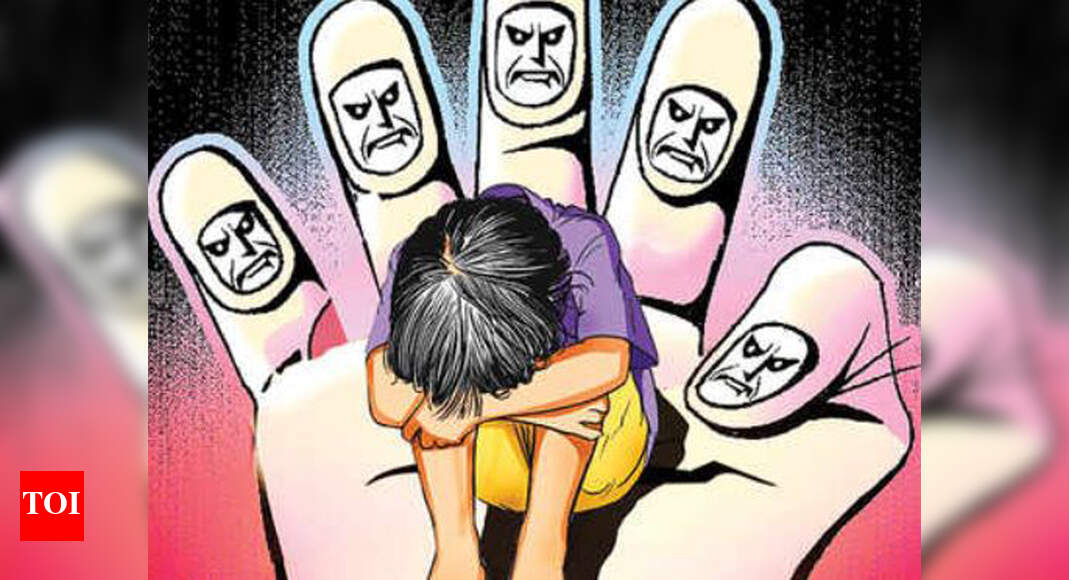
The architecture of that silence is the subject of this article. The architecture of what must replace it is the only question that matters now. Because the alternative — a country where 73 percent of suicide victims are male, where a man harassed at work has no statutory remedy, where a man who was abused as a child finds the social and legal framework jointly structured against his disclosure — is not a country living up to what its Constitution says it believes. And it is not a country that can afford, in human terms, to continue as it is.
The silence must end. And it must end with understanding — that it was never chosen, and that ending it is not weakness. It is, finally, the hardest and most necessary kind of strength.
This article is a public interest analysis and does not constitute legal advice. The statistical data cited represents findings from verified government databases (NCRB), peer-reviewed academic journals (The Lancet, PMC), and credible media and NGO publications. The article explicitly acknowledges that the feminist advocacy concerns that shaped existing legislation — particularly the POSH Act and the 2013 Criminal Law Amendment — were grounded in genuine and well-evidenced concerns about women’s safety and the risks of misuse of gender-neutral provisions. The call for reform in this article is complementary to, not in opposition to, the continuing project of protecting women from gendered violence.