Kabul Chawla: Whose Warrant That Nobody Executed!
In 2011, a Delhi court did something that courts in India do with careful deliberation and documented reason: it issued a non-bailable warrant against a sitting chairman and managing director of a major real estate company. The court labelled him a “flight risk.” The warrant was not a bureaucratic formality. It arose from a specific, documented FIR registered in January 2011 by Faridabad police, which accused the chairman of defrauding over 1,000 homebuyers of approximately Rs 400 crore, which is the money collected as full or near-full payment for residential plots and flats that were never delivered.
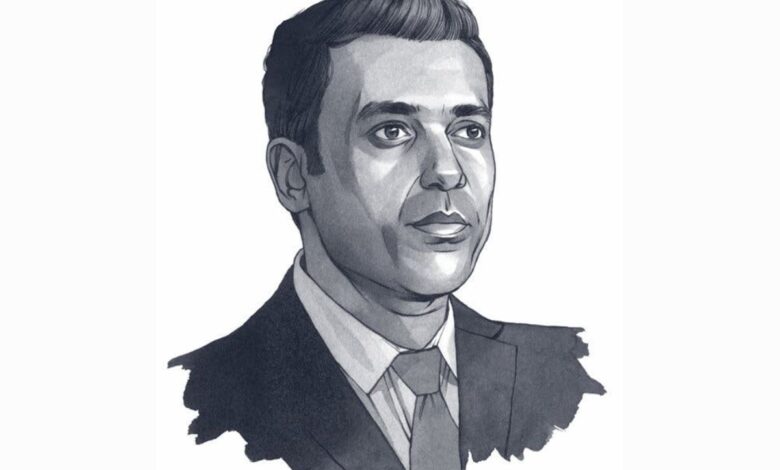
The chairman’s name is Kabul Chawla. The company is Business Park Town Planners (BPTP) Limited. The year that warrant was issued was 2011. As of March 2026, fifteen years later, Kabul Chawla has not been arrested. He has not appeared before an Indian court to answer the charges. He has not returned to face trial. He is believed to be living in New York, from where he manages BPTP via his son Kabir and through intermediaries, occasionally appearing by video at company events and even accepting awards for “sustainable development” — all while over a thousand families in Faridabad and Gurugram continue paying EMIs on homes they have never occupied.
This is not a story about a complicated legal grey area. It is a story about a documented warrant, a documented fugitive, documented victims, and a documented failure of institutional will. This article mentions why Kabul Chawla must be arrested — and what his continued freedom reveals about who Indian law is, and is not, built to protect.
The Anatomy of the Original Fraud
The first FIR against Chawla arose from BPTP’s Sector 85 project in Faridabad, known as Discovery Park. Buyers had paid approximately Rs 400 crore in total for plots and flats, trusting BPTP’s promise of delivery by 2012. The promise was not kept. The construction was not completed. The money, according to investigating agencies, was diverted. The charges filed were under IPC Sections 420 (cheating), 406 (criminal breach of trust), 406 (criminal conspiracy), 467, 468, and 471 — not minor infractions, but serious offences that speak to deliberate, premeditated betrayal of financial trust.
What happened next followed a pattern that years-long investigation characterises as systematic evasion by design. By mid-2011, the non-bailable warrant was issued. By late 2011, Chawla had reportedly left India, citing “business commitments.” He settled in the United States.
By 2012, reports confirmed he had purchased a 4,050 square foot, five-bedroom luxury condominium on the 68th floor of the Time Warner Center in Manhattan, New York, for approximately $19.4 million, using a Delaware-registered shell company with a Singapore address. The New York Times, in a landmark investigation into foreign fund flows into top-end Manhattan real estate, identified this purchase and linked it directly to Chawla, though Chawla publicly denied ownership, claiming the property belonged to a cousin. Broker emails, however, told a different story, directly linking the acquisition to Chawla himself.
The juxtaposition here is not merely symbolic — it is legally and morally central to the case for his arrest. In 2012, while 1,000 Indian families were fighting in consumer courts and police stations to recover the money they had paid for homes that did not exist, Kabul Chawla was purchasing a $19.4 million penthouse in one of Manhattan’s most exclusive buildings.
His net worth was pegged at Rs 2,071 crore in 2014, even as BPTP teetered on the edge of insolvency proceedings. He also owned a bungalow on Delhi’s elite Amrita Shergil Marg in the Lutyens Zone, which he sold in 2015 for Rs 150 crore when regulatory scrutiny was intensifying at home. He also maintained a bungalow in Delhi’s Golf Links, sold the same year amid scrutiny.
A Decade and a Half of Compounding Offences
The 2011 FIR is not Chawla’s only legal exposure — it is merely the origin point of a legal rap sheet that has grown, almost annually, for fifteen years. In 2013, the CBI issued a separate warrant in a money laundering matter. In 2014, Faridabad police again booked Chawla and other BPTP executives for fraud and criminal conspiracy in a housing scam affecting over 1,000 buyers — buyers like Rohit and Mamta Kapoor, who reported that BPTP had handed them an incomplete plot-buyer’s agreement with literally blank pages and still failed to deliver their plots in Parklands, Sector 85, despite full payment.
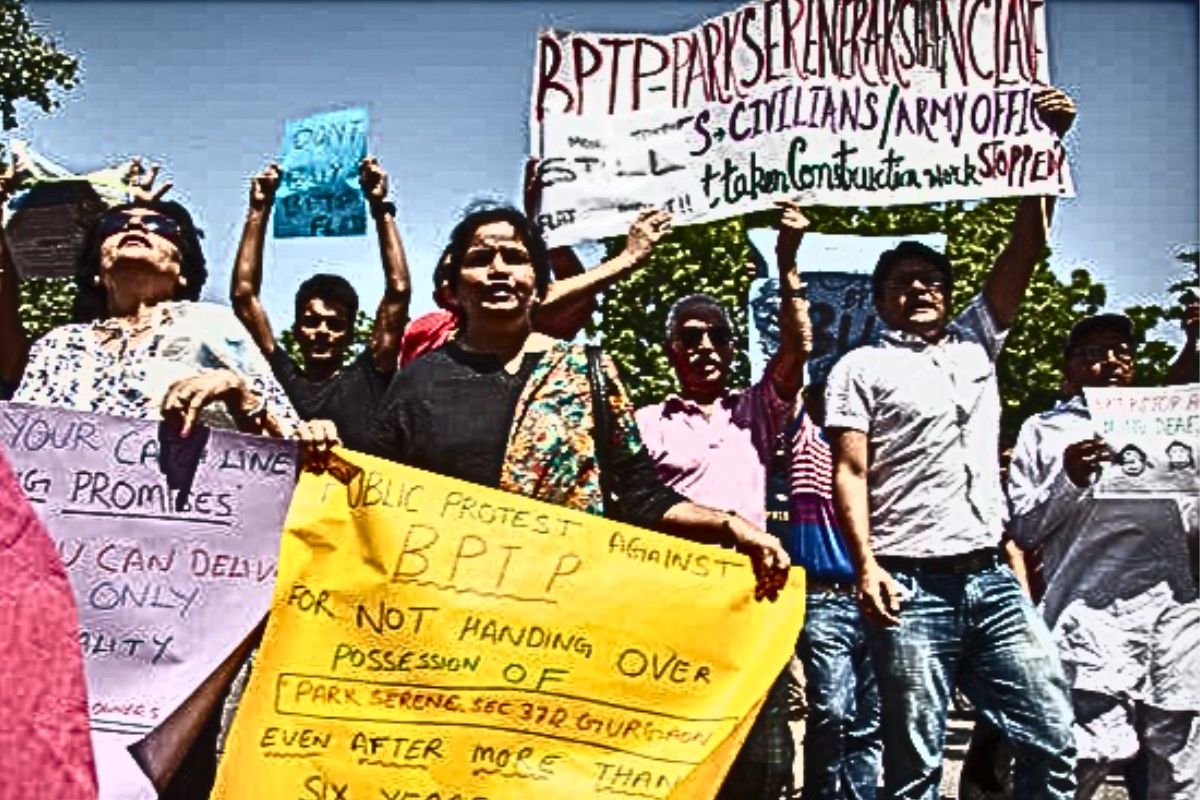
By 2014, protests had erupted at BPTP sites. Over 200 retired army officers who had paid 95 to 100 percent of the purchase price for apartments in Park Serene, Gurugram, staged demonstrations outside BPTP’s offices. These were not anonymous complainants — these were Indian military veterans who had served the nation, spent their retirement savings and pension gratuities on what they had been promised were luxury retirement apartments, and received nothing.
In 2016, the Delhi High Court intervened after buyers sued over undelivered plots in BPTP’s SVP project in Gurugram’s Sector 102, where each buyer had paid between Rs 86 lakh and Rs 110 lakh.
By 2022, reports from IANS described Chawla as “living it up in New York” — frequenting high-society events at the Hamptons and Manhattan galas, eleven years after the first FIR. By 2022, insolvency petitions against BPTP filed by creditors were stayed via out-of-court settlements, a pattern that Inventiva describes as Chawla using financial settlements strategically to avoid criminal proceedings from escalating into formal insolvency proceedings that might force him back to India.
And then, in August 2025, the Enforcement Directorate finally moved. ED officers raided BPTP’s corporate offices across Delhi, Noida, and Faridabad, and simultaneously raided the homes of Kabul Chawla and Director Sudhanshu Tripathi. The raids targeted Rs 500 crore in Foreign Direct Investment allegedly routed through Mauritius-based shell entities during 2007–2008, structured using put and swap options that are expressly prohibited under the automatic FDI route, making them FEMA violations of a serious and premeditated nature. The ED seized documents, froze bank lockers, and, according to reporting, unearthed evidence of Chawla’s alleged beneficial ownership of anonymous foreign entities, including the New York property.
Critically, the August 2025 ED raid on Chawla’s Gurugram residence “yielded zilch” in terms of his physical presence — because Chawla was not there. He operates through his son Kabir who handles day-to-day BPTP business, and through his attorney network, while remaining physically in New York.
The Mechanics of Impunity: How He Has Stayed Free
The question that every homebuyer, every market regulator, and every functioning legal mind asks is the same: with a non-bailable warrant issued in 2011, multiple FIRs across multiple police jurisdictions, and now FEMA proceedings by the ED — how is Kabul Chawla still free?
The investigation outlines the mechanics with forensic detail. The first layer of protection is geographic. Chawla’s New York base, and specifically his decision to operate from the United States, shields him from Indian summons and warrants because Indian courts cannot compel the attendance of a person physically present in a foreign sovereign jurisdiction. Indian law enforcement can request Interpol assistance and seek extradition, but cannot independently execute a warrant in the US.
The second layer is legal architecture. India and the United States have an extradition treaty, but its practical operation depends on the concept of “dual criminality” — the alleged conduct must constitute a criminal offence in both countries. FEMA violations have historically been characterised as civil in American legal interpretation, making extradition on those specific grounds difficult to execute. Additionally, Indian economic offences, when defined under statutes that have no exact American equivalent, create procedural complexity that Chawla’s reportedly well-resourced legal team has used to delay and frustrate extradition proceedings.
The third layer is legal obstruction. Chawla’s legal team — described as “top Delhi silks” — has filed anticipatory bail applications and quash petitions across multiple courts, creating a simultaneous multi-front litigation strategy that consumes judicial time and delays any single proceeding from reaching a decisive conclusion. The National Judicial Data Grid reported 4.4 crore pending cases as of 2025, with economic offences averaging ten-year trial timelines — a systemic delay that a well-funded defendant can exploit indefinitely.
The fourth, and most politically sensitive, layer is alleged political connectivity. Multiple investigations, drawing on media reports spanning a decade, document persistent claims that Chawla cultivated significant political connections in Haryana, particularly during the Congress government of Chief Minister Bhupinder Singh Hooda, under which BPTP secured substantial land allocations and regulatory approvals.
Critics have alleged that these connections provided Chawla with effective immunity during the Congress era, stalled probes through 2014, and continued to influence outcomes in subsequent years through networks that outlast electoral cycles. These are allegations that the courts have not adjudicated — they are documented claims from credible reporting, not findings of fact. But their persistent appearance across independent investigations by multiple journalists over many years gives them a cumulative weight that cannot be responsibly omitted from any account of why the warrant went unexecuted for fifteen years.
Awards, New Launches, and the Obscenity of Continued Operations
Perhaps the most morally charged dimension of this case is not the fraud itself — fraud, regrettably, is not uncommon — but what has happened while the fraud has gone unpunished. As of August 2025, Kabul Chawla was receiving awards for sustainable development from industry bodies while the non-bailable warrant remained active.

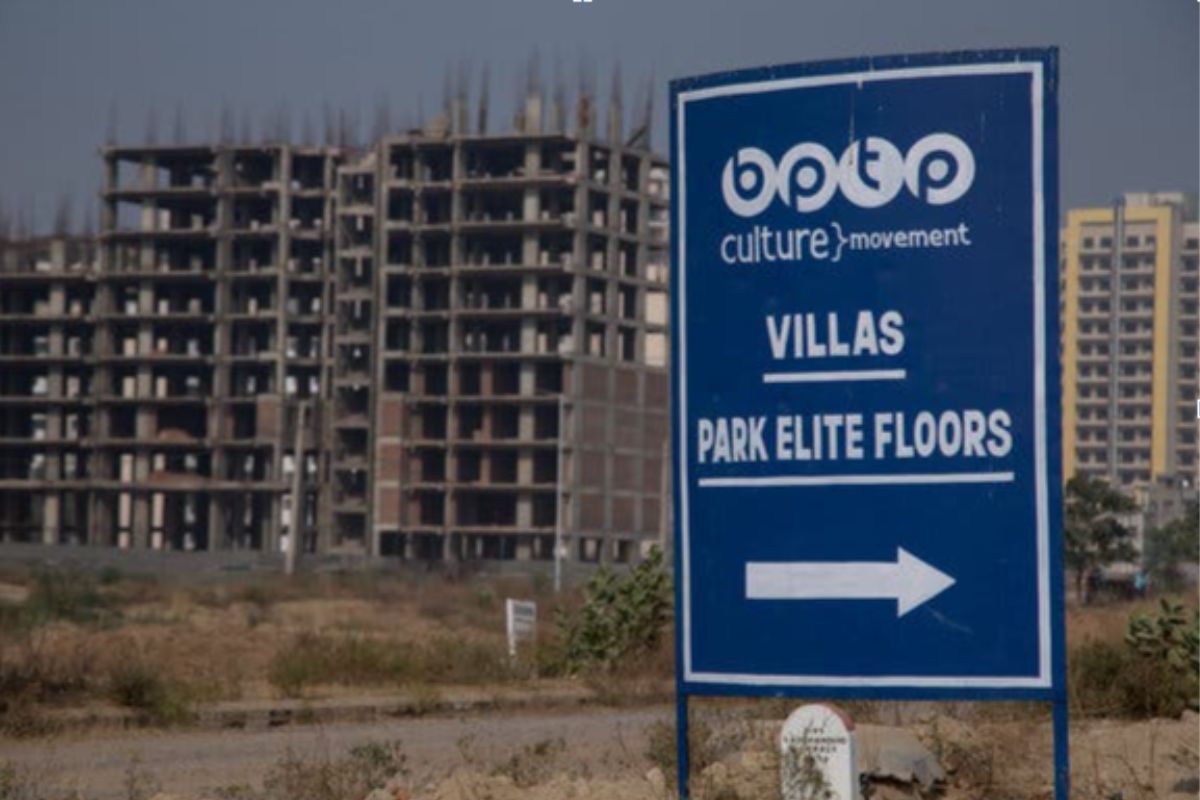
As of February 2025, BPTP launched a new Rs 3,000 crore luxury housing project — “BPTP Amstoria Verti-Greens” — on Gurugram’s Dwarka Expressway, collecting fresh buyer funds while the chairman faces unexecuted criminal proceedings and the ED investigation remains open. As of early 2026, BPTP is reportedly engaging merchant bankers to plan a mainboard IPO — an exercise that, if successful, would allow the promoter family to access billions of rupees from India’s retail investors in the securities market, even while the same promoter’s company faces active PMLA and FEMA scrutiny.
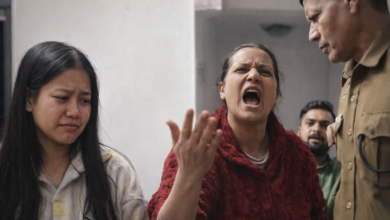
The victims’ suffering has not paused during these fifteen years of impunity. An elderly army officer whose pension and retirement savings were invested in Park Serene described to investigators: “our retirement plans are utterly destroyed”. Families who bought flats with home loans are simultaneously paying EMIs and paying rent elsewhere, a financial double burden that stretches years into decades. NRIs report losing financial stability that threatened their immigration status abroad. Against each of these human realities, Kabul Chawla’s life in Manhattan proceeds — gala events, high-society circuits, a $19.4 million condominium — in a contrast so stark that “ironic” is insufficient. It is a moral indictment.
The Legal Case for Immediate Arrest Is Unambiguous
The argument for Kabul Chawla’s arrest does not require new evidence. It requires the execution of instruments that already exist. A non-bailable warrant issued by a Delhi court in 2011 — operative for fifteen years — authorises and requires law enforcement to apprehend him.
Active FEMA proceedings from the ED’s August 2025 investigation, if converted into a PMLA case — which reporting suggests the agency is examining — would add arrest powers under Section 19 of the Prevention of Money Laundering Act, under which the ED can arrest without prior court sanction when it has reason to believe a person has committed a scheduled offence.
The Ministry of External Affairs and the Central Government have at their disposal bilateral legal assistance treaties and diplomatic channels that, when exercised with genuine political will, have succeeded in securing the return of accused persons from the United States — as the ongoing proceedings in other economic offence cases demonstrate. The mechanism exists. What has been absent for fifteen years is the will to apply it consistently.
India’s homebuyers — not just Kabul Chawla’s victims, but the collective millions who have watched Rs 7 lakh crore remain stuck in stalled real estate projects across the country — are watching this case as a test of whether the state’s legal apparatus protects the powerful or protects them. Every day that passes without an arrest is a message that the warrant was a performance rather than a promise. Every new BPTP project launch is a demonstration that the company calculates that its chairman’s immunity is durable. Every award given to Kabul Chawla at an industry ceremony while a non-bailable warrant hangs over his head is an institutional decision to pretend the warrant does not exist.
Kabul Chawla must be arrested, extradited, and brought before the courts that issued his warrant fourteen years ago. Not because that will return a single rupee to the families who were cheated. Not because it will undo a single broken promise. But because a country whose enforcement agencies will execute warrants against the powerful with the same speed and consistency that they execute them against the poor is the only country in which the middle-class Indian family can safely invest their life savings. That is the country India’s legal system promises to be. Kabul Chawla’s continued freedom is the most visible daily proof of the distance between that promise and that reality.