Zoom In To Zomato- Is Everything OK?
Signs of Food Delivery Woes:Customers are frustrated. Riders are frustrated. Restaurant partners are frustrated. It's a vicious cycle. Zomato might still look shiny from the outside, but inside, it's falling apart.

When technology companies begin to exhibit issues ahead of their well-constructed facades, it is not necessarily an overnight collapse but a series of subtle warning signals that, collectively, become a reason for alarm. The recent Zomato case provides us with an opportunity to learn about the ways in which technology companies that appear healthy might actually harbor issues. By examining these signs and comparing them to previous instances, we can get a better sense of how a company is doing beyond the press releases and the quarterly reports.
Let us start with what prompted this inquiry: a new anonymous whistleblower made some serious accusations against one of India’s most prominent food delivery platforms, Zomato. This insider accuses Zomato of losing business to competitors like Zepto Cafe and Swiggy, serious enough that the management stands accused of using some shady methods.
Employees were supposedly required to place at least seven orders per month on Zomato’s platform, and measures were in place to check if they complied with this directive. More astounding was the accusation that ordering on competing platforms like Swiggy was more or less forbidden in the office. If this is true, it recalls the immortal Shakespearean phrase from Hamlet: “The lady doth protest too much, methinks.” When a company feels the need to force its employees to utilize its service more, it invites speculation about real growth and true market position.
The whistleblower’s post did more than merely speak of rules of operation. It examined Zomato’s work culture in detail, declaring it “toxic” and referring to certain incidents that reflect on leadership concerns. The abrupt exit of Rakesh Ranjan, the head of Zomato’s food delivery business, shortly after a meeting with staff, is especially disturbing.
The post accuses the work culture to have deteriorated, with excessive surveillance and public shaming of staff. Such management practices are known from research to lower productivity, increase higher employee turnover, and decrease innovation. The whistleblower made a strong assertion: “The only thing keeping the company profitable now is platform fees.” This suggests the core business model may be struggling to earn enough money from its core business, something investors and industry observers need to know well.
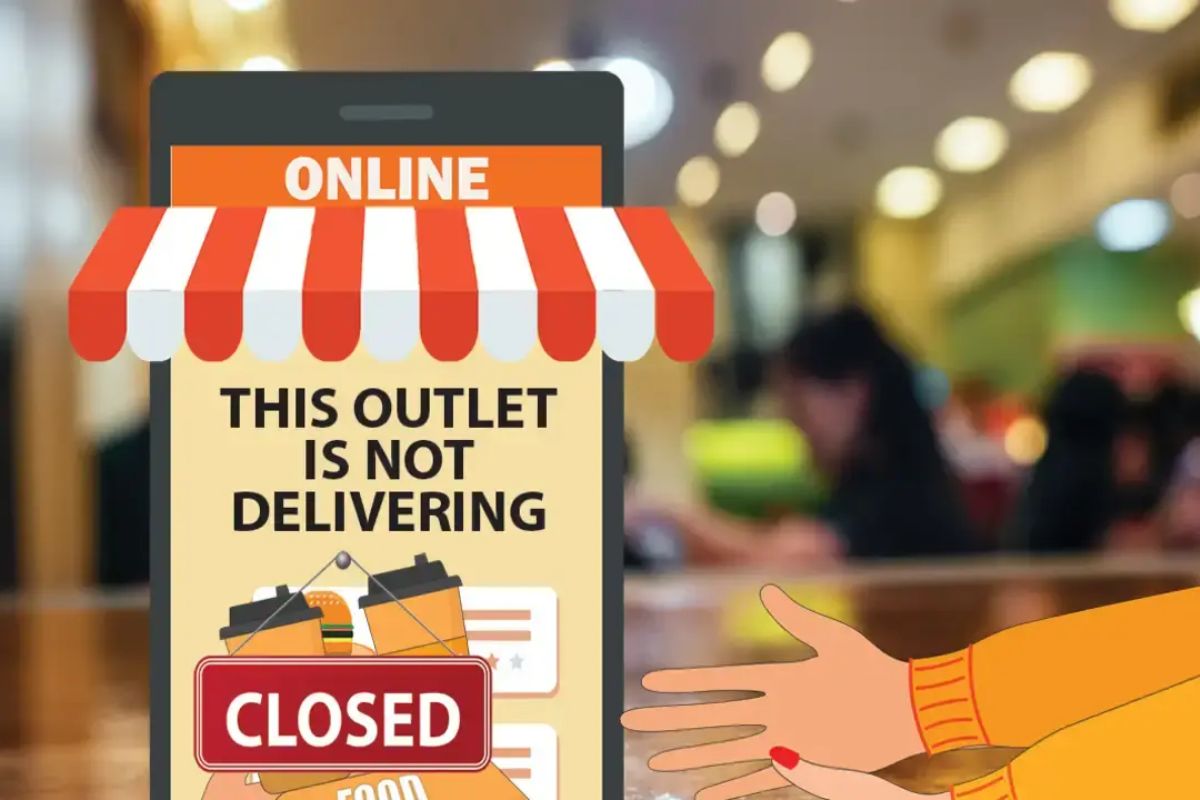
When we look at the company’s logistics, things don’t look any better. The whistleblower reported serious problems with delivery workers, stating riders make less than others in the industry and are quitting the platform in larger numbers. Quitting has reportedly caused more delayed deliveries and service disruptions. The post included a very astute observation: “Orders go offline not because restaurants are closed, but because there’s literally no one available to pick them up.” This observation shows us the disparity between what customers are being led to believe (restaurant closure) and what is really happening (not enough workers) – a lack of transparency that requires more attention.
The whistleblowing management style reveals what organizational psychologists would term “short-termism.” This means paying too much attention to short-term outcomes and too little to long-term development. And so, countless staff members have quit to join competitors like Zepto, which is what organizational professionals would refer to as a talent drain. The whistleblowing put it bluntly: “Customers are frustrated. Riders are frustrated. Restaurant partners are frustrated. It’s a vicious cycle. Zomato might still look shiny from the outside, but inside, it’s falling apart.” This scandal reveals what economists refer to as a negative feedback loop, where issues in one area of a business cause or exacerbate issues in other areas, leading to potentially quicker decay if not addressed.
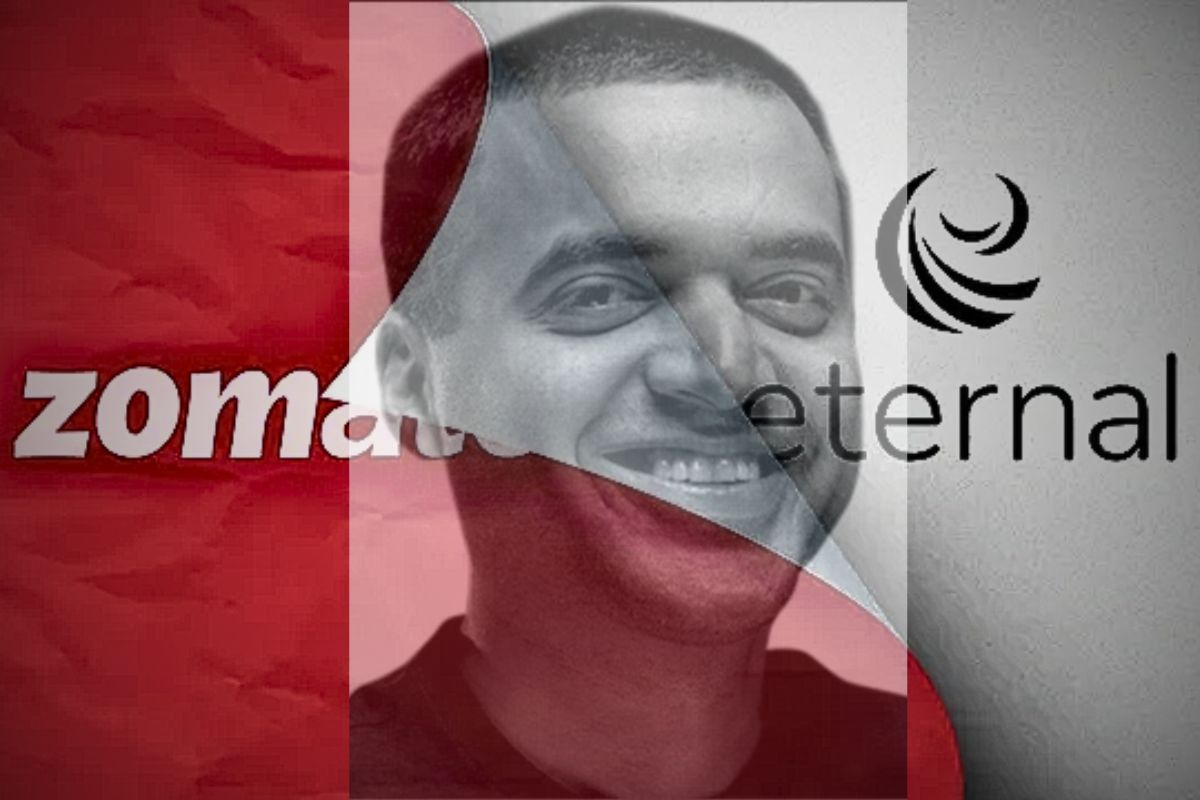
To rebut these allegations, Zomato CEO Deepinder Goyal has issued blanket denials, namely the one that employees are being compelled to order food on the company’s platform. While such denials are standard corporate practice when faced with public allegations, they must be considered in the context of trends witnessed and precedents set.
This leads us to an excellent way of examining things: looking at current signs at Zomato and cross-checking with past patterns at other companies that took similar paths. When multiple red flags appear at once – especially when key leaders leave, strange operating norms appear, and market numbers drop – they usually signal deeper issues in the future. As the philosopher George Santayana once famously quoted, “Those who cannot remember the past are condemned to repeat it.” Let’s look at some useful historical precedents so we can more clearly see what may be happening at Zomato.
The flight of star talent from a company can also be an early warning system for more profound organizational issues. Take the example of Ola, where several senior managers left, expressing concerns about founder Bhavish Aggrawal’s leadership style. While some exits were diplomatically euphemized as “personal reasons” (a phrase one should learn to read in corporate doublespeak), industry watchers read these exits as reactions to underlying leadership issues. The aftermath was revealing, as inconsistencies eventually crept between Ola’s reported sales numbers and underlying performance metrics. This trend shows how executive exits can be leading indicators of issues that only become visible to the outside world months or years later.
The learning for educators about Byju’s journey is just as valuable. Once worth a whopping $22 billion and touted as India’s edtech miracle story, Byju’s saw its meteoric rise followed by a dramatic turn of events that were preceded by some critical warning signs like the ones we’re seeing at Zomato. A large number of the company’s best talent walked out amid growing fears of debt levels, delayed financial reporting, governance issues, and a toxic work culture. These problems later translated into a disastrous fall in valuation and extreme financial distress.
The Byju’s case study illustrates how organizational culture issues and leadership choices can have tangible financial implications, even for companies that seemed like they couldn’t be stopped in their growth phase. A recent example is BluSmart’s case, and there is a lesson here.
The company lost its valuable top leadership, including the CEO and several key business leaders, suddenly after news of BluSmart and parent company Gensol Engineering’s financial woes. SEBI action against Gensol leaders added to the woes. What is so remarkable about the BluSmart case is the speed with which people’s perception of the company changed from a promising mobility disruptor to a troubled company. This shows the speed with which things can go wrong after leadership changes.
From those earlier examples, we were left wondering:
Does the cited exodus of key talent from Zomato imply the same underlying problems?
A correlation, as always, may not equal causation, but the class of departing executives together with the other cited issues warranted scrutiny in light of these earlier instances.
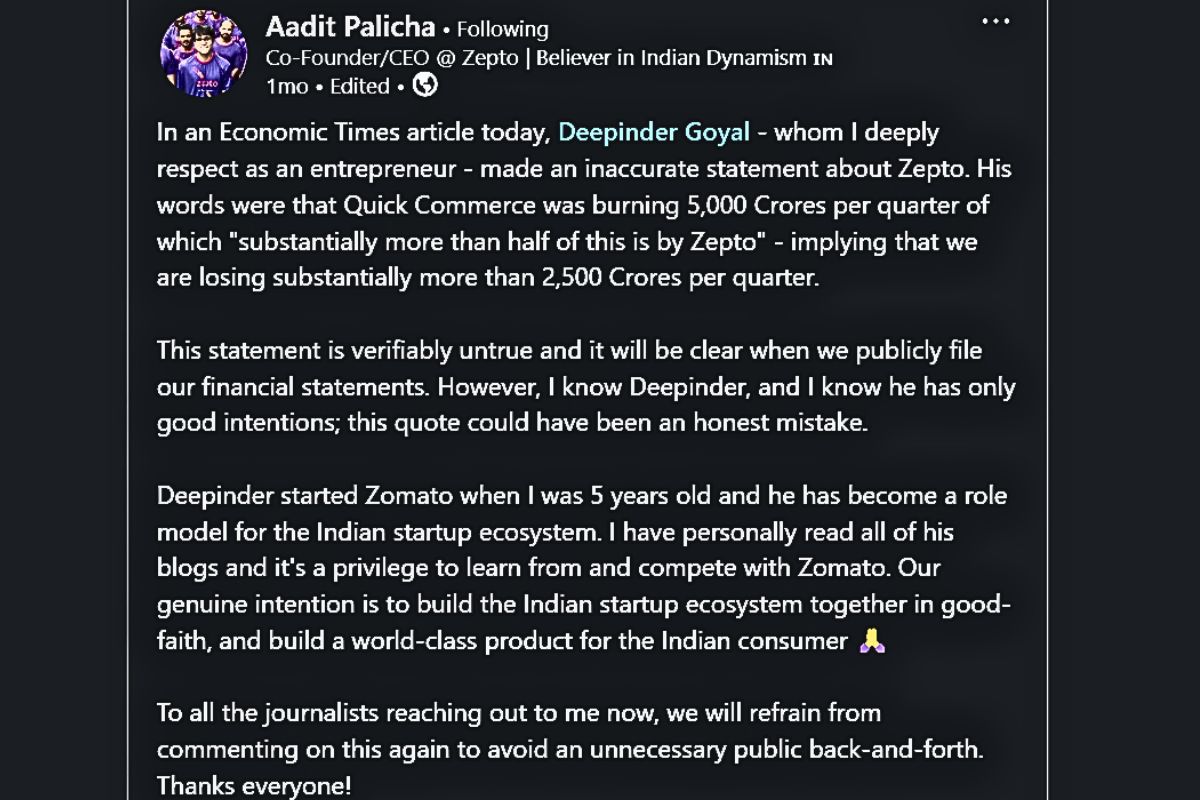
Another troubling aspect of the Zomato situation is the way that CEO Deepinder Goyal spoke about cash burn at the company. Few times ago, in a seminar, Mr. Goyal said that Zomato loses money at a much lower rate than competitor Zepto – something that Zepto founder Mr. Palicha publicly, yet respectfully, criticised. This style of speaking is fascinating to analyze because it uses what some call a “tu quoque” argument – essentially saying “but they are worse” instead of directly confronting the accusations. As Mark Twain once said, “When in doubt, tell the truth” – this principle suggests that confronting concerns directly instead of deflecting attention might be better for sustaining stakeholder trust.
The numbers of Zomato’s finances tell us where the company is today. In the December quarter, normally a high season due to festivals, Zomato experienced “muted growth” in its food delivery business, as the analysts described it. The Gross Order Value increased by only 2%, far less than the 20% increase that a Macquarie report had anticipated.
Meanwhile, its rival Swiggy has been increasing market share, to 43% in the October-December quarter, while Zomato retains 55%. These figures substantiate the allegations made by a whistleblower that Zomato has lost its market leadership and indicate that the company’s ills may manifest in its performance numbers. Having these figures in mind allows us to check whether what one sees is aligned with actual business performance.
What makes the Zomato case worth examining is what experts refer to as the “ecosystem of discontent” that appears to be building. In industries such as food delivery, success depends on satisfying the needs of various groups – customers who want good service, delivery personnel who need decent pay, and restaurant partners who desire consistent order fulfillment. When all three groups are upset simultaneously, as the whistleblower alleges, it creates escalating issues that can be difficult to resolve. This case is akin to what systems theorists describe as “cascading failures,” in which problems in one area of a system cause or exacerbate issues in other areas.
For customers with delivery problems, a switch to a competitor is low-friction – simply downloading another app. For delivery drivers who feel undercompensated, there are usually other jobs available. For restaurant partners with flaky pickup services, cultivating closer relationships with other delivery platforms is a good business move. This networked visibility generates threats that are not necessarily reflected in quarterly profits but can systematically erode a platform’s competitive advantage over time.
Thus, back to the main question:
Is everything okay with Zomato?
Evidence suggests there is reason to worry, but too early to make final conclusions. The sum of issues cited – ranging from whistleblower concerns to quitting executives, poor quarter performance, and heightened competition – is a recipe for cautious scrutiny by investors, market watchers, and consumers alike. But we have to keep things in perspective. Zomato has shown to be resilient in the past, having weathered the unprecedented pandemic crisis when restaurants shut down, and food delivery became a necessity among consumers and the hospitality sector.
What we are seeing might be a temporary adjustment phase when the company transitions to post-pandemic market realities and increased competition. Or these indicators may be pointing towards deeper structural issues that may create serious problems if not addressed at once and promptly. What is clear is that in the modern interconnected world, business reputations can change overnight when internal problems are revealed. The days when businesses could fully control their story are gone. Now, being open – voluntarily or otherwise – more and more affects how the public views them and their business results.
For Zomato, being honest about these problems instead of just defending itself may decide whether the business improves its market position or continues to need to answer questions about its future. We must closely observe how Zomato handles these issues. Will the company realize the issues and bring actual changes, or will it continue to turn a blind eye to problems while others pass it by? The response will determine the future of Zomato and teach us valuable lessons about staying strong in business, leaders being accountable, and the influence of company culture on tech companies.
After all, management guru Peter Drucker had said, “Culture eats strategy for breakfast” – a statement that is extremely significant as Zomato navigates this trying period.