Adani Enterprises Distances Itself. The How, The Why And The Gautam Adani Question
Adani Enterprises says it is not involved in the U.S. SEC case surrounding Gautam Adani. When legal scrutiny follows a promoter, companies often retreat behind technical filings and regulatory language and Adani Enterprises has done just that. But as the SEC’s pursuit intensifies and markets react sharply, the question is no longer legal; it is whether distancing is believable

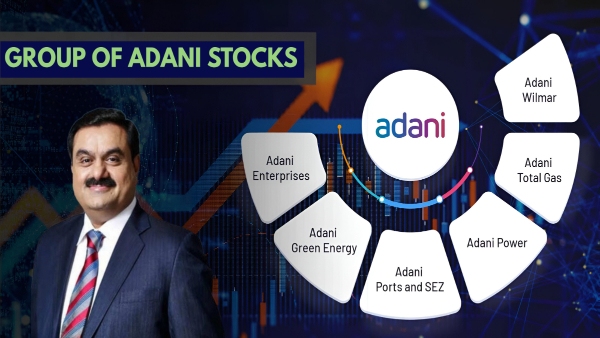
Adani Group entity Adani Enterprises on Saturday January 24, 2026, clarified that it is not party to any legal proceedings mentioned in recently published media reports, responding to queries by National Stock Exchange, and Bombay Stock Exchange.
In large conglomerates, the line between a promoter and the corporate entity he leads is often thin and carefully drawn. The latest developments involving the Adani Group and U.S. regulators have brought that line into sharp focus.
The clarification followed reports suggesting that the U.S. Securities and Exchange Commission (SEC) was seeking court permission to serve legal summons directly to Gautam Adani and his nephew, Sagar Adani, in connection with an alleged fraud and a $265-million bribery scheme.
Adani Enterprises further requested the exchanges to take the submission on record, emphasising that the reported developments do not have any bearing on its operations or disclosure obligations under applicable regulations.
“The content of the Press Report does not trigger any disclosure requirements under Regulation 30 read with Schedule III of SEBI Listing Regulations. We request you to please take this on record,” the filing said.
From a regulatory standpoint, the statement is narrowly framed and technically accurate. Adani Enterprises is not named as a respondent in the SEC’s civil action. Yet, beyond the language of compliance, the clarification raises a broader question the markets appear unwilling to ignore.

Can Adani Enterprises Truly Distance Itself?
Can Adani Enterprises realistically distance itself from the controversy when Gautam Adani – its promoter, chairman, and the central figure named by the U.S. regulator – remains at the helm of the company?
This is not a question of legal culpability. It is a question of corporate reality versus corporate form.
In closely held, promoter-driven conglomerates, leadership is rarely symbolic. Strategic decisions, capital allocation, and investor confidence are often closely tied to the promoter’s standing. When the promoter-chairman himself becomes the subject of international regulatory action, the assertion that the flagship entity remains unaffected inevitably invites scrutiny.
The markets appeared to deliver their own verdict. On Friday, Adani Group entities together lost nearly $12.5 billion in market capitalisation, with Adani Enterprises emerging as the top percentage loser on the Nifty 50. Shares of the flagship company fell over 10%, even as the broader index declined less than 1%.
If the developments truly have “no bearing” on operations, the scale of the sell-off raises an obvious question: are investors overreacting, or are they factoring in risks that formal disclosures do not address?
The Legal Backdrop Tightens
The pressure on Adani Group stocks followed reports that the SEC has asked a U.S. court for permission to directly email legal summons to Gautam Adani and group executive Sagar Adani. According to filings cited by Reuters and Bloomberg, the application was made before U.S. District Judge Nicholas Garaufis in Brooklyn, New York.
The U.S. regulator told the court that it had sought assistance from Indian authorities on two occasions to serve the summons, but those attempts were unsuccessful due to procedural objections. The SEC argued that further attempts through the Hague Convention were unlikely to succeed and sought permission to serve notices electronically.
The developments trace back to November 2024, when U.S. authorities accused certain Adani Group executives of participating in an alleged scheme to pay bribes to Indian officials to secure electricity purchase agreements involving Adani Green Energy, a group subsidiary.
The SEC subsequently filed a civil lawsuit against Gautam Adani and Sagar Adani. This action runs parallel to a criminal case initiated by the U.S. Department of Justice, which remains underway, according to court records.
Under U.S. law, foreign companies that tap U.S. capital markets are prohibited from offering bribes overseas to secure business, and from raising funds through misleading disclosures. The SEC complaint also alleges that U.S. investors were misled regarding the group’s anti-corruption practices.
Adani Group has consistently rejected the allegations, describing them as baseless, and has said it will pursue all available legal remedies. On January 23, counsel representing Gautam Adani reportedly made their first submission in a U.S. court since the case was filed.
Why The Market Reaction Matters
Despite Adani Enterprises’ assertion that the reported developments have no bearing on its operations or disclosure obligations, markets reacted sharply.
Adani Group firms together shed approximately $12.5 billion in market capitalisation in a single session. Adani Enterprises led the decline, falling over 10% to ₹1,864.2, while the Nifty 50 slipped just 0.95%. Other group stocks ended the day down between 3.4% and 14.5%.
Independent market analyst Ambareesh Baliga noted that market participants had largely assumed there were no pending regulatory actions and that the group had moved past earlier controversies. “So the SEC filing seems to have come out of the blue,” he said, adding that with no clear timeline on next steps, the issue could linger, especially in an already weak market environment.
So, why did Adani Enterprises draw that line?
1) The Corporate Logic Behind Distancing
At its core, the clarification issued by Adani Enterprises is a risk-containment strategy.
Listed companies in India operate under stringent disclosure and compliance frameworks. Acknowledging even indirect involvement in overseas legal proceedings can trigger a chain reaction—mandatory disclosures, lender reviews, covenant breaches, credit-rating actions, ESG downgrades, and enhanced scrutiny from auditors and regulators.
By clearly stating that it is not a party to the proceedings, Adani Enterprises is attempting to ring-fence itself from those consequences. This is not denial; it is regulatory hygiene.
2) Protecting Capital Access
Adani Enterprises is not just another group company, it is the flagship capital-raising vehicle of the Adani Group. It sits at the intersection of infrastructure funding, green energy investments, and large-scale borrowing, much of it from overseas lenders.
In such a context, perception matters almost as much as legality. Even a loosely worded admission can spook foreign investors, freeze funding pipelines, or push up borrowing costs. Distancing, therefore, serves as a signal to lenders and institutional investors that the company’s operations and obligations remain intact.

3) Legal Firewalling: Standard Practice, Not Evasion
Globally, conglomerates often deploy what legal experts call a firebreak strategy—drawing clear boundaries between individual liability and corporate exposure.
Civil cases are separated from criminal cases. Individuals are separated from listed entities. Jurisdictions are compartmentalised.
This is especially relevant in cross-border matters, where discovery, class actions, and jurisdictional reach can expand rapidly if lines are blurred. By maintaining a narrow, factual position, Adani Enterprises reduces the risk of being pulled into prolonged legal entanglements abroad.
4) Board Duty Over Promoter Loyalty
Another often-missed dimension is the role of the board.
Even if Gautam Adani was fully aware of—and approved—the clarification, the decision would ultimately rest on fiduciary duty. Directors of a listed company are obligated to act in the best interest of all shareholders, not to shield or amplify the position of a promoter.
Ironically, failing to distance the company when it is not legally involved could expose board members themselves to liability.
5) Buying Time in a Long Legal Battle
Cases of this nature do not resolve quickly. They unfold over years, not months. Early admissions, however carefully worded, can become anchors that weigh down a company long before any legal outcome is known.
Distancing allows Adani Enterprises to buy time, maintain operational continuity, and let the judicial process take its course without pre-emptive damage.
So Why Isn’t the Market Buying It?
Despite all this, the market reaction has been unforgiving. Adani Group firms shed billions in market capitalisation following reports of the SEC’s moves, suggesting investors are looking beyond legal formality.
The reason is simple: markets price reality, not structure.
When the promoter remains chairman, when ownership and control are unchanged, and when brand identity is inseparable from leadership, distancing can feel procedural rather than persuasive. Investors are not questioning whether Adani Enterprises is legally correct—they are questioning whether it is economically and reputationally insulated.
The Real Tension
This is where the Adani Enterprises story becomes less about law and more about governance.
On paper, the company’s clarification is sound. In practice, it collides with the realities of promoter-led conglomerates, where leadership concentration amplifies both success and risk.
That tension—between what is technically defensible and what is credibly reassuring—is what continues to unsettle markets.
The Last Bit, The Question(s) That Won’t Go Away
Adani Enterprises’ decision to distance itself makes corporate sense. It follows regulatory logic, financial prudence, and legal precedent. Gautam Adani would almost certainly have known, and likely approved, the move.
Legally, Adani Enterprises may be within its rights to draw a clean line between itself and proceedings involving its promoter. But in a market driven as much by perception as by paperwork, that distinction may not be so easily accepted.
When leadership, ownership, and control remain unchanged, the question is not whether distancing is permissible, but whether it is credible. And as the U.S. legal process unfolds, that question appears increasingly difficult to contain within the narrow language of exchange filings.