Adani Faces Scrutiny In Washington, Confidence In Tokyo. In Today’s Global Economy, Who Really Blinks?
While Adani Enterprises engages with US regulators over sanctions-related questions, Japanese lenders are leading a $750 million financing for a group entity. The parallel developments highlight a striking reality - in a fragmented global economy, investigation and investment can move forward at the same time.

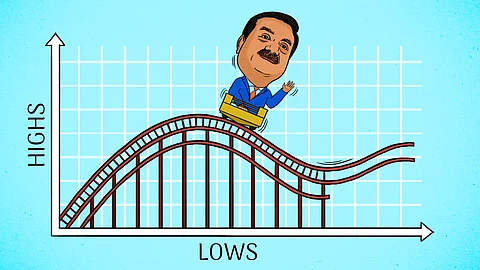
At first glance, the developments appear contradictory. In Washington, Adani Enterprises finds itself responding to a formal information request from the US Office of Foreign Assets Control (OFAC), following allegations tied to a Wall Street Journal report. In Tokyo, meanwhile, Japanese megabanks are leading a $750 million financing for an Adani Group company.
Regulatory engagement on one side of the world. Fresh institutional capital on the other.
The contradiction raises a larger question that goes beyond one conglomerate: in a global financial system increasingly defined by diversification and geopolitical fragmentation, does scrutiny in one jurisdiction automatically translate into isolation everywhere else?
For now, the evidence suggests otherwise.
What Is OFAC Looking At?
Adani Enterprises confirmed this week that it is in discussions with the US Office of Foreign Assets Control, disclosing that it received a formal Request for Information (RFI) dated February 4. The company clarified that the communication “does not contain any findings of aberrations or non-compliances,” and stated that it is responding as part of an ongoing engagement process.
The regulatory interaction stems from allegations in a Wall Street Journal report published in June 2025. The report claimed that Gautam Adani was attempting to persuade officials in the administration of US President Donald Trump to drop foreign bribery charges against him. It further reported that US prosecutors were examining whether entities linked to the Adani Group imported Iranian-origin liquefied petroleum gas (LPG) into India through the group-operated Mundra port.
According to the report, tanker traffic patterns between the Persian Gulf and Mundra were reviewed as part of investigative analysis, patterns that regulators sometimes associate with sanctions evasion.
Adani Group categorically denied the allegations at the time, stating that it had no deliberate engagement in sanctions evasion or trade involving Iranian-origin LPG. The company also maintained it was unaware of any formal US investigation on the subject.
In its latest disclosure, Adani Enterprises stated that it had voluntarily initiated engagement with OFAC in a cooperative and transparent manner. It further noted that LPG constituted a very small and operationally non-material component of its overall revenue in FY24-25 and that it had ceased LPG imports from June 2 last year out of abundant caution.
Importantly, the matter is described as a civil investigation concerning transactions processed through US financial institutions – a distinction that carries regulatory significance.
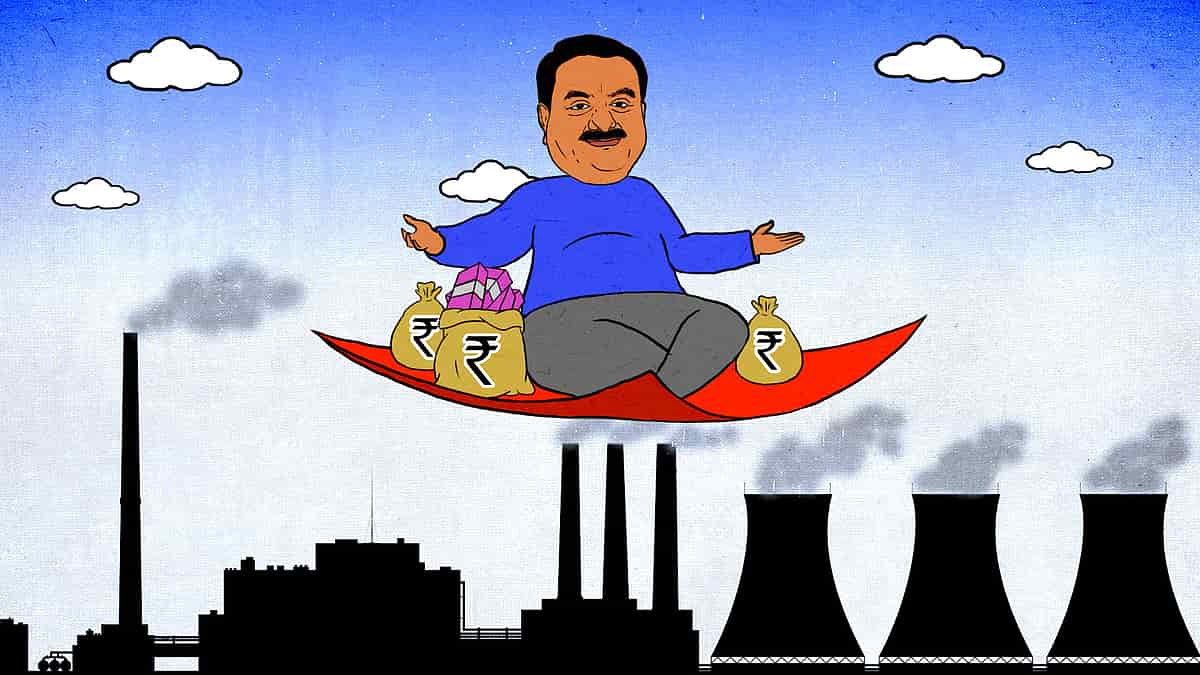
Why OFAC Matters
To understand the gravity of any OFAC engagement, one must understand the architecture of US sanctions enforcement.
The United States has, particularly since the first Trump administration, pursued an aggressive sanctions regime against Iran under what was termed the “maximum pressure” campaign. The objective has been to curb Iran’s oil exports and restrict revenue flows that Washington argues fund destabilising regional activities.
Sanctions enforcement often extends beyond US borders because of the central role of the US financial system in global trade. Transactions denominated in dollars or cleared through US financial institutions can fall under American jurisdiction, even if the underlying trade occurs elsewhere.
In recent announcements, US authorities targeted vessels alleged to be transporting Iranian oil, blocked transactions linked to such trade, and sanctioned entities and individuals connected to the supply chain. The reach of these measures illustrates how compliance risk is not merely political but structural – embedded within global financial plumbing.
Against this backdrop, any review involving Iranian-origin energy products and US-cleared transactions inevitably attracts regulatory scrutiny. However, scrutiny is not the same as determination. At present, Adani Enterprises is responding to an information request. No findings have been communicated.
Markets Register It But Do Not Revolt
If regulatory engagement was expected to trigger panic, markets did not oblige.
Shares of Adani Enterprises slipped roughly 2% after the disclosure that it was in talks with OFAC. The reaction was measured rather than dramatic, a signal that investors are distinguishing between inquiry and indictment.
The company clarified that the OFAC communication contains no findings of non-compliance. It also described the matter as a civil investigation concerning transactions processed through US financial institutions – a critical nuance in regulatory terms.
A 2% move reflects caution, not capitulation.
That distinction matters. Financial markets have, over the past few years, recalibrated how they process headline risk around the Adani Group. The initial shock cycles that once triggered sharp liquidity stress have increasingly given way to a more incremental pricing of regulatory and legal uncertainty.
For investors, the question is not whether scrutiny exists – it is whether it escalates, constrains funding access, or disrupts operating cash flows. At this stage, none of those thresholds appear to have been crossed.
And then came Tokyo.

Tokyo’s $750 Million Vote of Confidence
Almost simultaneously with the Washington disclosure, another development emerged – one that pointed in the opposite direction of isolation.
Adani Energy Solutions Ltd., a group-controlled entity, secured a $750 million dollar-denominated loan led by two major Japanese banks. The five-year facility is priced at roughly 200 basis points over the Secured Overnight Financing Rate (SOFR), reflecting standard institutional credit structuring rather than distressed borrowing.
The financing was led by Mitsubishi UFJ Financial Group and Sumitomo Mitsui Banking Corp – institutions not known for casual underwriting.
The development is not occurring in isolation. Japanese financial institutions have been steadily increasing exposure to India, seeking growth and yield beyond a low-rate domestic environment. Over the past year, Japanese banking majors have expanded their footprint across Indian financial services and corporate lending.
In this context, the Adani financing is both specific and structural. Specific because it signals that major international lenders remain willing to extend credit to group entities even amid US regulatory engagement. Structural because it reflects a broader rebalancing of capital flows toward high-growth markets like India.
The Adani Group has also indicated plans to raise up to $1.5 billion in yen-denominated debt over the next 18 months, a move that suggests diversification of funding sources, potentially reducing reliance on dollar markets at a time when US-based scrutiny is active.
The Balance Sheet Reality
Parallel to these developments, Adani Enterprises reported its highest quarterly profit on record – ₹5,630 crore for the quarter ended December 31.
However, the headline number warrants context.
The profit was driven largely by an exceptional gain of ₹5,630 crore from the sale of its stake in AWL Agri Business Ltd. In other words, the record earnings were primarily the result of a divestment rather than operational acceleration.
Revenue rose 8.6% to ₹24,820 crore, while costs increased 5.5% to ₹24,180 crore. Airport revenues surged 32% to ₹3,840 crore, offering a bright spot in operating performance. Yet the coal trading segment continues to face pressure, underlining that the core business environment remains mixed.
Adani Enterprises, often described as the incubator arm of the group, has been actively pruning non-core assets – a strategy that strengthens liquidity and balance sheet flexibility even if it compresses diversification. The numbers therefore reflect resilience but not without qualification.

A Familiar Cycle – Controversy, Contraction, Recalibration
For the Adani Group, this is not unfamiliar territory. Over the past few years, the conglomerate has witnessed intense scrutiny – from short-seller allegations to US indictments, from funding stress to credit reassessments by global lenders. Each episode triggered volatility. Each episode was followed by restructuring, refinancing, and a gradual rebuilding of capital channels.
What distinguishes the current moment is not the existence of scrutiny, but the coexistence of scrutiny and funding access. There was a time when regulatory heat in Washington might have translated into immediate liquidity strain. Today, the response appears more segmented.
A Multipolar Financial Reality
The broader backdrop matters.
Global finance is no longer unipolar. While the US dollar remains dominant in trade settlement and financial clearing, capital pools are increasingly diversified across regions. Japanese institutions, Middle Eastern sovereign funds, domestic bond markets, and private credit have all emerged as parallel channels of liquidity.
In such an environment, regulatory engagement in one jurisdiction does not automatically sever access elsewhere, particularly when no adverse findings have been established.
That does not mean scrutiny is inconsequential. OFAC reviews carry weight. Sanctions frameworks are structurally embedded in the global financial system. Compliance failures, if proven, can be costly.
But investigation alone does not equal isolation. Markets, at least for now, appear to be distinguishing between inquiry and outcome. Japanese lenders, for their part, appear to be pricing risk, not retreating from it.
The Last Bit, Who Really Blinks?
The developments surrounding Adani this week capture a paradox that increasingly defines global business. In Washington, a civil inquiry proceeds under the architecture of sanctions enforcement. In Tokyo, institutional lenders commit fresh capital, while in Mumbai, markets register caution but not alarm.
Fact: In today’s global economy, capital is rarely ideological. It is pragmatic, diversified, and opportunistic. It seeks yield, prices risk, and recalibrates exposure without necessarily waiting for political clarity.
The ultimate test for Adani will lie in the outcome of regulatory engagement, not in its existence.