After ED Flags Irregularities In Experion Deal, IBBI Steps In; Old Disputes Put Developer Under Sharper Spotlight

New Delhi: The Insolvency and Bankruptcy Board of India (IBBI) has intensified scrutiny of the Gurugram land acquisition linked to Experion Developers, after the Enforcement Directorate (ED) alleged serious misuse of the Insolvency and Bankruptcy Code (IBC) in the resolution of Dignity Buildcon. The move has not only widened regulatory attention on the 9.3-acre land deal in Sector 62, Gurugram, but also revived focus on a string of earlier consumer and regulatory disputes involving the developer across multiple projects and states.
IBBI Confirms Action Against Insolvency Professional
In a written response to a question raised in the Rajya Sabha, IBBI has confirmed that it has initiated proceedings against the Insolvency Professional (IP) who handled the Dignity Buildcon corporate insolvency resolution process (CIRP). The Board has stated that the alleged violations flagged in the matter are being examined under the IBBI (Inspection and Investigation) Regulations, 2017, and that “appropriate action” is already underway.
According to officials, the review focuses on whether the IP adhered to both the letter and the spirit of the Code, including:
- Adequacy and timing of disclosures on the composition and reconstitution of the Committee of Creditors (CoC).
- Conduct during CoC meetings, especially in relation to the independence of creditor decision-making.
- Overall transparency and fairness of the resolution process, given the serious regulatory concerns now raised.
IBBI has also indicated that many issues in the complaint appear to go beyond mere procedural lapses, touching possible criminality, and has recommended that the Ministry of Corporate Affairs (MCA) examine the case for a Serious Fraud Investigation Office (SFIO) probe.

ED’s Case: CoC Capture, Haircuts and Alleged Abuse of IBC
The ED’s allegations centre on a 9.3-acre prime commercial parcel in Gurugram’s Sector 62, which had earlier been attached under the Prevention of Money Laundering Act (PMLA) in connection with proceedings involving Religare Finvest.
According to the ED’s application before the National Company Law Tribunal (NCLT):
- While probing the PMLA case, the agency had attached assets belonging to Dignity Buildcon, the corporate debtor that owned the Gurugram land.
- Subsequently, Experion Capital (ECPL), a group entity of Experion Developers, acquired approximately 60% of CoC voting rights through debt assignments from major financial creditors.
- ED further alleges that ECPL exerted undue influence over Alchemist Asset Reconstruction Company (Alchemist ARC), which held about 35% of the voting share, giving Experion-linked entities effective control over around 95% of CoC voting power when its plan was considered.
The ED has claimed that:
- ECPL spent about ₹223.92 crore to acquire these voting rights but, after the resolution plan was approved, received around ₹334.08 crore, benefiting from what the agency describes as an unjustifiable arbitrage built into the plan and the haircut structure.
- Financial creditors who had suffered losses on Dignity Buildcon’s default allegedly accepted a haircut of over 70%, while ECPL – as the successful resolution applicant’s group entity – enjoyed both the upside from the haircut and dominant control over the voting process.
- The CoC was “manoeuvred” into approving a resolution plan that the ED characterises as financially inferior and not commercially justifiable, thereby prejudicing the interests of other prospective resolution applicants.
On this basis, the ED has urged the NCLT to recall its May 2023 order that approved Experion as the successful resolution applicant for Dignity Buildcon, asserting that the insolvency framework was used not as a tool of genuine resolution but as a vehicle to neutralise PMLA attachment and engineer control of the asset.
Experion’s Response: “Fully Paid Debt Assignments, Full Disclosure”
Experion Developers has rejected the ED’s allegations as “baseless” and legally unsustainable. The company has argued that:
- All debt assignments to ECPL were fully paid for on arm’s-length terms, with no sham or back-dated transactions.
- Every change in the creditor profile, including ECPL’s entry and subsequent changes in CoC composition, was duly placed before the NCLT and reflected on the IBBI’s public portal for corporate processes.
- Under the IBC, there is no prohibition on a creditor becoming a Resolution Applicant, and Experion contends that it has operated strictly within the framework permitted by Section 30(5) and related provisions of the Code.
The company has also maintained that the ED’s attachment of Dignity Buildcon’s assets was itself the subject of challenge before the Delhi High Court, which has granted interim protection in respect of certain properties — a point Experion cites to argue that it is being penalised for attempting to revive a distressed project that was otherwise mired in litigation.
Potential SFIO Probe: From Regulatory Infraction to Suspected Fraud
By formally recommending that MCA consider an SFIO investigation, IBBI has signalled that it views the matter as more than a narrow dispute over interpretation of the Code or the role of a single IP. SFIO investigations are typically reserved for complex corporate frauds, involving inter-locking entities, layered transactions and potential systemic abuse.
Officials indicate that an SFIO probe, if ordered, is likely to focus on:
- The sequence and pricing of debt assignments to ECPL and any related-party or conflict-of-interest dimensions.
- The CoC decision-making process, including whether any creditor’s voting discretion was improperly influenced.
- The interplay between the IBC process and PMLA attachment, and whether the insolvency route was consciously structured to dilute or bypass the effect of criminal-law enforcement.
Past Disputes and Regulatory Scrutiny Around Experion
The ED–IBBI action comes at a time when Experion Developers, despite strong revenue projections and an expanding project pipeline, already faces a history of high-visibility disputes before consumer fora, regulatory bodies and courts.
1. Supreme Court on Delayed Possession and One-Sided Clauses
In Experion Developers Pvt. Ltd. v. Sushma Ashok Shiroor, the Supreme Court in 2022 dealt with a complaint by a homebuyer alleging delay in possession and oppressive terms in the builder-buyer agreement. The Court:
- Affirmed that homebuyers could pursue remedies under the Consumer Protection Act in parallel with rights under real-estate regulation.
- Held that heavily one-sided contractual clauses in Experion’s standard agreement, particularly relating to delay and refund, amounted to unfair trade practice.
- Directed refund of the amounts deposited by the allottee with interest at 9% per annum. The judgment has since been widely cited as a precedent on how courts will scrutinise real-estate contracts that disproportionately favour developers.
2. NCDRC Findings on “Excess Area” Charges at Windchants
Experion’s flagship “Windchants” project in Sector 112, Gurugram, has been the subject of multiple consumer complaints before the National Consumer Disputes Redressal Commission (NCDRC). In Pawan Gupta v. Experion Developers Pvt. Ltd., the Commission:
- Noted allegations that Experion unilaterally raised the total sale consideration by demanding additional sums for an “increase in sale area” without adequate contemporaneous justification.
- After examining evidence, including architect certifications produced at a later stage, the Commission concluded that the increase in area had no proper basis and described the demand for extra money as a “pure unfair trade practice” on the part of the developer.
- Cancelled the developer’s demand for excess area charges, directed Experion to issue revised demands excluding such charges, rectify identified defects, hand over complete possession, and pay compensation for mental agony and harassment.
Separately, in Experion Developers Pvt. Ltd. v. Himanshu Dewan & Others, arising from the same Windchants project, the dispute over increased sale area and additional charges again reached the Supreme Court. The Court set aside an NCDRC order and remanded the matter for a more detailed examination of estoppel, acquiescence and the justification for increasing the sale area — underlining that the controversy over Experion’s area-enhancement practices is far from routine.
3. Illegal Construction and “Chica Loca” Bar in Lucknow
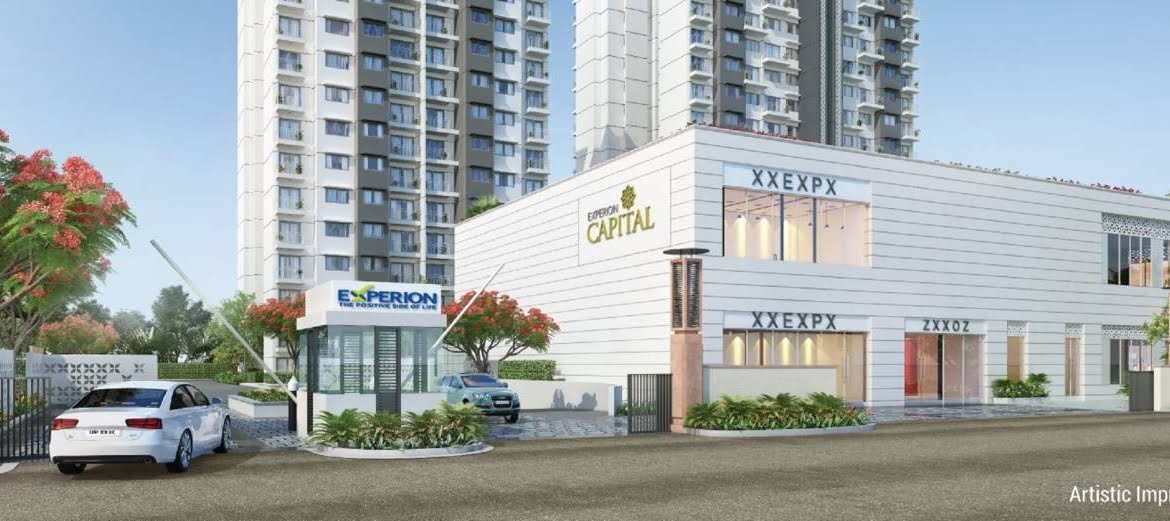
In January 2025, the Uttar Pradesh State Consumer Disputes Redressal Commission (SCDRC) passed a strongly worded order in proceedings relating to Experion Capital, a residential project in Vibhuti Khand, Gomti Nagar, Lucknow. The case involved the proposed operation of a restaurant-cum-bar branded “Chica Loca by Sunny Leone” within the residential complex.
Key features of that order and related reporting include:
- The Commission stayed the construction and operation of the restaurant-cum-bar and any similar commercial activity within the residential premises.
- It recorded serious concern over unauthorised constructions and encroachments allegedly carried out by Experion Developers and associated entities, which, according to the Commission, threatened the privacy and security of residents as well as nearby high-profile institutions such as the Lucknow Bench of the Allahabad High Court and the Indira Gandhi Pratishthan.
- The developer was directed to strictly comply with sanctioned plans and to refrain from converting residential spaces into nuisance-causing commercial establishments.
The episode triggered national headlines and added a regulatory dimension to Experion’s brand narrative well beyond the NCR.
4. Show-Cause Notice for Layout Violations at Windchants, Gurugram
In August 2025, the Department of Town and Country Planning (DTCP), Haryana issued a show-cause notice to Experion Developers Pvt. Ltd. (formerly Gold Developers Pvt. Ltd.) and the Resident Welfare Association (RWA) of the Windchants condominium in Sector 112, Gurugram, for alleged violations of approved layout plans and licence conditions under the Haryana Development and Regulation of Urban Areas Act, 1975.
Following an inspection, DTCP alleged, among other things, that:
- Two fire tender pathways had been converted into green areas, potentially compromising emergency access.
- Setback land—required to be kept vacant between certain internal roads and buildings—had been sold as part of plots or integrated into private use in violation of the sanctioned layout.
The notice called upon Experion and the RWA to restore the project to the approved layout and warned that failure to comply could result in cancellation or denial of future licences, along with other legal action.
A Developer Under Pressure, But Still Expanding
Notwithstanding these disputes, Experion Developers continues to project aggressive growth. As a wholly owned Indian subsidiary of Singapore-based Experion Holdings Pte Ltd, the company has indicated that it expects to more than double revenues to around ₹5,000 crore in FY26, compared with about ₹2,200 crore in the previous year, driven by a strong pipeline of residential and commercial projects.
Industry observers note that this combination of rapid expansion, heightened regulatory attention and a growing trail of consumer and statutory litigation places Experion at the centre of a broader policy debate:
- How far can debt assignments and CoC engineering be taken in CIRP without undermining the integrity of the IBC framework?
- To what extent should consumer fora and planning regulators police real-estate developers’ adherence to sanctioned plans and fair contract terms?
- And how should conflicts between IBC-driven resolution and parallel enforcement under PMLA or other criminal statutes be managed to ensure that insolvency proceedings are not used to dilute or sidestep anti-money-laundering measures?

For now, both the ED’s application before the NCLT and IBBI’s ongoing investigation into the conduct of the IP ensure that the Dignity Buildcon–Experion transaction will remain under multi-agency scrutiny. If MCA proceeds to authorise an SFIO probe, the case is likely to evolve into one of the most closely watched insolvency-linked controversies in recent years, with potential implications that go well beyond a single 9.3-acre plot in Gurugram.