Agile Energetics Electronics LLC: Graphene Hybrid Supercapacitors (GHSC) Chosen For National Critical Infrastructure Upgrade Program

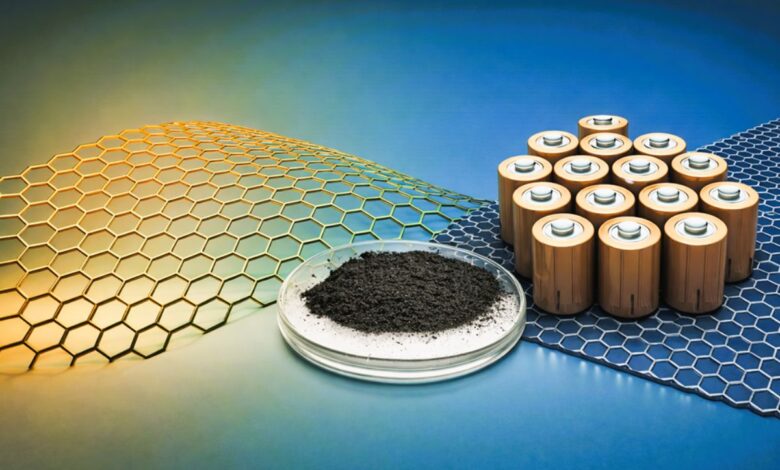
Graphene hybrid supercapacitors represent a significant advancement in energy storage by combining the rapid power delivery of supercapacitors with the exceptional electrical properties of graphene. The Graphene Hybrid supercapacitors developed by Agile Energetics Electronics LLC (AEE) were designed specifically for use in the USDOT market. By leveraging the benefits of supercapacitors and graphene’s exceptional conductivity, AEE developed multiple form factors tailored for diverse transportation infrastructure applications.
What is a Supercapacitor
A supercapacitor is an electrical energy storage device that, like a battery, stores and releases energy, but it does so far more efficiently in certain use cases. Traditional batteries can store large amounts of energy, yet they often suffer from slow charging, limited cycle life, and reduced performance in extreme conditions. Unlike many batteries, supercapacitors continue to operate reliably in very low temperatures, where battery performance typically degrades.
What is Graphene
Andre Geim and Konstantin Novoselov, who won their Nobel Prize in 2010 for Graphene, state that carbon in flat form has remarkable properties. Graphene is a single-atom-thick layer of carbon arranged in a hexagonal lattice with its origins in quantum physics. It has attracted global attention due to its exceptional strength, flexibility, and outstanding electrical and thermal conductivity. Although the theoretical structure of graphene was identified decades earlier, it was not until 2004 that Andre Geim and Konstantin Novoselov successfully isolated graphene at room temperature, demonstrating its extraordinary physical properties.
Scientific Benefits and Merits of Graphene
Graphene is considered one of the most effective electrode materials for supercapacitors due to its high surface area, conductivity, and structural stability. When combined with complementary materials, graphene significantly improves the energy density and overall performance of supercapacitor devices. As per research insights shared by Mar García Hernández of the CSIC Institute of Materials Science of Madrid, graphene research is ongoing but is already advancing critical fields such as electronics and energy systems.
Graphene-based hybrid electrodes integrated with other conductive polymers have demonstrated substantial gains in electrochemical performance. Ongoing research continues to focus on optimized synthesis techniques and material structures. Graphene Hybrid Supercapacitors rank high on thermal resilience, maintain higher efficiency and generate less heat than traditional energy storage devices, and exhibit lower degradation.
Total Cost of Ownership Benefits
As per Dr. Stephen Kraus and Shireen Bojja, financial modeling conducted within ESG frameworks highlights the total cost of ownership advantages of graphene hybrid supercapacitors, with significantly lower maintenance costs. In Shireen Bojja’s research journal “E-Score Through Financial Modeling as a Path Towards ESG and Industry 5.0”, her work demonstrates how environmental, social and governance works hand in hand, as well as how the theoretical framework is translated into an innovative hardware product. The modeling draws on and is integrated into the commercial development of the graphene-hybrid supercapacitor she pioneered, aligning long-term financial performance with sustainability goals.
AEE’s MEP Funding and Winning Entry into the FAA’s Infrastructure Investment Program
AEE’s Graphene Hybrid Supercapacitor features a unique hybrid formulation combining graphene and polymers to achieve an effective balance of power and energy density. Its low weight enables compact packaging, particularly in aviation environments. AEE’s GHSC innovation received MEP CMA+ funding, a federal manufacturing support program designed to promote nationally significant technologies, create jobs, and advance U.S. industrial competitiveness.
As per Arthur Rubalcava, founder of AEE, “Tailoring designs to specific applications enhances efficiency, performance, and integration across diverse use cases. To remain competitive, a product must function effectively within a complete system Apart from an exceptional standalone unit. This is the core strength of AEE’s GHSC: it is advanced and modular, yet seamlessly compatible with legacy systems.”
Through this innovation, Agile Energetics Electronics became the first American company to successfully develop GHSC technology for aviation applications, with the capability to integrate with legacy systems. AEE secured a winning entry into the FAA’s critical infrastructure upgrade program, replacing hazardous energy storage materials with clean, sustainable technology. The program represents a $534.5M investment aimed at modernizing airspace operations, creating jobs across local supply chains, construction, and manufacturing communities throughout the United States, and advancing long-term infrastructure resilience and environmental sustainability.