And The World Breathes A Sigh Of Relief As Trump’s Tariffs Find A ‘No-Go’ In US Courts
The U.S. Supreme Court has delivered a major constitutional blow to President Donald Trump’s sweeping tariff regime, ruling that emergency powers cannot replace congressional authority to tax. While markets exhaled and allies recalibrated, the decision has not ended the trade war - it has merely changed its battlefield

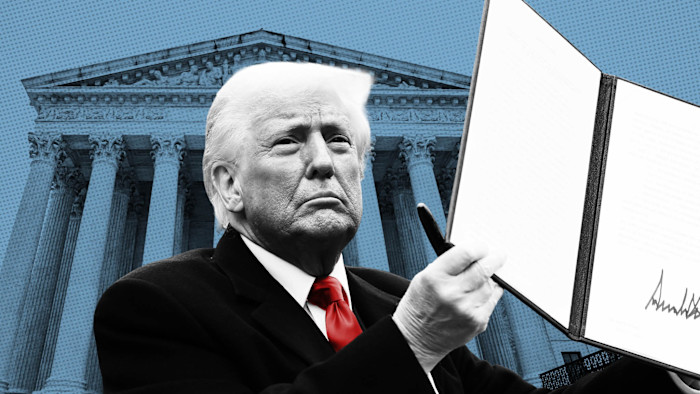
For months, President Donald Trump had used tariffs as both shield and sword – a blunt economic instrument deployed against rivals, allies, and at times even domestic political opponents. Then, in a single morning, the ground shifted.
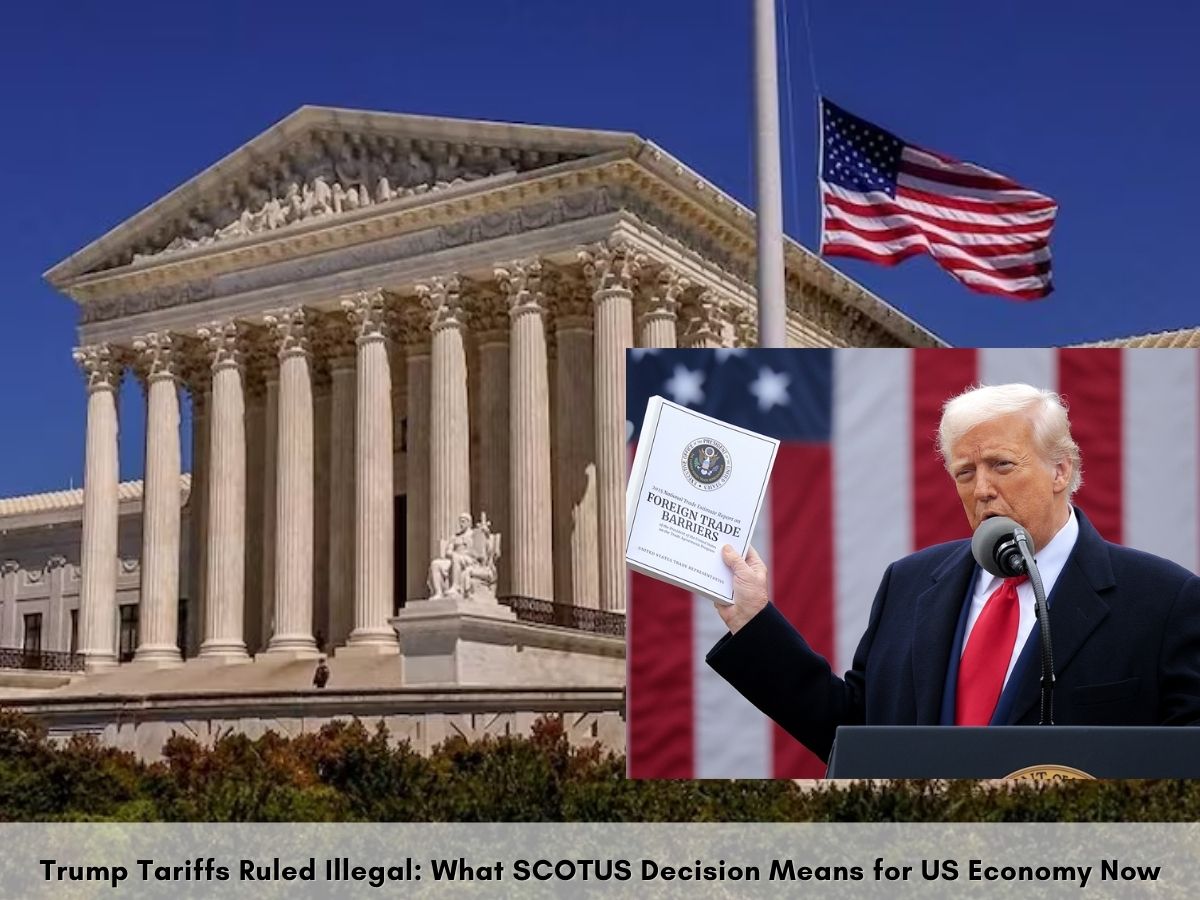
In a decisive 6–3 ruling, the Supreme Court of the United States struck down the core of Trump’s sweeping tariff regime, declaring that he had exceeded his authority under a 1977 emergency powers statute.
Writing for the majority, Chief Justice John Roberts made the constitutional boundary unmistakably clear – a president must point to “clear congressional authorisation” to impose such sweeping economic measures. In plain terms – Congress, not the president, has the power to tax.
That sentence reverberated far beyond Washington’s legal circles. Tariffs are not merely trade tools; they are taxes. And taxation sits at the heart of democratic accountability.
The ruling was not merely a rebuke of one policy. It was a reassertion of constitutional design. For a president who had argued that national emergencies granted expansive economic authority, the Court delivered a reminder: emergency power has limits. The trade war that reshaped global supply chains, rattled markets and forced governments into hurried negotiations was, at its legal core, built on contested ground.
The immediate implications were profound. Markets steadied cautiously. Trading partners paused to reassess. Political leaders recalibrated. Businesses that had paid billions in duties suddenly found themselves in a new legal universe.
This was not just about tariffs. It was about who controls America’s economic muscle and whether the executive branch can wield it unilaterally.
The Legal Earthquake, Why the Court Said No
At the centre of the dispute lay the International Emergency Economic Powers Act (IEEPA), a statute passed in 1977 during the Cold War and signed by President Jimmy Carter. Historically, it had been used to freeze assets, impose sanctions, and restrict transactions involving hostile states or actors during genuine national emergencies.
But, it had never been used to impose blanket tariffs across nearly every trading partner.
Trump became the first president to invoke IEEPA as a vehicle for sweeping import taxes. His administration argued that the law’s provision allowing the president to “regulate” commerce in times of emergency included the authority to levy tariffs. Critics countered that the statute nowhere mentions tariffs – and that “regulation” cannot be stretched to mean taxation without explicit congressional approval.
In effect, a law designed to target adversaries had been transformed into a global tariff machine.
The Constitutional Line
The constitutional architecture of the United States is explicit: Congress holds the power to levy taxes. Tariffs, the Court emphasised, are taxes on imports. Any extraordinary assertion of tariff authority must therefore rest on clear congressional authorisation.
The majority found none.
Chief Justice Roberts’ opinion did not question the president’s broad foreign policy powers. It questioned whether emergency statutes could override the separation of powers embedded in the Constitution. The answer, delivered in firm judicial prose, was no.
A 6–3 Split That Carries Weight
The ruling carried additional significance because it came from a conservative-majority bench – including justices appointed by Trump himself. That a Republican president’s signature economic strategy was struck down by a Court often described as sympathetic to executive power shows the magnitude of the decision.
This was not ideological crossfire. It was institutional self-correction.
For constitutional scholars – emergency powers cannot become a backdoor to permanent economic restructuring. For the White House, it was a stark limitation. For global markets, it was a signal that the legal foundations of the trade war had fractured.
The $175–$300 Billion Question
If the constitutional dimension was seismic, the financial implications are just as staggering.
Economists estimate that more than $175 billion has already been collected under the IEEPA-based tariffs alone. The Congressional Budget Office had projected that, if maintained, the full tariff regime could generate roughly $300 billion annually over the coming decade. U.S. net customs duty receipts hit a record $195 billion in fiscal 2025.
Now, the question looming over importers, exporters and the Treasury is simple: what happens to the money?
The Supreme Court did not directly address refunds. That responsibility now shifts to the U.S. Court of International Trade, which must determine whether companies are entitled to reclaim duties paid under a regime deemed unlawful.
The scale alone suggests logistical complexity. Billions collected. Thousands of affected firms. Years of transactions.
Even some justices acknowledged the potential “mess” of unwinding it.
If refunds are granted broadly, the administrative burden could stretch for years. If denied, political backlash will intensify. Either path carries economic and legal turbulence.
Customs, Containers and Confusion
While constitutional debates unfolded in Washington, cargo ships continued to dock.
Despite the ruling, U.S. Customs systems were not immediately updated. Importers filing entries were still required to report tariff codes tied to the invalidated duties. As many as 211,000 containers – valued at roughly $8.2 billion – arrived at U.S. ports in the days surrounding the decision.
Under standard procedure, importers have a 10-day window before payment is due. That creates a narrow corridor for amendments and corrections. Brokers anticipate a flood of post-summary corrections once systems are reconfigured. The backlog could be enormous.
Corrections that normally take weeks may now stretch into months. Refund claims could linger even longer. In theory, the Court’s ruling was crisp and definitive. In practice, implementation is anything but.
The legal decision may have drawn a bright constitutional line. But on the docks, in customs offices and across corporate balance sheets, uncertainty remains layered and unresolved.
“Game Two” Begins – Defeat, But Not Retreat
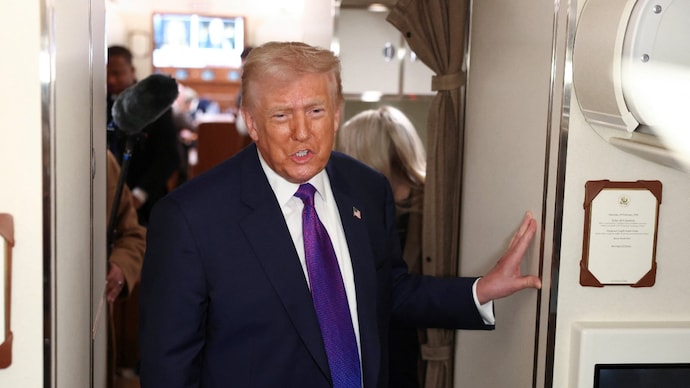
If the Supreme Court ruling was meant to close a chapter, President Donald Trump made clear within hours that he was already writing the next one.
Frustrated but defiant, Trump announced a new 10 percent global tariff almost immediately after the judgment. Within a day, he raised it to 15 percent – invoking a different statutory pathway and promising that additional “legally permissible” tariffs would soon follow.
Meaning – the legal foundation had been shaken, but the strategy would endure.
This time, the administration leaned on Section 122 of the Trade Act of 1974 — a rarely used provision that allows the president to impose temporary import surcharges for up to 150 days to address balance-of-payments deficits or serious international financial disturbances.
Unlike the broad emergency authority claimed under IEEPA, Section 122 carries explicit time limits. It is temporary by design. It has never been used at this scale.
That limitation matters. The 15 percent tariff is not permanent law; it is a short-term instrument. But in global trade, even temporary disruptions ripple through supply chains, pricing contracts and currency markets.
The clock has started ticking.
Section 232: National Security
Separate from both IEEPA and Section 122 lies Section 232 of the Trade Expansion Act of 1962 — the national security clause Trump used during his first term to impose tariffs on steel and aluminum.
Those sectoral tariffs remain intact because they were not at issue in the Supreme Court case. Cars, metals and other strategically sensitive sectors continue to face duties justified under national security investigations.
While the broad global sweep was curtailed, targeted economic pressure points remain firmly in place.
Section 301: The Retaliation Tool
Then there is Section 301 of the Trade Act of 1974 – a mechanism that authorises the U.S. Trade Representative to investigate and respond to what it deems unfair trade practices by foreign governments.
Section 301 was central to Trump’s earlier tariff battles with China. It could now become the administration’s preferred instrument for country-specific retaliation.
Together, these tools form what might be called “game two” – narrower in legal footing, perhaps more procedural, but no less disruptive in intent. Trump sharply criticised the Court’s majority opinion, calling the ruling “ridiculous,” while praising the dissenting justices as defenders of executive authority.
The trade war has not ended. It has changed legal vehicles.
Markets React
Financial markets responded with measured calm.
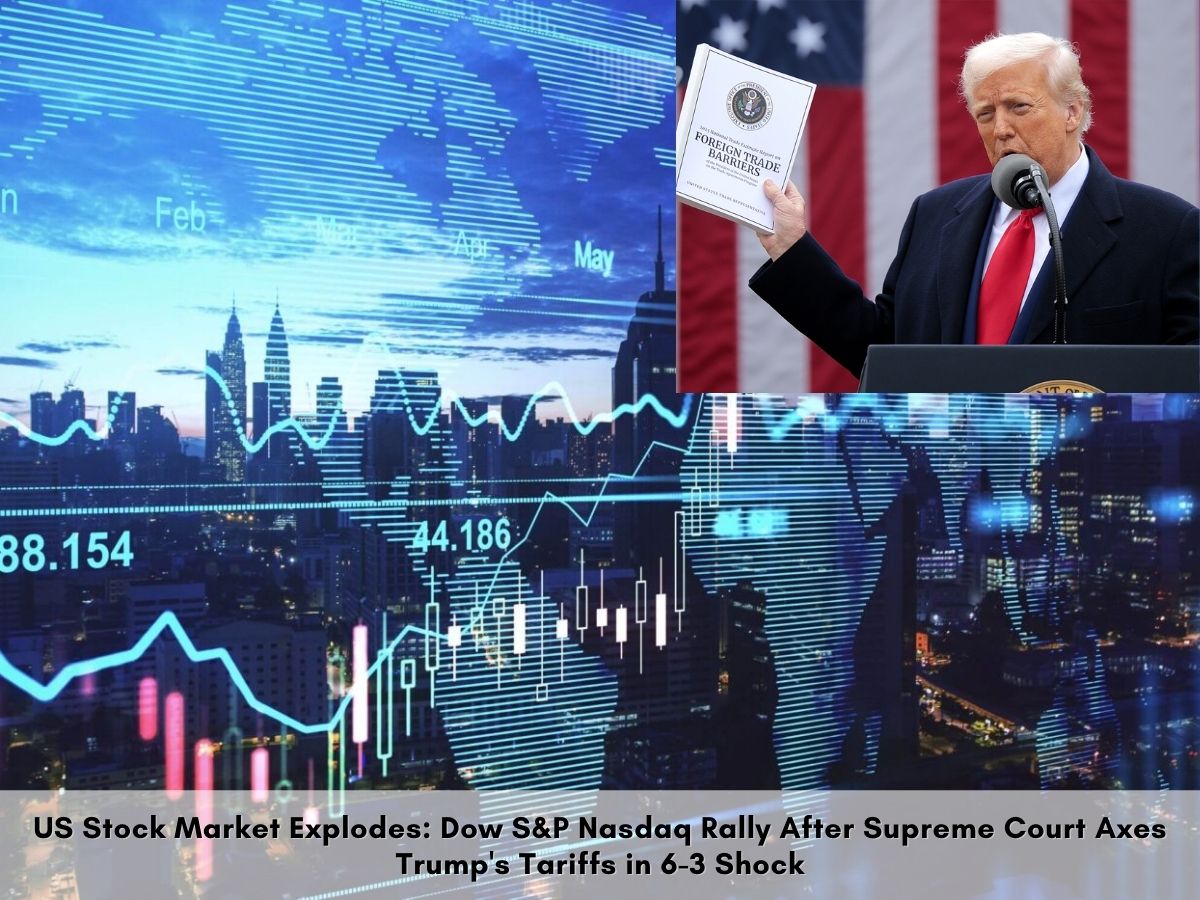
Wall Street indices edged higher in the immediate aftermath of the ruling – a modest vote of confidence that the most sweeping tariffs had been invalidated. Investors appeared to welcome the Court’s assertion of clearer constitutional boundaries.
Business groups expressed cautious optimism. The National Retail Federation described the decision as providing “much-needed certainty” for companies grappling with volatile import costs.
Yet that certainty remains partial.
The rapid announcement of a new 15 percent global tariff under Section 122 tempered any sense of finality. Businesses now face a familiar challenge: planning around temporary measures that may be extended, replaced or litigated again.
An analysis by the JPMorganChase Institute spotlighted a deeper economic truth. Midsize U.S. businesses have largely absorbed tariff costs by passing them on to consumers, reducing hiring, or accepting lower profit margins.
Political Fault Lines
For some congressional Republicans, the Supreme Court’s decision offered brief relief from defending controversial tariffs. Traditional free-trade conservatives have long expressed discomfort with sweeping trade wars, warning of higher prices and disrupted industries.
Senator Mitch McConnell publicly criticised broad trade wars as economically damaging. Others welcomed the Court’s reassertion of congressional authority.
But the party is far from unified.
A younger “America First” faction strongly backs Trump’s protectionist strategy, arguing that tariffs are essential to revive U.S. manufacturing and counter China’s industrial expansion.
Trump rescinded his endorsement of Colorado Representative Jeff Hurd after Hurd opposed certain tariff measures, signalling that deviation on trade policy may carry political consequences
Democrats see electoral opportunity.
Leaders including Senator Chuck Schumer and Senator Elizabeth Warren have called for refunds of unlawfully collected tariffs, arguing that American consumers ultimately bore the cost.
They have framed the issue squarely within cost-of-living concerns — likely to dominate midterm campaigns.
What began as a global trade strategy is becoming a domestic electoral issue.
Global Response, Relief Mixed With Wariness
Across capitals, the reaction followed a similar script: relief, but recalibration.
The European Commission called for “full clarity” and stressed the need for predictability in transatlantic trade.
Canada noted that while broad tariffs were struck down, sectoral duties on steel, aluminum and autos remain in force, continuing to affect key industries.
Mexico said it was studying the impact of the newly imposed 15 percent global tariff.
China responded cautiously, aware that alternative legal mechanisms – including Section 301 investigations – remain available. With Trump scheduled to visit Beijing later this year, trade diplomacy remains fragile.
Brazilian President Luiz Inácio Lula da Silva urged Washington to treat nations equally and avoid punitive unilateralism.
The world is relieved but no one feels secure.
India
For India, the ruling intersects directly with ongoing trade negotiations.
An interim India–U.S. framework had placed certain Indian exports under an 18 percent tariff structure. The subsequent shift to a 15 percent global tariff has complicated the competitive landscape.
New Delhi has said it is studying the tariffs implications. Trade talks have since been postponed, allowing reassessment.
Industry voices, including the Confederation of Indian Textile Industry, remain cautiously optimistic that India retains competitive positioning even under the revised tariff regime.
The strategic question lingers: Did India rush or hedge wisely?
Neal Katyal: The Face of Constitutional Pushback
Neal Katyal, the son of Indian immigrants and a former Acting Solicitor General of the United States, argued the case challenging the administration’s tariff authority.
He framed the ruling as a reaffirmation of constitutional balance: presidents are powerful, but the Constitution is more powerful still. His role symbolises something larger – the resilience of institutional checks even amid sweeping economic confrontation.
The Last Bit, What Changes And What Doesn’t
- IEEPA-based global tariffs have been struck down.
- Sectoral national security tariffs remain.
- A temporary 15 percent global levy is in force.
- Refund litigation looms before the U.S. Court of International Trade.
The Supreme Court restored a constitutional boundary but it did not end the trade war. Instead, it transformed it – from a sweeping emergency doctrine into a contested and politically charged struggle over who commands the economic levers of the United States.
The gavel has fallen but the argument continues.