Are We Becoming A Nation Of Unemployed Idiots Who Chase iPhone While Run Away From Responsibilities?
How India’s Youth Trade Their Future For An iPhone?


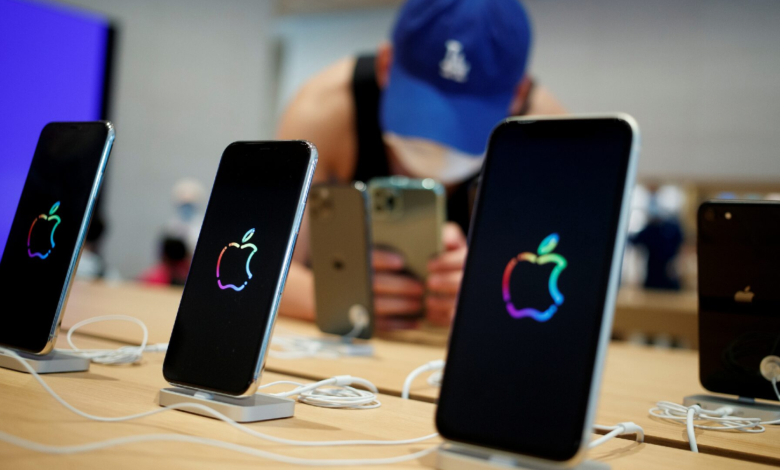
Recently, we witnessed an embarrassing display of misplaced priorities. Videos from Mumbai’s Bandra Kurla Complex and other Apple stores across India showed huge crowds of mostly young men jostling, shoving and even throwing punches to buy the iPhone 17. The scuffle escalated into slaps and punches, and security personnel struggled to control buyers who were desperate to get ahead in line.
This chaotic spectacle says more about the state of India’s youth than about the allure of Apple’s flagship. It reveals an uncomfortable truth where we are becoming a nation full of unemployed or under‑employed idiots who will borrow money and fight each other for a marginally new phone instead of building a future. What socio‑economic forces have created such scenes; whether it is unemployment, average wages, the rising debt culture, or the smartphone industry? India’s youth are distracted, financially overextended and drifting away from productive contributions, creating a pool of people ill‑equipped to build a resilient economy.
Why The Unedifying Rush; What Happened at the iPhone 17 Launch?
Overnight queues and violent scuffles
Apple’s iPhone launches have always been hyped, but the iPhone 17 release in India crossed a line. India Today’s ground report noted that people queued overnight at Apple stores in New Delhi, Mumbai, Bengaluru and Pune just to be among the first to buy the new models. Some enthusiasts admitted to travelling from Punjab and other states and waiting since 1 a.m. for the 8 a.m. opening.
The queue at New Delhi’s store wound across two floors of the mall. In Mumbai, the crowd’s impatience turned into physical altercations. Video footage posted by PTI showed buyers pushing and punching one another while ignoring security whistles, forcing officials to remove aggressors from the queue. A shopper, Mohan Yadav, complained that he had been waiting for hours but security failed to control people who were cutting the line.
The price tag and the illusion of ‘innovation’- What did these young men fight for?
The base iPhone 17 starts at ₹82,900, the ultra‑slim iPhone Air at ₹1,19,900, the iPhone 17 Pro at ₹1,34,900 and the Pro Max at a staggering ₹1,49,900. These prices are eye‑watering in a country where, the median monthly salary is barely over ₹27,000. Yet the hype around Apple’s minor hardware upgrades triggered a frenzy of consumption. When stripped of marketing gloss, the iPhone 17 offers incremental improvements over previous versions of a slightly better camera, marginally faster processor and design tweaks. There is no revolutionary new feature to justify the rush. However, for many young Indians, purchasing the latest iPhone is no longer about technology but about perceived status.
The EMI Trap Where Easy Credit Fuels Irresponsible Spending- Over 70 % of iPhones sold on EMIs
According to Outlook Money, media reports show that over 70 % of iPhones in India are purchased through equated monthly instalments (EMIs). In other words, only 3/10 buyers pay full price. This suggests that most purchasers cannot afford an iPhone outright and choose to finance it instead.
Sarthak Ahuja, a financial advisor speaking at the BT India Summit, confirmed this trend, noting that about 70 % of iPhones in India are bought on monthly instalments and that the same debt‑fuelled lifestyle is extending to other discretionary spending, including vacations. Holiday loans now exceed those for medical needs or home repairs; Gen Z borrowing for holidays doubled from 14 % in 2023 to 29 % by mid‑2025. This data points to a culture where consumption, not investment, is financed by credit.
The illusion of ‘no‑cost’ EMIs…
Many smartphone sellers advertise “no‑cost EMI” deals. However, experts warns that no‑cost EMIs simply mask the cost of credit. Financial planner Amit Suri explains that the interest does not disappear; it “shows up differently” through a higher sticker price, the loss of an upfront discount or a processing fee. Customers who choose EMIs typically lose the ₹10,000 instant discount that might have been available for outright purchases. Thus, by opting for monthly payments, buyers end up paying more overall.
What We Cannot See Is The Game Of Small payments And Big Traps…
EMIs are psychologically seductive because the monthly outflow seems small. As Suri points out, a ₹6,000 monthly payment for a phone appears harmless but becomes a trap once additional EMIs for televisions, vacations or subscriptions are added. The accumulation of small liabilities “chips away at your savings and flexibility,” leaving little room for emergencies or investment.
Abhishek Kumar, a SEBI‑registered investment advisor, warns that buying luxury tech items on loans “blocks monthly surplus into a fixed payout that reduces investible surplus”. These payments, he cautions, reduce the ability to build emergency funds or invest for long‑term goals. The contrast between the short thrill of owning the latest gadget and the long‑term compounding of investment is stark. Suri notes that investing the same ₹6,000 in a monthly systematic investment plan (SIP) could grow to more than ₹3 lakh in 15 years, while a phone loses half its value within two years. By choosing consumption over investment, many young Indians forgo substantial future wealth.
BNPL and no‑cost EMI widen access to premium phones
The smartphone market itself has evolved to facilitate this debt culture. Flexible financing mechanisms like buy‑now‑pay‑later (BNPL) and no‑cost EMIs are widening access to premium devices. These schemes, combined with aggressive marketing, make it possible for a young employee earning ₹20,000 to own a phone costing over ₹1 lakh.
Amazon’s sales data from Prime Day 2025 underscores this dynamic where it wasreported that the premium smartphone segment saw 60 % growth in value, with 70 % of demand coming from Tier 2 and smaller cities, and that deep discounts, no‑cost EMIs and exchange bonuses made flagship devices more accessible. During the sale, 1/4 purchases was on EMI and 90 % of those EMIs were no‑cost, enabling high‑end devices to penetrate non‑metro markets. In essence, e‑commerce platforms and financial firms have created a system where borrowing for consumption is not only normal but encouraged.
We have EMI’s credit history, and it can be seen that it is a double‑edged sword.
Mobile phone purchases on EMI are now a key channel for individuals in the informal sector to build a formal credit history. Digital lenders like Bajaj Finance provide loans at the point of sale, sometimes with manufacturer‑subsidised interest rates. This process benefits lenders because it brings new borrowers into the credit system and fosters loyalty; over 40 % of first‑time borrowers return to the same creditor for their next loan.
However, the no‑cost EMI has resulted in the majority of smartphone sales being financed on credit. What began as a tool to build credit history has morphed into a mechanism for normalising debt for consumption. Borrowers may believe they are building financial credibility, but they are simultaneously tying up future income to pay for depreciating gadgets.
Debt‑Fuelled Lifestyles and the Mirage of Prosperity- A generation addicted to instant gratification
Sarthak Ahuja’s comments illustrate how deeply the debt culture has permeated youth behaviour. He noted that Gen Z wants everything now, with easy EMIs fuelling their purchases. This attitude extends beyond gadgets where nearly 27 % of vacations are financed through EMIs. Mukul Malik from Asset Yogi highlighted a related issue where 93 % of individuals lose money in futures and options trading, yet social media glamorises risky trading. Young people chasing quick gains not only waste money but also compound their financial fragility. When consumer goods, travel and speculative investments are all funded by loans, the margin for error shrinks dramatically.
What are the risks of trading without knowledge?
Ahuja and Malik emphasised that social media and influencer culture glorify consumption and risky financial behaviour, encouraging youth to mimic unsustainable lifestyles. The appearance of success, owning the latest phone, posting vacation photos or boasting about trading, often hides the reality of debt and losses. Young buyers may not realise that the EMI for a phone or a trip is essentially a loan with interest disguised as convenience. Without financial literacy, they risk falling into a cycle of borrowing to maintain a façade of prosperity. As Ahuja warned, this carefree spending at the cost of long‑term stability threatens not only individual finances but also macroeconomic health.
The Elephant In The Room Where Loans Are Taken For Luxury While Essentials Suffer…
Travel loans have overtaken loans for medical needs or home repairs. Gen Z’s borrowing for holidays doubled from 14 % in 2023 to 29 % in the first half of 2025. This means that young Indians are prioritising Instagram‑worthy experiences over healthcare and home improvements. Such spending patterns reflect a society that values showmanship over essentials. While there is nothing wrong with travel or technology per se, the problem arises when these discretionary purchases are financed by debt, especially among those without stable incomes.
It would be unfair to paint all young Indians with the same brush. Ahuja’s analysis also indicates that Gen Z is not wholly irresponsible. Many invest in low‑cost ETFs, avoid hidden fees and prefer environmentally responsible brands. 86 % say sustainability matters when making purchases. They also use budgeting tools and digital notifications offered by fintechs to manage their spending. However, these positive behaviours coexist with a growing dependence on consumer credit. The challenge is ensuring that financial discipline outweighs the temptation of easy loans.
Millennials versus Gen Z: a clash of values
The same report contrasts Gen Z with millennials. Millennials tend to prioritise saving and cautious planning, while Gen Z values experiences and instant gratification. This divergence reflects broader cultural shifts. Millennials often grew up in an environment of economic uncertainty and were cautious about debt. Gen Z, raised on social media and instant online deliveries, expects immediate satisfaction. The risk is that instant gratification may sacrifice long‑term financial security. Banks and fintechs are responding by offering customised budgeting tools and smart reward systems. Yet traditional banks still push long‑term products that do not resonate with young, digital‑first users, creating a mismatch between financial services and consumer needs.
Unemployment: The Dark Cloud Behind the iPhone Rush
Amid the iPhone frenzy, India’s unemployment crisis remains severe. The government’s Periodic Labour Force Survey (PLFS) introduced monthly jobs data in April 2025. It revealed that 13.8 % of Indians aged 15–29 were unemployed. In urban areas, youth unemployment reached 17.2 %, while in rural areas it was 12.3 %. The overall unemployment rate for April 2025 was 5.1 %. Notably, women face higher unemployment: 14.4 % of young women were jobless, with urban female unemployment soaring to 23.7 %.

The Labour Force Participation Rate (LFPR) for those aged 15 and above was only 55.6 %, and the Worker Population Ratio (WPR) was 55.4 %. These figures underscore a critical problem where a significant portion of India’s youth is either out of work or not even seeking work. For them to prioritise expensive phones over skill acquisition or entrepreneurship is not only irrational but dangerous for the nation’s future.
Even for those who are employed, incomes are modest. Time Doctor’s salary survey places the average hourly wage in India at 412.59 INR and the median monthly salary around 27,300 INR. The salary range for most workers extends from ₹8,080 per month (≈USD 95) to ₹1,43,000 per month, but the majority of jobs fall near the lower end. An article highlights that an average Indian worker must put in roughly 967 hours to afford a base iPhone 17, making India the country where the phone is least affordable relative to wages. To afford the Pro Max version costing ₹1,34,999, a worker would need 1,749 hours of labour.
For comparison, a worker in Turkey needs 461 hours and one in Switzerland only 17 hours to buy the same phone. When average incomes are juxtaposed with iPhone prices, the irrationality of buying these devices on credit becomes obvious. A young person earning ₹20,000 per month and paying ₹6,000 monthly EMI for a phone spends 30 % of their income servicing a gadget that will be obsolete in two years. This financial myopia deepens when you consider that the median Indian salary is lower than the iPhone’s price. In essence, many Indians are working multiple months just to pay for a phone.
Smartphones as Identity: The Cultural Forces Behind the Craze
India’s smartphone market as evolving rapidly. Gen Z now accounts for 44 % of all smartphone purchases. These buyers are digital natives who evaluate devices based on how they feel in hand or look in mirror selfies rather than purely on specifications. Color, material and finish (CMF) have become core sales drivers because phones are used as symbols of identity.
This generation also expects 5G as a default rather than a premium feature; in Q1 2025, 87 % of smartphones shipped were 5G‑enabled. Artificial intelligence features are increasingly valued. 46 % of Gen Z buyers prioritise AI capabilities over traditional specs. Thus, a phone is no longer just a communication device but a powerful cultural marker. Owning the latest iPhone signals being modern, affluent and tech‑savvy, even if the buyer is unemployed or indebted.
In many parts of India, particularly among urban youth, the iPhone has become a status symbol. Peer pressure fuels this obsession and the desire to fit in or appear successful overrides rational financial planning. Social media amplifies the phenomenon. Users post unboxing videos, share “shot on iPhone” photos and flaunt their purchases. Influencers often portray high‑end gadgets as necessities for a modern lifestyle.
This desire to display success has real economic consequences. Ahuja observed that unlimited access to credit combined with Instagram‑fueled lifestyles encourages young people to borrow for show. When 70 % of iPhone buyers rely on EMIs, the product effectively becomes a membership badge to a perceived elite club. Yet the monthly outflows hinder genuine wealth accumulation.
The Lost Opportunity Cost: What Could India’s Youth Achieve Instead?
Financial advisors repeatedly stress the lost opportunity cost of financing depreciating gadgets. Suri explains that investing ₹6,000 per month could grow to over ₹3 lakh in 15 years. For a young person in their twenties, compounding could turn that sum into a significant nest egg by retirement. Instead, many choose to commit to EMIs for a phone that loses half its value in two years.
Funding startups, skills and education
India aspires to be the world’s startup hub. Yet the same youth who flock to Apple stores could be using their disposable income to develop skills, start businesses or invest in education. Vocational courses, coding bootcamps or micro‑enterprises typically require initial investment comparable to or even less than the cost of a high‑end smartphone. The current rush to own the latest phone diverts financial resources from productive uses.
Building a safety net
Only 33 % of Indians have any form of social security coverage. The majority rely on personal savings to handle medical emergencies, job loss or unforeseen expenses. However, Outlook Money highlights that EMI payments leave little room for emergency funds or long‑term savings. Without adequate financial buffers, any economic shock, from illness to job cuts, could push indebted young people into poverty. Viewed collectively, this behaviour undermines economic resilience. An economy built on consumption financed by debt is vulnerable to downturns. In contrast, widespread savings and investments would provide capital for businesses and reduce reliance on external funding.
The Macro Picture: How Consumer Debt Undermines Economic Resilience
Import bills and trade deficits
High‑end smartphones like the iPhone 17 are imported, which means each purchase contributes to India’s trade deficit. Instead of boosting domestic manufacturing or innovation, much of the money spent on iPhones flows abroad. Though Apple has started assembling devices in India, a large portion of value still accrues outside. Thus, the debt taken by Indian youth primarily enriches multinational corporations rather than the local economy.
Consumption over production
When a society emphasises consumption over production, economic growth becomes unbalanced. Investment in productive capital, factories, research labs, infrastructure, creates jobs and raises productivity. By contrast, financing consumption via EMIs boosts short‑term GDP figures but does not build long‑term capacity. In fact, consumer credit may crowd out investment by absorbing household savings that could have gone into businesses or capital markets.
The risk of an indebted generation
If a large cohort of young adults enters middle age with substantial consumer debt and little savings, the long‑term implications are severe. Borrowers might struggle to afford housing, healthcare or retirement. High household debt also limits the effectiveness of monetary policy. When interest rates rise, EMIs become more expensive, squeezing consumption and possibly triggering defaults. A debt‑ridden population is less resilient to economic shocks and less able to contribute to nation‑building.
Policy challenges
Policymakers face a conundrum as financial inclusion via consumer credit can bring individuals into the formal economy, but it also risks encouraging irresponsible borrowing. While digital lending platforms and no‑cost EMIs expand market access, they must be paired with financial literacy programmes. Regulators should enforce transparent disclosure of effective interest rates and discourage misleading “zero‑interest” claims. Banks and fintechs could design products that reward savings and skill development rather than consumption. For instance, matched savings schemes or education loans with favourable terms could channel youth enthusiasm toward productive ends.
Conclusion: From iPhone Frenzy to National Progress
The scenes outside Apple stores were a wake‑up call. Hundreds of young men, many likely unemployed, fought and jostled to buy a phone they probably could not afford. Over 70 % of iPhones in India are bought on EMIs, a statistic that highlights how deeply debt has been normalised. The average Indian worker must labour 967 hours to buy a base iPhone 17; yet youth unemployment sits at 13.8 %, and median monthly incomes are a fraction of the phone’s cost.
We are witnessing a generation distracted by shiny gadgets, financing lifestyle purchases at the cost of savings, skills and innovation. Gen Z’s embrace of instant gratification, amplified by social media and easy credit, risks creating a pool of financially fragile individuals ill‑equipped to build a resilient economy. Banks, fintechs and policymakers must promote responsible lending and financial literacy, while young people must reassess their priorities.

A nation’s greatness is not measured by the number of iPhones sold but by its ability to harness the energy and creativity of its youth. India cannot afford to become a nation full of unemployed idiots who fight over phones while neglecting education, enterprise and savings. It must channel youth energy into building a prosperous, innovative and equitable future.