Birch By Romeo Lane- The Accident That Was Predicted A Year Before It Happened, And How Authorities Failed To Save Lives?
How Goa's nightclub fire at Birch by Romeo Lane was not a tragedy of fate, but a tragedy of ignored paperwork, convenient amnesia, and institutional cowardice


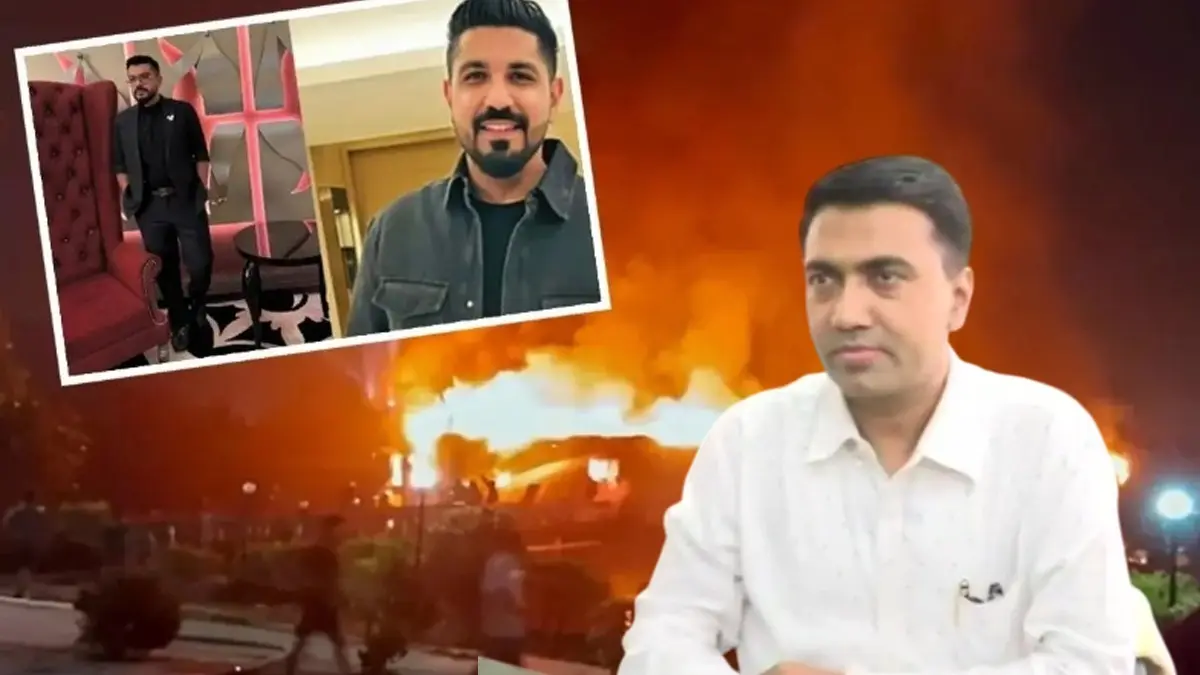
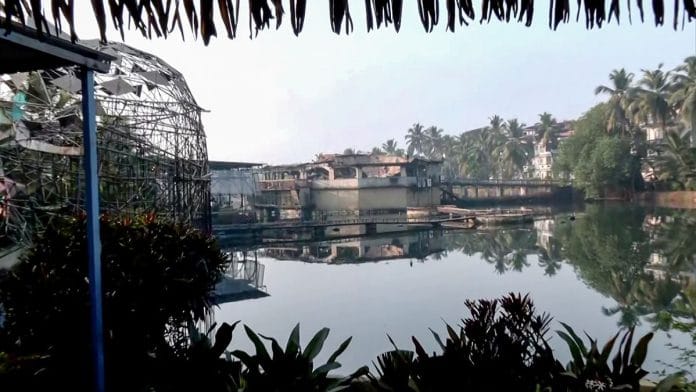
On the night of December 6, 2025, indoor electrical firecrackers ignited dried palm-leaf decorations inside a packed nightclub in Arpora, North Goa. Within minutes, twenty-five people were dead. Fifty more were injured. Fire trucks, unable to access the venue through its single 1.5-metre-wide lane, were forced to park 400 metres away. The rescue operation continued until morning. The nightclub was called Birch by Romeo Lane. Its owners, brothers Saurabh and Gaurav Luthra, had booked their tickets to Thailand at 1:17 AM on December 7, while firefighters were still inside.
This article is not about that night. It is about every other night before it; the two years of official notices, demolition orders, expired licences, forged documents, a formal legal warning predicting mass casualties, and a clean chit issued by a regulatory body two weeks before the blaze — that together constitute one of the most egregious chronicles of institutional failure in modern India. The fire at Birch by Romeo Lane did not happen because of bad luck. It happened because at least seven distinct moments existed at which a person with authority could have acted, and did not.
The ground itself was a lie
The story of Birch by Romeo Lane begins not with its owners but with the land it stood on. According to Goa’s Regional Plan 2021, the area of the Arpora site is zoned as a salt pan, classified as ECO-1 — a designated No Development Zone. This is khazan land: a centuries-old engineered tidal ecosystem of bunds, sluice gates, and fields, irreplaceable and legally protected. Building on it is not merely a technical violation, but it is environmentally catastrophic and, per Goa’s own statutes, flatly prohibited.
The land has been mired in litigation since at least 2005, with complaints against Surinder Kumar Khosla, a 78-year-old British national who is identified as an original owner of the property. The genesis of the dispute is illuminating. Pradeep Ghadi Amonkar, who claims to be the original landowner, alleges that he signed a sale agreement with Khosla in 2004 but cancelled it within six months after not receiving payment.
Khosla, he alleged, set up a commercial establishment on the land regardless, which was later taken over by the Luthra brothers. More strikingly, Amonkar alleged that a portion of his property was quietly reclassified from a salt pan to a settlement zone without his knowledge, purportedly to benefit the club.
None of this was secret. Goa’s Chief Minister Pramod Sawant later acknowledged in the state assembly that the inquiry into the club would cover violations dating all the way back to 1999, “when it was granted permission to be established on a tenanted land.” The name of the club kept changing, Sawant admitted, but the establishment, and its violations persisted for over two decades. This is not a story of a rogue operator who slipped through the cracks. It is a story of an establishment that was visible, complained about, and protected.
The demolition order that was never executed
In December 2023, a formal complaint was filed with the Arpora-Nagoa Village Panchayat alleging that the Birch structure was built illegally on salt pan land and was discharging sewage directly into the river. This was not a rumour. It was a documented complaint, on record, with the very body empowered to enforce land use laws in Arpora. Following its own inspection, the panchayat issued a demolition order in March 2024, finding that the structure had been built without a valid construction licence.
What happened next is the template for everything that follows. The owners appealed to the Additional Director of Panchayats, who granted a stay on the demolition order. The club continued to operate. The magisterial inquiry committee, which submitted its report on December 23, 2025, later found that Panchayat Secretary Raghuvir Bagkar “failed to take corrective action even after a demolition notice was issued and the trade licence had expired. Despite having multiple opportunities over several months to seal the premises or halt operations, no effective steps were taken.” The report’s language is precise that these “cumulative lapses,” directly contributed to unsafe conditions at the nightclub, ultimately leading to the fatal fire.
Also on record: the club’s trade licence expired on March 31, 2024, and was never renewed. Under Section 72-A of the Goa Panchayat Raj Act, the local body was empowered to seal the premises. It did not do so. For over a year, Birch by Romeo Lane operated as an unlicensed, illegal venue on protected land, in a structure built without permission, under a stayed demolition order, with a fire NOC it never legitimately obtained.
The fire NOC that was borrowed from a neighbour
Here is where the story moves from negligence into alleged fraud. The magisterial inquiry revealed something that should have shocked investigators had it not been for the broader pattern of systemic failure already in evidence. According to the inquiry report, none of the clubs or restaurants that operated at the Birch premises since 2004 had ever obtained a mandatory fire NOC. Instead, they allegedly continued operations by misusing a fire NOC issued to the neighbouring Maison Resort, without securing separate approvals as required by law. The report notes that this “grave irregularity has allegedly persisted since 2004,” pointing to over two decades of regulatory neglect.
This explains the Forgery FIR registered by Mapusa Police separately from the Anjuna FIR covering the fire itself. The forgery case was triggered by a complaint from the health officer of Candolim Primary Health Centre, who alleged that his signature had been forged and false entries made in official records to generate a fake health NOC, which was then submitted to the excise department to obtain a liquor licence for the nightclub. A fabricated police clearance certificate was identified as part of the same pattern. The Luthra brothers and their business partner Ajay Gupta, all partners of Being GS Hospitality Goa Arpora LLP, are charged with cheating and forgery under cognisable and non-bailable provisions of the law.
What this means, taken together, is that Birch by Romeo Lane had constructed its entire regulatory existence on counterfeit paper. Its licences were forged. Its fire clearance was borrowed. Its trade licence was expired. Its construction was unauthorised. Its land was protected. And yet it was allowed to operate, for years, hosting hundreds of paying guests on Saturday nights, charging ₹3,000 cover, winning the Times Hospitality Icons award for “Iconic Concept Bar,” and being featured in Forbes India.
The clean chit, two weeks before the fire
If the story of the demolition order is a story of enforcement failure, what happened in November 2025 is a story of active institutional absolution. Two weeks before the fire, the Goa Coastal Zone Management Authority gave the nightclub a clean chit. The CZMA concluded that the structure was “entirely legal” since it “purportedly fell outside the Coastal Regulation Zone, thereby eliminating any alleged CRZ violations.”
This conclusion was reached by relying on a 1996 NOC issued to a predecessor structure, a restaurant, staff quarters, and compound wall, not a nightclub, not a structure of the scale that Birch had grown to, and certainly not a structure built on what the Regional Plan 2021 classified as a No Development Zone.
Leader of Opposition Yuri Alemao later challenged the CZMA directly in the state assembly, accusing it of “not doing its job well.” Sawant acknowledged in response that the CZMA had received 534 complaints between 2021 and 2025 and issued 336 demolition orders. The implication that the body responsible for coastal protection was processing complaints at a rate that left hundreds unactioned, while simultaneously issuing clean chits to establishments under active complaint is not comforting.
The clean chit is now under independent scrutiny as a regulatory failure, and the question of how a body with 534 complaints and only 336 demolition orders gave a clean chit to an actively contested illegal structure on protected land, just fourteen days before a fire killed 25 people, remains unanswered.
The warning that was ignored
One month before the blaze, on November 4, 2025, senior advocate Arun Braz de Sa issued a formal legal notice to government authorities. The notice warned of “imminent risk of catastrophic failure and potential mass casualties” if operations at Birch continued unchecked. It cited specifically the single narrow-lane access, the absence of a fire NOC, the illegal construction on khazan land, and the lack of emergency exits.
This is not a retroactive assessment. This is not post-disaster wisdom. This is a formal legal warning, on letterhead, submitted to the state, predicting the exact mechanism of the disaster that would occur thirty-two days later. The government received it. It did not act. The club hosted a “Bollywood Banger Night” on December 6 with approximately 100 guests inside, pyrotechnics on the ground floor, and no functional escape route.
The prosecution, the bail, and the paradox
When the fire finally happened, the legal machinery moved with remarkable speed. An FIR was registered at the Anjuna Police Station on December 7, 2025, under Sections 105, 125(a), 125(b), and 287 read with Section 3(5) of the Bharatiya Nyaya Sanhita 2023, culpable homicide not amounting to murder, acts endangering life, and negligent conduct with fire. The brothers, who had already departed for Thailand, were detained in Phuket on December 11, deported on December 17, and arrested by Goa Police.
Their transit anticipatory bail before Delhi’s Rohini District Court was rejected the same day they were detained in Thailand. Additional Sessions Judge Vandana’s order was blunt: “The nature of offence, prima facie, is grave and serious in nature where 25 people have lost their lives.” Their subsequent bail application in the fire case was rejected again in February 2026. Their anticipatory bail in the separate forgery case was rejected a third and fourth time, in two different courts. A 4,150-page chargesheet was filed against 13 accused, with statements from 305 witnesses.
And then, on April 1 and April 8, 2026 respectively, both brothers were granted bail in both cases. The Mapusa Additional Sessions Court in the fire case observed that the allegations “do not indicate any intention on the part of the accused to cause death.” Each bail was set at ₹50,000, the cost of a business-class seat on the very flights the Luthras took to Thailand.
On April 8, 2026, the same morning the magistrate court granted the brothers bail in the forgery case; the Enforcement Directorate issued a provisional attachment order for immovable properties worth ₹17.45 crore linked to the Luthras and Khosla under the Prevention of Money Laundering Act. The ED had established that the establishment generated revenues of ₹29.78 crore between FY 2023-24 and the date of the fire, the entire amount classified as “proceeds of crime” since the club had operated without a single mandatory statutory approval throughout. A third owner, Surinder Kumar Khosla, a British national, remains outside India, with an Interpol Red Notice now sought against him.
So on April 8, 2026, two orders were signed by representatives of the same state. One said: you may go home. The other said: everything you earned, you may not touch. Both were legally correct. Both were simultaneously true. And both together told the 25 families of the dead something that no legal system ever quite articulates out loud, that justice and accountability are not the same thing, and that in India, the distance between them is often measured in years and in crores.
What this is really about
The Birch fire is regularly described as a tragedy. It was not. A tragedy is an event that could not reasonably have been foreseen. What happened at Arpora on December 6, 2025 was a catastrophe; meaning an event whose causes were known, documented, formally warned against, and then left unaddressed.
The magisterial inquiry found that no establishment at the Birch site had obtained a valid fire NOC since 2004. The Goa Coastal Zone Management Authority had received 534 complaints in four years and had issued 336 demolition orders, suggesting a compliance rate that left a substantial percentage of complaints without resolution.
A formal legal notice predicting mass casualties was on record with the state one month before the fire. A panchayat had ordered demolition over a year earlier and was overruled by its own superior. The trade licence had lapsed eight months before the fire and the club was never sealed. Surinder Khosla was complained against since 2005, two decades of unresolved litigation over the same piece of land.
Architect and urban planner Tahir Noronha, quoted in The Print in the days immediately after the fire, said what many observers had long thought: “A 1.5-metre bridge is not fire safe.” This is not a specialist insight. It is elementary. Yet at no stage did any regulator, any inspector, or any official with authority over this structure insist on its remediation as a condition of operation.
Goa journalist Kaustubh Naik, also quoted in The Print, offered the most unsettling observation: “I’m sure somebody will be scapegoated, but eventually these things will die out in a news cycle.” As of April 2026, panchayat officials have been dismissed. A 4,150-page chargesheet has been filed. ₹17.45 crore in assets have been attached. And the brothers who booked their flights to Phuket while the fire was still burning are at home, on ₹50,000 bail each, with a court condition not to leave India, enforced by the very regulatory infrastructure that failed to enforce a single earlier order over two years.


The 25 people who died at Birch by Romeo Lane were given no such conditions. Most of them were employees, ordinary workers from states across India who came to Goa for a living and did not make it home. Their families were offered ₹5 lakh each by the Chief Minister. The ED has attached ₹17.45 crore in assets linked to the people who employed them. The numbers do not balance, and they never will.